
 Worksheets
Tissues
Total questions: 20
Worksheet time: 13mins
Name
Class
Date
1.
Histology refers to the
a)
Study of tissues
b)
Study of the body
c)
Removal of tissues
d)
Study of the brain
2.
Define tissue with regards to anatomy
a)
A group of structurally and functionally related cells that come together to perform common functions
b)
Multiple sheets of thin paper used to clean your nose
c)
A series of different cells in the same area
d)
The smallest structural and functional unit of an organism
3.
Which of the following is NOT one of the four primary tissue types?
a)
Gastric
b)
Connective
c)
Muscle
d)
Epithelial
4.
What is the function of epithelial cells?
a)
Act as barriers between the external environment, or between organs and fluidfilled cavities
b)
Provide movement by pulling on bones
c)
Provide secretions which help to digest food
d)
Act as the messaging pathway between different areas of the body
5.
Which of the following cell types is correctly matched with it's cell shape?
a)
Squamous - flattened, pancake
b)
Cuboidal - rectangular
c)
Columnar - flattened, pancake
d)
Columnar - cubed/square
6.
Squamous cells are found where?
a)
Blood vessels and air sacs of lungs
b)
Respiratory passages
c)
Ducts of glands
d)
Uterine tube
7.
What is the general structure of cuboidal cells?
a)
Square with large central nucleus
b)
Flat, 'fried egg' appearance
c)
Rectangular with nucleus towards basal end
d)
Dead apical cells filled with keratin
8.
Which of the four SIMPLE epithelial types has a protective function?
a)
Pseudostratified
b)
Columnar
c)
Squamous
d)
Cuboidal
9.
The uterine tube consists of which cell type?
a)
Simple columnar
b)
Pseudostratified
c)
Simple squamous
d)
Stratified cuboidal
10.
Which cell type is "found in areas where organs need protection from mechanical abrasion but need to remain moist"?
a)
Non-keratinised stratified squamous
b)
Keratinised stratified squamous
c)
Stratified cuboidal
d)
Simple columnar
11.
What is the difference between exocrine and endocrine functions?
a)
Exocrine cells secrete fluids into ducts; endocrine cells secrete fluids into the blood stream
b)
They are synonymous
c)
Exocrine cells secrete fluids to the outside of the body; endocrine cells secrete fluids into the inside of the body
d)
Exocrine cells secrete clear fluids; endocrine cells secrete opaque fluids
12.
Which of the following is NOT a type of connective tissue 'proper'?
a)
Blood
b)
Loose
c)
Reticular
d)
Adipose
13.
The common term for adipose tissue is
a)
Fat
b)
Blood
c)
Bone
d)
Cartilage
14.
Cardiac muscle is specific to which organ?
a)
Heart
b)
Brain
c)
Pancreas
d)
Lungs
15.
The stomach consists of what type of muscle?
a)
Smooth muscle
b)
Skeletal muscle
c)
Cardiac muscle
d)
Deoxygenated muscle
16.
What is the cell type in nervous tissue responsible for sending and receiving messages?
a)
Neurons
b)
Neuroglial cells
c)
Dendrites
d)
Axons
17.

What tissue type is this?
a)
Adipose tissue
b)
Cardiac muscle
c)
Nervous tissue
d)
Skeletal muscle
18.
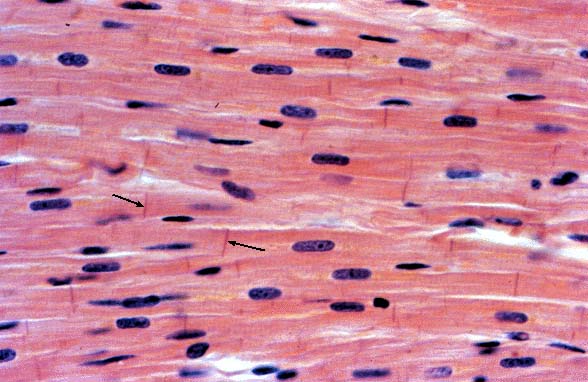
What tissue type is this? (The arrows are a clue)
a)
Cardiac muscle
b)
Skeletal muscle
c)
Smooth muscle
d)
Nervous tissue
19.
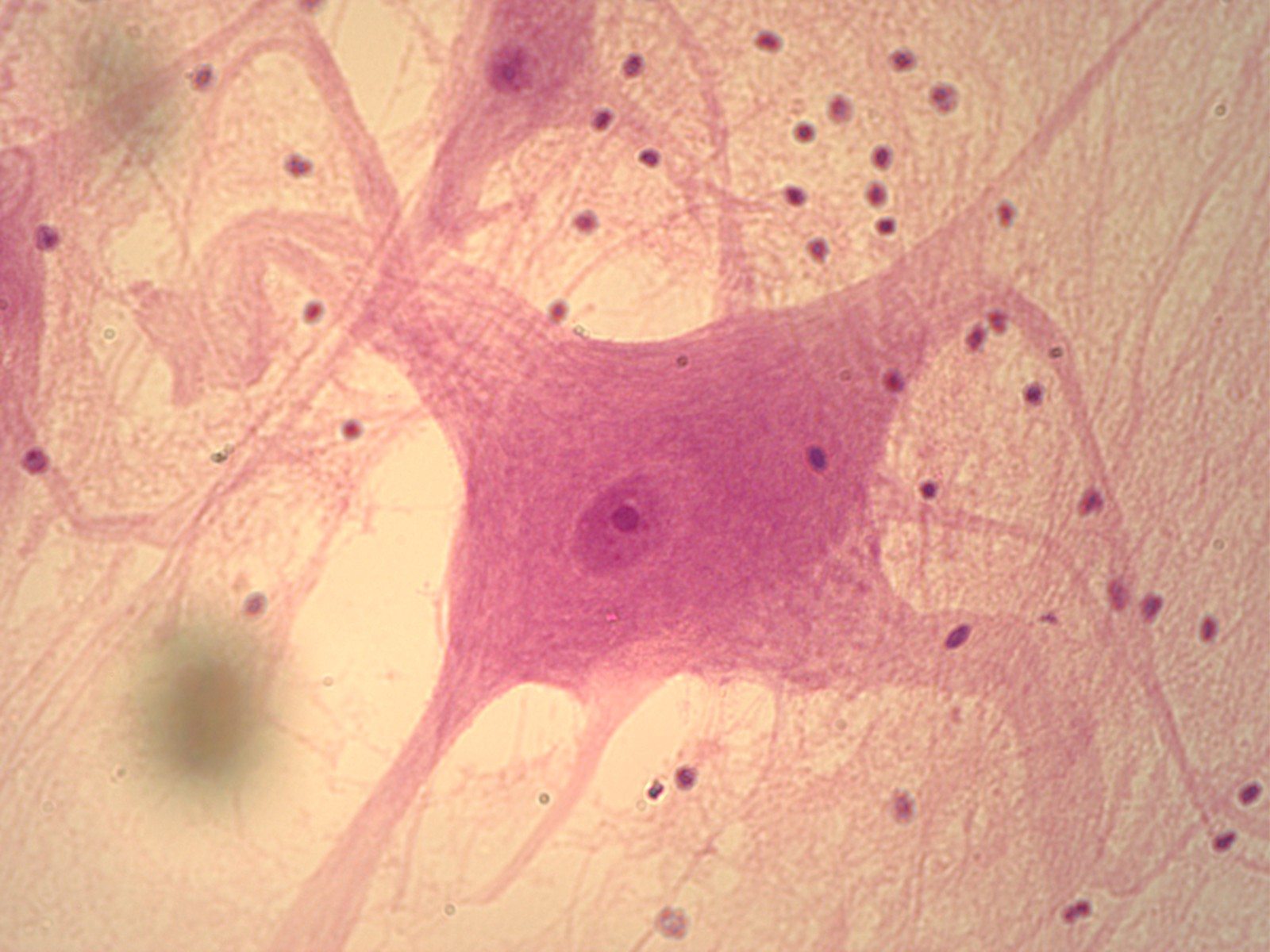
What tissue type is this?
a)
Nervous tissue
b)
Cardiac muscle
c)
Smooth muscle
d)
Connective tissue proper
20.

What tissue type is this?
a)
Skeletal muscle
b)
Nervous tissue
c)
Adipose tissue
d)
'Specialised' connective tissue
100 %

