
 Worksheets
7th Grade Final Review
Total questions: 80
Worksheet time: 59mins
Name
Class
Date
1.
The Netherlands established colonies in which modern state?
a)
California
b)
Florida
c)
New York
d)
South Carolina
2.
Which European nation colonized the lands darkly shaded on this map?
a)
England
b)
France
c)
Portugal
d)
Spain
3.
How did the invention of the caravel impact European exploration?
a)
It allowed African explorers to take control of European seas.
b)
It eliminated the need for traditional maps and charts.
c)
It allowed European explorers to travel faster.
d)
It prevented explorers from getting lost at sea.
4.
How were small groups of Europeans able to conquer civilizations that had much larger populations?
a)
Europeans used gunpowder to dominate warfare.
b)
Europeans used religion to prevent war.
c)
Europeans created alliances to unite rival nations.
d)
Europeans refused to trade with civilizations that resisted.
5.
How did the European nations use mercantilism to build wealth during the Age of Exploration?
a)
They controlled the trade of raw materials to build stockpiles of gold.
b)
They used slave labor to reduce costs.
c)
They created unions to protect workers.
d)
They shared all resources equally among nations.
6.
Which event marked the beginning of the market economy in Europe?
a)
state-funded exploration of the New World
b)
the growth of the feudal system
c)
the start of the African slave trade
d)
individual citizens opening private businesses
7.
The slave trade had a negative impact on civilizations in
a)
Africa
b)
Asia
c)
Australia
d)
Europe
8.
Why were Asian civilizations less likely to be taken advantaged of during the period of European colonialism?
a)
Many Europeans had Asian ancestors.
b)
Asians had established colonies in Europe.
c)
Europeans respected the advanced societies of Asia.
d)
Most Asian civilizations were governed by Europeans.
9.
How did many European nations attempt to take power away from traditional monarchies?
a)
by opening capitalist markets and increasing trade
b)
by reducing the influence of the church and banning religious governments
c)
by creating large militaries and forcing the use of new laws
d)
by separating the powers of government and writing constitutions
10.

The chart describes the characteristics of one form of government. These characteristics which form of government?
a)
dictatorship
b)
limited government
c)
monarchy
d)
unlimited government
11.
How did the Scientific Revolution impact the Catholic Church?
a)
It strengthened the church by spreading its teachings across the world.
b)
It weakened the church by providing a new religion.
c)
It weakened the church by challenging its teachings.
d)
It strengthened the church by providing evidence for its teachings.
12.

This is an image of a scientific theory. Which historical figure provided evidence for this scientific theory?
a)
Galileo
b)
John Locke
c)
Isaac Newton
d)
Ptolemy
13.
The concept of Natural Rights is most closely associated with which historical figure?
a)
John Locke
b)
Baron de Montesquieu
c)
Isaac Newton
d)
Jean-Jacques Rousseau
14.
How dd the English Civil War impact the culture of England?
a)
It strengthened England’s relationship with France.
b)
It increased democracy.
c)
It gave more power to the monarchy.
d)
It strengthened England’s relationship with the Catholic Church.
15.
Why did many nations write constitutions after overthrowing their former governments in 18th and 19th centuries?
a)
to establish formal ties to the Catholic Church
b)
to sponsor scientific thought in government
c)
to sponsor exploration of the New World
d)
to limit the powers of the new governments
16.
In what way did Robespierre's control of the committee of public safety impact the French government?
a)
It led to dictatorship.
b)
It increased democracy.
c)
It empowered the monarchy.
d)
It decreased military spending.
17.

This graph shows relationship between taxes and land ownership in France during the 1700s. How did the information found in the graph impact French history?
a)
It created a balance that kept all classes happy.
b)
It created tension that sparked a revolution.
c)
It created economic power that dominated Europe.
d)
It created military strength that conquered Europe.
18.
The spread of Napoleonic Empire is most closely linked with the growth of what idea in Europe?
a)
communism
b)
democracy
c)
nationalism
d)
oligarchy
19.
How did the congress of Vienna choose to reinstate the absolute monarchs of Europe after Napoleon's exile in 1815?
a)
to protect the rights of individual citizens in Europe
b)
to preserve the unique cultures of Europe
c)
to weaken the largest militaries of Europe
d)
to restore the traditional balance of power in Europe
20.
The revolutions of South America in the 19th century were inspired by what event?
a)
Bolshevik Revolution
b)
French Revolution
c)
Industrial Revolution
d)
Scientific Revolution
21.

This is a quote from Haitian Revolutionary, Toussaint L' Ouverture. The ideas expressed in this quote are most closely related to the ideas of what time period?
a)
Age of Absolutism
b)
Enlightenment
c)
Industrial Revolution
d)
Renaissance
22.
Why did the Industrial Revolution lead to an increase in the population of Europe?
a)
Technological advancements in agriculture increased the amount of food available.
b)
Increased market sizes led to a greater demand for workers.
c)
Jobs became less dangerous to those who worked in factories.
d)
Increased free time allowed people more time to raise families.
23.

These are photographs of popular modes of transportation during the Industrial Revolution. How did these modes impact businesses during the Industrial Revolution.
a)
They increased business spending and drove many companies into debt.
b)
They allowed companies to transport their goods to large markets quicker.
c)
They made it more difficult for companies to sell their goods in foreign markets.
d)
They made it more difficult for companies to have access to raw materials.
24.
What was the main reason many European nations established foreign empires in the 19th century.
a)
to avoid international war
b)
to protect European civilizations that were less advanced
c)
to gain access to foreign goods and markets
d)
to spread Christianity
25.

This is a political cartoon produced in the United States during the 1800's. Which historical event does this political cartoon reference.
a)
the Boxer Rebellion
b)
the French Revolution
c)
the Industrial Revolution
d)
the Open Door Policy
26.
Why did Japan go through the Meiji Restoration?
a)
to decrease interaction with Europe and America
b)
to form an alliance with China and Korea
c)
to protect itself from imperialism
d)
to revert to traditional cultural practices
27.
How did the British react to the Sepoy Rebellion in India?
a)
They allowed India to remain independent.
b)
They took complete control of India.
c)
They allowed the Indian government to control the terms of trade with Britain.
d)
They banned trade with India and drove the region into depression.
28.
Which event contributed to the start of the Spanish-American War?
a)
the Boxer Rebellion
b)
the explosion of the USS Maine
c)
the signing of the Open Door Policy
d)
the creation of the Great White Fleet
29.

This chart shows the MAIN causes of World War I. Which word best completes this chart.
a)
alliances
b)
colonies
c)
economies
d)
revolutions
30.

This is a time line of events in European History. Which event completes this time line?
a)
Russia withdraws from World War I.
b)
Japan undergoes the Meiji Restoration.
c)
The Industrial Revolution begins in Great Britain.
d)
The Enlightenment inspires the spread of communism.
31.
Which nation lost territory as a result of World War I
a)
Austria-Hungary
b)
France
c)
Great Britain
d)
United States
32.
Why was the League of Nations created after World War I?
a)
to punish war crimes
b)
to reinforce traditional alliances
c)
to prevent future wars
d)
to control international trade
33.
How did the Treaty of Versailles have a negative impact on the Germany economy?
a)
It prevented Germany from engaging in international trade after World War I.
b)
It unified the economies of Europe under one currency.
c)
It decreased Europe’s dependence on foreign goods.
d)
It forced Germany into debt by paying for the damages of World War I.
34.
Why did the stock market crash of 1929 have an negative impact on the European economy?
a)
Europe had invested heavily in companies from the United States.
b)
The United States was unable to pay the military forces keeping the peace in Europe after World War I.
c)
The United States had built large banks throughout Europe.
d)
Europe depended on loans from the United States to rebuild the destruction caused by World War I.
35.
Why did Communism become popular in Eastern Europe after World War I?
a)
People believed it would relieve the stresses of the global depression.
b)
People believed it would break the alliances that worsened World War I.
c)
People believed it would weaken the political power of the United States.
d)
People believed it would increase the region’s dependence on foreign trade.
36.
Which event is widely considered the beginning of World War II in Europe?
a)
the assassination of Archduke Franz Ferdinand
b)
the Japanese attack on Pearl Harbor
c)
the German invasion of Poland
d)
the signing of the Treaty of Versailles
37.
Why did the United States use atomic weapons on Japan in 1945?
a)
to prevent a long campaign in Japan
b)
to convince Germany to surrender
c)
to punish the Japanese for their role in the Holocaust
d)
to allow the Soviet Union a chance to invade
38.

This graph shows the Jewish population in Europe in two separate years. Which event caused the change seen in this graph?
a)
the Anschluss
b)
the bombing of Pearl Harbor
c)
the Holocaust
d)
the siege of Stalingrad
39.
How did the Holocaust impact global politics?
a)
It created tensions between the United States and the United Nations.
b)
It inspired the creation of the Universal Declaration of Human Rights.
c)
It inspired the creation of the United Nations.
d)
It led to a ban on the Jewish religion in Europe.
40.

Complete the chart with the appropriate descriptor from the choices into the box.
a)
Democracy
b)
Fascism
c)
Monarchy
d)
Socialism
41.
What failed to protect banks from running out of money?
a)
Federal Reserve
b)
The stock market
c)
Businesses
d)
The President
42.
What was Franklin Roosevelt's plan to end the Great Depression called?
a)
Square Deal
b)
Good Deal
c)
New Deal
d)
American Deal
43.
Who was President when the Great Depression started?
a)
Theodore Roosevelt
b)
Woodrow Wilson
c)
Franklin Roosevelt
d)
Herbert Hoover
44.
Which of the following was NOT true when Hoover was President?
a)
The government helped end the Great Depression
b)
1/4 of Americans were unemployed
c)
Businesses closed
d)
Banks ran out of money
45.
Did high tariffs help or hurt international trade?
a)
Help
b)
Hurt
46.
Which New Deal program still helps retired people?
a)
FDIC
b)
CCC
c)
Social Security
d)
Federal Reserve
47.
Which region of the U.S. saw the worst dust storms?
a)
Great Plains
b)
Northeast
c)
Southeast
d)
Pacific
48.
What was the goal of federal work programs like the CCC?
a)
Helped banks
b)
Helped unemployed people
c)
Helped businesses
d)
Helped Federal Reserve
49.
What was the name for people who left their homes to find work harvesting fruits and vegetables?
a)
migrant workers
b)
sharecroppers
c)
child workers
d)
industrial workers
50.
Which of the following was NOT an effect of the Great Depression?
a)
homelessness
b)
bank failures
c)
high tariffs
d)
struggling farmers
51.
In 1931, Japan invaded what country that violated the League of Nations?
a)
Thailand
b)
China
c)
pearl harbor
d)
russia
52.
December 7, 1941 .....
a)
was when Germany invaded poland
b)
Great Britain and France declared war
c)
Japan attacked Pearl Harbor
d)
Germany invaded Soviet Union
53.
Who was the British Prime Minister during most of the war
a)
Woodrow Wilson
b)
Adolf Hitler
c)
Winston Churchill
d)
Basil Fawlty
54.
Who was the German Dictator during WWII
a)
Charlie Chaplin
b)
Adolf Hitler
c)
Benito Mussolini
d)
Joseph Stalin
55.
When war broke out in Europe, how did the US Congress ask Franklin D. Roosevelt to respond?
a)
Remain neutral and not get involved
b)
Bomb Pearl Harbor
c)
Invade Normandy, France
d)
Drop the bombs on Hiroshima and Nagasaki
56.
Where did the attack at Pearl Harbor occur?
a)
Northern Africa
b)
the Pacific Ocean
c)
The continental USA (the land part of the USA)
d)
Europe
57.
Cause: The Japanese bombed Pearl Harbor.
What is the effect?
What is the effect?
a)
Adolf Hitler invaded Poland
b)
The United States entered WWII
c)
Britain entered WWII
d)
The USA immediately dropped the atomic bombs on Japan.
58.
What caused the Japanese to finally surrender?
a)
losing too many soldiers in Pacific battles
b)
running out of soldiers and military supplies
c)
two atomic bombs dropped on cities in Japan
d)
being forced to surrender to Germany and Italy
59.
What is a dictator?
a)
A person that has absolute control over a nation and its people
b)
A person that is elected by the people and answers to their will
c)
A person that runs the government with limits to their power
d)
A person that rules a nation fairly and justly
60.
What country did Mussolini lead?
a)
Italy
b)
Germany
c)
France
d)
The United Kingdom
61.
Of what nation was Joseph Stalin the leader?
a)
The Soviet Union
b)
Germany
c)
Italy
d)
Japan
62.
Which of the following acts that Hitler did was a violation of the Treaty of Versailles?
a)
Put German troops in the Rhineland
b)
United Germany with Austria
c)
Demanded territory that used to belong to Germany
d)
ALL of these were violations
63.
What was the term for the British allowing Hitler to have the Sudetenland later referred as?
a)
Appeasement
b)
The Munich Peace Plan
c)
The Great Deal
d)
Hitler's Magnificent Promise
64.
What was going on in the 1930's that led to several dictators around the world coming to power?
a)
The Great Depression
b)
The New Deal
c)
The Panic of Central Europe
d)
The Prosperity of the Great Nations
65.
This word means strengthening a country's military; it's a cause of World War I.
a)
Nationalism
b)
Militarism
c)
Alliances
d)
Imperialism
66.
This word means seeking other colonies; it was a cause of World War I.
a)
Militarism
b)
Imperialism
c)
Alliances
d)
Nationalism
67.
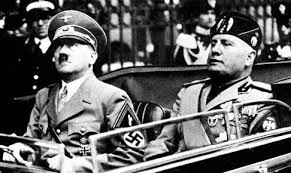
What was the name of Hitler's form of government which denied individual freedoms took complete power of the Germany?
a)
democracy
b)
fascism
c)
dictatorship
d)
monarchy
68.
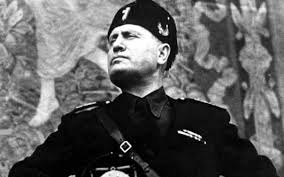
Who was Benito Mussolini?
a)
The fascist ruler of Italy
b)
The fascist ruler of Germany
c)
The fascist ruler of France
d)
The fascist ruler of England
69.
What type of leader was Joseph Stalin?
a)
Listened to the working class
b)
Democratic Leader
c)
Totalitarian Ruler
d)
shared ideas with the masses
70.
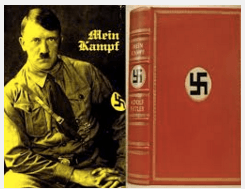
Mein Kampf by Hitler
a)
Philosophical work "My Struggle"
b)
Hitler's autobiography "My Strength"
c)
Hitler's biography "My Stupidity"
d)
Personal inspiration "My Semitics"
71.
During the World War II, what did Adolph Hitler use concentration camps to do?
a)
A. conduct secret research to develop the A-bomb
b)
A. carry out his Final Solution against the Jewish people
c)
A. imprison Allied soldiers captured in battle
d)
A. put Allied leaders on trial in a military court
72.
By the end of the Holocaust, over __________ Jews had been killed?
a)
2 Million
b)
4 Million
c)
6 Million
d)
8 Million
73.
What was the Holocaust?
a)
Ethnic killings in Rwanda between the Hutus and the Tutsis
b)
The systematic killing of Jews by Nazi Germany
c)
The destruction of Islamic holy sites in the Middle East
d)
The genocide in Kosovo
74.

Auschwitz is _
a)
Place to hold a fun birthday party.
b)
Jewish Concentration/death camp.
c)
A synagogue
d)
Jewish Church
75.
What was the main goal of the Truman Doctrine?
a)
Contain communism
b)
Provide weapons to democratic countries
c)
Help South Korea
d)
Provide collective security
76.
Which of the following is an example of the Marshall Plan at work?
a)
The Soviet Union blockaded the city of Berlin.
b)
The United Nations sent military forces to Korea.
c)
The United States helped France rebuild its economy.
d)
The United States set up the North Atlantic Treaty Organization.
77.
During the Cold War, nations formed the North Atlantic Treaty Organization (NATO) for the purpose of
a)
advancing communism
b)
free trade
c)
mutual defense
d)
arms control
78.
What event prompted the Soviet Union to form the Warsaw Pact?
a)
the formation of NATO
b)
the Cuban Missile Crisis
c)
the Korean War
d)
the launch of Sputnik
79.
Who eventually won the Chinese civil war and created a Communist government there?
a)
Chiang Kai-shek
b)
Fidel Castro
c)
Mao Zedong
d)
Ho Chi Minh
80.
The Berlin Wall was built in order to
a)
Separate communist Europe and democratic Europe
b)
Prevent East Germans from entering West Berlin
c)
Prevent an Allied takeover of Berlin
d)
Prevent the Soviets from taking over more democratic land
100 %

