Wayground logo

Free Printable Worksheets

Font size

S
M
L
XL
Worksheets

Population quiz

Total questions: 37

Worksheet time: 21mins

Name
Class
Date
1.

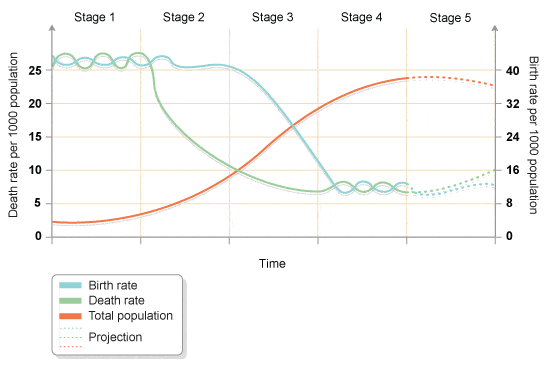
This major event happened at the end of stage 1 pushing countries into stage 2 many years ago

a)

Medical Revolution

b)

Industrial Revolution

c)

American Revolution

d)

Agricultural Revolution

2.
The total number of live births per year per 1,000 people in a society is the:
a)
crude birth rate.
b)
crude death rate.
c)
total fertility rate.
d)
natural increase rate.
3.
Why do women in more developed countries (MDCs) have lower rates of fertility?
a)
they are engaged in business and political activities
b)
they have access to medical care and birth control
c)
they pursue education opportunities, thus delaying child birth
d)
all of the above
4.
What is life expectancy?
a)
It measures how well off people in the country are. 
b)
The percentage of adults who can read and write
c)
the average number of years a person in a country is expected to live
d)
none of these
5.
Things that tend to send people away from their home
a)
Push Factors
b)
Pull Factors
6.
Things that tend to attract people to a new area
a)
Push Factors
b)
Pull Factors
7.
Having no jobs available is an example of a..
a)
Push Factor
b)
Pull Factor
8.
Having Freedom of religion is an example of a..
a)
Push Factor
b)
Pull Factor
9.

Flooding is...

a)

Push from a location

b)

Pull to a new location

10.
War is a _______ reason to move
a)
Social
b)
Environmental
c)
Economic
d)
Political
11.
Better employment opportunities in cities
a)
Economic reason for moving
b)
Social reason for moving
c)
Political reason for moving
d)
Environmental reason for moving
12.
Country X has a BR of 40 and a DR of 15. In what stage of the DTM is this country?
a)
Stage 1 - No growth
b)
Stage 2 - High growth
c)
Stage 3 - Moderate growth
d)
Stage 4 - Low growth
13.
For every 1,000 babies born in Mozambique this year, nearly 150 of them will die before they reach their 1st birthday. The rate of 150 deaths per 1,000 births is known as the:
a)
crude death rate.
b)
crude birth rate.
c)
total fertility rate.
d)
infant mortality rate.
14.
The population pyramid of Naples, Florida, is "upside down," because the city has a large percentage of:
a)
infants.
b)
females.
c)
elderly people.
d)
young people.
15.
Which stage of the DTM is the US in
a)
1
b)
2
c)
3
d)
4
16.
A characteristic of stage Three of the DTM shows?
   
a)
High birth and death rates
b)
Low death and high birth rates
c)
Declining birth and death rates 
d)
High death and low birth rates
17.
A characteristic of stage four of the DTM shows
   
a)
High birth and death rates
b)
Low death and high birth rates
c)
Low birth and death rates
d)
High death and low birth rates
18.
A characteristic of stage one of the DTM shows
    
a)
High birth and death rates
b)
Low death and high birth rates
c)
Low birth and death rates
d)
High death and low birth rates
19.
Model that explains changes in population demographics in countries at different time periods.
a)
Distant Decay Model 
b)
Demographic Transition Model 
c)
Overpopulation Model 
d)
 Epidemiologic Transition Model
20.
 What generalization can be made from the data in the chart?
a)
A.  Urbanization has been experiencing a sharp decline in the past ten years.
b)
Urban populations will need to carefully manage their resources due to problems of overpopulation.
c)
Rural populations will have to deal with problems of traffic, pollution and overcrowding.
d)
Urban and rural populations will have the same social, economic and political concerns.
21.
Without the development of ___________________________ people would not be able to produce enough food to allow for urbanization.
a)
animal herding
b)
subsistence agriculture
c)
commercial agriculture
d)
cottage industries
22.
Using the information, which two countries probably have the highest standards of living?
a)
Israel and Libya
b)
Libya and Saudi Arabia
c)
Afghanistan and Saudi Arabia
d)
Morocco ans Israel
23.
21. Curently, most population growth in the world is occurring in –
a)
countries in the Western Hemisphere
b)
countries in the Eastern hemisphere
c)
developed countries
d)
least developed countries
24.
The green area that shows the difference between the CBR & CDR in stages 2 & 3 is also known
a)
Population bulge
b)
Population boom
c)
Natural selection
d)
Culture lag
25.
Nutritional developments, improved education, some availability of contraceptives, and increased ubanization are characteristics of stage
a)
1
b)
2
c)
3
d)
4
26.
Improved sanitation, children seen as an asset, mechanization, and population explosion are characteristics of stage
a)
1
b)
2
c)
3
d)
4
27.
The shape of a country's population pyramid is determined primarily by its:
a)
crude birth rate.
b)
crude death rate.
c)
dependency rate.
d)
demographic ratio.
28.

Which three indicators are used to measure the HDI?

a)

Life expectancy, literacy rate, number of trees per 1000 people

b)

Life expectancy, mortality rates and GDP

29.

high birth rate, high infant mortality & a low literacy rate is associated with a

a)

more developed or highly developed country

b)

less developed country

30.
Name the type of pyramid in the picture.
a)
slow growth
b)
fast growth
c)
zero growth
d)
decline
31.

According this population pyramid the population is _______________

a)

growing

b)

getting smaller

c)

staying the same

d)

increasing fast

32.

This pyramid would be typical of a...

a)

developing contry

b)

Industrializing country

c)

Mature Industrial country

d)

Post Industrial country

33.
The movement of people from rural areas to cities is called
a)
reconstruction
b)
nativism
c)
urbanization
d)
mercantilism
34.
This population pyramid shows a country with a population that  is 
a)
growing
b)
staying the same
c)
decreasing
35.

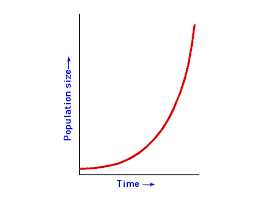
What has happened to human population over time

a)

It has grown exponentially

b)

It has decreased over time

c)

social darwanism

d)

boom-bust curve

36.

The shift in the US population from North to South was due to

a)

the invention of the AC and improved transportation

b)

Manifest destiny

c)

Push factors

d)

War

37.

This photo reflects

a)

Human development over time

b)

Human population

c)

Human achievements