
 Worksheets
Wild Things Rocks and Minerals
Total questions: 58
Worksheet time: 45mins
Name
Class
Date
1.
A rock that forms magma is______________________
a)
Sedimentary
b)
Metamorphic
c)
Igneous
2.
The streak of a mineral is always the same color as the mineral.
a)
True
b)
False
3.
A rock made of stuck-together sand is_______________
a)
Igneous
b)
Sedimentary
c)
Metamorphic
4.
A rock with bands of tightly interlocking mineral grains is__________________
a)
Igneous
b)
Sedimentary
c)
Metamorphic
5.
Diamonds and rubies are examples of minerals
a)
True
b)
False
6.
Minerals are living materials found in animals
a)
True
b)
False
7.
Minerals are always a dull brown color
a)
True
b)
False
8.
The continuous series of change that rocks undergo is known as the _____.
a)
rock cycle
b)
water cycle
c)
hibernation
d)
metamorphisis
9.
What type of rock would you most likely find a fossil inside of?
a)
sedimentary
b)
igneous
c)
metamorphic
d)
diamond
10.
True or False:
Sedimentary rocks always form under water.
Sedimentary rocks always form under water.
a)
true
b)
false
11.
What type of rock is formed when magma and lava cools and hardens?
a)
minerals
b)
sedimentary
c)
igneous
d)
metamorphic
12.
Emily was looking at a rock and saw tiny crystals. Emily should know that all rocks are made up of _____.
a)
diamonds
b)
minerals
c)
fossils
d)
dirt
13.
What type of rock is formed when an existing rock has been changed into a new rock?
a)
sedimentary
b)
igneous
c)
minerals
d)
metamorphic
14.
Melted material outside the Earth is called _________________.
a)
Magma
b)
Lava
15.
In sedimentary rocks, there are pieces of rocks called ________________ that have been pressed together.
a)
Chunks
b)
Small rocks
c)
Sediments
16.

This rock formed when bits of other rocks became pressed into a solid. What type of rock is it?
a)
Sedimentary Rock
b)
Metamorphic Rock
c)
Igneous Rock
17.

This rock was formed when magma cooled very slowly inside the Earth. What specific type of rock is it?
a)
Intrusive Igneous Rock
b)
Extrusive Igneous Rock
c)
Foliated Metamorphic Rock
d)
Clastic Sedimentary Rock
18.

This rock formed when lava cooled very quickly on Earth's surface. What specific type of rock is it?
a)
Extrusive Igneous Rock
b)
Intrusive Igneous Rock
c)
Non-Foliated Metamorphic Rock
d)
Biochemical Sedimentary Rock
19.
When you watch a volcano erupt molten rock, you are seeing _____
a)
Lava
b)
Magma
c)
Mineral Crystals
d)
Igneous Rocks
20.
When you are describing the sizes of the mineral grains in a rock, you are detailing the rock's _____
a)
Texture
b)
Composition
c)
Sedimentation
d)
Igneous-ness
21.
The individual particles that make up a rock are known as _____
a)
Grains
b)
Textures
c)
Metamorphs
d)
Lava
22.
What are the 3 major types of rocks?
a)
Igneous, Metamorphic, Sedimentary
b)
Metamorphic, Igneous, Cementation
c)
Brown, Red, Gray
d)
Streak, Hardness, Breakage
23.
Two ways to describe types of igneous rocks are _____
a)
Extrusive and Intrusive
b)
Foliated and Non-Foliated
c)
Clastic and Biochemical
d)
Black and Gray
24.
What process is used to form sedimentary rocks?
a)
Lava cools and hardens to form a rock.
b)
Bits of sand and gravel form layers that turn into rock from pressure.
c)
Extreme heat and pressure from inside the Earth turn rocks into new rocks.
d)
Magma trapped under the Earth's surface cools and solidifies.
25.
Which of the words below describe mud, sand, and tiny bits of rocks that cement together to form a type of rock?
a)
stalactites
b)
magmas
c)
metamorphs
d)
sediments
26.
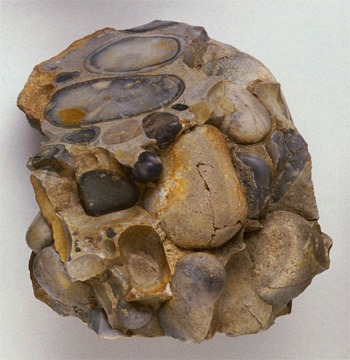
This rock was formed by smaller pieces of rock that settled at the bottom of a lake millions of years ago. What type of rock is this?
a)
Sedimentary
b)
Igneous
c)
Metamorphic
27.
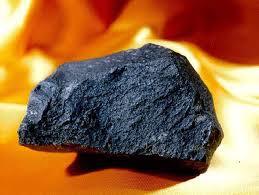
This rock was found near the mouth of a volcano. What type of rock is this?
a)
Sedimentary
b)
Igneous
c)
Metamorphic
28.
What is sedimentary?
a)
Formed by heat and pressure
b)
Formed by heat and cooling
c)
Layered rock formed by compaction
d)
All of the above
29.

When sediments are pressed together tightly, this is called ____________.
a)
Compaction
b)
Cementation
c)
Weathering
d)
Erosion
30.
The process in which dissolved minerals crystallize and glue sediment together.
a)
compaction
b)
deposition
c)
organic rock
d)
cementation
31.

The process when rocks break into smaller pieces due to exposure to natural elements is called
a)
erosion
b)
weathering
c)
sediments
32.
The movement of weathered material (sediment) is called?
a)
weathering
b)
erosion
c)
deposition
33.
This rock was formed when molten rock cooled into a solid. What type of rock is it?
a)
Igneous Rock
b)
Metamorphic Rock
c)
Sedimentary Rock
34.
Extreme Heat and Pressure creates a _________ rock.
a)
Igneous
b)
Metamorphic
c)
Sedimentary
d)
Mineral
35.
What two processes make sediment?
a)
Weathering
b)
Erosion
c)
Weathering & Erosion
36.
The three groups of rocks are classified by
a)
How they form
b)
Color
c)
Grain size
d)
Chemical Composition
37.
This rock was formed when magma cooled very slowly inside the Earth. What specific type of rock is it?
a)
Intrusive Igneous Rock
b)
Extrusive Igneous Rock
c)
Foliated Metamorphic Rock
d)
Clastic Sedimentary Rock
38.
This rock formed when bits of other rocks became pressed into a solid. What type of rock is it?
a)
Sedimentary Rock
b)
Metamorphic Rock
c)
Igneous Rock
39.
This rock formed when lava cooled very quickly on Earth's surface. What specific type of rock is it?
a)
Extrusive Igneous Rock
b)
Intrusive Igneous Rock
c)
Non-Foliated Metamorphic Rock
d)
Biochemical Sedimentary Rock
40.
When you watch a volcano erupt molten rock, you are seeing _____
a)
Lava
b)
Magma
c)
Mineral Crystals
d)
Igneous Rocks
41.
What are the 3 major types of rocks?
a)
Igneous, Metamorphic, Sedimentary
b)
Metamorphic, Igneous, Cementation
c)
Brown, Red, Gray
d)
Streak, Hardness, Breakage
42.
What are the 3 major types of rocks?
a)
Igneous, Metamorphic, Sedimentary
b)
Metamorphic, Igneous, Cementation
c)
Brown, Red, Gray
d)
Streak, Hardness, Breakage
43.
Two ways to describe types of igneous rocks are _____
a)
Extrusive and Intrusive
b)
Foliated and Non-Foliated
c)
Clastic and Biochemical
d)
Black and Gray
44.
This rock was formed by smaller pieces of rock that settled at the bottom of a lake millions of years ago. What type of rock is this?
a)
Sedimentary
b)
Igneous
c)
Metamorphic
45.

Each rock type can follow only one pathway of the rock cycle.
a)
True
b)
False
46.

This Rock Is Sedimentary. Which observation about the rock best supports this classification?
a)
The rock is composed of several minerals.
b)
The rock has large grains.
c)
The rock contains fragments of other rocks.
d)
The rock shows distorted and stretched pebbles.
47.
A rock that contains fossil seashells was most likely formed as a result of?
a)
Volcanic activity
b)
Sedimentation
c)
Heat and pressure
d)
. Magma and cooling
48.
What do minerals and rocks BOTH have in common?
a)
both are made of many minerals
b)
both are naturally occuring
c)
both are organic
d)
both have definite crystalline structures
49.
In order to create a metamorphic rock, what must be present?
a)
magma
b)
lava
c)
existing rock
d)
sediment
50.
A rock formed from fragments of other rocks is a(n)
a)
Metamorphic Rock
b)
Sedimentary Rock
c)
Extrusive Rock
d)
Igneous Rock
51.
An igneous rock containing large crystals is most likely a(n)
a)
Chemical Rock
b)
Foliated Rock
c)
Extrusive Rock
d)
Intrusive Rock
52.
A metamorphic rock in which the grains line up in parallel bands is a
a)
Clastic Rock
b)
Nonclastic Rock
c)
Nonfoliated Rock
d)
Foliated Rock
53.
Which of the following is not a rock
a)
Pumice
b)
Lava
c)
Halite
d)
Sandstone
54.
The three groups of rocks are classified by
a)
How they form
b)
Color
c)
Grain size
d)
Chemical Composition
55.

Rocks are formed by
a)
minerals
b)
other metals
c)
small particles
d)
sediments
56.
Extreme Heat and Pressure creates a _________ rock.
a)
Igneous
b)
Metamorphic
c)
Sedimentary
d)
Mineral
57.
You find a rock in which the grains are arranged in parallel bands of white and black crystals. The rock is probably a(n)
a)
Igneous rock
b)
Sedimentary rock
c)
Metamorphic rock
d)
Extrusive rock
58.
An igneous rock can become ______.
a)
metamorphic
b)
sedimentary
c)
igneous
d)
all of these
100 %

