
 Worksheets
Science Animals
Total questions: 87
Worksheet time: 1hrs 22mins
Name
Class
Date
1.
1. What is an adaptation?
a)
A feature or behavior that helps an animal survive.
b)
The food that an animal eats.
c)
How energy moves in a food web.
2.
This is a period of deep sleep that occurs in some animals when outside temperatures are cold: ______
a)
hibernation
b)
migration
3.
How do adaptations help animals?
a)
To hide from predators
b)
to hunt for food
c)
to survive in their habitats
d)
All of these are correct
4.
An animal's color or pattern that helps it blend into its surroundings
a)
Environment
b)
Mimicry
c)
Camouflage
5.
Which of these BEST describes how some birds survive when the weather gets cold?
a)
a. They store twigs and sticks in their nest
b)
b. They migrate to a warmer climate
c)
c. They grow more feathers to stay warm in the winter
d)
d. They hide in bushes and wait for warm weather
6.
A camel has long eyelashes to keep out the sand.
a)
Physical
b)
Behavioral
7.

Cactus has spines instead of leaves. The spines reduces water loss through the stomata.
a)
Physical
b)
Behavioral
8.

Venus fly trap closes the leaves to trap insects.
a)
Physical
b)
Behavioral
9.
Birds migrate (move to) a warmer place during winter.
a)
Physical
b)
Behavioral
10.
Which of the following is NOT a behavioral adaptation?
a)
Making a nest in the crevices of buildings
b)
Hunting at night
c)
Collecting food from trash cans
d)
Having large eyes that can see well in the dark
11.
Things an animal does to survive are called...
a)
physical adaptations.
b)
environmental advantages.
c)
behavioral adaptations.
d)
physical adaptations.
12.
Migration and hibernation are examples of...
a)
a behavioral adaptation.
b)
a structural adaptation.
c)
a physical adaptation.
d)
a result of the sun.
13.
Physical adaptations are...
a)
inherited.
b)
learned.
c)
important.
d)
an instinct.
14.
A monkey has a long tail to help it swing from branch to branch.
a)
Behavioral Adaptation
b)
Physical Adaptation
15.
Behaviors that are taught and mastered
a)
instincts
b)
learned behaviors
16.
What are the conditions in which something lives called?
a)
Home
b)
Environment
c)
school
d)
Biome
17.
What are all biotic and abiotic things that interact in an area?
a)
Ecosystem
b)
Environment
c)
Plants
d)
Population
18.
What is a group of ecosystems with similar climates and organisms
a)
Evolution
b)
Mutation
c)
Biome
d)
Abiotic factors
19.
All the living things in an environment
a)
Biotic factors
b)
Traits
c)
Animals
d)
Natural Selection
20.
All the nonliving things in an environment
a)
Ecosystem
b)
Dead Animals
c)
Genes
d)
Abiotic factors
21.
What are all the members of one species in a particular area
a)
Population
b)
Group
c)
Mutation
d)
Ecosystem
22.
Animals adaptions can be divided into what two categories?
a)
Mental + Emotional
b)
Supernatural + helpful
c)
Physical + Behavioral
d)
Summers + Stewart
23.

Which feature of a rose helps it grow without being eaten by large animals?
a)
flowers with bright colors
b)
sharp thorns
c)
small seeds
d)
deep roots
24.

A nice smell is an adaptation that __________________.
a)
helps the plant keep water inside the leaves.
b)
pokes animals that try to eat the plant.
c)
attracts pollinators to the plant.
25.

The colors & patterns on a turtle's shell help it blend in with the forest floor. This is:
a)
hibernation.
b)
behavior.
c)
migration.
d)
camouflage.
26.

This animal is using
a)
hibernation
b)
camouflage
c)
mimicry
27.
Behaviors inherited from parents
a)
instincts
b)
learned behaviors
28.
Which symbols best describe mutualism?
a)
+,+
b)
+,-
c)
+,0
d)
-,0
29.
Which symbols best describe parasitism?
a)
+,+
b)
+,-
c)
+,0
d)
-,0
30.
Which symbols best describe commensalism?
a)
+,+
b)
+,-
c)
+,0
d)
0,0
31.
A tick and a dog have this type of relationship.
a)
mutualism
b)
commensalism
c)
neutralism
d)
parasitism
32.
A tapeworm and a cat have this type of relationship.
a)
mutualism
b)
parasitism
c)
commensalism
d)
competition
33.
Cattle egrets are birds that forage in fields among cattle. The egrets get easy access to food and the cattle don't care if they are there or not.
a)
mutualism
b)
commensalism
c)
competition
d)
parasitism
34.
Red-billed oxpeckers are birds that feed on parasites found on an impala. The impala gets rid of parasites and the red-billed oxpeckers get a yummy dinner. This is an example of _______.
a)
commensalism
b)
mutualism
c)
neutralism
d)
competition
35.
A relationship between two organisms in which one organism benefits and the other is harmed.
a)
Mutualism
b)
Competition
c)
Parasitsm
d)
Commensalism
36.
A relationship between two organisms in which one organism benefits and the other is unharmed
a)
Mutualism
b)
Competition
c)
Parasitsm
d)
Commensalism
37.
A relationship between two organisms in which both organisms benefit.
a)
Mutualism
b)
Competition
c)
Parasitsm
d)
Commensalism
38.
Barnacles create home sites by attaching themselves to whales. This neither harms nor benefits the whales.
a)
Mutualsim
b)
Parasitism
c)
Commensalism
39.
Mistletoe extracts water and nutrients from the spruce tree to the tree's detriment (harm).
a)
Mutualsim
b)
Parasitism
c)
Commensalism
40.
Yucca flowers are pollinated by yucca moths. The moths lay their eggs in the flowers where the larvae hatch and eat some of the developing seeds. Both species benefit.
a)
Mutualism
b)
Parasitism
c)
Commensalism
41.
A wrasse fish feeds on the parasites found on the black sea bass's body. Both species benefit.
a)
Mutualism
b)
Parasitism
c)
Commensalism
42.
Silverfish live and hunt with army ants. They share the prey. They neither help nor harm the ants.
a)
Mutualism
b)
Parasitism
c)
Commensalism
43.
An organism that is eaten by another organism
a)
pray
b)
prey
c)
predator
d)
hamburger
44.
A frog eats a fly. The frog and fly are demonstrating ________.
a)
mutualism
b)
competition
c)
predator/prey
d)
parasitism
45.
An organism that eats other organisms
a)
producer
b)
omnivore
c)
prey
d)
predator
46.
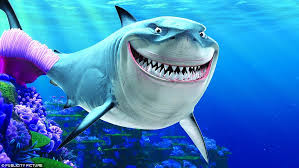
I am a...
a)
Fishivore
b)
Omnivore
c)
Carnivore
d)
Herbivore
47.

I am a monkey...I am also a
a)
Carnivore
b)
Apeivore
c)
Herbivore
d)
Omnivore
48.

Humans are...
a)
Omnivores
b)
Peepivores
c)
Herbivores
d)
Carnivores
49.

__________ is an organism that only eats plants for energy.
a)
Carnivore
b)
Herbivore
c)
Omnivore
d)
Terivore
50.

__________ is an organism that only eats meat for energy.
a)
Omnivore
b)
Borivore
c)
Herbivore
d)
Carnivore
51.

__________ is an organism that eats BOTH plants and animals for energy.
a)
Omnivore
b)
Darnivore
c)
Carnivore
d)
Herbiovre
52.
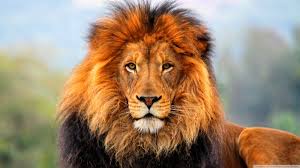
Lions only eat buffalo, antelopes, zebras and crocodiles. They are called __________.
a)
Omnivore
b)
Herbivore
c)
Carnivore
d)
Delivore
53.

Bears eat fish, insects, plants, seeds, nuts and young elk. They are called __________.
a)
Franivore
b)
Carnivore
c)
Herbivore
d)
Omnivore
54.

Elephants only eat leaves, fruit, nuts and grass. They are called __________.
a)
Omnivore
b)
Fortivore
c)
Herbivore
d)
Carnivore
55.

This type of eater has large, flat teeth used to grind down their food.
a)
Herbivore
b)
Omnivore
c)
Sarivore
d)
Carnivore
56.

This type of eater has sharp canine teeth used to penetrate its teeth into its food and tear.
a)
Morivore
b)
Omnivore
c)
Carnivore
d)
Herbivore
57.

I am a...
a)
Carnivore
b)
Herbivore
c)
Omnivore
d)
Ponyvore
58.

I am a...
a)
Herbivore
b)
Ratavore
c)
Omnivore
d)
Carnivore
59.
A producer?
a)
Eats other plants and animals
b)
Makes its own food
c)
Eats dead plants or animals
d)
Makes toys for kids
60.
A consumer?
a)
Makes its own food
b)
Eats dead plants and animals
c)
Eats plants and other animals for energy
d)
Buys toys for kids
61.
A decomposer?
a)
Eats dead plants or animals and breaks down to put nutrients in the soil
b)
Eats plants or other animals for food
c)
Makes its own food
d)
Machine that gathers trash
62.
If an animal becomes extinct, which part of the food chain is affected?
a)
The whole food chain is affected
b)
Only animals at the top of the food chain are affected
c)
Only animals at the bottom of the food chain are affected
63.
Which is an example of a producer?
a)
A Human
b)
A Spider
c)
A Tree
d)
A Caterpillar
64.
What do you call an animal that hunts and eats other animals?
a)
Prey
b)
Producer
c)
Predator
d)
Decomposer
65.
Bacteria and Fungi are examples of___________
a)
Decomposers
b)
Producers
c)
Consumers
d)
Herbivores
66.
Which is an example of a carnivore?
a)
Rabbit
b)
Dog
c)
Lion
d)
Chicken
67.
How do decomposers help other organisms in an ecosystem?
a)
They break down dead plants and animals and add nutrients back into the soil
b)
They use the sun to make food
c)
Decomposers only break down dead plants
d)
They do not help other organisms in an ecosystem
68.

What does a food chain represent?
a)
How all living organisms within a habitat are connected.
b)
All of the things that a particular animal eats.
c)
How plants create their own food.
d)
A single path of energy transfer within a habitat.
69.
All energy on Earth ultimately comes from what source?
a)
Water
b)
Sun
c)
Consumers
d)
Oxygen
70.
The arrows in a food chain or web represents what?
a)
They point to the organism that is being eaten.
b)
It shows how sunlight flows within an ecosystem.
c)
They show what direction the energy is flowing between organisms.
d)
They represent how water is transferred within a habitat.
71.

What does a food web represent?
a)
All connections of energy flow throughout all organisms in a habitat.
b)
The specific ways that mutualism is carried out.
c)
A single pathway or energy flow between organisms.
d)
How carnivores get their food.
72.

An energy pyramid represents what?
a)
How much sunlight is available for the ecosystem to use.
b)
How much energy a particular organism needs.
c)
How much energy is needed to build a pyramid.
d)
The amount of energy available to the next 'feeder' in a food web.
73.
Why is there a limited amount of energy that can be passed on to the next feeding level?
a)
There is never enough sunlight available.
b)
Some ecosystems have limited resources.
c)
Organisms use some of the energy they get from eating.
d)
All the energy is available to be passed on.
74.

Why might an organism have more than one arrow coming from them in a food web?
a)
More than one organism may eat them.
b)
They may eat more than one other organism.
c)
This organism gets its energy from multiple sources.
75.

The largest group of organisms found in a food web would be:
a)
Primary Consumers
b)
Producers
c)
Decomposers
d)
Tertiary Consumers
76.

What may happen if the snowshoe hare was removed from the food web pictured?
a)
The insects in the habitat would increase.
b)
The shrew population would decrease due to being only hawk food source.
c)
The willow tree population would decrease.
d)
Foxes would dies due to no food source.
77.

The mouse in this food web would be considered a:
a)
Primary Consumer
b)
Producer
c)
Tertiary Consumer
d)
Secondary Consumer
78.

The shrew provides energy for the _______?
a)
cricket
b)
grasshopper
c)
frog
d)
snake
79.

What is this called?
a)
Food Web
b)
Food Chain
c)
Abiotic Factors
80.
If a frog is the prey, what could be the predator?
a)
Grass
b)
Insect
c)
Snake
d)
Snail
81.

Where does the energy start in this food chain?
a)
Plant
b)
Sun
c)
Deer
d)
Wolf
82.

Which organism do the owl and the weasel compete for in the food web?
a)
Hawk
b)
Spider
c)
Grasshopper
d)
Shrew
83.

Does this food web have arrows pointing the right way?
a)
Yes
b)
No
84.

Which of the following best describes the small bird in the food web above?
a)
primary and secondary consumer
b)
secondary and tertiary consumer
c)
primary consumer only
d)
secondary consumer only
85.

Which of the following would be the most likely effect, if there were a sudden increase in the cricket population?
a)
There would be a decrease in the small bird population.
b)
There would be a decrease in the grass/flowers population.
c)
There would be a decrease in the mice population.
d)
There would be an increase in the grass/flowers population.
86.

Which organism has the most energy and which organism has the least amount of energy? Choose the best answer.
a)
mosquito and grass
b)
mouse and grass
c)
grass and owl
d)
grass and small bird
87.

Does this food web have arrows pointing the right way?
a)
yes
b)
no
100 %

