
 Worksheets
STAAR Science Review II
Total questions: 52
Worksheet time: 51mins
Name
Class
Date
1.

Which organism do the owl and the weasel compete for in the food web?
a)
Hawk
b)
Spider
c)
Grasshopper
d)
Shrew
2.

Which of the following is a herbivore?
a)
cricket
b)
frog
c)
hawk
d)
shrew
3.
What might happen if you remove a primary consumer from the ecosystem?
a)
There would be more food for secondary consumers.
b)
The number of primary consumers would increase.
c)
The number of plants would increase.
d)
The number of secondary consumers would increase.
4.

As a whole, Giants are considered hotter than White Dwarfs.
a)
True
b)
False
5.

In the diagram given, what happens as we move to the left?
a)
Stars Get Larger
b)
Stars get Colder
c)
Stars get hotter
6.
Compared to the rest of the stars, our sun is considered...
a)
Extremely Large and Cold
b)
Small with a medium temperature
c)
Medium size with medium temperature
7.
The category that contains the most stars is...
a)
Main Sequence
b)
Supergiants
c)
Giants
8.
A[n] ______________ tide occurs when the sun is at right angles to the line between Earth and the moon.
a)
high
b)
neap
c)
low
d)
spring
9.
Differences in the moon's and sun's pull on different sides of the Earth cause _________.
a)
gravity
b)
lunar phases
c)
tides
d)
dabbing
10.
Water flows toward the high tides, halfway between them causing ____________.
a)
neap tide
b)
high tide
c)
spring tide
d)
low tides
11.
When the Northern Hemisphere is pointing towards the sun, what season is the Southern Hemisphere?
a)
Winter
b)
Spring
c)
Fall
d)
Summer
12.
What are the reasons for the seasons?
a)
Earth's tilt and rotation.
b)
Earth's rotation and revolution.
c)
Earth's tilt and revolution.
d)
Earth's tilt and resolution
13.
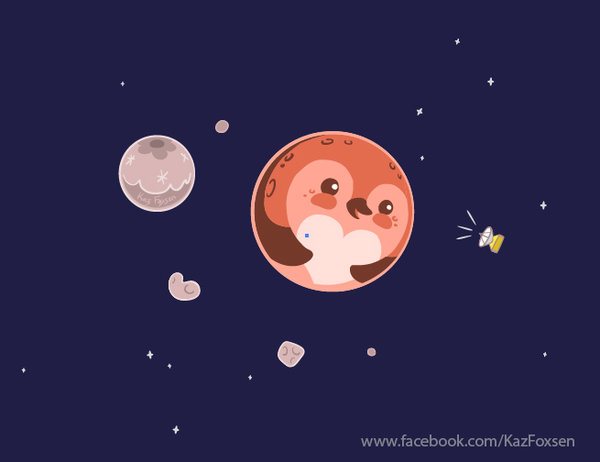
Waxing means...
a)
Growing
b)
Dying
c)
Losing light
d)
Moving
14.
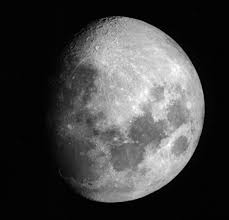
Name the moon phase
a)
waning crescent
b)
waxing crescent
c)
waning gibbous
d)
waxing gibbous
15.
About how long does it take the moon to make one complete cycle around the earth?
a)
65 days
b)
8 days
c)
365 days
d)
28 days
16.
A ___________ is an arrangement of elements in columns
a)
columns
b)
rows
c)
periodic table
d)
electron shell
17.
In the modern periodic table elements are arranged by:
a)
atomic mass
b)
atomic number
c)
valence electrons
d)
number of isotopes
18.
Each column in the periodic table is called a
a)
period
b)
group
c)
cluster
d)
unit
19.
The atomic number tells you what?
a)
number of electrons
b)
number of protons
c)
number of neutrons
d)
both electrons and protons in an atom.
20.

The atoms along the staircase are called
a)
metals
b)
nonmetals
c)
metalloids
d)
noble gases
21.
Element or compound?
H2O
H2O
a)
element
b)
compound
22.
How many elements are in C6H12O6?
a)
1
b)
2
c)
3
d)
4
23.
A chemical change is?
a)
a shoe lace cut in half
b)
doesn't change anything
c)
changes the look of an object
d)
change that results in the formation of new chemical substances
24.
The arrow symbol used in a chemical equation
a)
Yield sign
b)
Subscript
c)
Coefficient
d)
Chemical formula
25.
How many Hydrogen atoms are in H2O?
a)
zero
b)
one
c)
two
d)
three
26.
How many atoms of carbon (C) are in C6H12O6?
a)
3
b)
6
c)
12
d)
24
27.
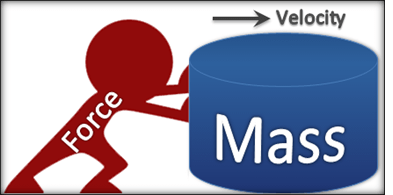
a)
1st
b)
2nd
c)
3rd
28.
Object at rest stays at rest.
a)
1st
b)
2nd
c)
3rd
29.
Acceleration is due to a force put on an objects mass.
a)
1st
b)
2nd
c)
3rd
30.

What is happening in this graph from point A to B?
a)
The object is accelerating.
b)
The object is not moving.
c)
The object is decelerating.
d)
The object is moving at a constant speed.
31.
2. Which of the following objects is not changing its velocity?
a)
A golf ball rolling down a ramp
b)
A skateboard rolling up a hill
c)
A cue ball rolling forward at a constant speed
d)
A marble going around the curve in a track
32.
Acceleration describes how an object’s velocity is changing. Which of the following scenarios provides the best example of an accelerating object?
a)
A car driving at a constant speed
b)
A book sitting on top of a high shelf
c)
A toy train traveling in a circle
d)
A toy boat floating in a bathtub
33.
Barnacles create home sites by attaching themselves to whales.
a)
mutualism
b)
commensalism
c)
parasitism
34.
Ticks feed on deer blood to the deer’s detriment.
a)
mutualism
b)
commensalism
c)
parasitism
35.
As buffaloes walk through the grass, insects become active & aggravating to the buffaloes and are seen and eaten by cowbirds.
a)
commensalism
b)
mutualism
c)
parasitism
36.
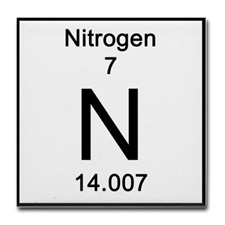
What is the number of protons that the element in this image contain?
a)
14
b)
7
c)
15
d)
18
37.
The first energy level can hold up to how many electrons?
a)
8
b)
4
c)
2
d)
5
38.
all matter is made of what
a)
energy
b)
atoms
c)
electrons
d)
compounds
39.
The positive particles of an atom are
a)
electrons
b)
positrons
c)
neutrons
d)
protons
40.
Particles in an atom that are neutral and have no charge are
a)
negatrons
b)
electrons
c)
neutrons
d)
protons
41.
An atoms overall charge is
a)
positive
b)
depends on its mood
c)
neutral
d)
negative
42.

What weather map symbol is this:
a)
Cold front
b)
Warm front
c)
Stationary front
d)
Occluded front
43.

In which direction is this front moving:
a)
west
b)
northwest
c)
southeast
d)
south
44.
The main reason land and sea breezes exist is because:
a)
the earth revolves around the sun
b)
the earth is tilted on an axis
c)
of the temperature difference between land and water
d)
of global warming
45.
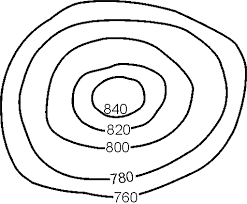
Determine the contour interval:
a)
5 m
b)
10 m
c)
15 m
d)
20 m
46.
What do contour lines that are farther apart represent?
a)
waterfall
b)
steep area
c)
gentle slope
d)
river
47.

How many mountain tops does this map have?
a)
one
b)
two
c)
three
d)
four
48.

What type of plate boundary is this?
a)
Plate
b)
Divergent
c)
Convergent
d)
Transform
49.
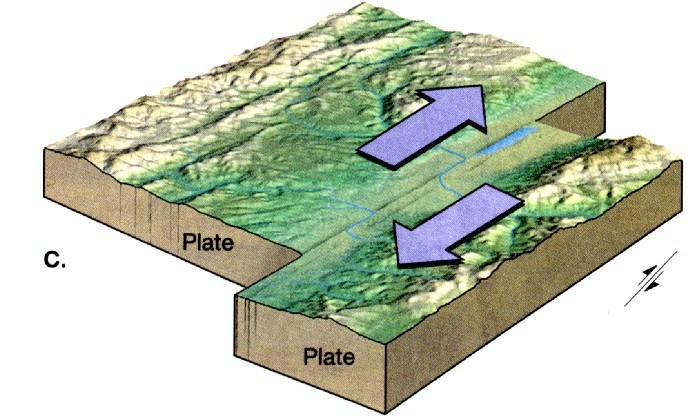
What type of plate boundary is this?
a)
Transform
b)
Convergent
c)
Divergent
d)
Plate
50.
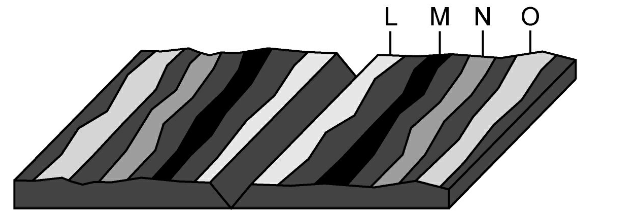
Where would the oldest rock be found?
a)
L
b)
M
c)
N
d)
O
51.
How is it possible for new crust to be formed without increasing the surface area of the Earth?
a)
Crust is destroyed at the same time it is created
b)
New crust is underwater where it sinks
c)
New crust breaks more easily than old crust
52.
Mountains are created when....
a)
Two continental plates collide
b)
Two oceanic plates pull apart
c)
An Oceanic plate subducts under a Continental Plate
d)
Two continental plates pull apart
100 %

