
 Worksheets
Levels of Organization and Changes in Population
Total questions: 25
Worksheet time: 17mins
Name
Class
Date
1.
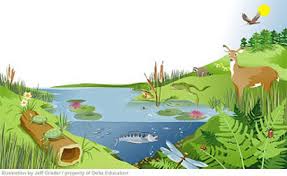
All living things
a)
biotic
b)
abiotic
c)
biosphere
d)
biome
2.

Any of the non-living factors that make up the environment in which living organisms occur.
a)
abiotic
b)
biotic
c)
abiology
d)
antibiotic
3.
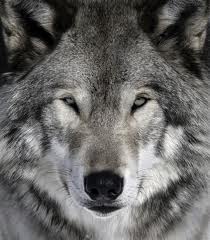
Group of organisms that are able to interbreed and produce young.
a)
Species
b)
habitat
c)
niche
d)
community
4.
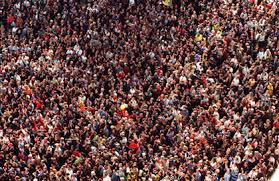
All individuals of a given species in a specific area at a certain time.
a)
population
b)
community
c)
ecosystem
d)
biome
5.
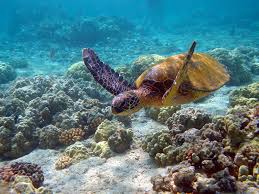
The place where an organism lives in order to obtain its food, water, and shelter.
a)
species
b)
habitat
c)
niche
d)
community
6.

The role of an organism in its environment.
a)
habitat
b)
niche
c)
community
d)
species
7.
All the different populations living together in a specific area/region at a certain time.
a)
population
b)
community
c)
ecosystem
d)
biome
8.

A (or more than one) biotic community plus the abiotic features.
a)
Population
b)
Community
c)
Ecosystem
d)
Biome
9.

Similar ecosystems on earth together.
a)
Ecosystem
b)
Biome
c)
Biosphere
d)
Population
10.
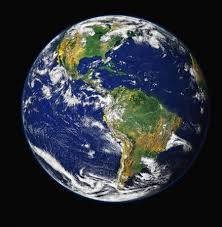
Whole living layer around the globe.
a)
Population
b)
Ecosystem
c)
Biome
d)
Biosphere
11.

The maximum number of organisms that can survive in a particular ecosystem.
a)
carrying capacity
b)
birth rate
c)
limiting factor
d)
death rate
12.
When the availability of food, water,space and shelter become less than what populations need.
a)
carrying capacity
b)
limiting factor
c)
exponential growth
d)
population density
13.

What can limit an area's carrying capacity?
a)
Lack of predators
b)
abundance of food
c)
disease
d)
all of the above
14.

Any naturally occurring event that has a an effect on the ecosystem.
a)
Natural Hazard
b)
Limiting Factors
c)
Climate
d)
Natural Selection
15.

Anything that prevents a population from growing larger.
a)
Natural Hazard
b)
Limiting Factor
c)
Natural Selection
d)
Growth
16.

The temperature and amount of rainfall in a particular environment.
a)
Climate
b)
Precipitation
c)
Temperature
d)
Biome
17.

If the temperature and amount of rainfall changes in an area from what is normal, this can also change the population.
a)
True
b)
False
18.

Organisms require a certain amount of food, water, space, and shelter in order to survive and reproduce.
a)
True
b)
False
19.

Changes in the amount of available resources in an ecosystem is not a limiting factor.
a)
True
b)
False
20.

If a disease destroying barley plants in a field swept through an ecosystem, what would happen to the barley eating bird population in the the field ?
a)
The bird population would stay the same
b)
The bird population would infinitely increase
c)
The bird population would decrease
21.

When a population grows past the ecosystem's carrying capacity, what happens to the population?
a)
Continues to grow
b)
The population starts to die off to return to carrying capcity
c)
The population will go extinct due to lack of resources
d)
The population grows then finds a new carrying capacity
22.

What is the carrying capacity of the graph?
a)
around 500
b)
more than 500
c)
less than 500
d)
around 600
23.

What are the biotic factors in this image?
a)
sunlight, elephants, and grasses
b)
sunlight, water, and air
c)
elephants, plants, trees
24.

What are the abiotic factors in this image?
a)
water, sunlight, dirt, air
b)
birds and plants
c)
water, plants, and birds
25.

Which of the following best describes a community?
a)
sharks, groupers, anemones and shrimp on a coral reef
b)
decorator crabs on the seafloor
c)
loggerhead sea turtles in Atlantic
d)
prairie grassland in Wyoming
100 %

