
 Worksheets
Speed, Velocity and Acceleration
Total questions: 27
Worksheet time: 52mins
Name
Class
Date
1.
What is speed?
a)
how far you go
b)
how much distance is covered over a period of time
c)
how fast you accelerate
d)
the change in the location of a object
2.
What is velocity?
a)
the quickness of an object
b)
the location of an object
c)
acceleration
d)
speed in a specific direction
3.
Shona cycles at an average speed of 8km/h. How far has she travelled if she cycles for 4 hours?
a)
55km
b)
32km
c)
43km
d)
32miles
4.
How far will a person go if they jog for 2 hours at a speed of 12 km/hr?
a)
6 km
b)
0.5 km
c)
10 km
d)
24 km
5.
Which of the following is a unit for acceleration?
a)
km/s
b)
m/s2
c)
mi/hr
d)
ft
6.
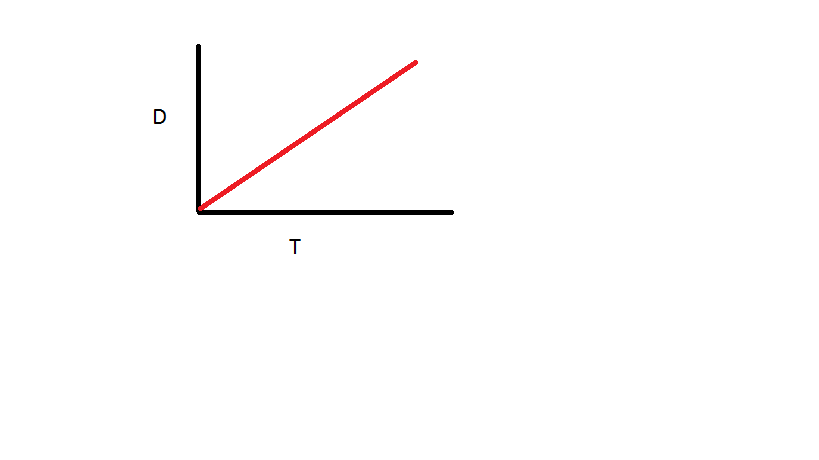
The graph represents
a)
Acceleration
b)
No motion
c)
Deceleration
d)
Constant Velocity
7.
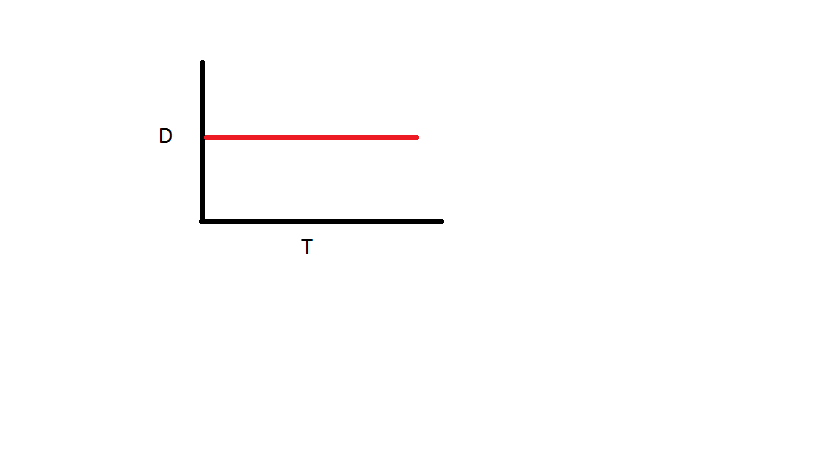
The graph represents
a)
No motion
b)
Constant velocity
c)
Acceleration
d)
Deceleration
8.

The graph represents
a)
no motion
b)
constant velocity
c)
acceleration
d)
negative acceleration
9.

What is happening at D?
a)
Stationary
b)
Accelerating
c)
Fast steady speed; moving away from the starting position
d)
Slower steady speed; moving away from the starting position
10.

What is happening at E?
a)
Stationary
b)
Accelerating
c)
Fast steady speed; moving away from the starting position
d)
Steady speed; returning to start position
11.

Which runner won the race?
a)
A
b)
B
c)
C
12.
An object is _____ if its position changes relative to another object.
a)
in motion
b)
at reset
c)
a frame of refence
d)
magical
13.
A place or object used for comparison to determine if another object is in motion is called a
a)
comparison point
b)
reference point
c)
point of view
d)
motion detector
14.
An object's inertia depends on its....
a)
mass
b)
volume
c)
energy
d)
gravity
15.
Momentum depends on ________ and _________
a)
mass and weight
b)
weight and inertia
c)
velocity and weight
d)
mass and velocity
16.
Acceleration is a change in....
a)
speed
b)
velocity
c)
displacement
d)
position
17.
________resists a change in motion of an object.
a)
centripetal acceleration
b)
inertia
c)
gravity
d)
mass
18.
Law of Conservation of Momentum states that.....
a)
the total momentum of objects in a collision is the same before and after a collision.
b)
momentum always changes
c)
momentum resists a change in motion
d)
momentum changes directions when objects collide
19.
To have momentum an object must be.....
a)
changing directions
b)
moving
c)
accelerating
d)
going at a constant rate
20.
The equation to calculate momentum is
a)
p=mv
b)
p=1/2mv2
c)
p=mgh
d)
p=mg
21.

What is the net force?
a)
40 N left
b)
0 N Balalnced
c)
400 N right
d)
40 N right
22.
What is Newton's Third Law?
a)
Object in motion stays in motion and an object at rest stays at rest unless acted on by a outside force
b)
Force = mass x acceleration
c)
For every action there is an equal and opposite reaction
23.

What happens when unbalanced forces act on an object at rest?
a)
the object remains at rest
b)
the object begins moving in an unpredictable direction
c)
the object begins moving in the direction of the net force
d)
the object begins moving opposite to the direction of net force
24.
F=MA
An object of mass 10 kg is accelerated upward at 2 m/s2. What force is required?
An object of mass 10 kg is accelerated upward at 2 m/s2. What force is required?
a)
20 N upward
b)
2 N East
c)
5 N downward
d)
0 N
25.
What is Newton's First Law
a)
F=ma
b)
Every action has an equal and opposite reaction
c)
An object at rest stays at rest, an object in motion stays in motion.
d)
Friction
26.
According to Newton's Third Law of Motion, when a hammer strikes and exerts a force on a nail, the nail
a)
disappears into the wood
b)
moves at a constant speed
c)
exerts an equal and opposite force back on the hammer
d)
creates a balanced force
27.
Name the opposing force to motion.......
a)
pull
b)
gravity
c)
friction
d)
lift
100 %

