
 Worksheets
Fetal Pig Anatomy
Total questions: 25
Worksheet time: 14mins

Identify the structure indicated by the arrow. It's a tongue like organ that is involved in producing and removing blood cells. It is also part of your immune system.
gallbladder
pancreas
spleen
stomach

Plays large role in the immune system and produces and destroys red blood cells.
kidney
liver
gallbladder
spleen
Small muscular pouch responsible for storing bile from the liver.
pancreas
mechanical
amylase
gallbladder

The red organ is the ___
stomach
small intestine
large intestine
liver
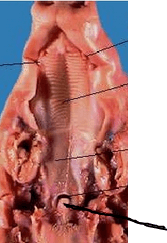
The flap that covers the glottis during swallowing is known as the
Tongue
Epiglottis
Esophagus
Pharynx

What is D? It is a blood vessel that supply oxygenated blood to the heart muscles
Lungs
Anterior vena cava
Coronary artery
Ductus arteriosus

What is B? It connects the kidneys to the bladder.
ureter
colon
vas deferens
spleen
Identify the organ. It filters your blood removing waste and creating urine.
Aortic arch (aorta)
Kidney
Small Intestine
Spleen

Identify this pig structure? It helps hold your digestive system in place.
pancreas
mesentery
pericardium
diaphragm


Name the structure indicated by the letter "B". A hard ring like organ that connects the larynx to the bronchial tubes. Also known as the windpipe.
trachea
esophagus
thymus
ureter

What is structure A? This structure produces bile and detoxifies the blood. It is the largest internal organ in your body.
liver
spleen
large intestine
small intestine


What is G? This structure secretes digestive enzymes into the digestive tract.
Duodenum
Spleen
Pancreas
Small Intestines


Which structure is C? It is contained in the male scrotum that produces sperm necessary for reproduction.
vas deferens
testicle
epididymis
urethra

Name the structure indicated by the number "42" in the picture. It secretes hormones such as insulin that regulates blood sugar and pancreatic juices that contain enzymes for helping with digesting foods (carbohydrates, lipids and proteins).
spleen
stomach
small intestine
pancreas
A flexible cord like structure in mammals that connects the placenta to the fetus during gestation. It carries nutrients to the fetus and wastes to the mother.
Ureters
Duodenum
Larynx
Umbilical Chord
The cavity that contains the heart and lungs
Abdominal Cavity
Cranium
Thoracic Cavity
Rib Cage
What is C? A large lobed like organ in the thoracic cavity that lies on both sides of the heart. The lungs are connected to the trachea which conveys oxygen to the bronchial structures and then to blood vessels to oxygenate the blood.
Lungs
Atrium
Coronary artery
Aorta

Identify structure 2 and 3. They are chamber of the heart (right and left) that receives blood as it returns to the heart.
on the heart.
Aorta
Ventricles
Pericardium membrane
Atrium
Identify structure 7 and 8. They are chambers of the heart (right and left) that pumps blood to the arteries.
Aorta
Ventricles
Pericardium membrane
Atrium

