
 Worksheets
Life Science Review
Total questions: 40
Worksheet time: 2hrs 32mins
Name
Class
Date
1.

Which of these best descries a method sexual reproduction in plants?
a)
Roots of lily plant are cut and replanted
b)
flowers from carrot plant pollinated and make seeds
c)
potato planted in ground grows a new stem
d)
runner from strawberry plant produces offspring
2.

An offspring that resulted from sexual reproduction has MOST likely received
a)
only dominant eyes from a single parent
b)
identical sets of genes from two different parents
c)
only chromosomes from1 parent one only genes from another parent
d)
same number of chromosomes from a male parent and a female parent
3.
Which of the following is the best description of an organ system?
a)
The human heart and lungs
b)
A group of similar cells working together to complete a specific task
c)
The structure of an organ
d)
A group of organs working together to complete a specific task
4.
Besides energy from the sun, what else does a plant require to complete photosynthesis?
a)
Wind energy
b)
Oxygen and carbon dioxide
c)
Oxygen and water
d)
Water and carbon dioxide
5.
What is the main difference between the offspring produced by sexual reproduction and asexual reproduction?
a)
Offspring produced sexually receive genetic material from one parent.
b)
Offspring produced by asexual reproduction receive genetic material from two parents.
c)
Offspring produced by sexual reproduction receive genetic material from two parents.
d)
Asexual and sexual reproduction are the same thing.
6.
What is the main purpose of the excretory system?
a)
to remove wastes
b)
to transport nutrients
c)
to move the body
d)
to respond to stimuli
7.

Which of the following correctly sequences the drawings from the simplest to most complex levels of organization?
a)
D, A, B, C,E
b)
E,C,A,D,B
c)
B,A,D,E,C
d)
B,D,A,C,E
8.

Which part produces pollen?
a)
W
b)
X
c)
Y
d)
Z
9.

Which part holds the ovules?
a)
W
b)
X
c)
Y
d)
Z
10.

Name the organelle at the arrow.
a)
mitochondrion
b)
ribosome
c)
chloroplast
d)
Golgi body
11.

What is the function of this organelle?
a)
store water
b)
absorb energy from the sun
c)
create proteins
d)
release ATP
12.
Which statement best describes a characteristic of a dominant gene?
a)
They are passes only to offspring in pairs
b)
They are passes only to female offspring
c)
They are masked by recessive alleles
d)
They mask recessive alleles even if only one is dominant
13.

C6H12O6 + 6O2 --> 6CO2 + 6H2O + ATP is the formula for what process used to make energy for non plant cells.
a)
cellular respiration
b)
photosynthesis
c)
Krebs cycle
d)
none of these
14.

Which of the following is NOT needed for plants to grow and thrive?
a)
glucose
b)
water
c)
oxygen
d)
`light
15.

What are the reactants (starting materials) of photosynthesis?
a)
CO2 and H2O
b)
C6H12O6
c)
CO2 + 6H2O + energy (sun)
d)
glucose and oxygen
16.

Most single-celled aquatic organisms use oxygen that is dissolved in water. When oxygen concentration in water is greater than the organism, oxygen passes through cell membrane of the organism. What is this process called?
a)
diffusion
b)
active transport
c)
photosynthesis
d)
respiration
17.

What is structure G?
a)
Stamen
b)
Anther
c)
Filament
d)
Ovule
18.

The Golgi Apparatus is which number?
a)
12
b)
4
c)
10
d)
6
19.
This organelle helps plants keep their rigid structure.
a)
Cell wall
b)
Cell membrane
c)
Chloroplast
d)
Nucleus
20.
This organelle moves materials throughout the cell.
a)
ER
b)
Ribosomes
c)
FedEx
d)
Golgi Complex
21.
This organelle makes proteins.
a)
Cell membrane
b)
Nucleus
c)
Ribosome
d)
ER
22.
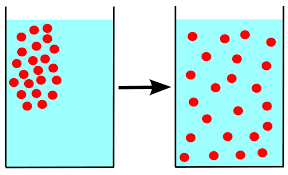
The picture below is an example of _________________.
a)
osmosis
b)
isotonic
c)
diffusion
d)
active transport
23.

After a living cell is placed in pure water, the cell will
a)
enlarge when water diffuses across the membrane into the cytoplasm
b)
shrink when large molecules are transported into the cytoplasm
c)
enlarge when water from inside the cell is carried out across the membrane
d)
shrink when sugars diffuse out of the cell across the membrane
24.

Directs all cell activities through the DNA located there.
a)
Lysosomes
b)
Nucleus
c)
ribosomes
d)
Mitochondria
25.

A student puts a stalk of wilted celery into a glass of water. After one hour, the celery was no longer wilted. Which sentence best explains why the celery stalk was no longer wilted?
a)
salt diffused out of the cells of the celery stalk
b)
salt diffused into the cells of the celery stalk
c)
water diffused out of the cells of the celery stalk
d)
water diffused into the cells of the celery stalk
26.

A student cutting of a rose plant was planted in a pot. Weeks later, the cutting grew roots and began to grow into a new rose plant. This is an example of the process
a)
pollination
b)
germination
c)
sexual reproduction
d)
asexual reproduction
27.
Some organisms are in an environment, water, soil, plant, frog. Which has the ability to absorb carbon dioxide (CO2) from the environment and produce glucose (C6H12O6)?
a)
plant
b)
water
c)
soil
d)
frog
28.

What body system consists of the kidneys?
a)
Circulatory
b)
Excretory
c)
Digestive
d)
Muscular
29.

The skin is the major organ in which system?
a)
Integumentary
b)
Muscular
c)
Endocrine
d)
Immune
30.

The liver is a part of which body system?
a)
Circulatory
b)
Digestive
c)
Excretory
d)
Respiratory
31.
Which of the following is the correct equation for PHOTOSYNTHESIS?
a)
6CO2 + light + 6H2O --> 6O2 + Sugar (C6H12O5)
b)
CO2 + sugar + H2O --> O2 + light
c)
O2 + light + H2O --> CO2 + Sugar
d)
CO2 + O2 + H2O --> Light+ Sugar
32.

The "powerhouse" of the cell- it makes energy for the cell.
a)
Nucleus
b)
Vacuole
c)
Mitochondria
d)
Cell Wall
33.
This is your body's largest organ.
a)
heart
b)
skin
c)
lungs
d)
intestines
34.

_______ regulates what enters and leaves a cell.
a)
Cell Membrane
b)
Nucleus
c)
Mitochondria
d)
Cytoplasm
35.

Prokaryotes (bacteria) reproduce asexually via -
a)
spore formation
b)
bud creation
c)
vegetative propagation
d)
binary fission
36.
2 parents needed.
a)
asexual
b)
sexual
37.
one parent needed.
a)
sexual
b)
asexual
38.

What is (2) showing?
a)
binary fission
b)
budding
c)
sporulation
d)
vegetative propagation
39.

What asexual process is shown in the picture?
a)
vegetative propagation
b)
binary fission
c)
regeneration
d)
budding
40.

The rabbit's ORIGINAL source of energy is from the...
a)
plant
b)
sun
c)
ATP
d)
glucose
100 %

