
 Worksheets
EOYR
Total questions: 210
Worksheet time: 2hrs 28mins
Name
Class
Date
1.
Atomic Theory:
Used air pressure and water vapor to prove his theory that matter is made of atoms that are one solid piece.
Used air pressure and water vapor to prove his theory that matter is made of atoms that are one solid piece.
a)
Dalton
b)
Bohr
c)
Rutherford
d)
Thomson
2.

Who's atomic theory lead to this model of the atom.
a)
Thomson
b)
Dalton
c)
Bohr
d)
Schrodinger
3.
Atomic Theory:
This scientist used cathodes to discover charged particles in atoms changing what the model of an atom looks like. Known as plum pudding model.
This scientist used cathodes to discover charged particles in atoms changing what the model of an atom looks like. Known as plum pudding model.
a)
Bohr
b)
Thomson
c)
Rutherford
d)
Bohr
4.

Who's atomic theory lead to this model of the atom?
a)
Thomson
b)
Bohr
c)
Dalton
d)
Rutherford
5.
Atomic Theory:
This scientist shot positive charges at gold foil and discovered a dense central mass of protons.
This scientist shot positive charges at gold foil and discovered a dense central mass of protons.
a)
Schrodinger
b)
Bohr
c)
Rutherford
d)
Dalton
6.

Who's atomic theory lead to this model of the atom.
a)
Rutherford
b)
Bohr
c)
Thomson
d)
Schrodinger
7.
Atomic Theory:
This scientist believed that the electrons had set energy levels at set distances from the nucleus. Each electron level had to be filled before moving out to the next level.
This scientist believed that the electrons had set energy levels at set distances from the nucleus. Each electron level had to be filled before moving out to the next level.
a)
Bohr
b)
Rutherford
c)
Schrdinger
d)
Thomson
8.

Who's atomic theory lead to this model of the atom?
a)
Bohr
b)
Rutherford
c)
Dalton
d)
Thomson
9.
Atomic Theory:
This scientist mathematically proved that electrons are in zones around the nucleus, and one can only predict where electrons should be. The modern cloud theory
This scientist mathematically proved that electrons are in zones around the nucleus, and one can only predict where electrons should be. The modern cloud theory
a)
Schrodinger
b)
Bohr
c)
Thomson
d)
Rutherford
10.

Who's atomic theory lead to this model of the atom.
a)
Schrdinger
b)
Bohr
c)
Rutherford
d)
Thomson
11.
What are the 3 states of matter?
a)
solid, liquid, air
b)
liquid, solid, gas
c)
gas, liquid, helium
d)
solid, putty, plasma
12.
What 2 things must something have to be called matter?
a)
mass and weight
b)
cm and ml
c)
mass and volume
d)
weight and volume
13.
What do you measure to find out how much space an object takes?
a)
volume
b)
mass
c)
weight
d)
length
14.
_________________ is determined by the pull of gravity on an object.
a)
Mass
b)
Volume
c)
Length
d)
Weight
15.
Which type of scale is used to measure mass?
a)
balance
b)
spring
16.
Which of the following lists are composed of only matter?
a)
helium, gas, milk, electricity
b)
heat, soil, toothpaste, water
c)
bacteria, mud, basketball, water
d)
cells, fear, paper, the sun
17.
Which object is not matter?
a)
air
b)
balloon
c)
sound
d)
moon
18.
How would your mass change on the moon?
a)
Mass would not change.
b)
Mass would increase.
c)
Mass would decrease.
19.
How would weight would change if you went to the moon?
a)
Weight would not change.
b)
Weight would increase.
c)
Weight would decrease.
20.
What is the name of the process used to find the volume of and irregularly shaped object?
a)
L x W x H
b)
Pouring method
c)
Displacement method
d)
Scientific method
21.
compounds are chemically bounded together
a)
False
b)
true
c)
I don't know?
22.
Can an element be broken down into a simpler substance
a)
yes
b)
No
23.
Are there any compounds on the periodic table
a)
yes there are many
b)
no because only elements are on the periodic table
c)
I think they are?
24.
Which one has more than one type of atom in it
a)
Element
b)
Compound
25.
which one only has one type of atom In it.
a)
Element
b)
compound
26.
Is salt (NaCI) a compound or a element
a)
Compound
b)
element
27.
which one can be found on the periodic table
a)
Compound
b)
Element
28.

a)
1
b)
2
c)
3
d)
4
29.

a)
1
b)
2
c)
3
d)
4
30.
How many elements are represented in the compound?
Na2CO3
Na2CO3
a)
1
b)
2
c)
3
d)
4
31.
Which of the following an element?
a)
Carbonic Acid
b)
Copper
c)
Iron and Copper
d)
Water
32.
What is made up two or more elements that are chemically combined?
a)
Element
b)
Mixture
c)
Compound
d)
Solids
33.
What cannot be broken down into other substances?
a)
Compound
b)
Mixture
c)
Solids
d)
Element
34.
Which of the following represents an element?
a)
H2O
b)
H2
c)
NaCl
d)
CaCO3
35.
Which of the following is not a compound?
a)
HCl
b)
Cl
c)
NaCl
d)
CO2
36.
Salt water boils and the water completely evaporates, salt (NaCl) is left in the bottom of the beaker. Which of the following is left in the beaker?
a)
Compound
b)
Element
c)
Mixture
d)
None of the Above
37.
Water is an example of:
a)
compound
b)
element
c)
solution
38.
A combination of substances that are not chemically combined is called a(n)____________.
a)
mixture
b)
compound
c)
physical
39.
Mixtures are separated through ___________changes.
a)
mixture
b)
compound
c)
physical
40.
How is a compound different from a mixture?
a)
Solids, liquids, and gases can form compounds
b)
Each substance in a compound loses its characteristic properties
41.

This picture represents which of the following?
a)
element
b)
compound
c)
mixture
42.

This picture represents which of the following?
a)
element
b)
compound
c)
mixture
43.

This picture represents which of the following?
a)
element
b)
compound
c)
mixture
44.
A ___________ is an arrangement of elements in columns
a)
columns
b)
rows
c)
periodic table
d)
electron shell
45.
In the modern periodic table elements are arranged by:
a)
atomic mass
b)
atomic number
c)
valence electrons
d)
number of isotopes
46.
Each row in the periodic table is called a
a)
group
b)
period
c)
cluster
d)
unit
47.
Each column in the periodic table is called a
a)
period
b)
group
c)
cluster
d)
unit
48.
The atomic number tells you what?
a)
number of electrons
b)
number of protons
c)
number of neutrons
d)
both electrons and protons in an atom.
49.
The family in the periodic table that contains the most reactive metals is the_______
a)
Alkaline Earth Metals
b)
Transition Metals
c)
Alkali Metals
d)
Other Metals
50.
Which group of the periodic table is composed of inert (not reactive) gases?
a)
alkali metals
b)
alkaline earth metals
c)
halogens
d)
noble gases
51.
Particles in an atom's nucleus that are neutral and have no charge are
a)
megatrons.
b)
electrons.
c)
neutrons.
d)
protons.
52.
A negatively charged particle that moves around the nucleus is a(n)
a)
proton
b)
neutron
c)
electron
d)
quark
53.

The atomic number of this pictured element is
a)
28
b)
58.6934
c)
Ni
d)
Nickel
54.
How many electrons do atoms need to be stable?
a)
1
b)
2
c)
6
d)
8
55.
Elements which are shiny, conduct electricity and heat are called
a)
metal
b)
nonmetal
c)
metalloid
d)
nonexistent
56.
Two elements chemically bonded form
a)
element
b)
compound
c)
mixture
d)
solutions
57.
Two dry elements mixed together form
a)
element
b)
compound
c)
mixture
d)
solutions
58.
Two elements mixed together in a liquid form
a)
element
b)
compound
c)
mixture
d)
solutions
59.

What does the H stand for?
a)
Hydrogen
b)
atomic number
c)
atomic mass
d)
atomic explosion
60.

What does the 1 stand for?
a)
Hydrogen
b)
atomic number
c)
atomic mass
d)
atomic explosion
61.

What does the 1.00794 stand for?
a)
Hydrogen
b)
atomic number
c)
atomic mass
d)
atomic explosion
63.

The yellow atoms are called
a)
metals
b)
nonmetals
c)
metalloids
d)
noble gases
63.
The yellow atoms are called
a)
metals
b)
nonmetals
c)
metalloids
d)
noble gases
64.

The atoms along the staircase are called
a)
metals
b)
nonmetals
c)
metalloids
d)
noble gases
65.
What does Li mean?
a)
Lanthanum
b)
Lawrencium
c)
Lutetium
d)
Lithium
66.
what is I?
a)
lithium
b)
indium
c)
iodine
d)
idk
67.
An isotope is the same element with a different number of...? (4.3)
a)
Protons
b)
Neutrons
c)
Electrons
68.
Which of the 4 major groups is the largest? (4.4)
a)
Metals
b)
Semimetals
c)
Nonmetals
d)
Inert/Noble Gases
69.
Which element is not in the Alkali metal family?
a)
Li
b)
H
c)
Fr
d)
Cs
70.
Which element is not a metal?
a)
H
b)
Re
c)
Al
d)
B
71.
Elements on the right side of the of the zigzag line are normally?
a)
non metals
b)
metals
c)
metalloids
d)
rare earth metals
72.

what does the 6 represent?
a)
Atomic mass
b)
atomic number
c)
chemical symbol
d)
element name
73.
Sulfur
a)
Metal
b)
Nonmetal
74.
Good conductor of heat
a)
Metal
b)
Nonmetal
75.
If a material can easily be drawn into the shape of a wire, it is
a)
Ductile
b)
Magnetic
c)
Malleable
d)
Reactive
76.
Which of the following is NOT a characteristic of most metals?
a)
Brittle
b)
Good conductor
c)
Ductile
d)
Malleable
77.
Which of these is a property of metals?
a)
It's malleable
b)
It can't conduct electricity
c)
They are used in food
d)
It's very brittle
78.
Which of these grouping of elements could have the characteristic of luster (shiny)?
a)
Metal
b)
Nonmetal
c)
metalloids
d)
Both metals and metalloids
79.
______________________ is the ability of an object to carry electric current.
a)
Thermal conductivity
b)
Electrical conductivity
c)
Malleable
d)
Ductile
80.

What are two properties that make a metal a GOOD choice to use as a wire in electronics?
a)
Conductivity, malleability
b)
Ductility, Conductivity
c)
Luster, maleability
d)
Malleability, high density
81.
If a substance is a gas at room temperature it is most likely a
a)
metal
b)
non-metal
82.
Brittle
a)
Metal
b)
Nonmetal
83.
Why do ionic bonds form?
a)
so the number of protons equals the number of electrons
b)
to fill the outermost energy level
c)
so an atom can become unstable
84.
An electron has what kind of charge?
a)
no charge
b)
positive
c)
negative
d)
it depends
85.
a proton has what charge?
a)
positive
b)
negative
c)
no charge
d)
it depends
86.
When the number of electrons equals the number of protons the atom has what charge?
a)
sponge bob
b)
positive charge
c)
negative charge
d)
neutral charge
87.
An atom that has gained or lost electrons is called ...
a)
a winner
b)
an isotope
c)
an ion
d)
a loser
88.
Atoms that lose electrons become...
a)
negatively charged
b)
postively charged
c)
remain neutral, no charge
d)
losers
89.
Atoms that gain electrons become...
a)
negatively charged
b)
positively charged
c)
remain neutrally charged
d)
21
90.
What is released when an ionic bond forms?
a)
butterflies
b)
cats
c)
dogs
d)
energy
91.
For an atom to LOSE and electron what has to be broken?
a)
The attraction between the electrons and protons
b)
the attraction between the electrons and neutrons
c)
The attraction between the protons
d)
The attraction between the electrons
92.
metals need how much energy to lose their valence electrons
a)
a large amount of energy
b)
a small amount of energy
c)
no energy needed
d)
What's energy?
93.
if METALS are more likely to LOSE electrons, they will form ...
a)
anions
b)
neutral atoms
c)
positive ions
d)
negative ions
94.
How do negative ions form?
a)
by losing electrons
b)
by gaining electrons
c)
by gaining protons
d)
by being a bully
95.
If an aluminum atom has 13 protons (+) and 10 electrons (-), what is it's charge?
a)
Al3+
b)
Al13+
c)
Al10+
d)
Al10-
96.
If an oxygen atom has 8 protons (+) and 10 electrons (-), what is it's charge?
a)
O10-
b)
O8+
c)
O2-
d)
O10+
97.
What are ionic bonds?
a)
valence electrons transferred between atoms
b)
Inner most electrons transferred between atoms
98.
Boiling
a)
liquid to gas
b)
gas to solid
c)
gas to liquid
d)
solid to liquid
99.
Particles (molecules) in a ______________________ have more energy than the other states of matter.
a)
gas
b)
solid
c)
liquid
100.
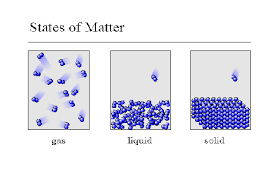
At higher temperatures
a)
particles in an object have less energy
b)
particles in an object move faster
c)
a gas contracts
101.
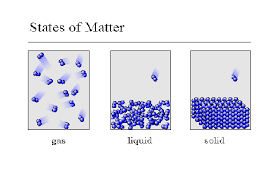
A gas
a)
has a definite shape but no definite volume
b)
has a definite volume but no definite shape
c)
has fast-moving particles
102.
Freezing
a)
Solid to gas
b)
Liquid to solid
c)
Gas to solid
d)
Liquid to gas
103.
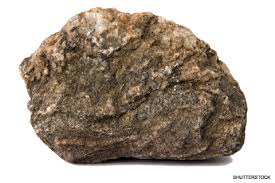
Which state of matter has tightly packed molecules?
a)
solid
b)
liquid
c)
gas
104.
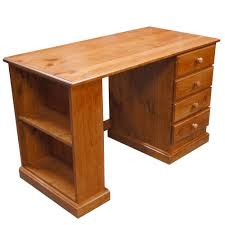
Which state of matter has a definite shape?
a)
solid
b)
liquid
c)
gas
105.
What is happening when my ice cream changes from a solid to a liquid?
a)
freezing
b)
melting
c)
burning
d)
evaporation
106.
Define a liquid.
a)
Indefinite shape, indefinite volume
b)
Definite shape, definite volume
c)
Found in stars
d)
Definite volume, indefinite shape
107.
Particles of a liquid
a)
are tightly packed together and stay in a fixed position.
b)
have no viscosity.
c)
decrease in volume with increasing temperature.
d)
are free to move around one another but still touch.
108.
What term describes a solid changing to a gas?
a)
Deposition
b)
Sublimation
c)
Evaporation
d)
Freezing
109.
Particles (molecules) in a ______________________ have more energy than the other states of matter.
a)
gas
b)
solid
c)
liquid
110.
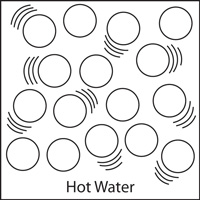
The speed of the molecules determines the _____.
a)
volume
b)
density
c)
pressure
d)
temperature
111.
What is condensation?
a)
gas to solid
b)
gas to liquid
c)
liquid to solid
d)
solid to liquid
112.

In this image, what are the symbols in red are called the_______.
a)
Products
b)
Reactants
c)
Subscripts
d)
Coefficients
113.

In this image, the symbols to the right of the arrow (in black) are called the_______.
a)
Products
b)
Reactants
c)
Subscripts
d)
Coefficients
114.
Read the following chemical formula: C6H12O6. How many hydrogen atoms are in the formula?
a)
12
b)
6
c)
4
115.
The law of conservation of mass states that....
a)
Matter can be made
b)
Matter can be destroyed
c)
Matter cannot be made or destroyed
116.

This is used to represent the amount of each atom in a molecule. What is the arrow pointing to?
a)
Exponent
b)
Coefficient
c)
Molecule
d)
Subscript
117.

This appears on the left side of a chemical formula, and represents how many molecules there are.... What is highlighted in yellow?
a)
Atom
b)
Subscript
c)
Molecule
d)
Coefficient
118.

How many Iron (Fe) atoms are in this chemical formula?
a)
2 iron atoms
b)
6 iron atoms
c)
5 iron atoms
d)
4 iron atoms
119.
If a chemical equation is BALANCED, is the mass being conserved?
a)
Yes
b)
No
120.

A group of atoms bonded together.
a)
A Molecule
b)
Coefficient
c)
Subscript
d)
An Atom Party
121.
The ability to be bent, flattened, or hammered without breaking is called?
a)
flexibilty
b)
softness
c)
pliability
d)
malleabiilty
122.
The boiling point of water is ______.
a)
0°C
b)
32°C
c)
100°C
d)
50°C
123.
Which is not a chemical property?
a)
flammability
b)
toxicity
c)
color
124.
Which item is more dense than water (sinks)?
a)
Styrofoam Cup
b)
Wooden Block
c)
Silverware
d)
Beach Ball
125.
Which item is more dense than water (sinks)?
a)
Styrofoam Cup
b)
Wooden Block
c)
Silverware
d)
Beach Ball
126.

What is the volume of the rock? The water level is displaced from 20 mL to 23 mL with the rock.
a)
3 mL
b)
23 mL
c)
20 mL
d)
43 mL
127.
what is burning?
a)
physical change
b)
physical property
c)
chemical change
d)
chemical property
128.
which one is a chemical property?
a)
odor
b)
combustibility
c)
solubility
d)
all of the above
129.
which one is a physical change?
a)
evaporation
b)
energy
c)
sublimation
d)
evaporation and sublimation
130.
what is condensing?
a)
physical property
b)
chemical property
c)
chemical change
d)
physical change
131.
what is solubility?
a)
chemical property
b)
physical property
c)
george
d)
chemical change
132.
what is digestion?
a)
body function
b)
chemical change
c)
physical change
133.
The kind of heat transfer that travels through space in electromagnetic waves is ______________________.
a)
insulation.
b)
Radiation
c)
Conduction
d)
Convection
134.
In heat transfer, heat always flows from the _______________ substance to the _______________ substance.
a)
Hotter to colder
b)
Colder to hotter
c)
Hotter to hotter
d)
Colder to colder
135.
The type of heat transfer that happens through direct contact of molecules or particles with each other is ___________________.
a)
Convection
b)
Conduction
c)
Radiation
d)
insulation.
136.
___________________ is the type of heat transfer that occurs in fluids, such as warm air rising and cold air sinking; creating wind.
a)
Convection
b)
Conduction
c)
Radiation
d)
insulation.
137.
Which statement is true?
a)
The quicker a molecule moves, the colder it is.
b)
The slower a molecule moves, the warmer it is.
c)
The quicker a molecule moves, the warmer it is
d)
The movement on molecule don�t affect its temperature
138.
Two objects at different temperatures are in contact. Which of the following happens to their thermal energy?
a)
Their thermal energies remain the same.
b)
Thermal energy passes from the cooler object to the warmer object
c)
Thermal energy passes from the warmer object to the cooler object.
d)
Thermal energy passes back and forth equally between the two objects.
139.
Heat from warm sand at the beach moves through the atmosphere by what method of heat transfer?
a)
Convection
b)
Conduction
c)
Radiation
d)
insulation.
140.
When you use a microwave, what is the main way that heat is transferred?
a)
Convection
b)
Conduction
c)
Radiation
d)
insulation.
141.
The handle of a metal spoon warms up when it is placed in a hot bowl of soup because of
a)
Convection
b)
Conduction
c)
Radiation
d)
insulation.
142.
Which of the following is NOT a conductor?
a)
oven mitt
b)
curling iron
c)
iron skillet
d)
copper pipe
143.
A large house being heated by heater warms a house when the air is circulating.
a)
Convection
b)
Conduction
c)
Radiation
d)
insulation.
144.
Which of the following is the best example of conduction?
a)
A light bulb warming a lampshade
b)
An egg cooking in a frying pan
c)
Water boiling in a pot
d)
Gases circulating in the atmosphere
145.

A moving skateboard
a)
Potential
b)
Kinetic
146.
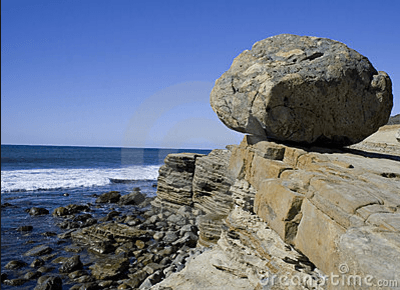
A rock at the edge of a cliff.
a)
Potential
b)
Kinetic
147.
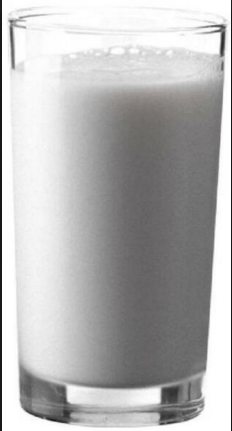
A glass of milk.
a)
Potential
b)
Kinetic
148.
Energy due to motion is ____________ energy.
a)
Potential
b)
Energy
c)
Kinetic
d)
Friction
149.
__________ is stored energy.
a)
Potential
b)
Kinetic
c)
None of the above
d)
All of the above
150.
When you are holding a book, energy is stored between the book and Earth; this type of energy is called ________ potential energy.
a)
Kinetic
b)
Elastic
c)
Gravitional
d)
Chemical
151.
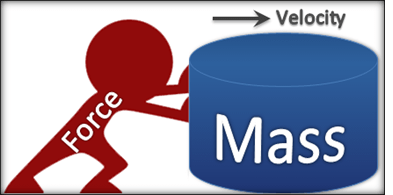
a)
1st
b)
2nd
c)
3rd
152.
What law is best described by inertia?
a)
1st
b)
2nd
c)
3rd
153.

a)
1st
b)
2nd
c)
3rd
154.

a)
1st
b)
2nd
c)
3rd
155.

a)
1st
b)
2nd
c)
3rd
156.

a)
1st
b)
2nd
c)
3rd
157.

a)
1st
b)
2nd
c)
3rd
158.
Object at rest stays at rest.
a)
1st
b)
2nd
c)
3rd
159.
Objects tendency to resist change
a)
Friction
b)
Inertia
c)
Force
d)
Gravity
160.
Force exerted between the surfaces of two objects.
a)
Friction
b)
Inertia
c)
Force
d)
Gravity
161.
Equal and Opposite
a)
1st
b)
2nd
c)
3rd
162.
Action/Reaction
a)
1st
b)
2nd
c)
3rd
163.
Push or Pull
a)
Friction
b)
Inertia
c)
Force
d)
Gravity
164.
What is an example of an inclined plane?
a)
crane
b)
slide
c)
bike
d)
see-saw
165.
What is an example of a wheel and axle?
a)
ax
b)
light bulb
c)
skateboard ramp
d)
bus tire
166.
What is an example of a pulley?
a)
slide
b)
flag pole
c)
ax
d)
chapstick
167.
Force X Distance = _______?
a)
Work
b)
Power
c)
Energy
d)
Force
168.

A fishing pole is an example of a compound machine. What simple machines are used to make up this compound machine?
a)
lever, wheel and axle, pulley
b)
wheel and axle, inclined plane, pulley
c)
wheel and axle, pulley, inclined plane
169.
Consists of two circular objects; a central shaft and a wheel.
a)
wheel and axle
b)
screw
c)
pulley
170.

a)
Lever
b)
Wheel and Axle
c)
Pulley
d)
Inclined Plane
171.

a)
Wedge
b)
Inclined Plane
c)
Lever
d)
Screw
172.
1. A _________is a simple machine with a fulcrum and a rigid bar.
a)
Pivot
b)
Lever
c)
Wedge
173.

3. Which type of lever is this?
a)
First Class Lever
b)
Second Class Lever
c)
Third Class Lever
174.
2. The place where a lever pivots is called the _______.
a)
Pivot point
b)
Tissue
c)
Fulcrum
175.
For a lever to be a first class lever the fulcrum needs to be ..
a)
between the load and the effort
b)
on one side and the load and effort on the other side
c)
on the same side as the load arm.
176.

6. What kind of lever is this?
a)
First Class Lever
b)
Second Class Lever
c)
Third Class Lever
177.
Which body part acts as the fulcrums of levers?
a)
lungs
b)
kidneys
c)
joints
d)
brain
178.
What happens when an object is opaque?
a)
all light is able to pass through
b)
no light is able to pass through
c)
some light is able to pass through
d)
it is black
179.
A convex lens curves ____________.
a)
outward
b)
inward
c)
opaque
d)
refracts
180.
What does transparent mean?
a)
some light is able to pass through
b)
no light is able to pass through
c)
all light is able to pass through
181.
Reflection that occurs when parallel rays of light hit a smooth surface and all reflect at the same angle
a)
diffuse reflection
b)
Regular reflection
182.
a measure of the amount a ray of light bends when it passes from one medium to another
a)
index of refraction
b)
plane mirror
183.

Measure of how high or low a sound is
a)
amplitude
b)
compression
c)
speed of sound
d)
pitch
184.
What is volume?
a)
how high or low a sound is
b)
the loudness or softness of a sound
c)
the number of vibrations per second
d)
vibrations
185.
What is vibration?
a)
how loud a sound is
b)
the back and forth movement of matter
c)
how high or low a sound is
d)
the loudness or softness of a sound
186.
What type material is used to make a stained glass window?
a)
opaque
b)
relective
c)
transparent
d)
translucent
187.
The amplitude of a sound wave determines how __________ the sound appears
a)
loud
b)
high pitch
c)
deep
188.
The area of a longitudinal wave where the particles are tightly packed is called
a)
compression
b)
rarefaction
c)
wavelength
d)
pitch
189.
a sound wave that goes through an opening and spreads out
a)
refraction
b)
diffraction
c)
compression
d)
density
190.
a sound wave that bounces off when it strikes a hard, flat surface
a)
refraction
b)
reflection
c)
diffraction
d)
interference
191.
Two factors effecting the magnitude of the force of gravity between 2 objects are...
a)
mass and distance
b)
mass and matter
c)
distance and weight
d)
weight and mass
192.
Gravity attracts all objects towards one another.
a)
False
b)
True
c)
It depends
193.
If Earth's mass was cut in half, what would happen to your mass?
a)
increase because gravitational force increases
b)
decrease because gravitational force decreases
c)
decrease because gravitational force increases
d)
nothing, mass is not affected by gravitational force
194.

What does this tool measure?
a)
weight
b)
meters
c)
mass
d)
force
195.
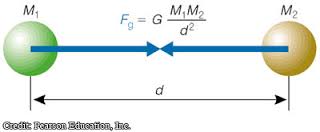
Complete the following statement: The farther away two planets are the _______ the gravitational force between them.
a)
more
b)
same
c)
dosen't matter
d)
less
196.
wood is a _____?
a)
conductor
b)
insulator
197.
wood is a _____?
a)
conductor
b)
insulator
198.
water is a______?
a)
conductor
b)
insulator
199.
A material in which electrons are not able to move easily
a)
Circuit
b)
Insulator
c)
Resistance
d)
Conductor
200.
This circuit has more than one loop. When one light goes out, the others stay on.
a)
closed circuit
b)
series circuit
c)
parallel circuit
d)
open circuit
201.

What kind of circuit is this?
a)
series
b)
parallel
202.

What type of circuit is show in the image?
a)
Series Circuit
b)
Parallel Circuit
203.
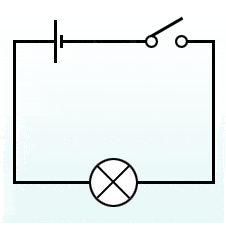
this circuit is .....?
a)
open
b)
parallel
c)
closed
d)
The cutest little circuit evah!
204.
A circuit must be closed for electrons to travel.
a)
true
b)
false
205.
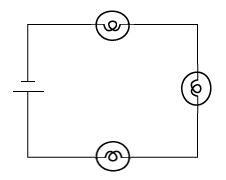
The picture shows an electrical circuit. This circuit is a series circuit because:
a)
It has 3 light bulbs.
b)
The same current flows through all three light bulbs.
c)
It uses a single battery.
d)
The electrical current has more than one path to flow through
206.
In a Series circuit the more lightbulbs you add the brighter they get
a)
False
b)
True
207.
What is a Parallel circuit?
a)
Has only one path
b)
Has more than one path
c)
Allows energy to travel through easily
d)
Has only one light bulb
208.
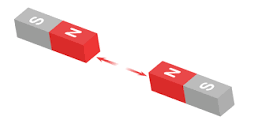
What will happen when these magnets are brought close together?
a)
They will attract each other.
b)
They will repel each other.
c)
Both magnets will turn to the left
d)
Both magnets will turn to the right
209.
A north pole and a south pole will attract.
a)
True
b)
False
210.
What happens when two north poles of a magnet are placed together?
a)
they repel
b)
they attract
c)
they cancel each other out
d)
the strength of the magnet is doubled
100 %

