
 Worksheets
5th FSSA Plants and Animals - Pahl
Total questions: 36
Worksheet time: 53mins
Name
Class
Date
1.
Which of these is a function of the roots?
a)
creates food
b)
lets carbon dioxide in and oxygen out
c)
absorbs water and nutrients from the soil
d)
uses photosynthesis
2.
What is the process by which plants make food called?
a)
chloroplasts
b)
stomata
c)
xylem
d)
photosynthesis
3.
Part of the plant that helps in seed dispersal
a)
Stem
b)
Leaf
c)
Flower
d)
Fruit
4.
Part of the plant that attracts insects for pollination
a)
Root
b)
Stem
c)
Leaf
d)
Flower
5.
Green pigment that helps to absorb sunlight
a)
Xanthophyll
b)
Carotene
c)
Chlorophyll
d)
Lycopene
6.
Part of plant that works like a food factory
a)
Root
b)
Stem
c)
Leaf
d)
Flower
7.
Part of plant that acts like an anchor
a)
Root
b)
Stem
c)
Leaf
d)
Flower
8.
Plants that produce their seeds in wood-like cones.
a)
gymnosperms
b)
legumes
c)
deciduous
d)
conifers
9.

The stalk connecting the ovaries and stigmas.
a)
filament
b)
pistil
c)
style
d)
anther
10.
They enclose the egg cells inside the ovaries.
a)
ovules
b)
anther
c)
seeds
d)
angiosperms
11.
The transfer of pollen, containing the sperm cells, to the female part of the flower.
a)
seed disperal
b)
pollination
c)
germination
d)
fertilization
12.

When a seed sprouts and begins the early growth of a young plant.
a)
germination
b)
pollination
c)
seed dispersal
d)
fertilization
13.
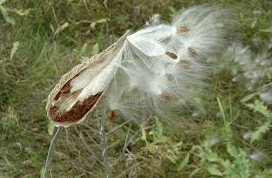
All of the following are examples of seed disbursement except:
a)
wind
b)
volcanic eruptions
c)
physical movement (rolling)
d)
animals feces
14.
This occurs after a tube grows down from the pollen grain through the style to the ovary.
a)
pollination
b)
germination
c)
fertilization
d)
seed dispersal
15.
Small grains that contain a plant's male reproductive cells.
a)
stamen
b)
pollen
c)
anther
d)
stigma
16.
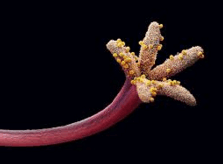
The part of the flower on which the pollen grains land.
a)
pistil
b)
stamen
c)
style
d)
stigma
17.
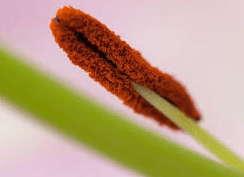
The part of a flower that produces the male reproductive cells.
a)
anther
b)
style
c)
stigma
d)
filament
18.
Uses energy directly from the sun.
a)
worm
b)
grass
c)
rabbit
d)
none
19.
Uses energy from plants.
a)
worm
b)
grass
c)
rabbit
d)
none
20.
Uses dead plants and animals for energy.
a)
worm
b)
grass
c)
rabbit
d)
none
21.

Mushroom
a)
Producer
b)
Consumer
c)
Decomposer
22.

What is this called?
a)
Food Web
b)
Food Chain
c)
Abiotic Factors
d)
Biotic Factors
23.

What is this called?
a)
Food Web
b)
Food Chain
c)
Abiotic Factors
d)
Biotic Factors
24.
Where do all life forms get their energy?
a)
Earth's Core
b)
Water
c)
Plants
d)
The Sun
25.

An animal that eats other animals is a....
a)
carnivore
b)
omnivore
c)
herbivore
d)
decomposer
26.

In the energy pyramid here, which organisms have the most energy available?
a)
Producers
b)
Carnivores
c)
Herbivores
d)
Top Predator
27.
A consumer that eats only plants.
a)
producer
b)
consumer
c)
carnivore
d)
herbivore
28.
Recently, a family of bobcats moved into an area with a large rabbit population. What changes may occur in the ecosystem?
a)
The rabbit population may increase
b)
The rabbit population may decrease
c)
The rabbit population may increase first, then decrease
d)
The rabbit population will remain the same
29.
If a habitat experiences a drought, the available resources will
a)
Increase
b)
Decrease
c)
increase, then decrease
d)
Not Change
30.
All living and nonliving things in an environment and the many ways they interact are called ______
a)
ecosystem
b)
community
31.
An animal that kills another animal for food is called
a)
prey
b)
predator
c)
producer
d)
herbivore
32.
The arrows in a food chain or web represents what?
a)
They point to the organism that is being eaten.
b)
It shows how sunlight flows within an ecosystem.
c)
They show what direction the energy is flowing between organisms.
d)
They represent how water is transferred within a habitat.
33.

Which of the following would be the most likely effect, if there were a sudden increase in the cricket population?
a)
There would be a decrease in the small bird population.
b)
There would be a decrease in the grass/flowers population.
c)
There would be a decrease in the mice population.
d)
There would be an increase in the grass/flowers population.
34.
Which one is NOT an example of a decomposer?
a)
mushroom
b)
leaves
c)
mold
d)
worm
35.

An animal that gets energy from eating both plants and animals is a
a)
herbivore
b)
carnivore
c)
omnivore
d)
autotroph
36.
What do consumers do in the food chain?
a)
They obtain energy from other organisms.
b)
They break down dead plant and animal material.
c)
They use sunlight to make food.
d)
They are parasites of plants.
100 %

