
 Worksheets
CA 1 BIOLOGY EOC
Total questions: 206
Worksheet time: 2hrs 43mins
Name
Class
Date
1.
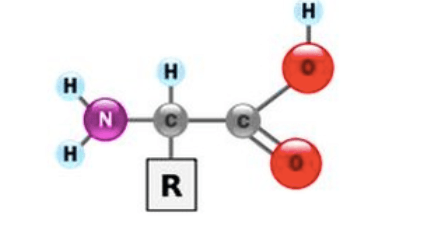
Which biomolecule is this a picture of?
a)
Protein
b)
Nucleic Acid
c)
Lipid
d)
Carbohydrate
2.
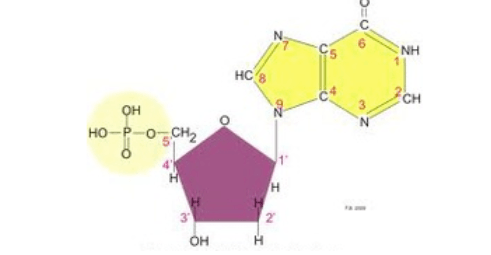
Which biomolecule is this a picture of?
a)
Protein
b)
Nucleic Acid
c)
Lipid
d)
Carbohydrate
3.
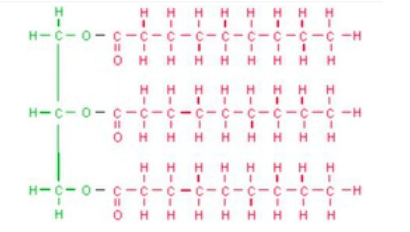
Which biomolecule is this a picture of?
a)
Protein
b)
Nucleic Acid
c)
Lipid
d)
Carbohydrate
4.
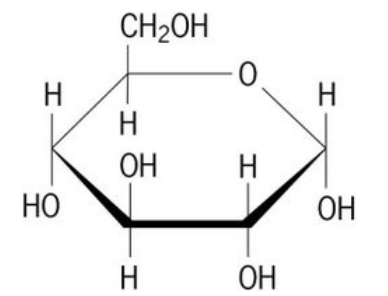
Which biomolecule is this a picture of?
a)
Protein
b)
Nucleic Acid
c)
Lipid
d)
Carbohydrate
5.
Which biomolecule is also known as enzymes?
a)
Carbohydrate
b)
Lipid
c)
Nucleic Acid
d)
Protein
6.
Which biomolecule contains pastas and breads?
a)
Lipid
b)
Protein
c)
Nucleic Acid
d)
Carbohydrate
7.
Which biomolecule is made of nucleotides and contain you DNA?
a)
Carbohydrate
b)
Lipids
c)
Protein
d)
Nucleic Acid
8.
Which biomolecule helps form muscles?
a)
Nucleic Acid
b)
Carbohydrate
c)
Protein
d)
Lipids
9.
Which biomolecule is responsible for insulation and energy storage?
a)
Protein
b)
Nucleic Acid
c)
Lipid
d)
Carbohydrate
10.
Which biomolecule has sugars and starches?
a)
Lipids
b)
Proteins
c)
Carbohydrates
d)
Nucleic Acid
11.
Which biomolecule contain your genetics?
a)
Carbohydrate
b)
Lipid
c)
Nucleic Acid
d)
Protein
12.
Which biomolecule is made of amino acids?
a)
Nucleic Acid
b)
Carbohydrate
c)
Protein
d)
Lipid
13.
Which biomolecule is your main source of energy?
a)
Nucleic Acid
b)
Protein
c)
Lipid
d)
Carbohydrate
14.
Which biomolecule contains fats, oils, and waxes?
a)
Proteins
b)
Nucleic Acid
c)
Lipids
d)
Carbohydrate
15.
Which of the following is not a carbon compound?
a)
Carbohydrates
b)
Lipids
c)
Nucleic Acids
d)
Vitamins
16.
Which biomolecule includes fats, such as triglycerides, oils, waxes, and steroids (cholesterol); insoluble in water; provides energy storage, insulation, part of cell membrane, and hormones
a)
Nucleic Acid
b)
Lipids
c)
Carbohydrate
d)
Protein
17.
Which biomolecule contains Deoxyribonucleic acid; a sequence of bases that makes hereditary code; Ribonucleic acid; translate hereditary code into proteins that determine how the cell will function under various conditions; provides storage and retrieval of information; encode genes, gene expression, helps make proteins
a)
Nucleic Acid
b)
Lipid
c)
Carbohydrate
d)
Protein
18.
Steroids are a type of ________.
a)
Nucleic Acid
b)
Lipid
c)
Cholesterol
d)
Protein
19.
Steroids are a type of ________.
a)
Nucleic Acid
b)
Lipid
c)
Cholesterol
d)
Protein
20.
four most common elements that make up all living things are carbon, hydrogen,
a)
nitrogen, and iron.
b)
oxygen, and nitrogen.
c)
calcium, and phosphorus.
d)
oxygen, and iron.
21.
The chemical reaction that breaks down a molecule by adding water is
a)
Dehydration Synthesis
b)
Hydrophobia
c)
Hydrolysis
d)
Dehydration
22.
The process that builds molecules by removing water to bind them together is
a)
Hydrolysis
b)
Protein Synthesis
c)
Dehydration Synthesis
d)
Lysis
23.
Which foods are high in protein?
a)
Meats, cheeses, milk, eggs
b)
Breads, pasta, grains
c)
Butter, oil, lard
d)
Apples, Bananas, Grapes
24.
Which foods are a good energy source?
a)
Meats, Yogurt, Cheese
b)
Ice Cream, Candy, Cookies
c)
Fruits, Vegetables, Whole Grains
d)
Butter, Lard, Oil
25.
What does the word organic mean?
a)
has nitrogen
b)
has sulfur
c)
has carbon
d)
has oxygen
26.
The more bonds a molecule has, the more....
a)
water is stored
b)
force is stored
c)
energy is stored
d)
oxygen is stored
27.
Nucleotides are monomer for
a)
Nucleic Acids
b)
Proteins
c)
Carbohydrates
d)
Lipids
28.
Enzymes need certain environmental conditions in order to function properly. What happens when enzymes are heated to a high temperature?
a)
they die
b)
they denature
c)
they change their amino acid sequence
d)
they work better
29.
Complex carbohydrates break down into which of the following?
a)
enzymes
b)
simple sugars
c)
amino acids
d)
ATP
30.
What are the largest carbohydrates called?
a)
monosaccarides
b)
oligosaccarides
c)
disaccarides
d)
polysaccarides
31.
What is the main goal of enzymes?
a)
lower the activation energy
b)
raise the activation energy
c)
slow the reaction rate
d)
find other molecules
32.
What is a polymer?
a)
a short repeating subunit
b)
a long chain of repeating units
c)
an anmino acid sequence
d)
an organic molecule
33.
The part of the enzyme that the substrate bonds to is called the _____.
a)
active site
b)
activation energy
c)
bond site
d)
peptide bond
34.
All polymers are made up of...
a)
monosaccharides
b)
monomers
c)
proteins
d)
None of these
35.
What is the function of a carbohydrate?
a)
Short term energy storage
b)
Movement
c)
Stores genetic information
d)
Speeds up reactions
36.

Amino acids combine to form which of the following biomolecule?
a)
Carbohydrates
b)
Lipids
c)
Proteins
d)
Nucleic Acids
37.

Proteins are long chains of amino acids that are held together by what kind of bond?
a)
Compound Protein Bond
b)
Double Bond
c)
Hydrogen Bond
d)
Peptide Bond
38.
I am responsible for long term energy storage in mammals.
a)
Protein
b)
Lipid
c)
Carbohydrate
d)
Nucleic Acid
39.

All of the following are parts of a nucleotide except?
a)
Phosphate Group
b)
Nitrogen Base
c)
Amino Group
d)
Deoxyribose/Ribose sugar
40.
Which is a Carbohydrate's monomer?
a)
Sugar
b)
Amino acids
c)
Monosacharide
d)
Nucleotide
41.
Which is NOT a function for Lipids?
a)
Long term Energy Storage
b)
Chubify
c)
Insulation
d)
Cell Membrane
42.
True or False: Enzymes are substrate specific
a)
True
b)
False
43.

What are three parts of nucelotide that make up DNA?
a)
Dissacharide, nitrogen base, amino acid
b)
Phosphate group, protein, sugar
c)
sugar, nitrogen base, phosphate group
d)
Sugar, amino acid, nitrogen
44.
What does the root mono- mean?
a)
one
b)
many
c)
block
blcok
blcok
d)
molecule
45.
what does the root -mer mean?
a)
unit
b)
life
c)
carb
d)
one
46.
what does the root poly- mean?
a)
one
b)
many
c)
all
d)
none
47.
What is a catalyst?
a)
makes something happen faster
b)
stops something from happening
c)
makes something happen slower
48.
keeping a steady, internal environment is called..
a)
homeostasis
b)
respiration
c)
photosynthesis
d)
feedback
49.
If you cannot maintain your body temperature
a)
you cannot maintain homeostasis
b)
you have a genetic mutation
c)
you need less energy
50.
the root -ose means
a)
sugar
b)
protein
c)
building
d)
breaking apart
51.
if a enzyme gets denatured
a)
it works better
b)
it no longer works
c)
it becomes a different enzyme
52.
T or F. An enzyme works on every substrate
a)
true
b)
false
53.
the substrate is
a)
what an enzyme breaks down
b)
the building blocks of a polymer
c)
the result of a reaction
d)
organic material
54.

Enzymes are a specific type of which biomolecule?
a)
Carbohydrate
b)
Lipid
c)
Protein
d)
Nucleic acid
55.
ATP is a member of which class of biomolecule?
a)
Carbohydrate
b)
Lipid
c)
Protein
d)
Nucleic acid
56.
Which class of biomolecule is used to make cell membranes?
a)
Carbohydrate
b)
Lipid
c)
Protein
d)
Nucleic acid
57.
What is one of the two biomolecules that are primarily used as energy sources by cells?
a)
Polysaccharide & Nucleic acid
b)
Polysaccharide & Protein
c)
Polysaccharide & Lipid
d)
Lipid & Protein
58.

The diagram to the right best represents which class of biomolecules?
a)
Carbohydrate
b)
Lipid
c)
Protein
d)
Nucleic acid
59.

The diagram to the right best represents which class of biomolecules?
a)
Carbohydrate
b)
Lipid
c)
Protein
d)
Nucleic acid
60.

The diagram shown depicts which class of biomolecule?
a)
Carbohydrate
b)
Lipid
c)
Protein
d)
Nucleic acid
61.

What class of biomolecule is shown?
a)
Carbohydrate
b)
Lipid
c)
Protein
d)
Nucleic acid
62.
Which is true of prokaryotic and eukaryotic cells?
a)
Prokaryotic cells are larger than eukaryotic cells.
b)
Eukaryotic cells do not have nuclei, and prokaryotic cells do have nuclei.
c)
Prokaryotic cells lack membrane-bound organelles, and eukaryotic cells contain membrane-bound organelles.
d)
Eukaryotic cells are simpler than prokaryotic cells.
63.

Type of cell shown?
a)
Eukaryotic
b)
Prokaryotic
c)
Bacterial
d)
Plant
64.
Proteins are produced at which cellular structures?
a)
nuclei
b)
ribosomes
c)
mitochondria
d)
chloroplasts
65.

What type of cell is pictured?
a)
Prokaryotic
b)
Eukaryotic
c)
Plant
d)
Animal
66.
Prokaryotic and eukaryotic cells have many differences, but they also share some common features. Which of the following may be found in either type of cell?
a)
Golgi bodies
b)
ribosomes
c)
mitochondria
d)
nucleus
67.
Some prokaryotes and eukaryotes have a cellular structure called a flagella. What is the purpose of the flagella?
a)
to transport molecules across the cell membrane
b)
to propel the cell through liquid
c)
to collect food for the cell
d)
to tell the cell the direction of a food source
68.
Which of the following would be found in both eukaryotic AND prokaryotic cells?
a)
chloroplast
b)
cytoplasm
c)
nucleus
d)
endoplasmic reticulum
69.

Type of cell shown?
a)
Bacterial
b)
Prokaryotic
c)
Eukaryotic
d)
Red blood
70.
Which of the following in NOT a characteristic of eukaryotic cells?
a)
DNA is separated from the cytoplasm by a nuclear membrane
b)
Large
c)
Complex
d)
Lack membrane-bound organelles
71.
Which of the following is NOT a type of eukaryotic cell?
a)
mushroom cell
b)
pea leaf cell
c)
bacterial cell found in Swiss cheese
d)
alligator stomach cell
72.

What is the function of A?
a)
movement through watery environment
b)
store genetic instructions
c)
stick to host cells
d)
store genes for antibiotic resistance
73.

How is this organism best classified?
a)
unicellular & eukaryotic
b)
multicellular & eukaryotic
c)
unicellular & prokaryotic
d)
multicellular & prokaryotic
74.
How are prokaryotes and eukaryotes similar?
a)
They both contain membrane-bound organelles.
b)
They both have cell membranes.
c)
The both have nuclei.
d)
They both have chloroplasts.
75.

What number is pointing to the cell membrane?
a)
1
b)
2
c)
3
d)
4
76.
Both prokaryotes and eukaryotes have a nucleus.
a)
True
b)
False
77.
Which of the following is found inside a prokaryote?
a)
cytoplasm
b)
DNA
c)
ribosomes
d)
all of these
78.
One example of a prokaryote is a...
a)
fungus
b)
bacteria
c)
animal
d)
plant
79.

Which type of cell?
a)
Prokaryote
b)
Eukaryote
80.
All organisms are made of:
a)
organelles
b)
cytoplasm
c)
DNA
d)
cells
81.
All cells come from other...
a)
cells
b)
plants
c)
nucleus
d)
microscopes
82.
What type of cell has a nucleus?
a)
eukaryotic
b)
prokaryotic
83.
There are three parts to the cell theory. Which is NOT one of those parts?
a)
All organisms are composed of one or more cells.
b)
The cell is the basic unit of structure and organization in organisms.
c)
Cells spontaneously arise from carbon and nutrients carried in the bloodstream.
d)
All cells come from pre-existing cells.
84.
A HYPERTONIC solution has a _____ concentration of solute than the interior of the cell and a cell will ______ when placed into this solution.
a)
lower; shrink
b)
lower; swell
c)
higher; shrink
d)
higher; swell
85.
Which organelle converts sugars into energy?
a)
lysosome
b)
mitochondria
c)
nucleus
d)
ribsome
86.
Some cells, such as human nerve and muscle cells, contain many more mitochondria than do other cells, such as skin cells. Why do some cells have more mitochondria than others?
a)
The cells use more energy
b)
The cells store more nutrients
c)
The cells degrade more proteins
d)
The cells divide more frequently
87.
A cell with numerous ribosomes is probably specialized for
a)
enzyme storage
b)
energy production
c)
cell division
d)
protein synthesis
88.
A cell stores food, water or waste products in
a)
chloroplast
b)
nuclei
c)
ribosomes
d)
vacuole
89.
What is the cellular process that takes place in the mitochondria of the cell and requires oxygen to release energy?
a)
photosynthesis
b)
osmosis
c)
respiration
d)
reproduction
90.
In what part of the plant cell does the process of photosynthesis take place?
a)
nucleus
b)
mitochondria
c)
chloroplasts
d)
vacuoles
91.
What happens during photosynthesis?
a)
The cell uses oxygen to make food.
b)
The cell uses glucose to make oxygen
c)
The cell uses the energy in sunlight to make food.
d)
The cell uses the energy in sunlight to make carbon dioxide.
92.
What is the function of a cell wall?
a)
to protect and support the cell
b)
to perform different functions in each cell
c)
to prevent water from passing through it
d)
to prevent oxygen from entering the cell
93.
Osmosis is the movement of _____ across a membrane.
a)
food
b)
energy
c)
oxygen
d)
water
94.

The cell below is in a _________ solution.
a)
Hypotonic
b)
Hypertonic
c)
Isotonic
95.

The cell below is in a _____________ solution.
a)
Hypertonic
b)
Hypotonic
c)
Isotonic
96.
This cellular structure helps organisms maintain homeostasis by controlling what substances may enter or leave cells.
a)
vacuole
b)
nucleus
c)
cell membrane
d)
cell wall
97.
A cell in an isotonic solution will
a)
swell
b)
shrink
c)
stay the same size
d)
impossible to tell
98.
Diffusion is the movement of molecules from an area of _____ concentration to an ______ concentration
a)
High, low
b)
Low, high
c)
Low, low,
d)
High, high
99.
In diffusion, particles move down a _______ ________
a)
Concentrate gradient
b)
Conceited gradient
c)
Concentration gradient
d)
Concentrated orange juice
100.
When both inside and outside of a cell have the same amount of water it is said that the cell has reached a state of ___________.
a)
osmosis
b)
equilibrium
c)
diffusion
d)
hypertonic
101.
Which of the following is correct about the Golgi?
a)
Digests waste materials
b)
Protection and Support
c)
Modifies and packages molecules
d)
cellular movement
102.
Molecules using simple diffusion move from
a)
high to low concentrations
b)
low to high concentrations
c)
no concentrations
d)
both concentrations
103.
What kind of transport does not require energy?
a)
Active
b)
Vacuole
c)
Passive
d)
Na/K Pump
104.
What is facilitated diffusion?
a)
Transport that uses proteins to help move molecules across the membrane.
b)
Movements of substances through a membrane.
c)
When molecules spread from High to Low concentration on their own.
d)
When pressure pushes something through a membrane.
105.
Which of the following is the best example of osmosis?
a)
NA/K Pump
b)
Water moving though the cell membrane
c)
Kidneys
d)
Photosynthesis
106.
Active transport does not require energy.
a)
True
b)
False
107.
Antibiotics treat which of the following?
a)
Flu Virus
b)
Common Cold
c)
Viral Infections
d)
Bacterial infections
108.
These are tightly packed coils of DNA and proteins that form during cell division.
a)
RNA
b)
centromeres
c)
spindle fibers
d)
chromosomes
109.

Number 1 is a (the) -
a)
Golgi Bodies
b)
Mitochondrion
c)
ribosome
d)
Nucleus
110.

Identify this structure.
a)
cell wall
b)
cell membrane
c)
sap vacuole
d)
cytoplasm
111.
Which characteristic do most plants have in common?
a)
they are unicellular
b)
they are prokaryotic
c)
they produce seeds
d)
they are autotrophic
112.
If the environment gets cold, we will often shiver in order to:
a)
keep body temperature the same as the external temperature
b)
decrease body temperature
c)
increase body temperature
d)
regulate blood pressure
113.

Which of these best completes this concept map?
a)
an animal cell
b)
a prokaryotic cell
c)
a plant cell
d)
a bacteria
114.
If a cell’s lysosomes were damaged, which of the following would most likely occur?
a)
The cell would produce more proteins than it needs.
b)
The cell would have chloroplasts that appear yellow rather than green.
c)
The cell would be less able to break down molecules in its cytoplasm.
d)
The cell would be less able to regulate the amount of fluid in its cytoplasm.
115.

Turn down for -
a)
who
b)
what
c)
when
d)
your mom
116.
If an organism’s cells have damage to its ribosomes, what symptoms would you expect to see?
a)
Limited growth because of cell’s inability to catch sunlight and make sugars
b)
limited growth because molecules, viruses and worn out organelles are not broken down
c)
limited growth because proteins are not being produced
d)
limited growth because cell materials are not able to be transported out of the cell
117.

What is G? (little dots)
a)
LYSOSOME
b)
RIBOSOMES
c)
ROUGH ER
d)
GOLGI BODY
118.
A disease is breaking down the function of the rough endoplasmic reticulum. As a result, which of the following biomolecules would be in limited supply in the cell?
a)
proteins
b)
ATP
c)
nucleic acids
d)
lipids
119.

What does “B” represent?
a)
hydrophobic tails
b)
hydrophilic tails
c)
hydrophobic heads
d)
hydrophilic heads
120.
Organelle that sends proteins from ribosomes to the golgi apparatus is the ______
a)
mitochondria
b)
cell membrane
c)
endoplasmic reticulum
d)
central vacuole
121.
Which organelle produces ATP?
a)
mitochondria
b)
ribosomes
c)
golgi body
d)
nucleus
122.
Hairlike projections that protrude from the surface of the cell and help provide movement are ___
a)
flagella
b)
microtubules
c)
centromeres
d)
cilia
123.
double membrane surrounding the nucleus is the ___
a)
nuclear wall
b)
nuclear envelope
c)
nucleolus
d)
nucleoplasm
124.
The organelle that receives proteins from the ER and sorts them for delivery to other parts of the cell is the _______
a)
golgi apparatus
b)
endoplasmic reticulum
c)
ribosomes
d)
mitochondria
125.
If one bacteria cell is moving while another is not, the cell that is moving probably has a _____ while the other does not
a)
ribosome
b)
flagella
c)
chloroplast
d)
central vacuole
126.
Small sacs that transport materials around the cell
a)
vacuoles
b)
vesicles
c)
mitochondria
d)
ribosomes
127.
Only eukaryotic cells have....
a)
membrane-bound organelles
b)
DNA
c)
ribosomes
d)
cell membranes
128.
Which is the correct order of organization of structures in living things?
a)
tissues, cells, organs, organ system
b)
cells, tissues, organs, organ system
c)
organ system, cells, organs, tissues
d)
cells, organs, tissues, organ systems
129.
When the volume of a cell increases, its surface area
a)
increases at a slower rate
b)
increases at the same rate
c)
decreases at the same rate
d)
decreases at a faster rate
130.
Surface area is an important factor in limiting cell growth because..
a)
the cell might burst
b)
materials cannot enter the cell if the surface area is too large
c)
the cell may take in too much food
d)
the cell may become too large to take in enough food and remove enough waste
131.
If you are feeling ill and the doctor prescribes you some antibiotics to help you feel better, you are infected with a _______
a)
Virus
b)
Bacteria
132.
The chicken pox is spread via contact from person to person. In order to prevent getting the chicken pox, you can get a vaccination. Is chicken pox caused by a virus or a bacterium?
a)
Bacterium
b)
Virus
133.
The common cold can be spread many different ways. One such way is through coughing and sneezing. Is the common cold caused by bacteria or by viruses?
a)
Bacteria
b)
Virus
134.
_________ are found in BOTH viruses and in all living organisms.
a)
Genetic Material
b)
A cell membrane
c)
ribosomes
135.
This virus attacks the white blood cells (immune cells) of the human body. Eventually, the immune system cannot handle the viral invasion. This makes the body prone to attack from other viruses and bacteria. What is the name of this infectious viral disease?
a)
AIDS
b)
Cancer
c)
Diabetes
136.
This infectious viral disease has many symptoms, from chills, fever, and aching muscles to coughing and sneezing to nausea and vomiting. The symptoms show up within 2-7 days after the cell is infected. This is an example of?
a)
Lytic Cycle
b)
Lysogenic Cycle
c)
Meiosis
137.
HIV weakens the immune system by killing
a)
antibiodies
b)
immune cells
c)
skin cells
138.
The projections on the virus (tail fibers) are used for -
a)
carrying genetic material
b)
attaching to a host cell
c)
protecting the DNA
139.
Which of the following is the most crucial role of fungi in a balanced ecosystem?
a)
they serve as decomposes and recycle nutrients
b)
they serve as primary consumers
c)
they serve as primary producers
140.

A(n) _____ is a virus that enters a bacterial cell.
a)
endospore
b)
decomposer
c)
plasmid
d)
bacteriophage
141.
During the lytic infection by a virus, the host cell is-
a)
destroyed
b)
copied
c)
passed on to the lysogenic cycle
d)
not affected
142.
Which of the following infections can only be caused by a virus?
a)
chickenpox
b)
pneumonia
c)
meningitis
d)
diarrhea
143.

What part of the phage is the DNA?
a)
A
b)
B
c)
C
d)
D
144.
What part of a virus is the protein capsule that houses the genetic material (DNA/RNA)?
a)
tail
b)
nucleus
c)
capsid
d)
glycoprotein
145.
Which viral life cycle allows viral genetic material to lay dormant while the host cell reproduces?
a)
lytic
b)
mitosis
c)
lysogenic
d)
S phase
146.

What process is this?
a)
phagocytosis
b)
lytic cycle
c)
lysogenic cycle
d)
formation of antibodies
147.
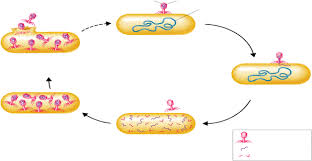
What is shown here?
a)
Lysogenic Cycle
b)
Lytic Cycle
c)
Binary Fission
d)
Conjugation
148.

Name the phase:
a)
Anaphase
b)
Telophase
c)
Metaphase
d)
Prophase
149.

What is the next phase of mitosis?
a)
Prophase
b)
Metaphase
c)
Anaphase
d)
Telophase
150.

What is the next phase of mitosis?
a)
Prophase
b)
Metaphase
c)
Anaphase
d)
Telophase
151.

What is the next phase of mitosis?
a)
Prophase
b)
Metaphase
c)
Anaphase
d)
Telophase
152.

Name the phase:
a)
Prophase
b)
Metaphase
c)
Anaphase
d)
Telophase
153.
What portion of the cell cycle involves the actual dividing?
a)
interphase
b)
mitosis
c)
Gap 1
d)
Gap 2
154.
When a cell is not actively dividing, it is in what phase?
a)
interphase
b)
anaphase
c)
prophase
d)
telophase
155.

a)
Cytokinesis
b)
Interphase
c)
Anaphase
d)
Metaphase
156.

a)
Anaphase
b)
Cytonkinesis
c)
Interphase
d)
Prophase
157.

a)
Cytokinesis
b)
Anaphase
c)
Telophase
d)
Prophase
158.
What percent of a cell's lifetime is spent in interphase?
a)
10%
b)
90%
c)
40%
d)
75%
159.
When does the chromatin condense into chromosomes?
a)
Metaphase
b)
Anaphase
c)
Telophase
d)
Prophase
160.
Which of these lists presents the stages of the cell cycle in the correct order?
a)
interphase, mitosis, cytokinesis
b)
cytokinesis, mitosis, interphase
c)
mitosis, interphase, cytokinesis
d)
interphase, cytokinesis, mitosis
161.
In the S stage of interphase_______________
a)
the cell grows
b)
the nucleus divides
c)
the cell membrane divides
d)
the DNA is replicated
162.

During the growth/gap 1 stage of the cell cycle, a cell
a)
splits into two new cells
b)
doubles in size and growth
c)
Duplicates its DNA
d)
divides its cytoplasm
163.

Substage of interphase immediately after a cell divides
a)
G1
b)
Synthesis
c)
G2
d)
Mitosis
164.

Cell division is represented by what letter?
a)
A
b)
B
c)
C
d)
D
165.

In mitosis, the two resulting cells are
a)
different from the starting cell and identical to each other.
b)
different from the starting cell and different from each other.
c)
identical to the starting cell and different from each other.
d)
identical to the starting cell and identical to each other.
166.

Fruit fly body cells have 8 chromosomes. After mitosis, you would expect a resulting fruit fly daughter cell to have ...
a)
16 chromosomes.
b)
46 chromosomes.
c)
8 chromosomes.
d)
4 chromosomes.
167.

The stages of mitosis in order
a)
Metaphase, Anaphase, Prophase, Telophase
b)
Prophase, Anaphase, Metaphase, Telophase
c)
Prophase, Metaphase, Anaphase, Telophase
d)
Anaphase, Prophase, Telophase, Metaphase
168.

The structures labeled B are
a)
centrioles
b)
sister chromatids
c)
centromeres
d)
chromopheres
169.
Why do cells of organism need to replicate?
a)
growth
b)
repair of damaged cells
c)
replacement of dying cells.
d)
All of the above
170.

The offspring from asexually reproduced organisms are?
a)
Different than their parents
b)
Identical to parents
c)
Like a combination from both parents
d)
A different species
171.

Why would it be important to replicate DNA before a cell divides in mitosis or meiosis?
a)
In order for the cells to have the correct amount of DNA.
b)
In order for the cell grow in size.
c)
In order for the cells to have extra DNA.
d)
In order for the cell to change the DNA.
172.

When comparing the offspring of sexually and asexually reproducing organisms, we would expect the genetic material (DNA) of the sexually reproducing organism to -
a)
contain fewer mutations
b)
be lesser in quantity
c)
be simpler overall
d)
show more genetic variation
173.
Tightly wound DNA is called a
a)
chromatin
b)
centromere
c)
chromosome
d)
protein
174.

Why is DNA important?
a)
it is very small and very complicated
b)
it's in everything
c)
it serves as the blueprint for traits of all living things
d)
because we eat it every day for energy
175.
Cells which never stop growing and dividing
a)
cancer cells
b)
brain cells
c)
fat cells
d)
skin cells
176.
Which is a cause of cancer?
a)
A defect in a gene that regulates cell growth and division that was inherited
b)
Mutations in genes that control cell division from chemicals or radiation
c)
Both of these
d)
Neither of these
177.

Which phrase best describes cancer?
a)
absence of cyclins
b)
multiple gene mutations
c)
uncontrolled cell growth
d)
precesnce of genetic defects
178.

Type of tumor that becomes invasive and impairs the function of one or more organs
a)
Benign
b)
Malignant
c)
Metastasis
d)
checkpoint
179.

The spreading of cancer cells through the circulatory system (blood vessels) and lymph nodes) that allows tumors to grow in other organs
a)
Benign
b)
Malignant
c)
Metastasis
d)
checkpoint
180.
Programmed cell death is called
a)
apoptosis
b)
cytokinesis
c)
interphase
d)
cancer
181.
Cancer treatment that uses medicine to kill cells that are rapidly dividing
a)
radiation
b)
surgery
c)
acupuncture
d)
chemotherapy
182.
Cancer cells may form a mass of abnormal cells called a(n)
a)
cyst
b)
tumor
c)
zygote
d)
none of the above
183.
The process in which DNA is copied is called
a)
recombination
b)
replication
c)
reparation
d)
recreation
184.
In meiosis, the haploid number of chromosomes in a human sex cell is:
a)
46
b)
92
c)
22
d)
23
185.
What is the diploid number of cells found in a human body cell?
a)
23
b)
46
c)
92
d)
47
186.
Another name for a sex cell is a:
a)
gamete
b)
embryo
c)
bone cell
d)
muscle cell
187.

The process on the left is:
The process on the right is:
The process on the right is:
a)
Left: meiosis
Right: meiosis
Right: meiosis
b)
Left: meiosis
Right: cloning
Right: cloning
c)
Left: mitosis
Right: meiosis
Right: meiosis
d)
Left: mitosis
Right: mitosis
Right: mitosis
188.

What scientific process is being shown?
a)
Mixing
b)
Crossing under
c)
Crossing over
d)
square dancing
189.
Crossing over occurs in...
a)
Prophase 1
b)
Prophase 2
c)
Metaphase 1
d)
Metaphase 2
190.
What is it called when chromosomes fail to separate properly.
a)
Stickiness
b)
Independent Assortment
c)
Nondisjuntion
d)
recombination
191.
Mitosis creates _____ daughter cells that are identical to the parent cell.
a)
4 haploid
b)
2 haploid
c)
4 diploid
d)
2 diploid
192.

Four students examined the cells and made the following observations:
Student 1: Cell 1 is a plant cell because it has a cell wall
Student 2: Cell 2 is an animal cell because it has a nucleus
Student 3: Cell 1 is a plant cell because it has chloroplasts
Student 4: Cell 2 is an animal cell because it has a cell membrane
Who is correct?
Student 1: Cell 1 is a plant cell because it has a cell wall
Student 2: Cell 2 is an animal cell because it has a nucleus
Student 3: Cell 1 is a plant cell because it has chloroplasts
Student 4: Cell 2 is an animal cell because it has a cell membrane
Who is correct?
a)
Student 1 and Student 2
b)
Student 2 and Student 3
c)
Student 1 and Student 3
d)
Student 2 and Student 4
193.
Which of the following best describes the function of a chloroplast?
a)
protein synthesis
b)
movement of materials throughout the cell
c)
production of glucose/food and oxygen
d)
regulates movement of materials into and out of the cell
194.

Letter C represents what cell part?
a)
nucleus
b)
nucleolus
c)
nuclear membrane
d)
cytoplasm
195.

Letter D represents which cell organelle?
a)
smooth ER
b)
rough ER
c)
golgi body
d)
vacuole
196.

Letter E represents which cell organelle?
a)
smooth ER
b)
rough ER
c)
golgi body
d)
vacuole
197.

Letter J represents which cell organelle?
a)
cell wall
b)
cell membrane
c)
cytoplasm
d)
mitochondria
198.

Letter L represents which cell organelle?
a)
golgi body
b)
cell membrane
c)
cytoplasm
d)
mitochondria
199.
What are the 4 nitrogen bases?
a)
adenine, thymine, cytoplasm, and guanine
b)
adenine, thymine cytosine, and guanine
c)
adenine, thymine, cytosine, and gylcerol
d)
adenine, thymine, cytosine, and glucose
200.
Which 2 molecules forms the sides (backbone) of the DNA ladder?
a)
deoxyribose and adenine
b)
deoxyribose and a hydrogen bond
c)
sugar and the nucleus
d)
deoxyribose (sugar) and phosphate
201.
Which sequence of DNA bases would pair with this partial strand
ATG TGA CAG
ATG TGA CAG
a)
ATG TGA CAG
b)
TAC ACT GTC
c)
GTA AGT GAC
d)
CAT TCA CTG
202.
Which of the following units are repeatedly joined together to form a strand of DNA? (This is the MONOMER of DNA.)
a)
amino acids
b)
nucleotides
c)
fatty acids
d)
polysaccharides
203.
Which enzyme is responsible for adding nucleotides?
a)
Topoisomerase
b)
DNA Polymerase
c)
Ligase
d)
Primase
204.
A process in which DNA has the unique ability to make an exact copy of itself.
a)
Replication
b)
Translation
c)
Transcription
205.
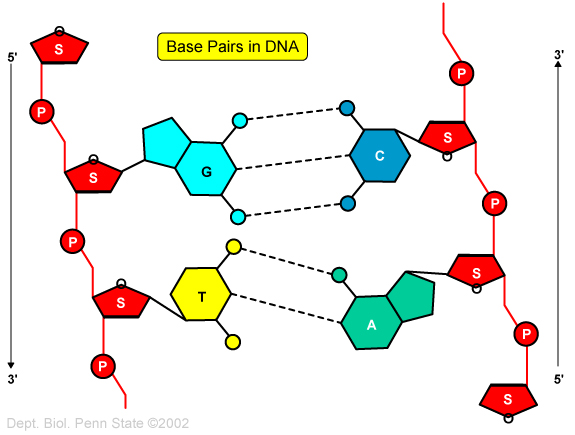
Nitrogenous bases are joined by which type of bond?
a)
polar bonds
b)
ionic bonds
c)
covalent bonds
d)
hydrogen bonds
206.
Any change in the sequence of DNA is...
a)
transgenic shift
b)
Single Genotype
c)
Monohybrid Trait
d)
Mutation
100 %