
 Worksheets
STAAR 8th grade: Category 2
Total questions: 40
Worksheet time: 3hrs 16mins
Name
Class
Date
1.
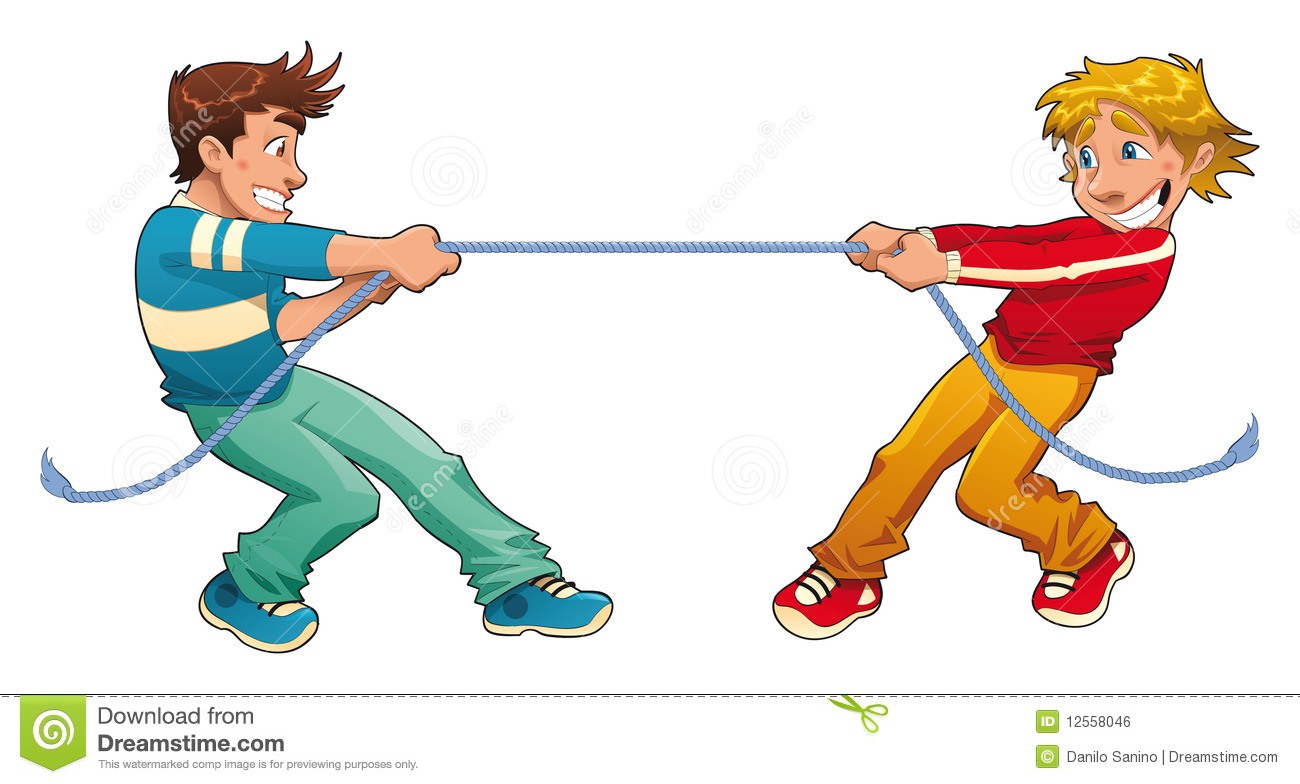
If these boys are pulling with the same amount of force. What will happen?
a)
The boy in blue will win.
b)
They will not move at all.
c)
The boy in red will win.
d)
Both will fall down.
2.
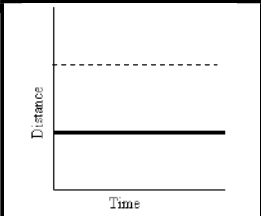
What does this graph represent?
a)
Constant speed
b)
Acceleration
c)
Not moving
3.
If a 10 kilogram object accelerates suddenly at 15 m/s2, how much force was applied to the object?
a)
150 Newtons
b)
15 Newtons
c)
150 kilograms
d)
100 kilograms
4.

During which interval is the object speeding up?
a)
A to B
b)
B to C
c)
D to E
d)
E to F
5.
The tendency of an object at rest to stay at rest unless it is acted upon by a force is ___________________
a)
inertia
b)
motion
c)
gravity
d)
lubricant
6.
What force causes rivers to run downhill?
a)
sliding friction
b)
gravity
7.
Which is an example of Newton's 2nd Law of Motion? (the acceleration of an object depends on the mass of the object and the force applied)
a)
throwing a baseball
b)
swimming
c)
jumping on a trampoline
d)
pushing a full shopping cart vs. pushing an empty shopping cart
8.
Force = Mass x Acceleration
How much force is needed to accelerate a 130 pound runner at 2 m/sec?
How much force is needed to accelerate a 130 pound runner at 2 m/sec?
a)
9800 N
b)
2000 N
c)
260 N
d)
65 N
9.
A bowling ball and a soccer ball are rolling at the same speed on the same surface. Why will the bowling ball be harder to stop?
a)
it has greater velocity
b)
it has greater momentum
c)
it has greater friction
d)
it has greater acceleration
10.
A change in position or location
a)
Magnetism
b)
Gravity
c)
Position
d)
Movement
11.

The picture of the position vs. time graph shows an object that is...
a)
accelerating/speeding up
b)
moving at a constant speed
c)
not moving
d)
accelerating/slowing down.
12.
55 mph north is an example of....
a)
speed
b)
velocity
c)
direction
d)
force
13.
Which of the following IS NOT acceleration?
a)
change in speed
b)
change in direction
c)
change in speed or direction
d)
change in mass
14.
Force is measured in _____________.
a)
centimeters
b)
grams
c)
newtons
d)
liters
15.
Which of Newton's Laws is being described?
a rocket lifting off the ground
a rocket lifting off the ground
a)
Law of Inertia / Newton's 1st Law
b)
Law of acceleration / Newton's 2nd Law
c)
Action - Reaction/ Newton's 3rd Law
16.
How do you calculate FORCE?
a)
mass x direction
b)
acceleration x direction
c)
acceleration x temperature
d)
mass x acceleration
17.
What happens to an object's acceleration as mass of the object increases?
a)
it increases as long as FORCE is the same
b)
it decreases as long as Force is the same
c)
it decreases as long as the TEMPERATURE is the same
d)
it increases as long as the TEMPERATURE is the same
18.

__________ is the sum of all forces acting on an object. It is capable of accelerating a mass.
a)
velocity
b)
gravity
c)
net force
d)
distance
19.

If two forces act on an object in the same direction, the net force is the _____________
a)
the difference between the two forces
b)
the sum of the two forces
c)
Only one of the forces acts on the object
d)
The multiplication of both forces
20.
Which of the following are examples of a non-contact force?
a)
Friction
b)
Magnetism
c)
Pushing a car
d)
Pulling on a rope
21.
Friction
a)
A push or pull that causes an object to move, stop, or change direction.direction.
b)
A change in position or location
c)
The force that causes objects with mass to attract one another.
d)
A force that resists the motion of two surfaces sliding across one another.
22.

According to the graph how far does the person travel in the first 5 seconds?
a)
2 m
b)
10 m
c)
0 m
d)
5 m
23.

What is happening at D?
a)
Stationary
b)
Accelerating
c)
Fast steady speed; moving away from the starting position
d)
Slower steady speed; moving away from the starting position
24.

Which runner won the race?
a)
A
b)
B
c)
C
25.

The graph represents
a)
balanced forces
b)
unbalanced forces
26.
Acceleration only takes place when things speed up.
a)
True
b)
False
27.

How many times does this object STOP moving?
a)
None
b)
Once
c)
Twice
d)
Three times
28.
Which of the following is NOT an example of acceleration?
a)
A car traveling at a steady speed of 20 km/hr
b)
A runner sprinting at a rate of 10 m/s and then slowing down at the finish line
c)
A planet orbiting the sun
d)
The dot-car traveling down a ramp
29.
You push on a tree with 20 N of force. If the tree doesn't move, the tree is pushing back on you with _____of force.
a)
20N
b)
40N
c)
10N
d)
70N
30.

Using the image, which letter on the coaster represents the greatest kinetic energy?
a)
W
b)
X
c)
Y
31.
Of the following, which is a vector?
a)
Mass
b)
Time
c)
Speed
d)
Velocity
32.
Acceleration is defined as the CHANGE in
a)
time it takes for one place to move to another place.
b)
velocity of an object.
c)
distance divided by the time interval
d)
velocity divided by the time interval
33.

a)
Airplane W has a greater kinetic energy than Airplane X.
b)
The two airplanes have the same gravitational potential energy but different kinetic energies.
c)
Airplane X has more gravitational potential energy than Airplane W.
d)
The two airplanes have the same kinetic energy but different gravitational potential energies.
34.

a)
Activity 3 required more work than Activity 1, but Activity 3 did not require more work than Activity 2.
b)
Activity 1 required the same amount of work as Activity 3.
c)
Activity 2 required the most work.
d)
Activity 1 was the only activity that required work.
35.

a)
The cart was stationary with a velocity of 0 m/s for the entire 7 seconds.
b)
The cart was stationary except for a short burst of acceleration of 0.5 m/s^2 .
c)
The cart moved at a constant velocity of 0.5 m/s for the entire 7 seconds.
d)
The cart accelerated at a constant rate of approximately 0.8 m/s^2 .
36.
Two cars with different masses travel at the same speed down a hill toward a stop sign. What
will happen when both cars apply brakes at the same time to stop?
a)
The car with the smaller mass will require less force to stop than the car with the larger
mass.
b)
The car with the larger mass will maintain its velocity while traveling down the hill.
c)
The car with the smaller mass will take longer to stop than the car with the larger mass
d)
The car with the larger mass will have less inertia than the car with the smaller mass
37.

Consider the two examples below. In which instance is more work done?
a)
Example A
b)
Example B
c)
Example A and Example B represent the same amount of work.
d)
Neither example represents any work done.
38.

Which of these best explains why the coin fell straight down into the cup instead of remaining on the index card?
a)
The coin was at rest until the card was removed, so it tended to remain in the same location. Once the card was gone, the unbalanced force of gravity caused the coin to fall.
b)
Moving the card applied an action force on the coin. Since the card was gone, gravity applied a reaction force on the coin.
c)
The card had less mass than the coin, so a smaller force of gravity acted on the card. The larger force of gravity on the coin made it fall.
d)
The acceleration of the coin falling into the cup was equal and opposite to the acceleration of the card.
39.
a)
Airplane W has a greater kinetic energy than Airplane X.
b)
The two airplanes have the same gravitational potential energy but different kinetic energies.
c)
Airplane X has more gravitational potential energy than Airplane W.
d)
The two airplanes have the same kinetic energy but different gravitational potential energies.
40.

a)
4N
b)
6N
c)
10 N
d)
14 N
100 %

