
 Worksheets
Science STAAR Review for Housepoints
Total questions: 22
Worksheet time: 1hrs 5mins
Name
Class
Date
1.
If you wanted to test the effect of gravity on an object, which set of materials should you choose?
a)
battery, wires, lightbulbs
b)
hot plate, water, thermometer
c)
two different types of balls, metric ruler
d)
two cups, two different types of soil, water and seeds
2.
Which statement describes weather, rather than climate?
a)
The weather is usually hot and humid year around
b)
The destination has hot summers and cold winters
c)
The summer temperatures average between 29 and 35 degrees
d)
The humidity level on Tuesday was 30%
3.
Two wires carrying electricity can create a spark if they come too close together. This spark can start a fire. Wires carrying electricity are usuallly covered with plastic to keep them from starting a fire. Why does the plastic keep electricity from starting a fire?
a)
Plastic is a good insulator.
b)
Plastic can melt when heated.
c)
Plastic is softer than wire.
d)
Plastic conducts electricity.
4.
A student combined powdered paint with water to make a small amount of a blue liquid paint mixture. The student left the paint mixture in an open container. Several days later the student found the container and observed that changes had occurred. What most likely happened to the mixture?
a)
The container was empty after the mixture evaporated into the air.
b)
The paint evaporated, leaving only clear water in the container.
c)
The water evaporated, leaving only a dry blue solid in the container.
d)
The liquid paint mixture was lighter in color after some water evaporated.
5.
Tropical climates have warm temperatures and abundant sunlight all year. What must be available for plants in these climates to make their own food throughout the year?
a)
Bacteria
b)
Birds
c)
Shade
d)
Water
6.
A student puts four objects in a bucket filled with water. The objects are listed below.
-
Plastic ball
Glass marble
Metal paper clip
Wood block
-
Which two objects are most likely less dense than the water?
-
Plastic ball
Glass marble
Metal paper clip
Wood block
-
Which two objects are most likely less dense than the water?
a)
Wood block and metal paper clip
b)
Plastic ball and glass marble
c)
Metal paper clip and glass marble
d)
Wood block and plastic ball
7.
What would most likely happen to the carbon dioxide–oxygen cycle if Earth’s large forests were all cut down?
a)
There would be more carbon dioxide in the atmosphere because fewer plants would be using it to produce their own food.
b)
The remaining plants would stop producing carbon dioxide, and animals would use less oxygen.
c)
The remaining plants would produce more oxygen, and animals would produce less carbon dioxide.
d)
There would be more oxygen in the atmosphere because fewer plants would be using it to produce their own food.
8.
Which of these is not soluble in water?
a)
Oil
b)
Salt
c)
Honey
d)
Sugar
9.
Which mixture can be separated using a coffee filter?
a)
rocks and sand
b)
sand and water
c)
lemon juice and water
d)
sand and iron filings
10.
Plants are known as producers because they produce their own food. How do producers receive the energy for this process?
a)
By consuming soil nutrients
b)
By absorbing sunlight
c)
By releasing water
d)
By producing oxygen
11.

Students are asked to classify renewable and non-renewable resources during class. The classification chart is shown below.
Which two answer choices best complete the blanks.
Which two answer choices best complete the blanks.
a)
Petroleum and water
b)
Plants and coal
c)
Timber and natural gas
d)
Air and fish
12.
When standing on a dock looking down into a pond of fish, the fish appears to be closer to the surface than it really is. What causes this difference?
a)
Light is blocked.
b)
Light is focused.
c)
Light is refracted.
d)
Light is reflected.
13.
Different birds prefer different diets. American goldfinch eats seeds from grasses and wildflowers. Eastern bluebirds eat a large variety of insects. Lesser goldfinch eat seeds from sunflower plants. Purple martin eat winged insects. Yellow warbler birds eat caterpillars, moths, mosquitoes, and beetle.
Based on this information, which two types of birds do NOT compete for food resources?
Based on this information, which two types of birds do NOT compete for food resources?
a)
American goldfinch and Lesser goldfinch
b)
Lesser goldfinch and Eastern bluebird
c)
Eastern bluebird and Purple martin
d)
Purple martin and Yellow warbler
14.
Which of these describes how canyons are most likely formed?
a)
Wind blew large rocks that smashed agains the canyon walls.
b)
Ice wedged into cracks in the rock and weathered the canyon walls.
c)
Glaciers eroded the canyon rock as they melted and moved.
d)
Floods eroded the sandstone away from the canyon walls.
15.
What is an adaptation?
a)
A feature or behavior that helps an animal survie.
b)
The food that an animal eats.
c)
How energy moves in a food web.
16.
An example of a physical adaptation is...
a)
a turtle hiding inside its shell
b)
The spikes on a porcupine fish
c)
a rabbit burrowing underground
d)
a viper biting when threatened
17.

Some adaptations of a hawk are illustrated here.
Which of these adaptations most help the hawk keep other hawks out of its territory by warning them from far away?
Which of these adaptations most help the hawk keep other hawks out of its territory by warning them from far away?
a)
Brown head
b)
Loud call
c)
Hollow bones
d)
Sharp claws
18.
All of the following can be inherited by the offspring of an apple tree
EXCEPT–
EXCEPT–
a)
shape of leaves
b)
broken branches
c)
type of fruit
d)
flower color
19.

This instrument can be used to see if materials conduct electricity. Which of these groups contains items that could all conduct electricity to complete the circuit?
a)
rubber ball, plastic comb, nail
b)
paper clip, penny, screw
c)
cork, dollar bill, tweezers
d)
pencil, eraser, spoon
20.
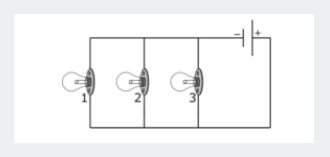
If bulb 1 burns out, what will occur?
a)
bulbs 2 and 3 will go out
b)
bulbs 2 and 3 receive more volts
c)
bulbs 2 and 3 will stay lit
d)
nothing will happen
21.

A student placed a pencil in a cup of water. The pencil appears broken because light-
a)
always travels in a straight line
b)
bends when it passes through water
c)
makes the water in the glass evaporate
d)
reflects the pencil on the water's surface
22.
What is a structure that helps aquatic animals, such as a frog or duck?
a)
scaly skin
b)
webbed feet
c)
long arms and tail
d)
feathers
100 %

