
 Worksheets
5.P.2.3 Chemical and Physical Changes
Total questions: 10
Worksheet time: 15mins
Name
Class
Date
1.

Which example best describes a chemical change?
a)
wax melting
b)
an apple turning brown
c)
a piece of paper being cut into small pieces
2.
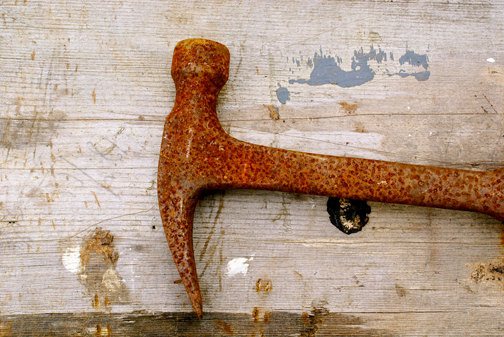
Kim lost her hammer outside. When she found it a few months later, some parts of the metal were covered with flaky, brown rust. Which type of change occurred when rust formed on the hammer?
a)
chemical
b)
electrical
c)
thermal
d)
physical
3.

Which best explains why burning leaves is a chemical change?
a)
The leaves emit light during the change.
b)
The temperature of the leaves increases.
c)
The shape of the leaves changes.
d)
The leaves turn to ashes.
4.

Which is a chemical change?
a)
frying an egg
b)
boiling water
c)
breaking a glass cup
d)
crushing a piece of bread
5.

Tonya observes a mixture of two clear liquids in a container to see if a chemical change occurs. Which observation demonstrates the mixture is undergoing a chemical change?
a)
The mixture remains at a constant temperature.
b)
A gas forms after the liquids are mixed.
c)
One liquid floats on top of the other.
d)
The mixture does not change color.
6.

Ramano is burning wood in a bonfire. What change is occurring during the fire?
a)
The wood is dissolving into liquid.
b)
The wood is gaining more mass.
c)
The wood is dissolving into a liquid.
d)
The wood is releasing a gas as smoke.
7.

Which example best describes a physical change?
a)
baking a pie
b)
burning a candle
c)
making a paper airplane
d)
lighting a match
8.
Which of these is an example of a new substance being formed?
a)
a nail rusting
b)
a wall being painted
c)
water changing to steam
d)
paper being folded
9.

Which is an example of a different substance being formed?
a)
glass breaking
b)
metal melting
c)
water freezing
d)
wood burning
10.

Examine the diagram. What would a teacher most likely use this image to explain?
a)
Heat being added and taken away is causing physical changes in water.
b)
Air being added and taken away is causing physical changes in water.
c)
Heat being added and taken away is causing chemical changes in water.
d)
Air being added and taken away is causing chemical changes in water.
100 %

