
 Worksheets
Ecology Quiz Review
Total questions: 41
Worksheet time: 40mins
Name
Class
Date
1.
A collection of organisms that make up a community as well as all of the nonliving aspects of the environment.
a)
Population
b)
Community
c)
Habitat
d)
Ecosystem
2.
A collection of organisms that belong to different populations but all live in the same area and interact with one another.
a)
Population
b)
Ecosystem
c)
Community
d)
Ecosphere
3.
Nonliving factor that affects an ecosystem...
a)
biotic factor
b)
abiotic factor
c)
food chain
d)
biome
4.
Living factors or organisms that affect an ecosystem
a)
abiotic factors
b)
species
c)
trophic level
d)
biotic factors
5.

What are the biotic factors in this image?
a)
sunlight, elephants, and grasses
b)
sunlight, water, and air
c)
elephants, grass, trees
6.

What are the abiotic factors in this image?
a)
water, sunlight, dirt, air
b)
birds and plants
c)
water, plants, and birds
7.

What is this called?
a)
Food Web
b)
Food Chain
c)
Abiotic Factors
d)
ecological pyramid
8.

What is this called?
a)
Food Web
b)
Food Chain
c)
Abiotic Factors
d)
ecological pyramid
9.

What does a Primary Consumer eat?
a)
Tertiary Consumers
b)
Secondary Consumers
c)
Producers
10.

An organism that lives by breaking apart dead organic matter into simpler parts is...
a)
scavenger
b)
consumer
c)
decomposer
d)
carnivore
11.

In a food web, arrows point at:
a)
what the animal is eaten by
b)
what the animal eats
12.

Which of the following is a herbivore?
a)
cricket
b)
frog
c)
hawk
d)
shrew
13.
Which is a producer?
a)
deer
b)
tall grass
c)
lion
d)
worm
14.

Which level will contain plants?
a)
A
b)
B
c)
C
d)
D
15.

Which level has the most energy available?
a)
producer
b)
primary consumer
c)
secondary consumer
d)
tertiary consumer
16.
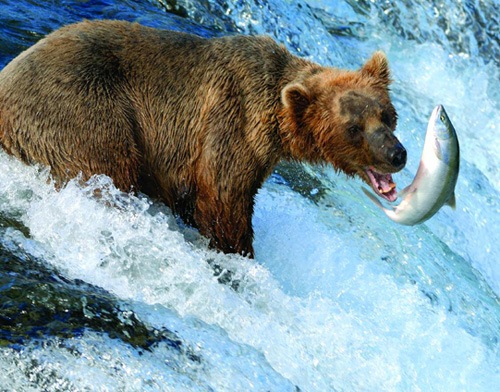
An organism that needs to eat other organisms to obtain energy is known as a:
a)
Autotroph
b)
Producer
c)
Consumer
d)
Mutualist
17.
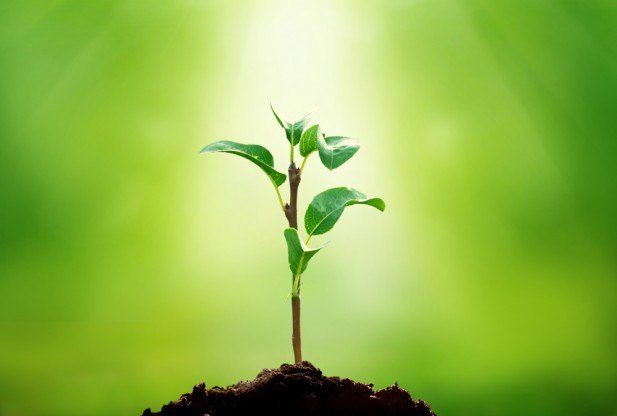
An organism that uses sunlight to create its own food is known as a:
a)
Producer
b)
Heterotroph
c)
Consumer
d)
Decomposer
18.
How much energy is available to be passed on to the next trophic level in an ecosystem?
a)
100%
b)
10%
c)
50%
d)
90%
19.

The rabbit in this food web would be considered a:
a)
Decomposer
b)
Producer
c)
Secondary Consumer
d)
Primary Consumer
20.

The fox in this food web would be considered a:
a)
Tertiary Consumer
b)
Producer
c)
Secondary Consumer
d)
Primary Consumer
21.
All energy on Earth ultimately comes from what source?
a)
Water
b)
Sun
c)
Consumers
d)
Oxygen
22.

As a population grows, it will most likely stop growing at what size?
a)
Growth limit
b)
Exponential limit
c)
Carrying Capacity
d)
It won't stop growing
23.

Which kind of growth does the human population follow? It is described as a J-shaped curve.
a)
Exponential Growth
b)
Logistic Growth
c)
Outstanding Growth
d)
Minimal Growth
24.
A population is...
a)
A group of one species in one area
b)
Multiple species that live in one area
c)
All of the living and nonliving things in an area
d)
None of these
25.

What type of growth is represented behind?
a)
exponential
b)
logistics
c)
a good kind
d)
representative
26.

What is the carrying capacity of the following graph?
a)
1000
b)
8000
c)
800
d)
600
27.

What point on the graph represents the carrying capacity?
a)
A
b)
B
c)
C
d)
D
28.
What is something that slows the growth rate of a population called?
a)
food chain
b)
biotic potential
c)
limiting factor
d)
community
29.
What is a limiting factor that is based on the number of organisms in a given area (population size)
a)
density-dependent
b)
density-independent
c)
biotic potential
d)
carrying capacity
30.
Which of the following is NOT a density-dependent limiting factor?
a)
flood
b)
disease
c)
predation
d)
competition
31.
What is a limiting factor that is not determined by population size called?
a)
density-dependent
b)
density-independent
c)
biotic potential
d)
food chain
32.
Which of the following is a density-independent limiting factor?
a)
disease
b)
competition for food
c)
earthquake
d)
parasitism
33.
A relationship between two organisms in which one organism benefits and the other is unaffected...
a)
Mutualism
b)
Competition
c)
Parasitsm
d)
Commensalism
34.
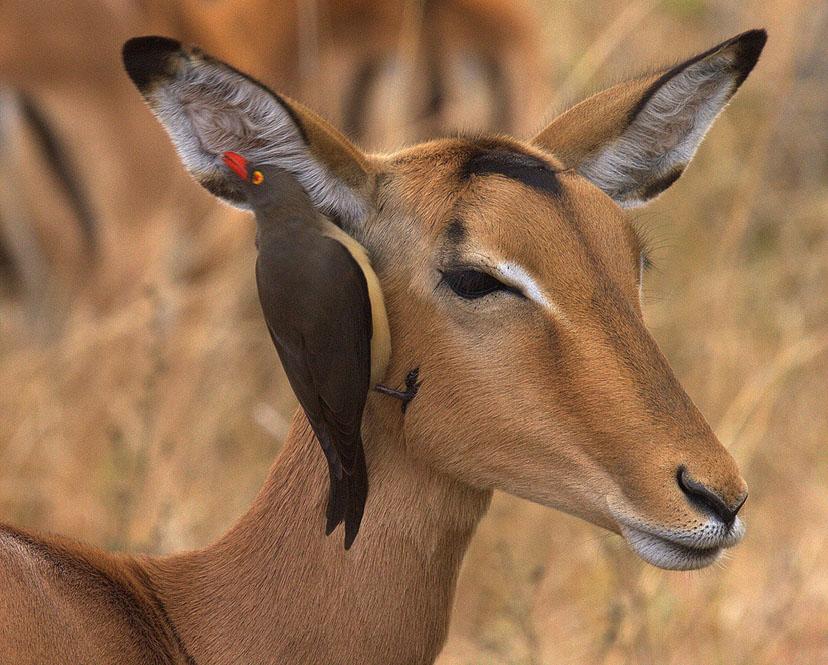
Red-billed oxpeckers are birds that often feed on parasites that infest impala. This is an example of _______.
a)
commensalism
b)
mutualism
c)
neutralism
d)
competition
35.
A relationship between two organisms in which both organisms benefit.
a)
Mutualism
b)
Competition
c)
Parasitsm
d)
Commensalism
36.
A relationship between two species where one benefits while the other is harmed.
a)
Mutualism
b)
Commensalism
c)
Parasitism
d)
Naturalism
37.

A tapeworm lives in the intestines of a dog. It absorbs food the dog has eaten and grows larger in the process. The dog becomes weaker from malnutrition. What type of symbiotic relationship is this?
a)
mutualism
b)
commensalism
c)
parasitism
d)
predation
38.

Cleaner shrimp living in the ocean eat ectoparasites (parasites on the outer surface of the animal) off of fish. What type of symbiotic relationship is this?
a)
mutualism
b)
commensalism
c)
parasitism
d)
predation
39.

Clown fish live among anemones, acting as a lure for the sea anemone's prey. The clown fish gets protection and shelter from the anemone.
This is an example of which type of symbiosis?
This is an example of which type of symbiosis?
a)
Commensalism
b)
Mutualism
c)
Parasitism
d)
IDK
40.

A cuckoo lays its eggs in the nest of a warbler. The cuckoo's eggs hatch first and the young cuckoos kick the warbler eggs out of the nest. The warbler raises the cuckoo babies and the warbler babies don't survive.
This is an example of which type of symbiosis?
This is an example of which type of symbiosis?
a)
Commensalism
b)
Mutualism
c)
Parasitism
d)
IDK
41.
Which of the following represents a correct food chain
a)
grass -> mouse -> snake
b)
mouse -> grass -> snake
c)
snake -> mouse -> grass
d)
grass -> snake -> mouse
100 %

