
 Worksheets
PBS EOC Review
Total questions: 131
Worksheet time: 2hrs 30mins
Name
Class
Date
1.
What is the structure of purines?
a)
A single 5 carbon ring
b)
A single 6 carbon ring
c)
A double ring with one six carbon and one 5 carbon ring
d)
A double ring with two four carbon rings
2.
What is the role of an restriction enzyme?
a)
Create a pattern of a person's DNA
b)
Act as molecular scissors that cut DNA
c)
Separate and compare different DNA sequences
d)
Produce millions of copies of DNA
3.
_______ has a double ring structure and is an example of a _______
a)
adenine... purine
b)
thymine... pyrimidine
c)
cytosine.....purine
d)
guanine....pyrimidine
4.
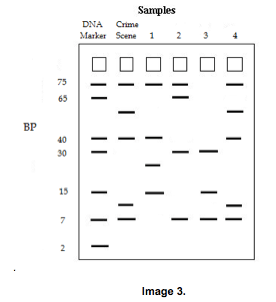
Who should the lawyer request a warrant for?
a)
Suspect 1
b)
Suspect 2
c)
Suspect 3
d)
Suspect 4
5.
A student wants to test the effects of type of exercise on heart rate. What is the dependent variable?
a)
heart rate
b)
type of exercise
c)
amount of exercise
d)
time of day exercise occurs
6.
How many rings does a pyrimidine have?
a)
1
b)
2
c)
3
d)
4
7.

Mr. Krabbs is trying a new money making scheme. On Tuesdays he is selling his crabby patties on colored buns. He usually averages 25 customers per day. On Tuesdays he now averages 27 customers.
What was the control?
What was the control?
a)
The customers
b)
The crabby patty
c)
The colored buns
d)
The number of customers
8.
What is produced as a result of DNA being cut by restriction enzymes?
a)
Restriction Fragment Length Polymorphisms
b)
Restriction Fragmented Long Palindromes
c)
Polymerase Chain Reaction
d)
Polymorphic Fragment Chains
9.
DNA is ________ charged and migrates to the ________ end of the gel.
a)
negative, positive
b)
positive, negative
c)
negative, neutral
d)
positive, neutral
10.
What is the backbone of DNA made out of?
a)
Phosphates and sugars
b)
Basepairs
c)
Deoxyribose
d)
Hydrogen bonds
11.
A and T make a _____ bond; they are held together by _______ bonds.
a)
triple... hydrogen
b)
double... nitrogen
c)
double... hydrogen
d)
triple... nitrogen
12.
Which of the following most likely would contain a good DNA sample?
a)
Shoeprint
b)
Tabletop
c)
Syringe
d)
Blood
13.
What can be determined from the diameter of a blood drop?
a)
Blood type
b)
Weapon
c)
Amount of blood lost
d)
The height from which the blood fell
14.
Body system that includes lymph nodes, spleen, thymus and bone marrow
a)
Endocrine
b)
Integumentary
c)
Immune
d)
Urinary
15.
What can be used to determine time of death?
a)
Blood pressure
b)
Fingerprints
c)
Skin texture
d)
Body Temperature
16.
What causes the DNA to separate and move down the gel?
a)
Magnetism
b)
Electricity
c)
Hydrogen Bonds
d)
Agarose
17.
Which person is a physician (medical doctor) who performs an autopsy and can determine manner and cause of death?
a)
Coroner
b)
Toxicologist
c)
Medical Examiner
d)
Forensic Anthropologist
18.
Which DNA fragment would end up closest to the top of gel (where the DNA is loaded into the wells)?
a)
100 bp
b)
1,000 bp
c)
5,000 bp
d)
10,000 bp
19.
If adenine makes up 20% of DNA, what percent is thymine?
a)
20%
b)
10%
c)
30%
d)
60%
20.
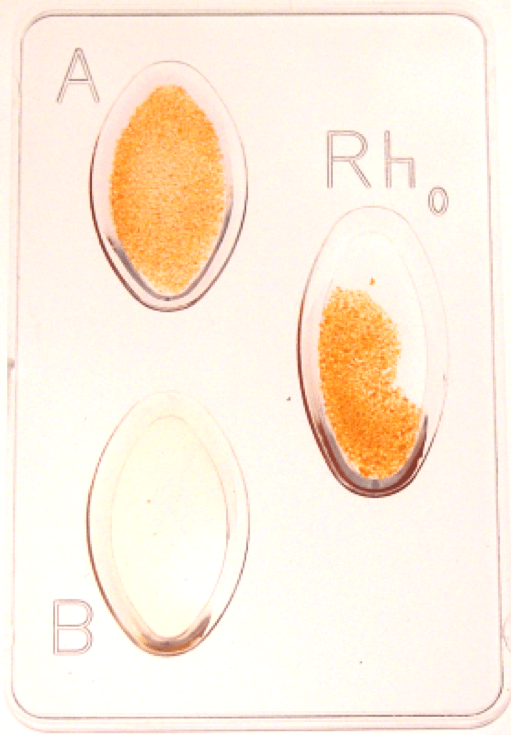
What blood type does the person have given the image?
a)
Type A
b)
Type B
c)
Type AB
d)
Type O
21.
Which body system is responsible for sending signals with hormones?
a)
Immune
b)
Nervous
c)
Endocrine
d)
Digestive
22.
Which body system is responsible for pumping blood and transporting oxygen?
a)
Circulatory system
b)
Respiratory System
c)
Muscular System
d)
Digestive System
23.
Which body system is involved with breaking down food and absorbing nutrients to give the body energy?
a)
Muscular
b)
Digestive
c)
Immune
d)
Endocrine
24.
When can a doctor give permission to a patients mother?
a)
The person is under 18
b)
When the person cannot be reached by phone
c)
When the person has given consent to the doctor
d)
When the mother tells the doctor it is okay
25.
Mary's husband come to the doctor with her and demands to know the results of her blood test. He begins yelling at the nurse. The nurse gives him the records- was HIPAA violated?
a)
Yes, he is not entitled to know her information just because he came to the doctor's office.
b)
No, He came with his wife to the doctor and she never told the nurse not to say anything.
c)
Yes, because he should not be yelling at the nurse
d)
No, husbands and wives are exempt from HIPAA
26.
Andy went to the middle east and came back with the measles. He doesn't want anyone to know and asks his nurse to not tell anyone. The nurse notifies public health authorities anyway. Was HIPAA violated?
a)
Yes, the patient specifically asked her to protect his privacy.
b)
No, measles is a public health concern and trumps the patient's entitlement to privacy
c)
It depends on if the nurse has proper clearance from her boss.
27.
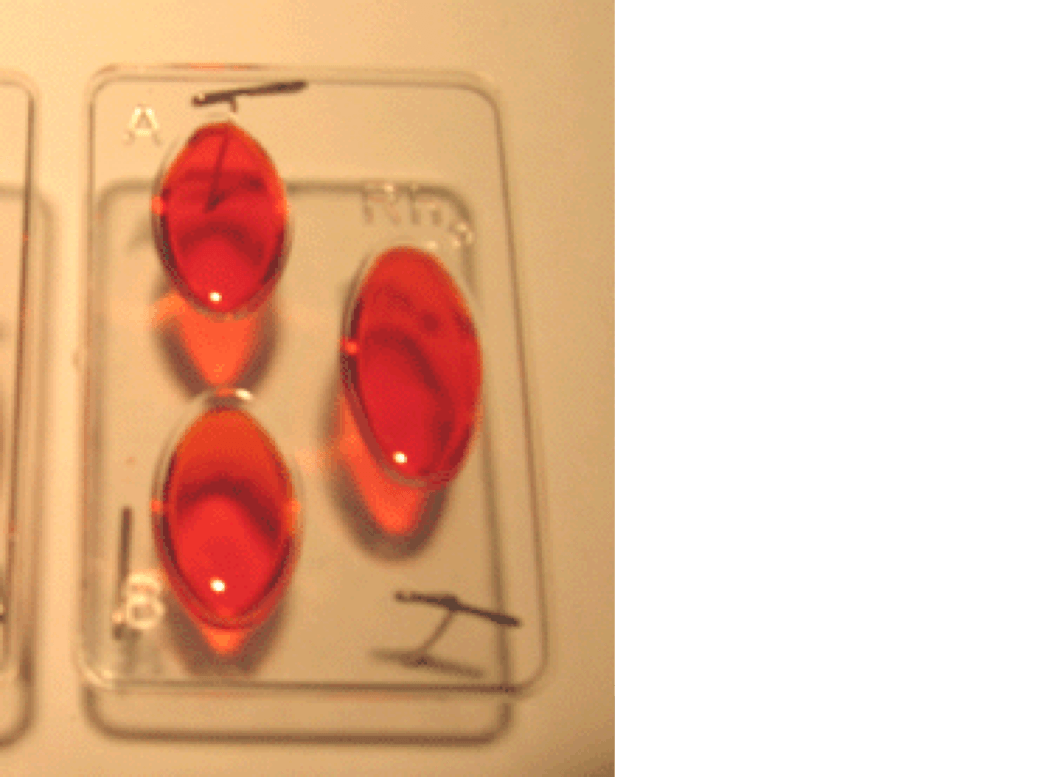
What type of blood does this person have given the image?
a)
Type A
b)
Type B
c)
Type AB
d)
Type O
28.
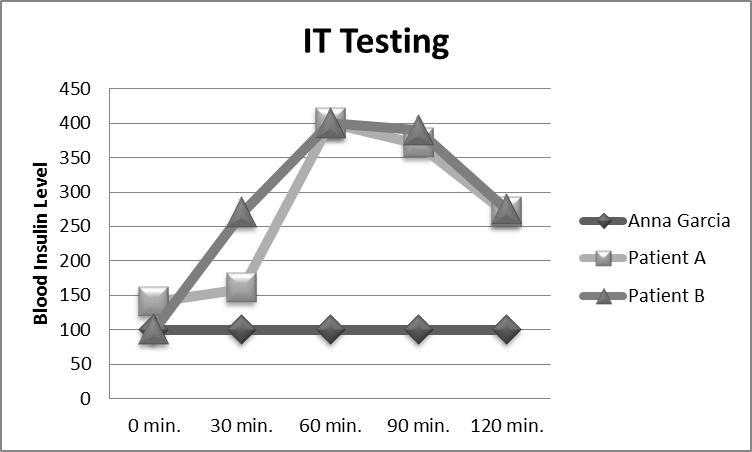
Which individual(s) has/have Type 1 diabetes?
a)
Anna only
b)
Patient A
c)
Patients A and B
d)
Patient B and Anna
29.
Which hormone is produced when blood sugar is LOW?
a)
glucagon
b)
insulin
c)
glucose
d)
pancreasome
30.
If a person has LOW blood sugar, they have
a)
hypoglycemia
b)
hyperglycemia
31.
Cells exposed to HIGH concentrations of sugar will
a)
expand
b)
shrink
c)
not change
d)
expand and then shrink
32.
Control of blood sugar levels in the body is an example of a
a)
positive feedback loop
b)
negative feedback loop
c)
neutral feedback loop
d)
cause-effect feedback loop
33.
What organ secretes digestive enzymes and make insulin
a)
Spleen
b)
Pancreas
c)
Liver
d)
Lungs
34.
The risk factors for developing type 2 diabetes include all of the following except:
a)
Advanced age
b)
obesity
c)
poor foot care
d)
physical inactivity
35.
The normal range for resting blood sugar is
a)
30-69 mg/dL
b)
70-130 mg/dL
c)
160-280 mg/dL
d)
425 mg/dL
36.
Untreated diabetes may result in all of the following except
a)
Blindness
b)
Cardiovascular disease
c)
kidney disease
d)
genetic mutations
37.
Individuals that suffer from diabetes experience increased concentrations of sugar in the blood known as ____. This condition causes the blood to be a ____solution.
a)
hypoglycemia;hypertonic
b)
hyperglycemia; hypotonic
c)
hypoglycemia; hypotonic
d)
hyperglycemia ;hypertonic
38.
The type of cells that make glucagon.
a)
alpha cells of pancreas
b)
beta cells of pancreas
c)
liver
d)
brain
39.
Identify symptoms associated with Type I Diabetes
I. Weight gain
II. Decreased urination
III. Feeling hungry
IV. Feeling thirsty
V. Weight loss
VI. Hyperactivity
I. Weight gain
II. Decreased urination
III. Feeling hungry
IV. Feeling thirsty
V. Weight loss
VI. Hyperactivity
a)
All of these
b)
I, III, V, VI
c)
III, IV, and V
d)
II, IV, VI
40.
Type of diabetes characterized by insulin resistance
a)
Type I
b)
Type II
41.
Out of the following, this is a treatment for Type 1 diabetes.
I. A diet low in carbs
II. Exercise
III. Insulin
IV. Anti-viral drugs
V. Warmer climates
I. A diet low in carbs
II. Exercise
III. Insulin
IV. Anti-viral drugs
V. Warmer climates
a)
All of these
b)
I, II, III, and V
c)
III
d)
III and V
42.
Processes that amplify a response to an external stimulus are known as
a)
positive feedback loops
b)
negative feedback loops
c)
external stimuli
d)
internal stimuli
43.
What does the term "steady state" refer to with respect to the process of homeostasis?
a)
balanced external environment
b)
balanced internal environment
c)
changing external environment
d)
changing internal environment
44.
Failure to maintain homeostasis could result in:
a)
lack of internal balance
b)
eventual death
c)
difficulty carrying on metabolism
d)
all three
45.
Negative Feedback Loops:
a)
amplify processes
b)
prevent small changes from getting larger
c)
are initiated during childbirth
d)
are found only in plants
46.
Maintaining body temperature is an example of a:
a)
negative feedback loop
b)
positive feedback loop
47.
The process of childbirth is an example of:
a)
negative feedback loop
b)
positive feedback loop
48.
Which organ belong with this system: endocrine
a)
kidneys
b)
glands
c)
brain
d)
bones
49.
Positive feedback is when the change caused by the stimulus is
a)
decreased
b)
non existant
c)
increased
d)
changes constantly
50.
Rapid growth during puberty causes your body to release more and more growth hormones. As you grow, more and more growth hormones are released until puberty is reached, and then the hormones stop.
a)
Positive Feedback Response
b)
Negative Feedback Loop
51.
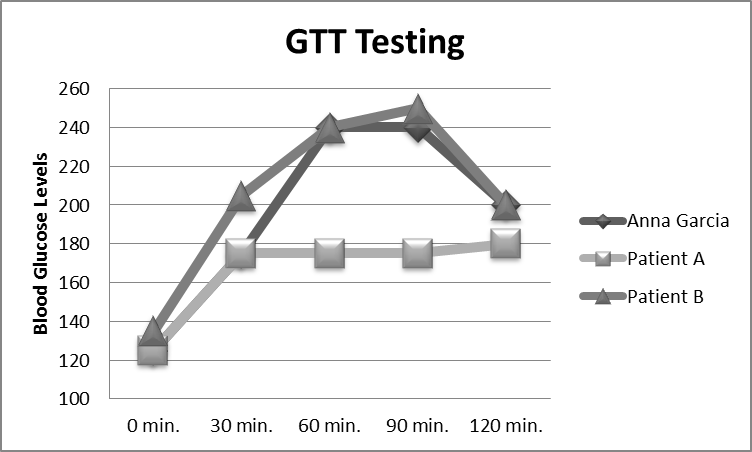
Which individual(s) has/have diabetes?
a)
Anna and Patients A and B
b)
Patient A only
c)
Patient B and Anna
d)
Patient A and Anna
52.
What is the job of LDL?
a)
Take cholesterol to the liver
b)
Take cholesterol to the cells
c)
Take cholesterol to the pancreas
d)
Take cholesterol to the blood
53.
What is the job of HDL?
a)
Take cholesterol to the liver
b)
Take cholesterol to the cells
c)
Take cholesterol to the pancreas
d)
Take cholesterol to the blood
54.
What is a lipoprotein?
a)
a fat that carries protein in the blood
b)
a protein that carries cholesterol in the blood
c)
a cell that carries blood to the liver
d)
a cell that transforms cholesterol into protein
55.
Which lipoprotein takes up more room?
a)
LDL
b)
HDL
56.
Which lipoprotein decreases your chances of heart disease?
a)
HDL
b)
LDL
c)
PDL
d)
BDL
57.
Total cholesterol should be under _____ mg/dL
a)
100
b)
150
c)
200
d)
250
58.
LDL cholesterol levels should be under ____ mg/dL.
a)
50
b)
100
c)
150
d)
200
59.
HDL cholesterol levels should be over ___ mg/dL.
a)
30
b)
40
c)
50
d)
60
60.
What process is used to analyze the DNA? (what we did in lab)
a)
Centrifuge
b)
Transcription
c)
Electrophoresis
d)
Protein synthesis
61.
DNA has an overall charge of __________.
a)
positive
b)
negative
c)
neutral
62.
Can someone be a carrier of the FH gene? Why or why not?
a)
Yes, because it is recessive
b)
Yes, because it is dominant
c)
No, because it is recessive
d)
No, because it is dominant
63.
What is the name of the “bands” we visually see and analyze in gel electrophoresis?
a)
Restriction Enzymes
b)
Double Helix
c)
Restriction Fragment Length Polymorphism
d)
Gel
64.
Draw a Punnett Square of a heterozygous male & heterozygous female with FH. What is the % chance of a child without FH?
a)
100%
b)
75%
c)
50%
d)
25%
65.
What is atherosclerosis?
a)
Plaque build up in the inner walls of arteries
b)
Plaque build up in the heart chambers
c)
Quivering contraction of the ventricles
d)
Quivering contraction of the atria
66.
What is angioplasty?
a)
Use of a balloon & stent to move plaque and reinforce the wall
b)
Use of a balloon to move plaque to clear pathway
c)
Use of new vessel to go around the blocked section of blood flow
67.
What is coronary artery bypass graft?
a)
Use of a balloon & stent to move plaque and reinforce the wall
b)
Use of a balloon to move plaque to clear pathway
c)
Use of new vessel to go around the blocked section of blood flow
68.
What is a function of the coronary arteries?
a)
Supply blood to the lungs
b)
Supply blood to the brain
c)
Supply blood to the heart
d)
Supply blood to the Aorta
69.
What is the medical term for heart attack?
a)
Myocardial infarction
b)
Hypertrophic cardiomyopathy
c)
Commotio cordis
d)
Myocardial difibrilation
70.
Which side of the heart pumps oxygen-rich blood to the rest of the body?
a)
Right
b)
Left
71.
Which side of the heart pumps blood into the lungs?
a)
Right
b)
Left
72.
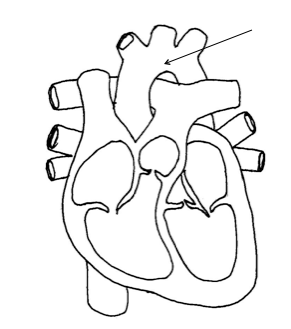
Name the part.
a)
Pulmonary vein
b)
Right atrium
c)
Aorta
d)
Pulmonary artery
73.
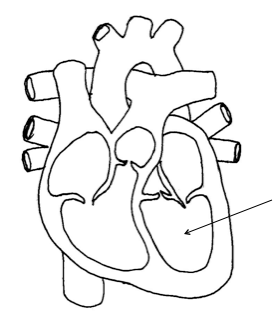
Name the part.
a)
Left ventricle
b)
Vena cava
c)
Right atrium
d)
Right ventricle
74.
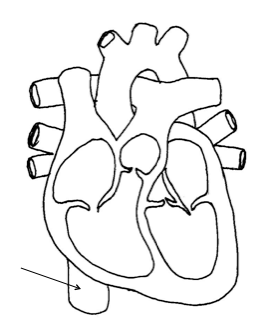
Name this part.
a)
Superior vena cava
b)
Right ventricle
c)
Inferior vena cava
d)
Pulmonary vein
75.
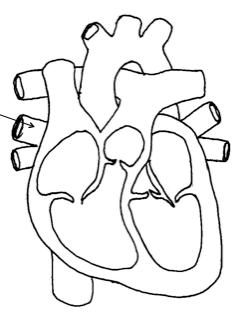
Name this part.
a)
Pulmonary veins
b)
Left atrium
c)
Aorta
d)
Pulmonary artery
76.
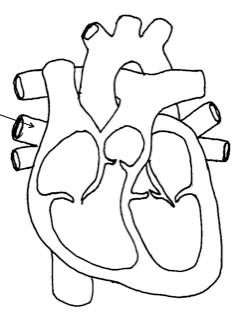
Name this part.
a)
Pulmonary veins
b)
Left atrium
c)
Aorta
d)
Pulmonary artery
77.
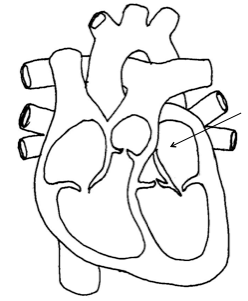
Name this part.
a)
Right atrium
b)
Left ventricle
c)
Right ventricle
d)
Left atrium
78.
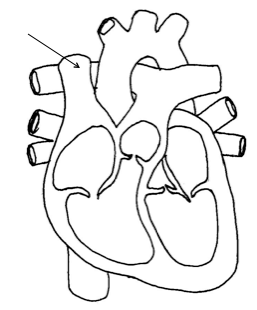
Name this part.
a)
Superior vena cava
b)
Right ventricle
c)
Right atrium
d)
Inferior vena cava
79.
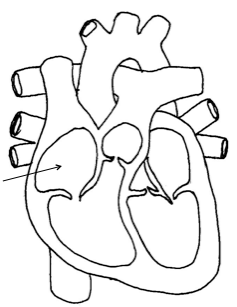
Name this part.
a)
Right ventricle
b)
Aorta
c)
Right atrium
d)
Atrium
80.
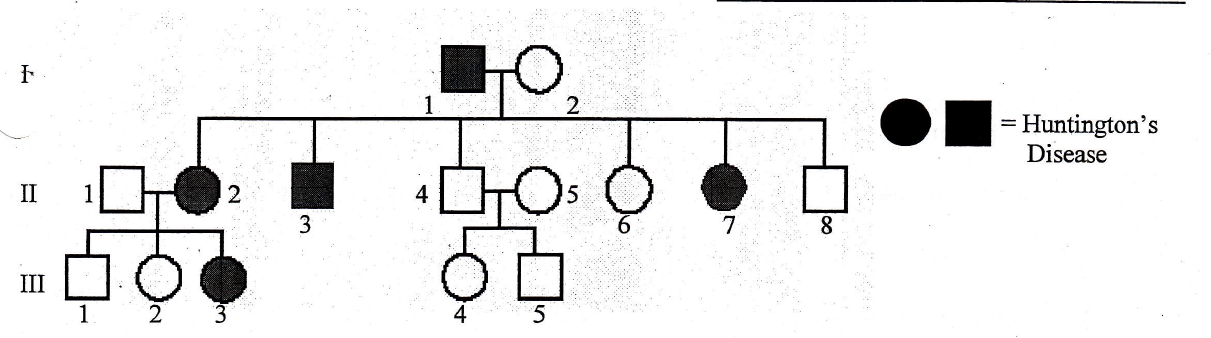
There are no carriers for Huntington's Disease- you either have it or you don't. Is Huntington's disease caused by a dominant or recessive trait?
a)
Dominant
b)
Recessive
81.

What does this shape represent in a pedigree?
a)
Not affected Female (doesn't have the trait)
b)
Not affected Male (doesn't have the trait)
c)
Affected Male (has the trait)
d)
Affected Female (has the trait)
82.

What does this shape represent in a pedigree?
a)
Not affected male (doesn't have the trait)
b)
Not affected female (doesn't have the trait)
c)
Affected male (has the trait)
d)
Affected female (has the trait)
83.
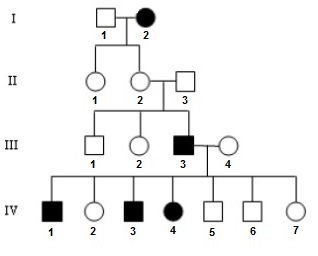
If hemophilia is a sex-linked recessive trait, what genotype would individual I-2 have?
a)
XBXb
b)
XbXb
c)
XBY
d)
XbY
84.
Infection and disease are caused by microorganisms called pathogens.
a)
True
b)
False
85.
Hand washing is an example of a(n)_______ technique.
a)
sterile
b)
aseptic
c)
antiseptic
d)
clean
86.
Viruses are not affected by antibiotics.
a)
True
b)
False
87.
What is used to treat someone with a bacterial infection such as strep throat
a)
aspirin
b)
radiation
c)
antibiotics
d)
ibuprophen
88.
What is the best environment for microorganisms to grow?
a)
sunny, cold and dry
b)
hot and dry
c)
warm, dark and moist
d)
cold and wet
89.
Which part of a bacteria cell wall "holds" the stain?
a)
plasma membrane
b)
fimbriae
c)
peptidoglycan
d)
pilus
90.
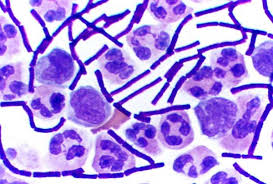
These bacteria are
a)
gram positive
b)
gram negative
c)
nonliving
d)
viral
91.
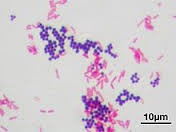
These bacteria are
a)
nonliving
b)
gram positive
c)
gram negative
d)
gram positive and gram negative
92.
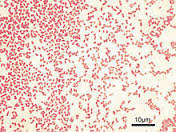
These bacteria are
a)
gram positive and negative
b)
gram positive
c)
gram negative
d)
viral
93.
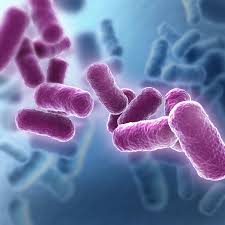
?
a)
coccus
b)
bacillus
c)
spirilla
d)
none of these
94.
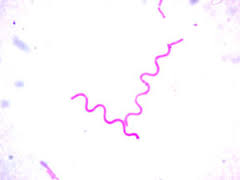
?
a)
coccus
b)
bacillus
c)
spirilla
d)
none of these
95.
Which is applied first in gram staining?
a)
alcohol
b)
grams iodine
c)
crystal violet
d)
safranin
96.
Which is applied last in gram staining?
a)
alcohol
b)
crystal violet
c)
safranin
d)
grams iodine
97.
Bacteria are classified by
a)
shape
b)
gram staining + or -
c)
both of these
98.
A disease that is spread through living organisms is known as
a)
A non-infectious disease
b)
A Bacterial Infection
c)
An infectious disease
d)
A virus
99.
Which is an example of a non-specific immune response
a)
T-Cells
b)
Memory Cells
c)
White Blood Cells
d)
Antibodies
100.
Which is an example of a specific immune response
a)
Saliva
b)
B Cells
c)
Tears
d)
Skin
101.
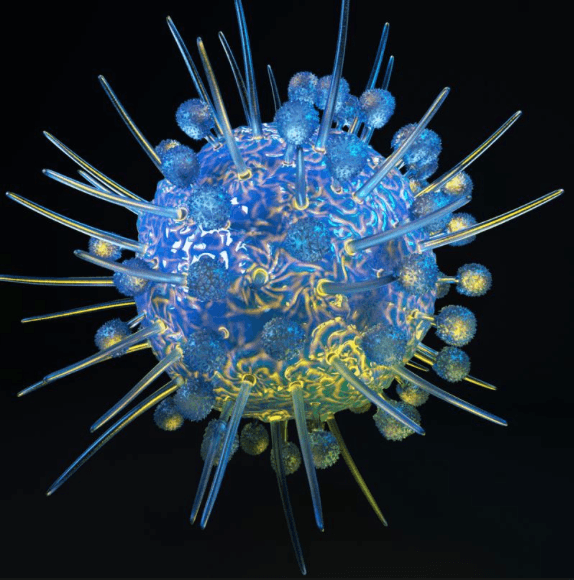
Most viruses do not kill humans. Why not?
a)
Viruses can only kill bacterial cells
b)
Humans have 100 trillion cells; viruses can't infect enough to kill
c)
Our immune cells hunt and kill viruses
d)
We have vaccines for all viruses
102.
Herd immunity is most effective at protecting infants and others who cannot have vaccines when
a)
everyone under 18 is vaccinated
b)
a high proportion of all people are vaccinated
c)
factory farming is outlawed
d)
antibiotic are used to treat viral infections
103.
Airborne transmission of viruses involves
a)
mosquitoes biting an infected person and flying to the next victim
b)
viral particles left on surfaces where they can picked up on people's hands
c)
viral particles are carried through the air in droplets when people sneeze
d)
bodily fluids containing virus are exchanged through skin-to-skin contact
104.
What do all viruses need to reproduce?
a)
They need host genetic material
b)
They need a host cell
c)
They need bacteria
d)
They need insulin
105.
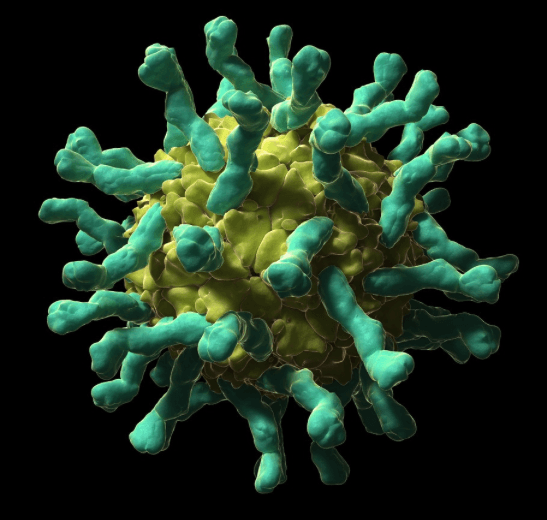
The reason that viruses are considered to be nonliving is because
a)
They are not cellular
b)
They cannot reproduce on their own
c)
They cannot make proteins
d)
all of the above
106.
A capsid is
a)
a structure that directly causes cell lysis
b)
the type of virus that attacks bacteria
c)
the genetic material of a virus
d)
the protein coat of a virus
107.
An infectious particle that is made of only proteins and causes other proteins to fold incorrectly is known as a _______________.
a)
viroid
b)
prion
c)
bacteriophage
d)
protista
108.
HIV is spread through
a)
droplet infection
b)
direct contact
c)
blood and bodily fluids
109.
Why is it important to complete a course of antibiotics?
a)
to prevent antibiotic resistance
b)
so you do not waste drugs
c)
because antibiotics are good for you
110.
What do antibodies do?
a)
bind and flag infectious agents
b)
destroys infectious agents
c)
recognizes infectious agents
111.
A disease spread through the air is called...
a)
Airborne
b)
Dropletborne
c)
Bareborne
d)
Waterborne
112.
White blood cells that eat pathogens.
a)
B cells
b)
T cells
c)
phagocytes
d)
amoeboids
113.
What is the first line of defense against pathogens?
a)
B cells
b)
T cells
c)
Skin
d)
Phagocytes
114.
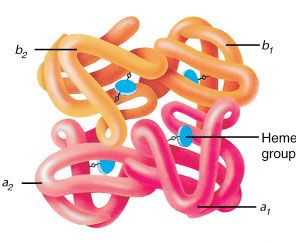
Hemoglobin is a _______.
a)
protein
b)
parasite
c)
plasma
115.
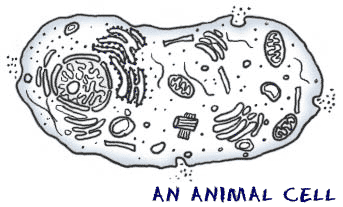
Most animal cells have an outer-layer that protects the inside; like our skull protects our brains. This protective layer is called:
a)
hemoglobin
b)
mitochondria
c)
cytoplasm
d)
membrane
116.
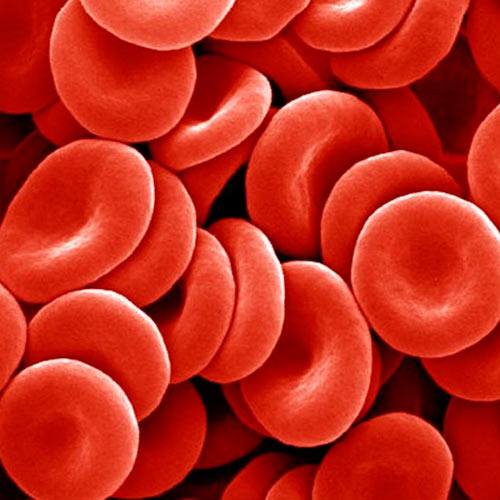
Red blood cells carry _______.
a)
blood
b)
oxygen
c)
water
117.
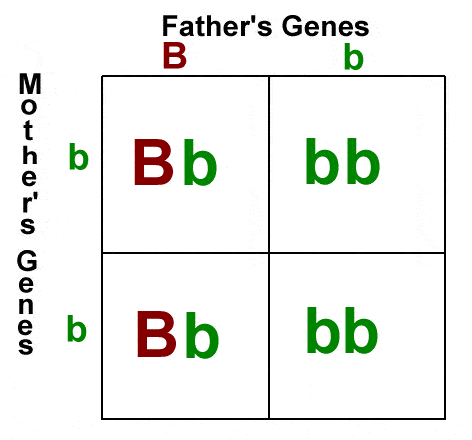
In this Punnet Square, the mother has two __________ genes.
a)
recessive
b)
dominant
118.
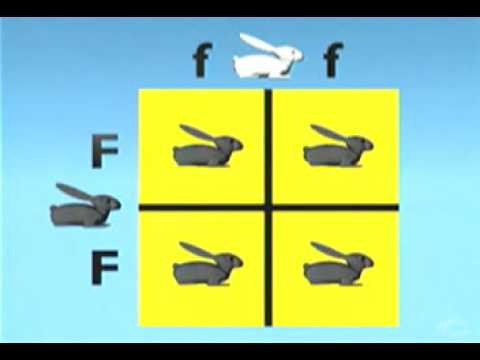
In this Punnet Square, grey fur is the ________ gene.
a)
recessive
b)
dominant
119.
If you have type B- blood, who can be your donor?
a)
B- only
b)
A- and AB-
c)
O- and B-
d)
AB+
120.
What happens if you receive blood from a blood type that doesn't match?
a)
The Antibodies do not bind with the antigen.
b)
Nothing happens.
c)
The immune system will attack the blood cells.
d)
The antigens change shape.
121.

Which of the following is not true about Sickle Cell Anemia?
a)
It is most common among those of African descent.
b)
It is caused by the genetic mutation that replaces GLU with VAL in the hemoglobin protein
c)
It is caused by a frame shift mutation
d)
It has a protective factor for malaria
122.
Anna's fingernails were bluish/grey in color. What is the medical term for this condition?
a)
azuritis
b)
cyanosis
c)
psoriasis
d)
anemia
123.
What is the hematocrit for the following test results: total volume = 8mm; RBC volume = 1.7mm
a)
25.2%
b)
15.4%
c)
21.25%
d)
18.75
124.
These are responsible for clotting the blood:
a)
Erythrocytes
b)
Thrombocytes
c)
Leukocytes
d)
Erytropoietin
125.
sickle cell anemia causes an abnormal shape of the ...
a)
platelets
b)
leukocytes
c)
blood vessels
d)
erythrocytes
126.
The function of erythrocytes is to transport ______ to the lungs.
a)
oxygen
b)
protein
c)
carbon dioxide
d)
platelets
127.
Pale yellow fluid portion of whole blood that consists of water & its dissolved constituents
a)
Plasma
b)
Leukocytes
c)
Anemia
d)
Erythropoietin
128.
Stiffening of the body is also known as
a)
Decomposition
b)
Mummification
c)
Rigor mortis
d)
None of the above
129.
To take a corpse’s temperature, forensic investigators insert a thermometer into the:
a)
liver
b)
mouth
c)
stomach
d)
underarm
130.
What is the MOST common manner of death?
a)
homicide
b)
accidental
c)
undetermined
d)
natural
131.
The reason someone dies is called the:
a)
type of death
b)
manner of death
c)
cause of death
d)
mechanism of death
100 %