
 Worksheets
body systems
Total questions: 136
Worksheet time: 1hrs 21mins
Name
Class
Date
1.
Muscular, pouch-like enlargement of the digestive system
a)
Pancreas
b)
Stomach
c)
Epiglottis
d)
Pepsin
2.
Flap of skin that covers the opening to the windpipe during swallowing
a)
Stomach
b)
Pepsin
c)
Pancreas
d)
Epiglottis
3.
Digestive enzyme that is found in the stomach and begins the digestion of proteins
a)
Esophagus
b)
Pepsin
c)
Peristalsis
d)
Epiglottis
4.
Series of involuntary contractions along the walls of the digestive tract
a)
Peristalsis
b)
Epiglottis
c)
Pepsin
d)
Stomach
5.
Muscular tube that connects the mouth to the stomach
a)
Epiglottis
b)
Peristalsis
c)
Stomach
d)
Esophagus
6.
Which organ system provides support, protection, movement, and storage (Ca)
a)
nervous
b)
skeletal
c)
muscular
d)
respiratory
7.
Which organ system removes metabolic wastes?
a)
nervous
b)
digestive
c)
excretory
d)
circulatory
8.
Which organ system breaks down food into molecules the body can use?
a)
digestive
b)
muscular
c)
respiratory
d)
reproductive
9.
Small muscular pouch responsible for storing bile
a)
pancreas
b)
mechanical
c)
amylase
d)
gallbladder
10.
Gland that produces insulin as well as other chemicals needed for digestion
a)
pancreas
b)
mechanical
c)
amylase
d)
gallbladder
11.
Main type of digestion that occurs in the stomach
a)
mechanical
b)
chemical
c)
amylase
d)
gallbladder
12.
Digestive enzyme found in saliva
a)
mechanical
b)
chemical
c)
amylase
d)
gallbladder
13.

What is part J?
a)
anus
b)
esophagus
c)
duodenum
d)
rectum
14.

What is part F?
a)
mouth
b)
small intestine
c)
rectum
d)
esophagus
15.

What is the correct sequence that food follows through the digestive system?
a)
H, I, F, B
b)
F, G, I, J
c)
F, G, D, I
d)
A, I, D, F
16.
Which of these stages of digestion includes a chemical change?
a)
peristalsis
b)
chewing
c)
saliva
d)
large intestine
17.
Which stage of digestion removes water?
a)
large intestine
b)
small intestine
c)
mouth
d)
stomach
18.
What is the name of the molecule in saliva that chemically digests food?
a)
bile
b)
stomach acid
c)
enzymes
d)
chyme
19.
Where does chemical digestion begin?
a)
mouth
b)
esophagus
c)
stomach
d)
small intestine
20.
Bile breaks down food chemically, peristalsis moves the food along, and nutrients are removed from the food.
Name the stage of digestion!
Name the stage of digestion!
a)
mouth
b)
esophagus
c)
small intestine
d)
large intestine
21.
Where nutrients go after the small intestine has absorbed them.
a)
bloodstream
b)
stomach
c)
esophagus
d)
kidneys
22.
The body system that includes the kidneys and bladder.
a)
endocrine system
b)
integumentary system
c)
excretory system
d)
reproductive system
23.

This is a smooth muscle tube for voiding. (urination)
a)
ureters
b)
urinary bladder
c)
urethra
d)
calyx
24.

This is a group of capillaries that make up the nephron.
a)
glomerulus
b)
calyx
c)
medulla
d)
cortex
25.

This is a hollow, muscular organ that stores urine until it is excreted.
a)
kidney
b)
ureter
c)
urethra
d)
urinary bladder
26.

These vessels transport urine from the renal pelvis to the urinary bladder.
a)
renal tubules
b)
ureters
c)
vas deferens
d)
urethra
27.

This is the functional unit of the kidney.
a)
nephron
b)
glomerulus
c)
calyx
d)
tubules
28.

This is also called the Excretory or Renal system
a)
Digestive System
b)
Immune System
c)
Urinary System
d)
Lymphatic System
29.

This is a bean shaped organ that forms urine.
a)
ureter
b)
adrenal gland
c)
kidney
d)
urethra
30.

This is the soft inner layer of the kidney.
a)
medulla
b)
cortex
c)
calyx
d)
glomerulus
31.

This is the protective outer layer of the kidney.
a)
medulla
b)
cortex
c)
calyx
d)
glomerulus
32.

This is the funnel shaped part of the kidney that collects urine.
a)
renal pelvis
b)
renal pyramids
c)
renal corpuscle
d)
renal columns
33.

This means voiding or urination;
a)
mastication
b)
ossification
c)
micturition
d)
reabsorption
34.
There are _______ bones in an adult human skeleton.
a)
300
b)
200
c)
206
d)
306
35.
What does the skull protect?
a)
cranium
b)
lungs
c)
kidneys
d)
brain
36.
The humorous is found in your _____________.
a)
leg
b)
arm
c)
hip
d)
head
37.
The tibia is the ___________ bone in your __________.
a)
small, arm
b)
large, arm
c)
small, leg
d)
large, leg
38.
True or False.
Blood cells are produced in the bone marrow found in long bones.
Blood cells are produced in the bone marrow found in long bones.
a)
True
b)
False
39.
True or False.
Your doctor would take an x-ray if he of she thought you broke a bone.
Your doctor would take an x-ray if he of she thought you broke a bone.
a)
True
b)
False
40.
True or False.
Elderly people have very strong bones.
Elderly people have very strong bones.
a)
True
b)
False
41.
Broken bones can heal.
a)
True
b)
False
42.
Cartilage is as hard as bone.
a)
True
b)
False
43.
What is the purpose of our joints?
a)
Move and bend
b)
Jump and Taste
c)
Move and Think
d)
Bend and Sleep
44.
Where can you find a hinge joint?
a)
hip
b)
knee
c)
neck
d)
wrist
45.
Where would you find a ball and socket joint?
a)
elbow
b)
wrist
c)
knee
d)
shoulder
46.

a)
vertebrae
b)
skull
c)
patella
d)
sternum
47.

a)
femur
b)
humorous
c)
collar
d)
scapula
48.

a)
pelvis
b)
clavicle
c)
mandible
d)
sternum
49.

a)
radius
b)
ulna
c)
humorous
d)
tibia
50.

a)
humorous
b)
femur
c)
tibia
d)
fibula
51.

a)
fibula
b)
tibia
c)
patella
d)
radius
52.

a)
ulna
b)
radius
c)
humorous
d)
femur
53.

a)
patella
b)
ulna
c)
radius
d)
humorous
54.

a)
sternum
b)
ribs
c)
radius
d)
ulna
55.

a)
tibia
b)
fibula
c)
femur
d)
ulna
56.

a)
clavicle
b)
cranium
c)
vertebrae
d)
scapula
57.

a)
scapula
b)
tibia
c)
sternum
d)
ulna
58.
Which is NOT a job of the skeletal system?
a)
Protect
b)
Think
c)
Move
d)
Support
59.

a)
clavicle
b)
cranium
c)
humorous
d)
tibia
60.

a)
radius
b)
ulna
c)
fibula
d)
tibia
61.
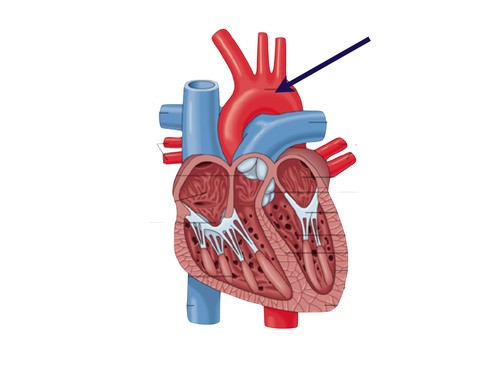
Identify
a)
Pulmonary veins
b)
Pulmonary artery
c)
Aorta
d)
Vena cava
62.
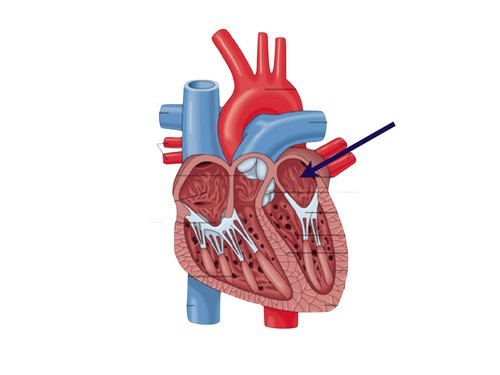
Identify
a)
Left atrium
b)
Right atrium
c)
Left ventricle
d)
Right ventricle
63.
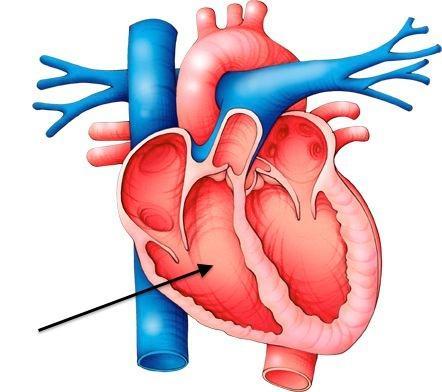
Identify
a)
Left atrium
b)
Right atrium
c)
Left ventricle
d)
Right ventricle
64.
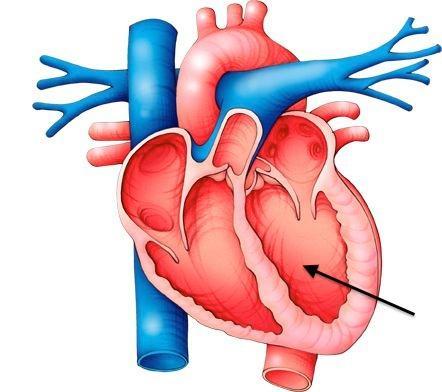
Identify
a)
Left atrium
b)
Right atrium
c)
Left ventricle
d)
Right ventricle
65.
The heart has ___ chambers.
a)
1
b)
2
c)
3
d)
4
66.
This chamber of the heart RECEIVES blood returning from the body
a)
Right Atrium
b)
Right Ventricle
c)
Left Atrium
d)
Left Ventricle
67.
Which chambers of the heart are the thickest and strongest?
a)
Atria
b)
Ventricles
c)
Valves
d)
Aorta
68.

True or False: There are four chambers in the heart.
a)
True
b)
False
69.
The aorta is the largest artery in the body. The blood leaving the aorta is full of?
a)
Oxygen
b)
Carbon Dioxide
c)
White blood Cells
d)
Potassium
70.
Thin-walled vessels that allow for the exchange of O2 , CO2, nutrients and wastes between blood cells or air sacs in the lungs
a)
Arteries
b)
Veins
c)
Capillaries
71.

What does Deoxygenated mean?
a)
Oxygen-rich
b)
Blood flow
c)
Oxygen-poor
d)
Water Flow
72.

A flap of tissue that prevents blood from flowing backward
a)
Aorta
b)
Atrium
c)
Septum
d)
Valve
73.
Carry blood away from heart; mostly oxygen-rich
a)
Arteries
b)
Veins
c)
Capillaries
74.
Blood circulation from the heart to the rest of the body is called
a)
Full body
b)
Systemic
c)
pulmonary
d)
heart to lung
75.
What is pulmonary circulation?
a)
Blood travelling to and from the lungs
b)
Blood travelling to and from the body
c)
A blood clot in the lungs
d)
The vessel that brings blood to the lungs
76.
Which is the correct definition of the Circulatory system?
a)
The system fights disease so the body stays healthy.
b)
The system that circulates blood and oxygen through the body, consisting of the heart,blood vessels,and blood.
c)
Breaks down food into smaller pieces and absorbs those nutrients into the body.
d)
Provides shape and structure for the body.
77.
What function does the heart do?
a)
Protects organs and produces red blood cells.
b)
Generates heat.
c)
Breaks down food into nutrients.
d)
The heart is a pump, which moves the blood. The arteries and veins are the pipes where the blood flows.
78.
What is the main function of the artery?
a)
It controls your brain and your thought process.
b)
They carry oxygen- poor blood BACK to the heart.
c)
Arteries carry oxygen- rich blood AWAY from the heart.
d)
It receives information (senses) and sends messages to the body about how to react to things.
79.
Which is NOT a function of the circulatory system?
a)
deliver O2 and nutrients to cells
b)
remove CO2 and wastes from cells
c)
break down carbohydrates into glucose
d)
transport other materials through body
80.
Structure(s) that keep the blood flowing in one direction.
a)
Valve(s)
b)
Septum(s)
c)
Neuron(s)
d)
Bronchiole(s)
81.
arteries, veins, and capillaries are three types of __________
a)
heart valves
b)
blood vessels
c)
cells
d)
veins
82.

What does the Circulatory System do?
a)
Circulates the Blood throughout the body
b)
Circulates Water throughout the body
c)
Excretes Waste
d)
Controls all parts of the body
83.
What is an upper, thin-walled chamber through which blood is pumped to the ventricles?
a)
Valves
b)
Veins
c)
Ventricles
d)
Atrium
84.

What is a lower, thick-walled chamber that receives blood from the Atrium?
a)
Ventricle
b)
Valve
c)
Aorta
d)
Pericardium
85.

What is the Circulatory System also known as?
a)
The heart
b)
Cardiovascular System
c)
Nervous System
d)
Aorta
86.

What is the functon of an Pulmonary Circulation?
a)
Sends blood from the heart to the lungs to be purified.
b)
Carries the blood from the heart throughout the body
c)
Temporarily close a passage or permits blood flow in only one direction.
d)
Makes you bleed
87.

What do Red-Blood cells do?
a)
Carry oxygen from the lungs to the body cells and transport carbon dioxide from the cells back to the lungs
b)
keeps blood flowing in one direction to the heart and prevent blood from flowing backwards
c)
Collects blood from the capillaries and drain it into the veins
d)
Bring nutriients to the cells and carries away waste materials.
88.

What does blood do?
a)
Carries Water to cells
b)
Carries Oxygen to cells
c)
Carries Food to cells
d)
All of the above
89.
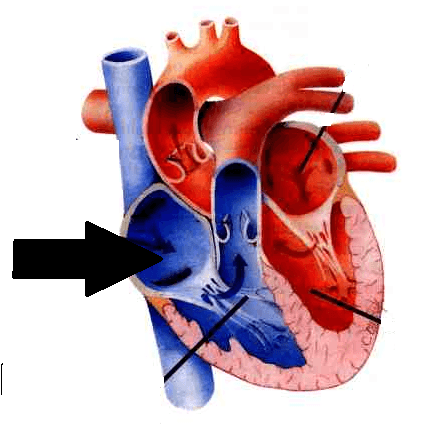
Identify
a)
Left atrium
b)
Right atrium
c)
Left ventricle
d)
Right ventricle
90.
Chewing food is an example of _____________.
a)
chemical digestion
b)
physical digestion
91.
Food being broken down by enzymes found in saliva is an example of
a)
chemical digestion
b)
physical digestion
92.

The red organ is
a)
stomach
b)
small intestine
c)
large intestine
d)
liver
93.

The organ highlighted is the
a)
stomach
b)
small intestine
c)
liver
d)
large intestine
94.

The highlighted organ is the
a)
anus
b)
small intestine
c)
large intestine
d)
liver
95.

The highlighted organ is the
a)
liver
b)
large intestine
c)
small intestine
d)
stomach
96.

This is an image of the
a)
stomach
b)
small intestine
c)
esophagus
d)
large intestine
97.
This structure is where most of the chemical digestion takes place:
a)
esophagus
b)
small intestine
c)
anus
d)
large intestine
98.
Peristalsis refers to
a)
one of the digestive organs
b)
the action of the stomach
c)
heart rate increasing
d)
smooth muscles moving food through the digestive system
99.
Inside the large intestine you would observe
a)
mechanical digestion
b)
chemical digestion
c)
chemical digestion
d)
no digestion
100.
Where would you expect to find hydrochloric acid?
a)
stomach
b)
small intestine
c)
liver
d)
large intestine
101.

The ___ is a funnel-shaped sac located inside the renal sinus.
a)
renal capsule
b)
renal medulla
c)
renal cortex
d)
renal pelvis
102.

Each of the following organs is part of the urinary system EXCEPT the
a)
kidney
b)
rectum
c)
urethra
d)
ureter
103.

Urine is charred to the urinary bladder by
a)
ureters
b)
the uretha
c)
bood vessels
d)
none of these are correct
104.
Urine production takes place in the:
a)
nephrons
b)
bladder
c)
ureter
d)
renal pelvis
105.
Urine exits the bladder and the body through a tube called the:
a)
Ureter
b)
Urinary tract
c)
Urethra
d)
Bladder
106.

What is organ 1.
a)
Kidney
b)
Ureter
c)
Bladder
d)
Urethra
107.

What is #2?
a)
Kidney
b)
Ureters
c)
Bladder
d)
Urethra
108.

What is #3?
a)
Kidney
b)
Ureters
c)
Bladder
d)
Urethra
109.

What is #4?
a)
Kidney
b)
Ureter
c)
Bladder
d)
Urethra
110.

Identify Letter J
a)
Distal Convoluted Tubule
b)
Collecting Duct
c)
Peritubular Capillaries
d)
Proximal Convoluted Tubule
111.

Identify Letter H
a)
Ureter
b)
Renal Capsule
c)
Renal Coretx
d)
Renal Medulla
112.

Identify Letter G
a)
Ureter
b)
Renal Capsule
c)
Renal Cortex
d)
Renal Medulla
113.

Identify Letter D
a)
Adrenal Gland
b)
Renal Artery
c)
Renal Vein
d)
Renal Pelvis
114.

Identify Letter B
a)
Adrenal Gland
b)
Renal Artery
c)
Renal Vein
d)
Renal Pelvis
115.
What is the name of the collar bone?
a)
Clavicle
b)
Scapular
c)
Sternum
d)
Xiphoid
116.
What Is The Largest Bone In Your Body?
a)
Skull/Cranium
b)
Humerus
c)
Femur
d)
Rib Cage
117.

How Many Bones Are In The Skeletal System?
a)
150
b)
80
c)
300
d)
206
118.
Which of the following is not a function of bones?
a)
Protection
b)
Blood cell formation
c)
Storage
d)
Absorption
119.

The bones in your back are made up of what?
a)
fingers
b)
phalanges
c)
vertebrate
d)
toes
120.

What is the place where two bones meet?
a)
hinge
b)
bone
c)
spot
d)
joint
121.
What are the bones that protect your heart and lungs?
a)
rib cage
b)
sternum
c)
clavicle
d)
femur
122.
Whats all the little bones in your finger called
a)
Carpals
b)
Tiny Sticks
c)
Phalanges
d)
Spider Webs
123.

What is another name for the kneecap?
a)
Patella
b)
Tibia
c)
Fibia
124.

What bones is highlight?
a)
Femur
b)
Humerous
c)
Skull
d)
Shin
125.

What protects our brain?
a)
Cranium
b)
Nose
c)
Chin
d)
Neck
126.
The sternum is also known as your?
a)
Breastbone
b)
Shoulder
c)
Elbow
127.

a)
humerus
b)
clavicle
c)
ribs
d)
scapula
128.

a)
ulna
b)
humerus
c)
radius
d)
vertebrae
129.

a)
ulna
b)
humerus
c)
radius
d)
vertebrae
130.

a)
ulna
b)
radius
c)
humerus
d)
clavicle
131.

a)
tibia
b)
fibula
c)
radius
d)
calcaneus
132.

a)
metatarsals
b)
carpals
c)
tarsals
d)
metacarpals
133.

a)
tibia
b)
femur
c)
fibula
d)
humerus
134.

What do the bones create?
a)
white blood cells
b)
platlets
c)
red blood cells
d)
flying turkeys
135.
This layer lies directly beneath the compact bone:
a)
Periosteum
b)
Bone Marrow
c)
Soft bone
d)
Cancellous (spongy) bone
136.

a)
humerus
b)
clavicle
c)
ribs
d)
scapula
100 %