
 Worksheets
7th Grade Final Review 2017
Total questions: 150
Worksheet time: 3hrs 3mins
Name
Class
Date
1.
A series of steps used by scientists to solve a problem or answer a question.
a)
scientific method
b)
recipe
c)
data collection
d)
metric system
2.
Which is NOT a step in the scientific method?
a)
Make observation
b)
Form a theory
c)
Collect data
d)
Form a hypothesis
3.
A testable explanation to a problem that has not yet been tested.
a)
data
b)
theory
c)
hypothesis
d)
fact
4.
This variable in an experiment is the one being changed by the scientist.
a)
dependent variable
b)
independent variable
c)
data
d)
control group
5.
Testing a hypothesis often involves a(n):
a)
answer
b)
experiment
c)
problem
d)
safety check
6.
What is a hypothesis?
a)
A hypothesis is the right answer to an experiment.
b)
A hypothesis is the wrong answer to an experiment.
c)
A hypothesis is an educated guess.
d)
I don't know.
7.
The summary at the end of an experiment that explains the results.
a)
conclusion
b)
procedures
c)
materials
d)
responding variable
8.
The name of the information that you get from your experiment (you organize it into charts and graphs).
a)
observations
conclusion
conclusion
b)
data
c)
variables
d)
hypothesis
9.
An experiment is performed on plants to see how different liquids affect plant growth. Each plant in the experiment is given a different liquid; water, apple juice, or milk. Each plant has the same amount of soil, sunlight, and listens to the same music. In this investigation, the independent variable is ...
a)
The type of plant
b)
The amount of sunlight
c)
The type of music
d)
The type of liquid
10.
If you increase the amount of spinach you eat, then you will increase the iron in your blood.
What's the dependent variable?
What's the dependent variable?
a)
increase the amount of iron in your blood
b)
spinach you eat
11.
Dependent variable means
a)
the scientist controls what to test
b)
educated guess
c)
ask a question
d)
what is being measured
12.
If I ride my bike to school instead of walking, then I will get to school faster. What is the dependent variable?
a)
True
b)
How fast you get to school
c)
Riding a bike or walking
d)
False
13.
If I study for my scientific method test, then I will have a better test score. What is the dependent variable?
a)
Scientific Method
b)
Studying
c)
Independent variable
d)
Test score
14.
If I listen to Mr. Castro's instructions, then I will have less accidents in the lab. What is the independent variable?
a)
Yes
b)
Maybe
c)
Listening or not listening to instructions
d)
Likelihood of having an accident in lab
15.
What is observation?
a)
Using the 5 senses and available tools to make conclusions and formulate opinions
b)
Asking questions
c)
Singing songs
d)
Dancing
16.
What is an inference?
a)
Just a guess.
b)
A statement based off of your observations.
c)
The same as an observation.
d)
Examples of something.
17.
What are the two types of observations?
a)
Qualitative and Quanitative
b)
Personal and Educational
c)
A prediction about something.
d)
Examples of something.
18.
Which statement is an observation?
a)
That house is empty because there are no lights on.
b)
Her hair is brown.
c)
Her hair is brown because she dyed it.
d)
Her hair has not been cut in two years.
19.

Which statement is an inference about this picture?
a)
The van is tan.
b)
The van ran into KFC.
c)
The driver was hungry.
d)
Red and white are part of the KFC building.
20.
Finish the observation.
The water is...
The water is...
a)
79 degrees
b)
very hot
c)
super cold
d)
deep
21.
Finish the inference...
The deer ran
The deer ran
a)
over the hill.
b)
to the North.
c)
because it was scared.
d)
and then stopped.
22.

Which of the following is a quanitative. observation?
a)
The bird is very colorful.
b)
The bird has 4 different colors on him.
c)
The bird has many, many feathers.
d)
It is a bird.
23.

What is a qualitative observation about this image?
a)
There are 10 mini trees in the picture.
b)
There are two color bushes in the picture.
c)
There is one powerline going across in the air.
d)
There is art created from trees in this photo.
24.
What is not an observation?
a)
There are three oranges on the table.
b)
The teacher's favorite fruit are peaches.
c)
There are several types of fruit on the table.
d)
There is one green apple and one red apple on the table.
25.
Any living thing is called an
a)
organ
b)
organization
c)
organism
26.
All living organisms are made up of ____.
a)
Cells
b)
Bacteria
c)
Organs
d)
Tissue
27.
Respiration (breathing) is needed for........
a)
energy production
b)
getting rid of waste
c)
reproduction
d)
wind
28.
A living thing that is made up of only one cell
a)
Multicellular
b)
Unicellular
c)
Organism
29.
A living thing that is made up of two or more than one cell
a)
Unicellular
b)
Multicellular
c)
One celled
30.
An organism's ability to maintain steady internal conditions when outside conditions change
a)
Homeostasis
b)
Organizatoin
c)
Homephone
31.
When living things adjust and respond to changes in their internal and external environments
a)
Response to Stimuli
b)
Homeostasis
c)
Energy
32.
Living things use energy for all the processes they perform. Living things get energy by making their own food, eating food, or absorbing food.
a)
Organization
b)
Energy
c)
Reproduction
33.
Living things grow by increasing cell size and increasing in cell number. Living things develop and cells develop specialized functions.
a)
Reproduction
b)
Organization
c)
Growth and Development
34.
When living things maintain a stable internal environment.
a)
Homeostasis
b)
Growth and Development
c)
Response to Stimuli
35.
Living things make more living things by this process
a)
Reproduction
b)
Growth and Development
c)
Organization
36.
In order from smallest to largest, what are the five levels of organization in the body?
a)
organism, organ system, organ, tissue, cell
b)
cell, organ, organ system, tissue, organism
c)
cell, tissue, organ, organ system, organism
d)
cell, tissue, organ system, organ, organism
37.
Tissue that works together to perform a function
a)
organ
b)
cell
c)
organ system
d)
organism
38.
What do you have when organ systems work together?
a)
organs
b)
organism
c)
cells
d)
tissue
39.
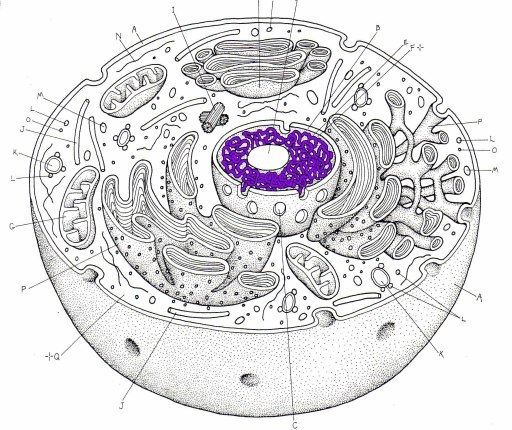
What kind of cell is this?
a)
Eukaryotic
b)
Prokaryotic
40.
Cells can only be seen with the help of a...
a)
hand lens
b)
magnifying glass
c)
3D glasses
d)
microscope
41.
What is unicellular?
a)
one cell
b)
many cells
c)
no nuclues
d)
DNA
42.
What is multicellular?
a)
one cell
b)
no cells
c)
many cells
d)
no nucleus
43.
All cells come from other...
a)
cells
b)
plants
c)
nucleus
d)
microscopes
44.
What type of cell has a nucleus?
a)
eukaryotic
b)
prokaryotic
45.
What type of cell does not have a nucleus?
a)
eukaryotic
b)
prokaryotic
46.
Plants and animal cells are examples of ___ cells
a)
prokaryotic cells
b)
eukaryotic cells
47.
Bacteria is what kind of cell?
a)
Eukaryotic
b)
Prokaryotic
48.
Sac within the cytoplasm that is full of fluid; plants have one large; stores food, water, etc.
a)
vacuole
b)
cell wall
c)
lysosome
d)
ribosome
49.
Gives the cell a rigid, box-like shape; outside of the cell membrane; in plants.
a)
cytoplasm
b)
chromatin
c)
cell wall
d)
cell membrane
50.
Consists of a jellylike substance that contains many organelles.
a)
ribosomes
b)
cytoplasm
c)
chloroplasts
d)
cell wall
51.
Which organelle uses energy from sunlight to make sugar?
a)
mitochondria
b)
nucleus
c)
chloroplasts
d)
vacuoles
52.
Which part of the cell is often called "the brain of the cell"?
a)
nuclear membrane
b)
endoplasmic reticulum
c)
nucleus
d)
ribosomes
53.

I am the outer most layer of an animal cell. What am I?
a)
cell wall
b)
nucleus
c)
cell membrane
d)
cell skin
54.

I make proteins for the cell. What am I?
a)
ribosome
b)
mitochondria
c)
chloroplast
d)
lysosome
55.

You might think of me as the trash collector or recycler is maybe more accurate. What am I?
a)
cytoplasm
b)
lysosme
c)
vacuole
d)
ribosome
56.

I am a protein packaging and shipping machine! Who am I?
a)
vacuole
b)
ribosome
c)
endoplasmic reticulum
d)
golgi apparatus
57.

I store water in both plant and animal cells. What am I?
a)
cytoplasm
b)
ribosomes
c)
vacuole
d)
lysosomes
58.

I am only found in a plant cell. What am I?
a)
cell wall
b)
mitochondria
c)
cytoplasm
d)
chloroplast
59.

What is this?
a)
mitochondria
b)
lysosomes
c)
chloroplast
d)
endoplasmic reticulum
60.

What does this structure do?
a)
supports the cell
b)
cell's control center
c)
converts energy to food
d)
makes proteins
61.

What is the picture
a)
ribosome
b)
nucleus
c)
cell wall
d)
mitochondrion
62.
When a cell divides, what do we call the 2 new cells?
a)
mother cells
b)
father cells
c)
daughter cells
d)
son cells
63.
When you start with 1 cell, at the end of mitosis, how many identical cells will you have?
a)
1
b)
2
c)
3
d)
4
64.

Name the phase:
a)
Anaphase
b)
Telophase
c)
Metaphase
d)
Prophase
65.

What is the next phase of mitosis?
a)
Prophase
b)
Metaphase
c)
Anaphase
d)
Telophase
66.

Name the phase:
a)
Prophase
b)
Metaphase
c)
Anaphase
d)
Telophase
67.

Name the phase:
a)
Prophase
b)
Metaphase
c)
Anaphase
d)
Telophase
68.

Name the phase:
a)
Prophase
b)
Metaphase
c)
Anaphase
d)
Telophase
69.

The stages of mitosis in order
a)
Metaphase, Anaphase, Prophase, Telophase
b)
Prophase, Anaphase, Metaphase, Telophase
c)
Prophase, Metaphase, Anaphase, Telophase
d)
Anaphase, Prophase, Telophase, Metaphase
70.
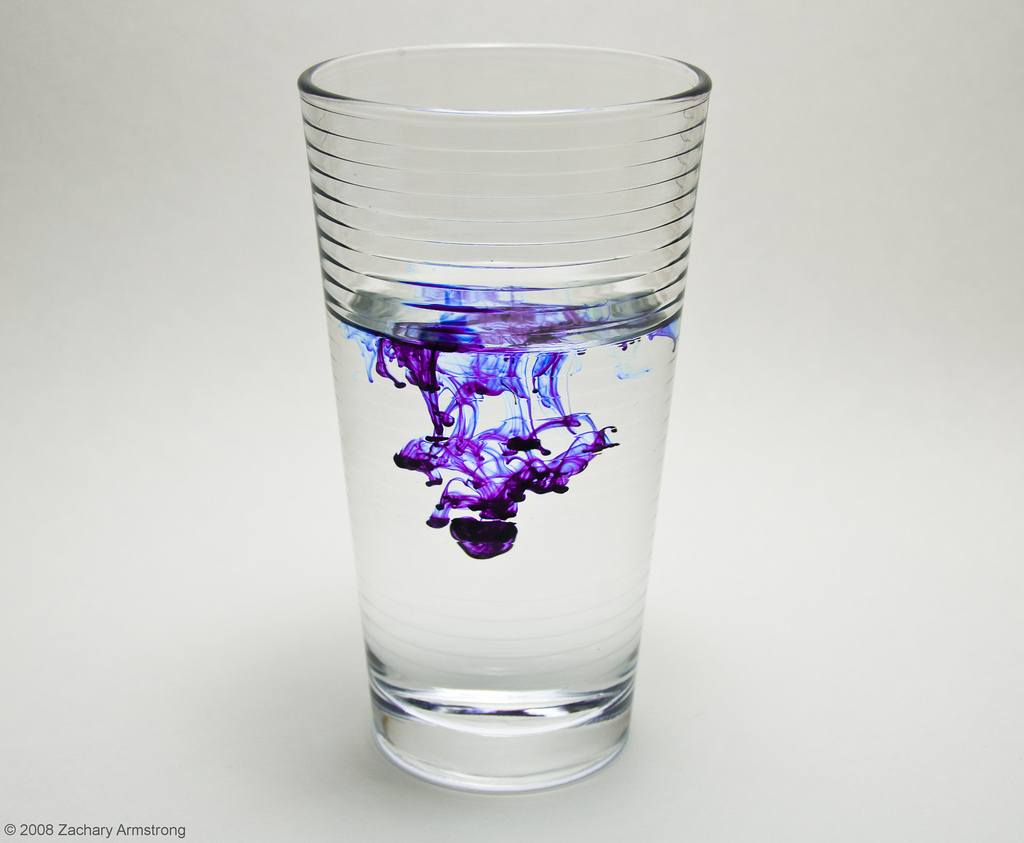
Where is there a low concentration of dye?
a)
at the bottom of cup
b)
in the color
c)
at the top of cup
d)
no concenteraion gradient
71.
Osmosis is the movement of _____ across a membrane.
a)
food
b)
energy
c)
oxygen
d)
water
72.

Where is there a high concentration of water?
a)
in the flower
b)
cannot be determined by picture.
c)
in the vase
d)
in the leaves
73.
Passive transport requires no
a)
concentration gradients
b)
osmosis
c)
motion
d)
energy
74.
What is diffusion?
a)
when molecules move
b)
when molecules move from a high concentration to a low.
c)
no movement
d)
molecules move everywhere
75.
Diffusion and Osmosis are examples of...
a)
Active Transport
b)
Passive Transport
76.

_______ regulates what enters and leaves a cell.
a)
Cell Membrane
b)
Nucleus
c)
Mitochondria
d)
Cytoplasm
77.

What is the source of energy for photosynthesis?
a)
carbohydrates-chemical
b)
sunlight-radiant
c)
heat-thermal
d)
television-electrical
78.
What is the gas we breath out that plants use for photosynthesis?
a)
sulfur
b)
carbon dioxide
c)
oxygen
d)
hydrogen
79.

Which of the following structure is where cellular respiration occurs in the cell?
a)
nucleus
b)
cytoplasm
c)
mitochondria
d)
vacuoles
80.

What stage of Mitosis is this cell in?
a)
Prophase
b)
Interphase
c)
Anaphase
d)
Telophase
81.

What stage of Mitosis is this cell in?
a)
Anaphase
b)
Cytokinesis
c)
Telophase
d)
Metaphase
82.

What stage of Mitosis is this cell in?
a)
Cytokinesis
b)
Interphase
c)
Anaphase
d)
Metaphase
83.

What stage of Mitosis is this cell in?
a)
Anaphase
b)
Cytonkinesis
c)
Interphase
d)
Prophase
84.

What stage of Mitosis is this cell in?
a)
Cytokinesis
b)
Anaphase
c)
Telophase
d)
Prophase
85.

This picture shows which process?
a)
mitosis
b)
meiosis
c)
the cell cycle
86.
The result of Meiosis is:
a)
two diploid cells
b)
two haploid cells
c)
four diploid cells
d)
four haploid cells
87.
You inherited...
a)
most of your chromosomes from your mother
b)
most of your chromosomes from your father
c)
a random number of chromosomes from each parent
d)
half your chromosomes from your mother and half from your father.
88.
type of reproduction of meiosis
a)
sexual
b)
asexual
89.
Crossing over helps promote
a)
male genotype
b)
genetic variation
c)
DNA replication
d)
mitosis
90.
A human usually has _____ amount of chromosomes.
a)
6
b)
22
c)
4
d)
46
91.
Which of these cells would undergo meiosis?
a)
skin cells
b)
liver cells
c)
brain cells
d)
sperm cells
92.

Which process and type of resulting cells are represented?
a)
mitosis, gametes
b)
mitosis, body cells
c)
meiosis, gametes
d)
meiosis, body cells
93.
Cells produced during mitosis are genetically
a)
different
b)
identical
94.
Creates diploid cells
a)
Mitosis
b)
Meiosis
c)
Both
95.

A sea star will regenerate an arm if needed. What cellular process is directly responsible for this regeneration?
a)
meiosis
b)
transpiration
c)
mitosis
d)
respiration
96.
Who were the first guys to build a model of a DNA molecule?
a)
Larry, Moe, and Curley Joe
b)
Watson and Crick
c)
Watson and Holmes
d)
Superman and Batman
97.
The building block of nucleotides are a sugar, a phosphate group, and a _________________ base.
a)
oxygen
b)
hydrogen
c)
nitrogen
d)
carbon
98.
The backbone of a DNA molecule is made from a ______________ and a _______________ group.
a)
lipid, carbon
b)
sugar, phosphate
c)
nitrogen, oxygen
d)
nitrogen, sulfur
99.
What are the four nitrogen bases?
a)
adenine, thymine, guanine, cytosine
b)
adenine, lysine, prolene, guanine
c)
arganine, cytosine, lysine, purine
d)
lysine, cytosine, lucine, guanine
100.
The shape of the DNA molecule is a double __________________?
a)
"S"
b)
helix
c)
rope
d)
curve
101.

Which of the following best describes a DNA molecule?
a)
double helix
b)
contains ribose
c)
made of amino acids
d)
contains Uracil
102.
Which of the following units are repeatedly joined together to form a strand of DNA? (This is the MONOMER of DNA.)
a)
amino acids
b)
nucleotides
c)
fatty acids
d)
polysaccharides
103.
Adenine bonds with ______________.
a)
Guanine
b)
Thymine
c)
Cytosine
d)
Adenine
104.
Guanine bonds with ______________.
a)
Adenine
b)
Guanine
c)
Cytosine
d)
Thymine
105.
Aa, DD, bB, yy are all examples of
a)
genotypes
b)
phenotypes
106.
AA and Aa always show up as
a)
dominant
b)
recessive
107.
Which of the following genotypes is homozygous dominant?
a)
A
b)
Aa
c)
AA
d)
aa
108.
Which of the following genotypes is heterozygous?
a)
Bb
b)
BB
c)
bb
d)
B
109.
In a flowering plant species, red flower color (R) is dominant over white flower color (r). What is the genotype of any red-flowering plant resulting from this species?
a)
rr
b)
R
c)
RR
d)
RR or Rr
110.
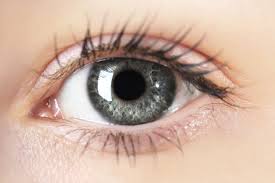
What you see, or the physical appearance.
a)
Genotype
b)
Phenotype
c)
Homozygous
d)
Heterozygous
111.
aa always shows up as
a)
dominant
b)
recessive
112.
Which of the following is homozygous dominant?
a)
Yy
b)
Y
c)
yy
d)
YY
113.
Which of the following is homozygous recessive?
a)
Tt
b)
tt
c)
TT
d)
T
114.
A characteristic that an organism can pass on to its offspring through its genes is ___________
a)
Trait
b)
Gene
c)
Allele
d)
Dominant
115.

What are the possible genotypes for this cross?
a)
TT = 25% Tt= 50% tt=25%
b)
all tall
c)
TT= 75% tt = 25%
d)
Tt = 100%
116.
Which of the following alleles is homozygous (purebred) recessive?
a)
Tt
b)
tt
c)
TT
d)
t
117.

Genotype refers to the ...
a)
physical expression of the genes
b)
the possible combination of alleles in a gene
c)
whether an allele is dominant or recessive
d)
how an organism will appear
118.

Which domain is capable of living in extreme environments like hot springs, geysers, or very salty waters?
a)
Bacteria
b)
Archaea
c)
Eukarya
119.

Which domain includes all animals and plants?
a)
Archaea
b)
Eukarya
c)
Bacteria
120.

Almost all bacteria are...
a)
Unicellular
b)
Multicellular
121.

Which two kingdoms are entirely multicellular?
a)
Animalia and Plantae
b)
Animalia and Protista
c)
Protista and Plantae
122.

To which phylum do crabs and spiders belong?
a)
Echinodermata
b)
Arthropoda
c)
Cnidaria
d)
Mollusca
123.

To which phylum do birds and cats belong?
a)
Arthropoda
b)
Chordata
c)
Echinodermata
d)
Cnidaria
124.

To which phylum do sea stars and corals belong?
a)
Echinodermata
b)
Arthropoda
c)
Cnidaria
d)
Annelida
125.
Which kingdoms have some organisms that can make their own food (autotrophic)?
a)
Plantae and Animalia
b)
Fungi and Plantae
c)
Protista and Plantae
126.
True or False: All cells have DNA.
a)
True
b)
False
127.
Organisms whose cells have NO nucleus are classified as...
a)
Eukaryotic
b)
Prokaryotic
c)
Dead
128.

Moss belongs in the kingdom...
a)
Fungi
b)
Plantae
129.

Algae and Kelp belong to the Kingdom...
a)
Plantae
b)
Protista
c)
Fungi
d)
Eubacteria
130.

Fungi are a type of...
a)
decomposer
b)
producer
131.
What is the genus name here:
Canis lupus
Canis lupus
a)
Canis
b)
lupus
132.

The name for the phylum of segmented worms is called...
a)
Echinodermata
b)
Arthropoda
c)
Annelida
d)
Cnidaria
133.

Most animals in this phylum have a backbone.
a)
Arthropoda
b)
Chordata
c)
Annelida
d)
Mollusca
134.

Which organisms belong in the same kingdom as the pictured organism?
a)
Dandelion, Ladybug, Algae
b)
Ladybug, Wolf, Jellyfish
c)
Mushroom, Wolf, Jellyfish
d)
Jellyfish, Algae, Dandelion
135.
Which statement about bacteria is true?
a)
Bacteria have a nucleus.
b)
All bacteria live in extreme environments.
c)
Bacteria are prokaryotic.
d)
Bacteria can only be found in dirty or greasy environments.
136.
Two examples of crustaceans are -
a)
shrimp and squid
b)
crayfish and bass
c)
lobsters and crabs
d)
jellyfish and barnacles
137.
Plants that shed their leaves in the fall and grow new leaves in the spring are -
a)
deciduous
b)
algae
c)
evergreen
d)
coniferous
138.
Which phylum has flattened bodies, bilateral symmetry, some are consumers, many are parasites, have a sac like gut but don't have a coelom?
a)
Platyhelminthes
b)
Echioderms
c)
Cnidaria
d)
Porifera
139.
Sponges get their food by
a)
going through photosynthesis
b)
decomposing it
c)
sponges do not eat
d)
filter feeding
140.
Sponges are ________ which means attached to one spot.
a)
immobile
b)
mobile
c)
sessile
d)
spicule
141.
Sponges can reproduce
a)
sexually
b)
asexually
c)
both sexually and asexually
d)
sponges do not reproduce
142.
What is the name of the phylum sponges belong to?
a)
mammals
b)
chordate
c)
cnidarians
d)
Porifera
143.
What part of a sponge allows water to enter through it?
a)
collar cells
b)
spicules
c)
pores
d)
amebocyte
144.
___________ are tiny hard particles that give a sponge support and can provide protection when they stick out of a sponge.
a)
spongin
b)
bones
c)
buds
d)
spicules
145.
Are coral reefs alive?
a)
no
b)
sort of
c)
yes
146.
Coral reefs are made up of thousands of tiny animals called?
a)
coralettes
b)
polyps
c)
plankton
147.
What is happening to coral reefs around the world?
a)
they are growing too big
b)
they are in danger of dying
c)
they pollute the ocean
148.
Where does coral get food?
a)
from the sun
b)
from algae
c)
from fish
149.
What is one thing that kills coral?
a)
pollution
b)
other ocean animals
c)
the sun
150.
What is it called when coral loses its color?
a)
bleaching
b)
white out
c)
colorization
100 %

