
 Worksheets
World History Review
Total questions: 87
Worksheet time: 49mins
Name
Class
Date
1.
Thomas Hobbes believed...
a)
People needed more government
b)
People needed less government
c)
He was indifferent to government control
d)
proponet for freedom of speech
2.
What was NOT a reason for the American Revolution?
a)
taxation without representation
b)
distance from colonies to Britain
c)
harsh rule of King George
d)
slavery of African Americans
3.
What were the main reasons for the cause of the French Revolution?
a)
Bad Harvest
b)
deficit spending
c)
unequal society
d)
all the above
4.
The domination of one country over another. This happened in Africa when European countries tried to come in and take over.
a)
Imperialism
b)
Communism
c)
Methodism
d)
Socialism
5.
What country sponsored Columbus?
a)
Great Britain
b)
Portugal
c)
Spain
6.
What were the complaints Luther made against the Church called?
a)
95 Theses
b)
95 Topic Sentences
c)
59 Theses
d)
95 Wrongs
7.
Which of the following was one of Luther's criticisms of the Church?
a)
Sale of Indulgences
b)
Reading the Bible
c)
Praying
d)
Belief in God
8.
Which invention helped spread the ideas of the Reformation?
a)
Telescope
b)
Astrolabe
c)
Printing Press
d)
Indulgences
9.
The "tickets to heaven" that the Catholic Church sold were known as
a)
indulgences
b)
salvation
c)
lottery
d)
95 theses
10.
The branches of Christianity that developed as a result of protests against the Catholic Church were called
a)
Greek Orthodox
b)
Protestant
c)
Catholic
d)
Buddhist
11.
Martin Luther believed that people should be able to read the Bible themselves
a)
True
b)
False
12.
What did Martin Luther believe?
a)
humans could be saved by their faith, not their deeds
b)
Latin should always be used in Catholic services
c)
the pope could never make a mistake
d)
selling indulgences was good because it brought wealth to the Church
13.
Who lived in the Andes Mountains?
a)
Aztecs
b)
Incas
c)
Mayans
d)
Tu
14.
Where did the Aztecs live?
a)
Chichen Itza
b)
Machu Picchu
c)
Yucatan Peninsula
d)
Valley of Mexico
15.
Who had an Emperor?
a)
Maya and Inca
b)
Inca and Aztec
c)
Maya and Aztec
d)
None
16.
Which civilization was not an empire?
a)
Mayan
b)
Inca
c)
Aztec
d)
Persia
17.

The Inca used the Quipus (cord with knots) to:
a)
decorate their clothes
b)
count, collect data and keep records
18.
Which civilization focused on blood-letting to feed the gods?
a)
Maya
b)
Aztec
c)
Inca
d)
Olmec
19.
The Aztec capitol city was
a)
rainforest
b)
mountains
c)
desert
d)
an island city
20.
*terrace farming
* quipu (knots on strings)
* road system
* Machu Piccu
* quipu (knots on strings)
* road system
* Machu Piccu
a)
Maya
b)
Aztec
c)
Inca
21.
How did the Mayans end?
a)
the Spaniards conquered
b)
It is a mystery
c)
Olmecs took their land
d)
hurricane destroyed their civilization
22.

Aztec emperor
a)
Moctezuma
b)
Pachacuti
c)
Cortes
d)
Pizarro
23.
What caused most of the Aztec deaths during the Spanish invasion?
a)
Spanish guns
b)
Spanish iron weapons
c)
smallpox
24.
"Pax Romana" means...
a)
fullness of time
b)
Roman peace
c)
rule of Rome
d)
golden age
25.
How did Constantine affect Christianity?
a)
He made Christianity legal in 313 AD
b)
He placed even more bans on the religion.
c)
He persecuted Christians in the Colosseum.
d)
He moved the capital of Rome to the Eastern Empire.
26.
A meeting of European countries to agree upon rules for the colonization of Africa was the?
a)
Treaty of Paris
b)
London Conference
c)
Berlin Conference
d)
Treaty of Kanagawa
27.
The theory used to justify imperialist expansion was ?
a)
Social Darwinism
b)
Annexation
c)
Assimilation
d)
Protectorate
28.
"Jewel in the Crown" was what country?
a)
Great Britain
b)
South Africa
c)
China
d)
India
29.
A country with its own internal power but under the control of an outside power is a ?
a)
Boer
b)
colony
c)
Protectorate
d)
Raj
30.
The Boer War was a conflict between the Boers and the ?
a)
Zulu
b)
Dutch
c)
British
d)
Union of South Africa
31.
Motives for imperialism in Africa include?
a)
Economics
b)
Social Darwinism
c)
Missionary desires
d)
All of the above
32.
When a stronger country takes over a weaker country.
a)
Nationalism
b)
Imperialism
c)
Militarism
d)
Alliance System
33.
What role did African delegates have in the Berlin Conference?
a)
None, they weren't invited
b)
A strong & dominant role
c)
An equal role with the European powers
34.
Which of the following is a main player for imperialism?
a)
China
b)
India
c)
Africa
d)
Great Britain
35.
The American Revolution was motivated by the Enlightened idea
a)
Of a distinct class system
b)
That all men are created equal
c)
Of the rightful rule of a monarch
d)
That government needs central authority
36.
What was the name of the treaty that ended the American Revolution
a)
Treaty of Paris (1763)
b)
Treaty of Paris (1783)
37.
What is federalism?
a)
the sharing of powers among the federal government and it's employees
b)
the sharing of powers between the federal government and state governments
38.
Life, Liberty and the pursuit of happiness were...
a)
Unalienable rights
b)
Bill of Rights
c)
Freedom to live
d)
Will Smith movie
39.

When was America declared independent?
a)
June 6th, 1774
b)
June 6th, 1775
c)
July 4th, 1776
d)
July 4th, 1781
40.
The Boston Tea Party was a cause of the American Revolution?
a)
True
b)
False
41.
What country agreed to help the Americans after Saratoga?
a)
Britain
b)
Canada
c)
Spain
d)
France
42.
What angered the colonists to the point where they wanted independence from Britain?
a)
taxes
b)
Boston Tea Party
c)
Lexington and Concord
d)
Declaration of Independence
43.
The profitability of cash-crop (plantation) agriculture led to the development of what type of trade between European countries, the Colonies, and Africa?
a)
circular trade
b)
Triangular Trade
c)
square trade
d)
Colonial trade
44.
Most of the people of France belonged to the
a)
1st Estate
b)
2nd Estate
c)
3rd Estate
d)
4th Estate
45.
The idea that reason should guide society rather than tradition helped cause the revolution and came from
a)
the Declaration of Independence
b)
the Scientific Revolution
c)
the Enlightenment
d)
all of the above
46.
France was deep in debt because
a)
money spent on the American Revolution
b)
the queen's lavish spending
c)
the 1st and 2nd estates did not pay taxes
d)
all of the above
47.
Why was voting in the Estates General unfair
a)
votes were not secret
b)
each estate voted by how many members there were
c)
each estate got the same number of votes
d)
the King got two votes
48.
The National Assembly set down the ideas of the Revolution in
a)
the Declaration of Independence
b)
the Declaration of the Rights of Man and of the Citizen
c)
the US Constitution
d)
The Edict of Nantes
49.
When the people of Paris heard that the military was going to stop the National Assembly, their response was to
a)
leave the city
b)
storm the Bastille
c)
force the King to come to Paris
d)
none of the above
50.
The radicals who took over the revolution were led by
a)
Louis XVI
b)
Robespierre
c)
Rousseau
d)
Marquis de Lafayette
51.

How did the Enlightenment and the American Revolution influence the French Revolution?
a)
the people of France overthrew their absolute monarchy
b)
absolute monarchy was strengthened
c)
support for absolute monarchy increased
d)
France was divided into three estates
52.
Which situation was an unintended consequence of Spain's colonization of the Americas?
a)
establishment of a favorable balance of trade
b)
introduction of the encomienda system
c)
transmission of communicable diseases
d)
exploitation of resources in new lands
53.
One reason Spain sponsored the first voyage of Columbus to the west was to
a)
find a more direct trade route to Asia
b)
obtain military technology
c)
make contact with the empire of Benin
d)
trade in established ports in the Americas
54.
". . . (It) brought the potato, the pineapple, the turkey, dahlias, sunflowers, magnolias, maize, chillies and chocolate across the Atlantic. On the other hand, tens of millions died in the pandemics of the 16th century, victims of smallpox, measles and the other diseases brought by Europeans (and don't forget that the African slave trade was begun by the Europeans, to replace the work force they had decimated).". . . — Michael Wood, BBC History (adapted)
Which historical development is being described in this quotation?
Which historical development is being described in this quotation?
a)
establishment of the line of Demarcation
b)
creation of the Hanseatic League
c)
Columbian exchange
d)
Glorious Revolution
55.
"I was immediately handled and tossed up to see if I were sound, by some of the crew, and I was now persuaded that I had gotten into a world of bad spirits, and that they were going to kill me. Their complexions, too, differing so much from ours, their long hair, and the language they spoke . . . united to confirm me in this belief. . . . The closeness of the place and the heat of the climate, added to the number in the ship, which was so crowded that each had scarcely room to turn himself, almost suffocated us."
Which event is described in this passage?
Which event is described in this passage?
a)
the Aztec invasion of Mayan cities
b)
the Ottoman invasion of Hungary
c)
immigration from Europe to the New World
d)
the transatlantic slave trade
56.
The Middle Passage is best defined as
a)
a route through the Swiss Alps
b)
a narrow body of water connecting two larger bodies of water
c)
the forced journey of enslaved Africans to the Americas
d)
the expulsion of Muslims from Spain
57.
What was a direct result of the trans-Atlantic slave trade on African cultures?
a)
Many African communities faced economic disaster.
b)
European industrial factories were established throughout Africa.
c)
Animism was no longer practiced in Africa
d)
Africans across the continent hired Europeans to train their military
58.

What is the best title for this diagram?
a)
Triangular Trade
b)
Silk Road
c)
Middle Passage
d)
Columbian Exchange
59.
What family ruled Florence?
a)
Da Vinci
b)
Brunelleschi
c)
Medici
d)
Luther
60.
A humanist is a person
a)
who focuses on human potential and acheivement
b)
who works hard
c)
who is an artist
d)
who is a poet
61.
Why did Gutenberg's printing press a huge impact?
a)
It introduced artists to perspective
b)
provided jobs
c)
made books cheaper
d)
he invested his money in art
62.
Which of the following is NOT a reason why the Renaissance began in Italy?
a)
Wealthy Italian patrons supported the arts
b)
Cultural diffusion encouraged curiosity and spread Arab and African ideas
c)
The Black Plague did not hit Italy as a result of the Alps
d)
Renewed interest in the cultures of Ancient Greece and Rome
63.
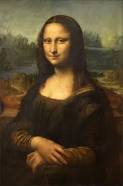
Who painted the Mona Lisa?
a)
Michelangelo
b)
Boticceli
c)
Leonardo da Vinci
d)
Donatello
64.
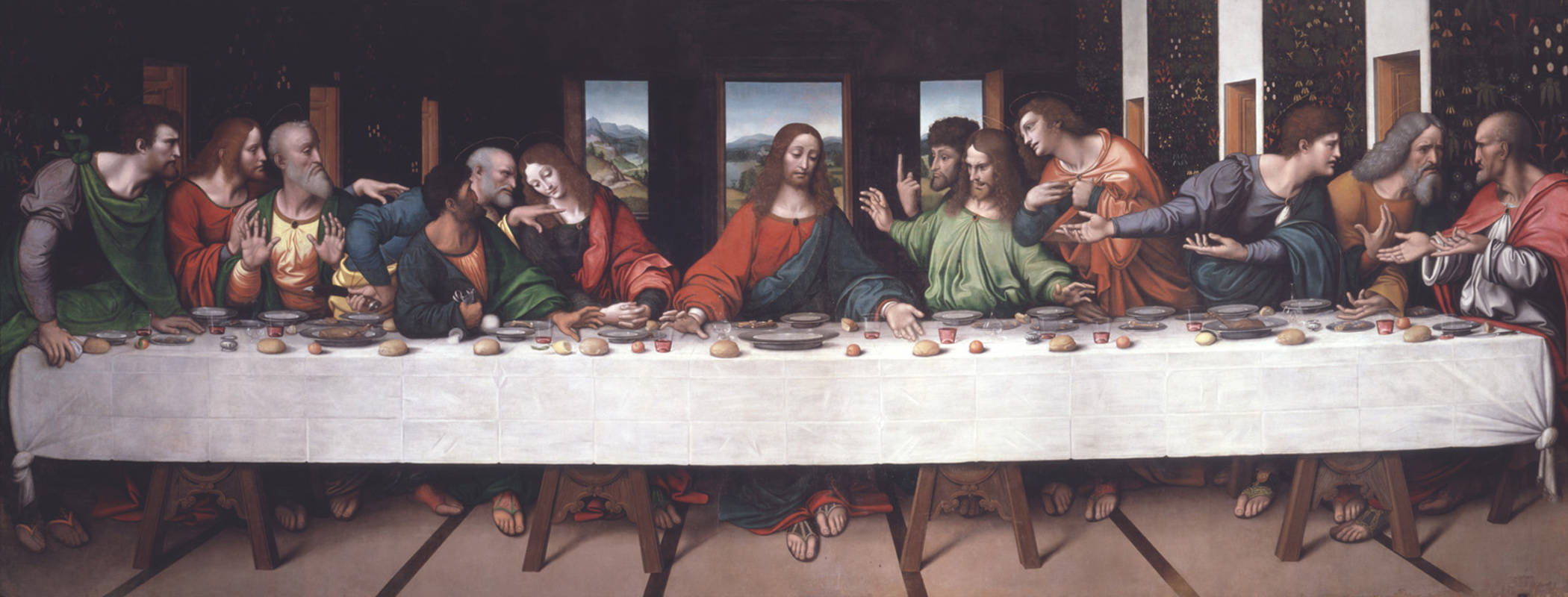
Who painted "The Last Supper"?
a)
Machiavelli
b)
Botticelli
c)
Kepler
d)
Leonardo da Vinci
65.
Where did the Renaissance begin?
a)
Italy
b)
France
c)
England
d)
Germany
66.
Which of the following is associated with Humanism?
a)
the ideas of the middle ages
b)
the ideas of Greece & Rome
c)
the ideas of ancient China
d)
the ideas of ancient India
67.
What provided the major economic support for the Renaissance?
a)
wealthy patrons
b)
church officials
c)
government grants
d)
kings competing for prestige
68.
Raphael is best known for his creation of which of the following?
a)
Mona Lisa
b)
Last Supper
c)
Murals of the Sistine Chapel
d)
School of Athens
69.

Which Amendment in the US Constitution was probably influenced the MOST by Voltaire's ideas?
a)
The Second Amendment, the right to organize and serve in a militia
b)
The Fifth Amendment, the right against self-incrimination
c)
The Third Amendment, protection from quartering soldiers in one's home
d)
The First Amendment, freedom to speak and express ideas
70.

Which Enlightenment philosopher believed in using "Checks and Balances" within the government to control the power of the government?
a)
Beccaria
b)
Hobbes
c)
Locke
d)
Montesquieu
71.

Which enlightenment philosopher believed an absolute monarchy was the best option to keep the people safe?
a)
Rousseau
b)
Locke
c)
Voltaire
d)
Hobbes
72.
Which of the following ideas did Cesare Beccaria support?
a)
Women's equality
b)
Abolishment of torture
c)
Freedom of speech
d)
Separation of Powers
73.
John Locke believed that
a)
people are born with natural rights
b)
people were born selfish and greedy
c)
absolute monarchy is the best government
d)
people give up freedom to escape a brutish life
74.
What system of farming did the Inca develop in order to farm in the mountains?
a)
Chinampas
b)
Irrigation
c)
Aqueducts
d)
Terrace Farming
75.
The capital city of the Incan Empire was ____
a)
Machu Picchu
b)
Divining
c)
Cuzco
d)
Huacas
76.
Why wasn’t trade an important part of the economy of the Inca?
a)
People had nothing to trade because only the emperor owned property.
b)
The Inca never developed a true writing system to keep records.
c)
Ordinary people like traders and merchants could not use the roads.
d)
The Sapa Inca preferred to conquer neighbors than to trade with them.
77.
What did the Aztecs do to apease their gods?
a)
burning neighboring houses
b)
trying to kill the leader
c)
human sacrifice
d)
naming your child after their god
78.

Tenochtitlan was...
a)
the Aztec's capital
b)
the Inca capital
c)
the Mayan capital
d)
another name for the Yucatan Peninsula
79.
Which was NOT a Mesoamerican empire?
a)
Maya
b)
Aztec
c)
Inca
d)
Songhai
80.

What civilization claimed that they had been ordered by the gods to start a new empire where they saw an eagle on a cactus with snake going through its mouth?
a)
Mayans
b)
Olmecs
c)
Toltecs
d)
Aztecs
81.
How were the Aztecs able to farm?
a)
built stone walls within the mountains to create a flat surface
b)
alternated crops to keep the soil fertilized
c)
used land outside of the island to grow crops
d)
used floating gardens called chinampas that were anchored to trees
82.
In Feudal Europe, manors functioned as
a)
Large facilities for the poor
b)
trading centers for travelers
c)
self-sufficient economic communities
83.
Which of the following terms matches this definition: “agricultural laborer tied to an estate with rights including military protection, heritable ownership of a plot of land, and owing obligations to share crop yields each season with his or her lord”?
a)
Serf
b)
Slave
c)
Plebian
84.
The goal of the Christian Crusades was to
a)
spread Christianity to Africa
b)
increase the boundaries of the Roman Empire
c)
retake the Holy Land (Jerusalem) from the Muslims
d)
conquer India
85.
What fraction the European population pass because of the plague?
a)
1/4
b)
1/3
c)
1/2
d)
1/6
86.

How did the Bubonic Plague spread?
a)
Bad water
b)
Rats
c)
Looking at people
d)
Fleas on the Rats
87.
Which of the following was an outcome for peasants in Europe after the Black Death c. 1340 CE?
a)
wages went down
b)
more land was available and wages increased
c)
social unrest decreased
100 %

