
 Worksheets
Year 9: Ecosystems
Total questions: 22
Worksheet time: 23mins
Name
Class
Date
1.

What is the process described in number 1 and 3?
a)
combustion give off CO2, animals eat plants that contain carbon
b)
combustion give off CO2, animals respire and give off CO2
c)
Decomposing matter gives off CO2, animals eat plants which contain carbon
d)
decomposing matter gives off CO2, green plants absorb CO2 for photosynthesis
2.

Which of the following materials cannot be recycled?
a)
aluminium
b)
plastic bags
c)
glass bottles
d)
cartons
3.

This is an image of a _________.
a)
consumer
b)
scavenger
c)
decomposer
d)
producer
4.
An illustration that uses arrows to show the many possible directions in which matter and energy can pass through the organisms in an ecosystem.
a)
Food chain
b)
Food web
c)
Energy Pyramid
d)
Succession Map
5.
The nonliving aspects of an ecosystem.
a)
Abiotic factors
b)
Biotic factors
6.
The living portions of the ecosystem.
a)
Biotic factors
b)
Abiotic factors
7.
A collection of organisms that make up a community as well as all of the nonliving aspects of the environment.
a)
Population
b)
Community
c)
Habitat
d)
Ecosystem
8.
Organisms that feed on both living producers and other consumers.
a)
Carnivores
b)
Omnivores
c)
Herbivores
d)
Detritivores
9.
Part of the earth that living organisms inhabit
a)
biosphere
b)
biome
c)
niche
d)
ecosystem
10.
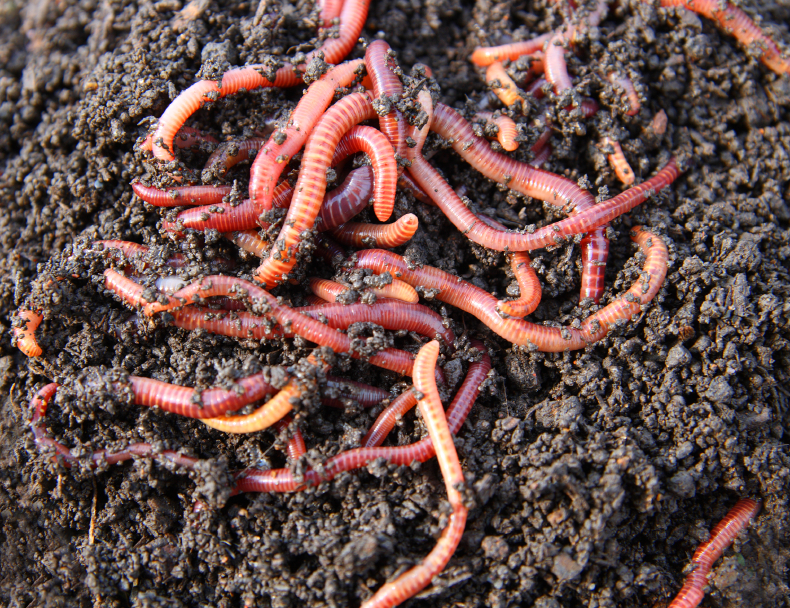
What role do these organisms play in their ecosystem as they break down matter?
a)
producer
b)
primary consumer
c)
secondary consumer
d)
decomposer
11.
What is the first thing that would happen in this food chain if the grass died?
Sun -> Grass -> Mouse -> Snake -> Hawk
Sun -> Grass -> Mouse -> Snake -> Hawk
a)
The snake population would increase
b)
the mouse population would increase
c)
the mouse population would decrease
d)
the hawk population would decrease
12.

How many carnivores are shown in this food web?
a)
6
b)
4
c)
5
d)
3
13.
What is the original source of almost all energy in most ecosystems?
a)
carbohydrates
b)
sunlight
c)
water
d)
carbon
14.

How does energy transfer in the trophic levels of a food pyramid?
a)
Energy doesn't transfer.
b)
Energy increases as it goes up.
c)
Energy decreases as it goes up.
d)
Energy stays the same.
15.
What are the products of photosynthesis?
a)
water and carbon dioxide
b)
oxygen and glucose
c)
oxygen and carbon dioxide
d)
oxygen and water
16.
What are the reactants for cellular respiration?
a)
oxygen and lactic acid
b)
water and glucose
c)
carbon dioxide and water
d)
glucose and oxygen
17.
A scientist who studies the interaction between organisms and their environments
a)
Biologist
b)
Zoologist
c)
Geologist
d)
Ecologist
18.
When a toxin is introduced to a food chain, the negative affect will get worse as you go up trophic levels. (mice affected a little, hawks affected a lot). This describes...
a)
Biomagnification
b)
Eutrophication
c)
Bioremediation
d)
Overexploitation
19.

Which organism is the tertiary consumer?
a)
greenfly
b)
ladybug
c)
robin
d)
hawk
20.
A relationship between two organisms in which one organism benefits and the other is unharmed...
a)
Mutualism
b)
Competition
c)
Parasitsm
d)
Commensalism
21.
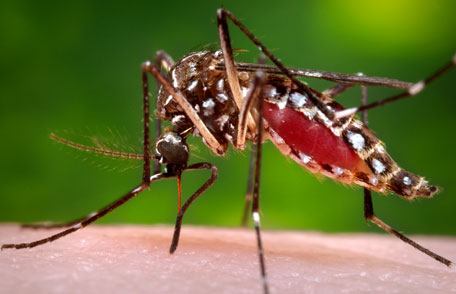
When a mosquito bites you, you are the __________ and the mosquito is the ____________.
a)
host, hostess
b)
parasite, host
c)
host, parasite
d)
prey, predator
22.

Oxpeckers feed on the ticks found on a rhinoceros. The oxpeckers get a meal and the rhinoceros is helped by the removal of the ticks.
a)
parasitism
b)
commensalism
c)
mutualism
100 %

