
 Worksheets
Orbits are Odd
Total questions: 12
Worksheet time: 6mins
Name
Class
Date
1.

The natural pull of objects toward each other is called ___
a)
the solar system
b)
gravity
c)
a satellite
d)
an orbit
2.

Earth travels around the Sun, completing the whole trip every ___
a)
24 hours
b)
7 days
c)
27 days
d)
365 days
3.
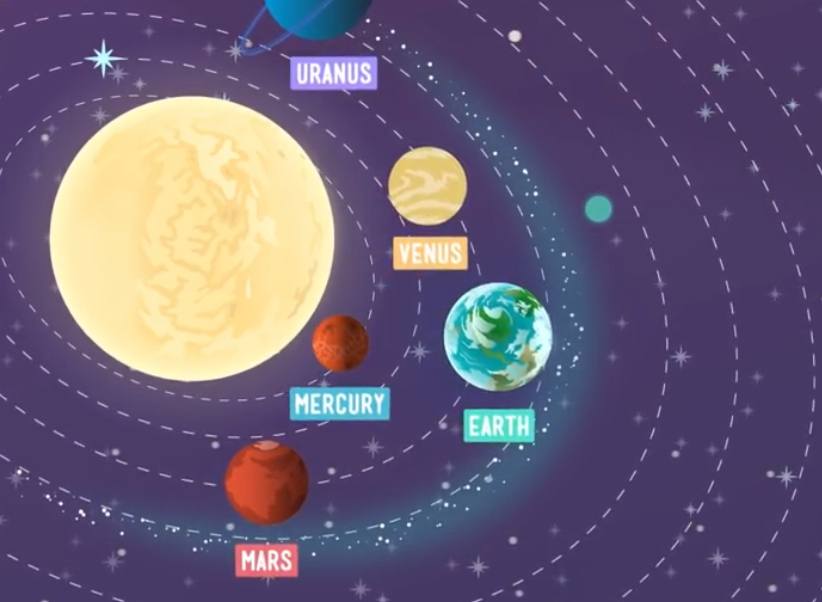
Why do we orbit the Sun and not the other way around?
a)
brighter objects tend to orbit duller ones
b)
duller objects tend to orbit brighter ones
c)
lighter objects tend to orbit heavier ones
d)
heavier objects tend to orbit lighter ones
4.

The Sun is the heaviest object in our solar system. It's about ___
a)
twice as heavy as Jupiter
b)
200 times heavier than Jupiter
c)
500 times heavier than Jupiter
d)
1000 times heavier than Jupiter
5.
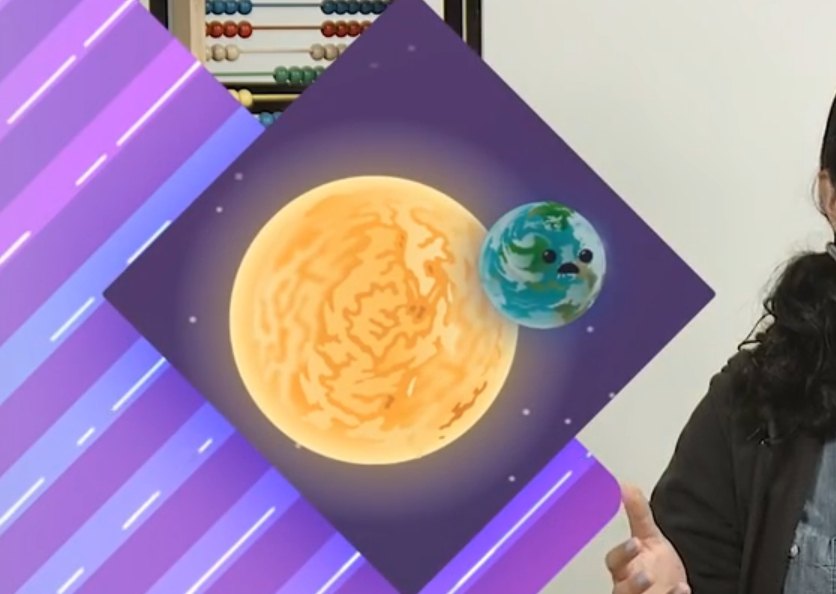
The Earth doesn't totally get sucked into the Sun, because ___
a)
it's moving too slowly around it
b)
it's moving fast enough around it
c)
it's too heavy too pull in
d)
it's too far away
6.

A group of stars, gas and dust bound together by gravity is called ___
a)
an orbit
b)
the Sun
c)
a galaxy
d)
a black hole
7.

What is the name of our galaxy?
a)
the Solar System
b)
Orbital Galaxy
c)
the Andromeda Galaxy
d)
the Milky Way
8.

An object that has a gravitational pull stronger than anything else in space is called ___
a)
a black hole
b)
a galaxy
c)
dark matter
d)
an orbit
9.

What object is at the center of our Milky Way galaxy?
a)
a giant star
b)
a black hole
c)
our solar system
d)
the Earth
10.

The eight main planets tend to orbit the Sun in a relatively circular way in the same ___
a)
straight line
b)
identical orbit
c)
imaginary plane
d)
ideal curve
11.

Which dwarf planet has a weird orbital path, off-level with the other planets?
a)
Pluto
b)
Neptune
c)
Ceres
d)
Eris
12.

Pluto is sometimes closer to the Sun than which planet?
a)
Jupiter
b)
Saturn
c)
Uranus
d)
Neptune
100 %

