
 Worksheets
What do you know about Anatomy and Physiology
Total questions: 20
Worksheet time: 13mins
Name
Class
Date
1.
The articular cartilage covers the epiphysis.
a)
True
b)
False
2.
This is the smaller bone in the lower leg postioned behind the Tibia?
a)
Tibia
b)
Femur
c)
Fibula
d)
Pelvis
3.
Which of the following cells is responsible for laying down new bone tissue?
a)
Osteoblasts
b)
Calcium
c)
Cartilage
d)
Osteoclasts
4.
How many bones are there in the human body?
a)
208
b)
126
c)
206
d)
80
5.
What is the name given to the connective tissue that attaches muscle to bone?
a)
Ligament
b)
Tendon
c)
Patella
d)
Perimysium
6.
Rotation of the forearm until the palm faces upwards is called is known as?
a)
Supination
b)
External rotation
c)
Plantar flexion
d)
Pronation
7.
The tendency of the body's systems to maintain a relatively constant or balanced internal environment.
a)
Anatomy
b)
Physiology
c)
Homeostasis
d)
Metabolism
8.
The branch of biological science that studies and describes how body parts work or function.
a)
Anatomy
b)
Physiology
c)
Homeostasis
d)
Metabolism
9.
Which of the following is a key function of Red blood cells?
a)
Transport actin
b)
Transport Oxygen
c)
Transport myosin
d)
Transport helium
10.

Which body cavity is located above the diaphragm and is surrounded by the rib cage?
a)
abdominal
b)
pelvic
c)
thoracic
d)
diaphragm
11.

Name the part of the spine in red
a)
Lumbar
b)
Cervicle
c)
Thoracic
d)
Sacral
12.
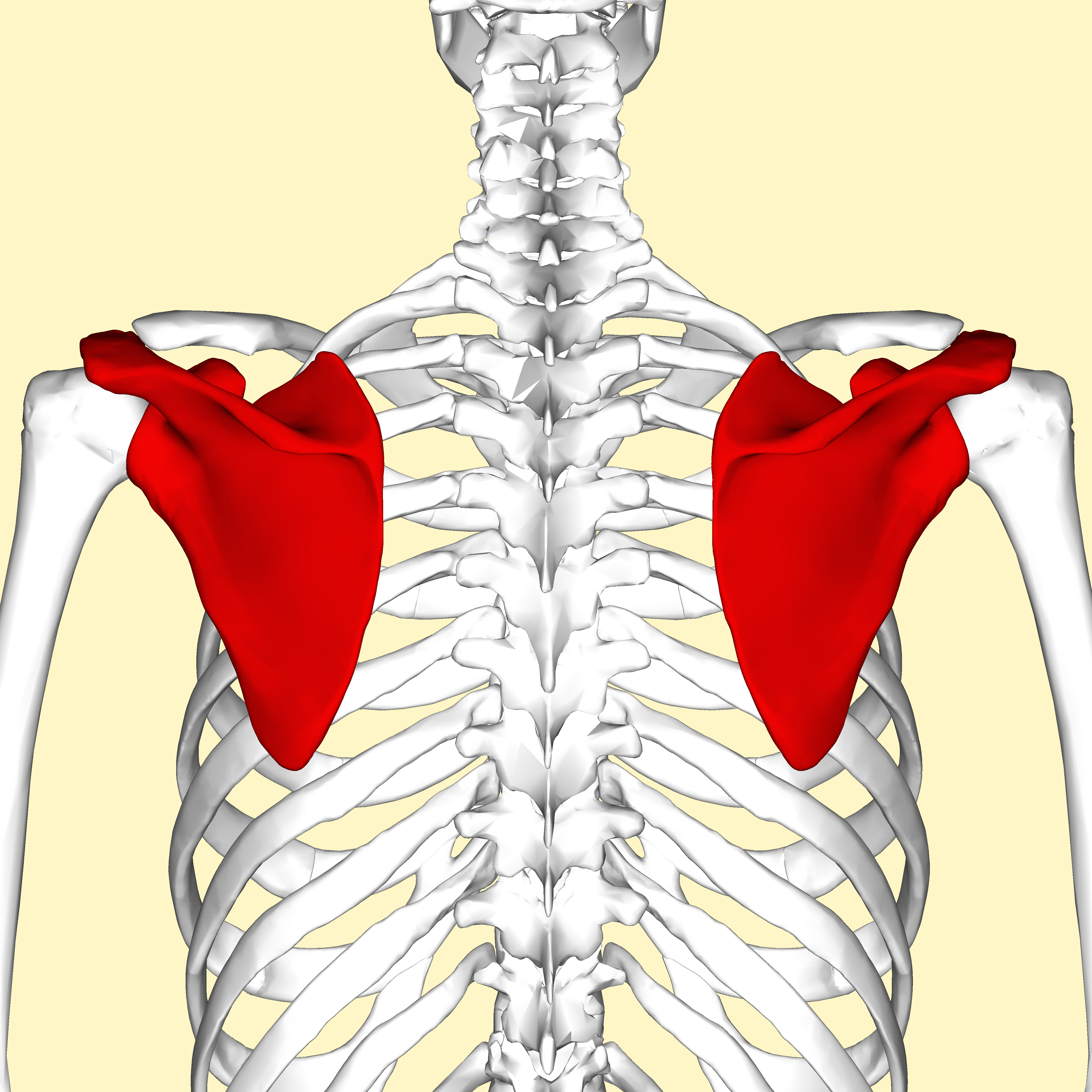
What bones is represented in the picture?
a)
Clavicle
b)
Scapula
c)
Sternum
d)
Carpals
13.
_________________ travel away from the heart and carry oxygen-rich blood to the body.
a)
arteries
b)
veins
14.

The air sacs that are covered with capillaries where gas exchange takes place
a)
bronchi
b)
lungs
c)
oxygen
d)
alveoli
15.

Identify the bone.
a)
Humerus
b)
Ulna
c)
Radius
d)
Clavicle
16.
Which type of muscle is found in your heart?
a)
Skeletal
b)
Smooth
c)
Cardiac
d)
Straight
17.
This organ excretes carbon dioxide gas.
a)
bladder
b)
kidney
c)
lungs
d)
heart
18.

Name the bone in red
a)
Ulna
b)
Humerus
c)
Femur
d)
Clavicle
19.
These are composed of amino acids.
a)
proteins
b)
lipids
c)
carbohydrates
d)
nucleic acids
20.
A collection of tissues to provide a specific function is known as a(n)
a)
Tissues
b)
Organ
c)
Organ system
d)
Cells
100 %

