Wayground logo

Free Printable Worksheets

Font size

S
M
L
XL
Worksheets

GA Studies - Geography and Early Natives

Total questions: 50

Worksheet time: 26mins

Name
Class
Date
1.
Which physical feature covers about 700 square miles and was once a logged for it's cypress trees?
a)
Chattahoochee River
b)
Okefenokee Swamp
c)
Barrier Islands
d)
Appalachian Mountains
2.
The Appalachian Plateau is located in the ______________ corner of Georgia.
a)
Southest
b)
Northwest
c)
West
d)
East
3.

Which region is very flat?

a)

Piedmont

b)

Coastal Plain

c)

Appalachian Plateau

d)

Valley and Ridge

4.
Atlanta is located in the________region? 
a)
Valley and Ridge
b)
Blue Ridge Mountains
c)
Appalachian Plateau
d)
Piedmont
5.
Georgia has ____________ main regions.
a)
2
b)
7
c)
5
d)
50
6.

What is the largest region in Georgia?

a)

Appalachian Plateau

b)

Piedmont

c)

Coastal Plains

d)

Blue Ridge Mountains

7.

What is the smallest region in Georgia?

a)

Valley and Ridge

b)

Coastal Plain

c)

Blue Ridge Mountains

d)

Appalachian Plateau

8.
This river flows between Georgia and South Carolina. 
a)
Altamaha River
b)
Savannah River
c)
Ocmulgee
d)
Chattahoochee River
9.

Which region has the biggest mountains?

a)

Blue Ridge

b)

Valley and ridge

c)

Piedmont

d)

Appalachian Plateau

10.

True or False? The Mississippians had a terrible trading network.

a)
True
b)
False
11.

The _______ River begins in the Blue Ridge Mountains and forms the southwest border between Georgia and Alabama. 

a)
Flint
b)
St. Mary's
c)
Oconee
d)
 Chattahoochee River
12.
The Oconee River and Ocmulgee River join together to form the ___________ River. 
a)
Altamaha
b)
Flint
c)
St. Mary's
d)
Savannah
13.
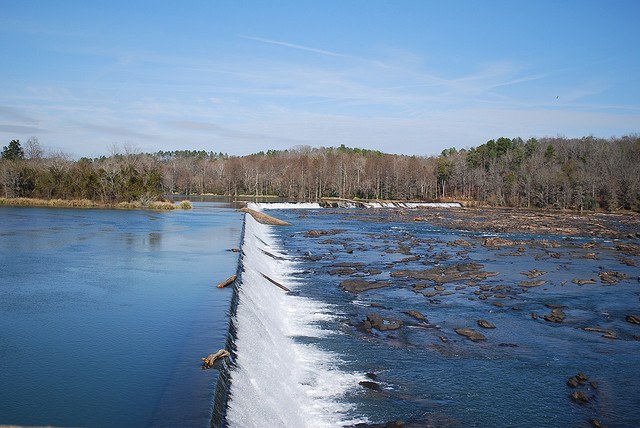
What region is this?
a)
Coastal Plains
b)
Ridge and Valley
c)
Piedmont
d)
Appalachian Plateau
14.
What do the Savannah and Chattahoochee rivers have in common?
a)
they both border the state of GA
b)
they are both located in the middle of GA
c)

they both flow into the Atlantic Ocean

d)
they are both close to Florida's border
15.

What region do you live in (where the barrier islands are located)? 

a)
Coastal Plain
b)
Appalachian Plateau
c)
Blue Ridge Mountain
d)
Ridge and Valley
16.
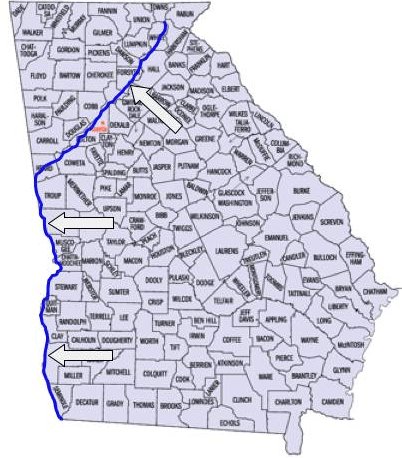
The blue line represents what Georgia river?
a)
Flint
b)
Savannah
c)
Ocmulgee
d)
Chattahoochee
17.
What nation is Georgia in? 
a)
South America
b)
North America 
c)
Atlanta
d)
United States of America
18.

The highest point in Georgia, Brasstown Bald, can be found what region?

a)

Blue Ridge

b)

Piedmont

c)

Coastal Plain

d)

Appalachian Plateau

19.
The Okefenokee Swamp is located in the __________________ region of Georgia.
a)
Coastal Plain
b)
Piedmont
c)
Ridge and Valley
d)
Blue Ridge Mountain
20.
What separates the Piedmont from the Coastal Plain?
a)
mountains
b)
Fall Line
c)
rivers
d)
Flint River
21.
What purpose do Georgia's barrier islands play?
a)
Georgia's barrier islands protect the mainland from wind, water, and sand erosion.
b)
That's where we have fun in the sun
c)
Barrier islands provide fresh water.
d)
Barrier islands provides no purpose.
22.

Which physical feature of Georgia is an area that features a shift in elevation and the point where two regions meet?

a)
Appalachian Mountains
b)
Savannah River
c)
the Fall Line
d)
Chattahoochee River
23.

This region has the largest population and GA's state capital (Atlanta) is located here.

a)

Coastal Plains

b)

Piedmont

c)

Blue Ridge Mountains

d)

Appalachian Plateau

24.

True or False?

In the Mississippian Natives' society, Chiefs were the highest ranking citizens in their Chiefdom society followed by Elites and then Commoners.
a)
True
b)
False
25.

Which physical feature is a mountain chain that stretches from Georgia to Maine and is located in the Blue Ridge region (however a smaller area is located in the Appaachian Plateau and Ridge and Valley regions)?
a)
Smoky Mountains
b)
Rocky Mountains
c)
Blue Ridge Mountains
d)
Appalachian Mountains
26.
The blue line represents what Georgia river?
a)
Flint
b)
Savannah
c)
Ocmulgee
d)
Chattahoochee
27.
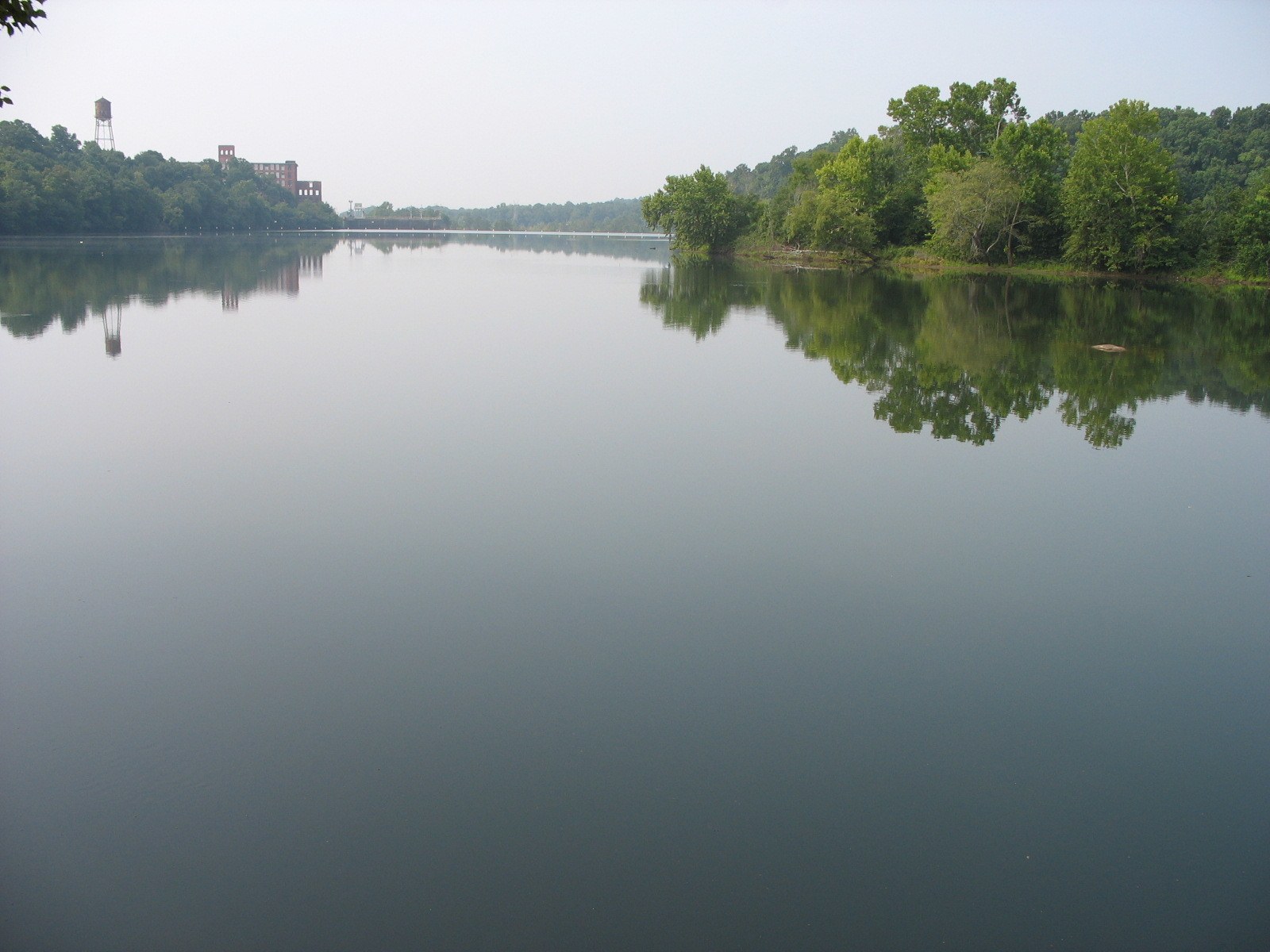
What region is this?
a)
Blue Ridge
b)
Ridge and Valley
c)
Piedmont
d)
Appalachian Plateau
28.

What hemispheres is Georgia in?

a)

Northern & Eastern

b)

Southern & Eastern

c)

Northern & Western

d)

Southern & Western

29.

Which physical feature forms most of the border between Georgia and South Carolina, used for trade, and home to one of Georgia's deepwater ports?

a)

Chattahoochee River

b)

Savannah River

c)

Ogeechee River

d)

Altamaha River

30.
Which city below is NOT located on the Fall Line?
a)
Atlanta
b)
Augusta
c)
Columbus
d)
Macon
31.

Which physical feature is an important source of water for the state that forms part of the southwestern border between Georgia and Alabama?

a)

Chattahoochee River

b)

Coosa RIver

c)

Flint River

d)

Savannah River

32.
 Which city is located on the Atlantic Ocean and was the first settlement in Georgia?
a)
Athens
b)
Dalton
c)
Atlanta
d)
Savannah
33.
Which of these travels and stops at the Gulf of Mexico?
a)
Chattahoochee River
b)
Okefenokee Swamp
c)
Savanna River
d)
Fall line
34.
Which of these is located at the bottom of the Coastal Plain region?
a)
Barrier Islands
b)
Savanna River
c)
Okefanokee Swamp
d)
Appalachian Mountains
35.
Mississippians were known for _____.
a)
terrace farming
b)
their warrior skills
c)
slash and burn
d)
mound building
36.

The Mississippian Natives lived in circular shelters they built out of sticks covered in mud. What is this material called?

a)

Mortar

b)

Waddle and Daub

c)

Brick

d)

Tabby

37.
Where were religious events held in the Mississippian civilization?
a)
at the bottom of mounds
b)
on top of mounds
c)
near the Mississippi River
d)
at yo mama's house
38.

Which development resulted in increased population and permanent settlements located on rivers for the Natives of GA?

a)
improved weapons
b)
trading with the Europeans
c)
improvements in agriculture
d)
more complex social structure
39.
Which physical feature extends nearly 100 miles, can receive more than 80 inches of rainfall each year, and is home to the first gold rush in the United States?
a)
Okefenokee Swamp
b)
Barrier Islands
c)
Savannah River
d)
Appalachian Mountains
40.
In what region of the United States would you find Georgia? 
a)
northeast
b)
southwest
c)
southeast 
d)
northwest
41.
What region is this?
a)
Blue Ridge
b)
Ridge and Valley
c)
Piedmont
d)
Coastal Plains
42.
The Paleo, Archaic, Woodland, and Mississippian people were:
a)
Native American groups relocated during the Trail of Tears.
b)
Native Americans who lived in Georgia prior to European arrival.
c)
Southern groups who fought during the Civil War.
d)
Dinosaur periods
43.

True or False?

Before the arrival of the Europeans, the Mississippian Natives lived in bigger organized towns called palisades where they would farm and hunt in order to feed themselves.

a)

True

b)

False 

44.
What region is known for being very hot and humid in the summer and mild winters with little to no snow?
a)
Coastal Plains
b)
Ridge and Valley
c)
Appalachain Plateau
d)
Blue Ridge
45.

Which region is known for having an abundance of agriculture?

a)

Appalachian Plateau

b)

Costal Plains

c)

Blue Ridge

d)

Piedmont

46.

True or False?

Georgia borders Florida, Alabama, Tennessee, South Carolina, and North Carolina.

a)

True

b)

False

47.

What physical feature is located in the Blue Ridge region and is the highest peak in Georgia?

a)

Mt. St. Helens

b)

Lookout Mountain

c)

Pikes Peak

d)

Brasstown Bald

48.

The Atlantic Ocean serves as a border to Georgia in the ____________.

a)

Northeast

b)

Southeast

c)

Northwest

d)

Southwest

49.

The following describes what Georgia River?

Provides drinking water for Augusta

Provided settlers with area for growing rice

Serves as a major shipping route for cities to the Atlantic Ocean

a)

Chattahoochee River

b)

Mississippi River

c)

Savannah River

d)

Altamaha River

50.

The Appalachian Plateau region is know for it's ____________ industry, while the Ridge and Valley region is known for the ___________ and carpet industry.

a)

textile and agriculture

b)

coal and textile

c)

technology and coal

d)

fishing and tourism