
 Worksheets
Galaxy and Solar System
Total questions: 25
Worksheet time: 24mins
Name
Class
Date
1.
What are galaxies mostly made of?
a)
stars, planets, and animals
b)
stars, dust, and gas
c)
asteroids, planets, and comets
d)
people, animals, and plants
2.
Which planet is closest to the sun?
a)
Earth
b)
Venus
c)
Mercury
d)
Mars
3.

Gas giants
a)
Inner planets
b)
Outer planets
c)
Both
d)
Venus
4.
The 4 inner planets are terrestrial. What does the word "terrestrial" mean?
a)
made of gases
b)
made of hard rock
c)
made of trees
d)
able to have life
5.
I am a rock entering a planet's atmosphere.
a)
meteor
b)
meteorite
c)
asteroid
d)
comet
6.
Which two inner planets have no moons?
a)
Earth and Mars
b)
Mars and Venus
c)
Mercury and Venus
d)
Venus and Mars
7.

Mercury, Venus, Earth, & Mars
a)
Inner planets
b)
Outer planets
c)
Both
d)
Pluto
8.
Asteroids "hang out" in our solar system in a place called:
a)
The Kupier Belt
b)
The Oort Cloud
c)
The Planetary Rings
d)
The Asteroid Belt
9.

Lots of rings
a)
Inner planets
b)
Outer planets
c)
Both
d)
Mars
10.

Located between the inner and outer planets.
a)
Sun
b)
Asteroid belt
c)
Uranus
d)
Moons
11.

Shorter revolutions
a)
Inner planets
b)
Outer planets
c)
Both
d)
Neptune
12.
All of the following planets have rings, EXCEPT--
a)
Saturn
b)
Venus
c)
Uranus
d)
Neptune
13.
All of the outer planets--
a)
have many moons
b)
are small
c)
have a short orbit around the Sun
d)
are rocky
14.
We are composed mainly of rock and metal.
a)
comets and stars
b)
stars and meteors
c)
asteroid and meteors
d)
comets and asteroid
15.
One similarity between asteroids, comets and meteoroids is that they all:
a)
are made of rock
b)
come from the Asteroid Belt
c)
come from the Oort Cloud
d)
orbit the sun
16.
_________ have a tail made from frozen gasses and dust.
a)
Asteroids
b)
Meteors
c)
Comets
17.
The Sun is at the center of the solar system.
a)
true
b)
false
18.
What force keeps the planets orbiting the sun?
a)
Gravity
b)
Magnetism
c)
Electricity
d)
Friction
19.
The __________ has planets, moons, comets, and asteroids orbiting one star.
a)
solar system
b)
universe
c)
galaxy
d)
United States
20.
What is the name of the star closest to the Earth?
a)
Sun
b)
North Star
c)
South Star
d)
Orion
21.
The apparent motion of the Sun moving across the sky is due to Earth's
a)
revolution
b)
gravity
c)
rotation
d)
orbit
22.
What is a natural satellite that revolves around a planet?
a)
Meteor
b)
Comet
c)
Asteroid
d)
Moon
23.
What type of galaxy do we live in?
a)
Spiral
b)
Elliptical
c)
Irregular
d)
Coaxial
24.
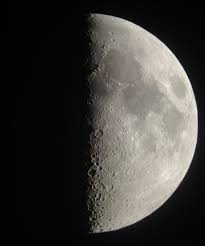
Name the moon phase
a)
First Quarter
b)
Last Quarter
c)
New Moon
d)
Full Moon
25.

What is the name of our galaxy?
a)
Milky Way
b)
Almond Joy
c)
Andromeda
d)
Snickers
100 %

