
 Worksheets
5th grade pre assessment
Total questions: 61
Worksheet time: 34mins
Name
Class
Date
1.
The living and non-living things that affect each other form this...
a)
association
b)
ecosystem
c)
adaptation
2.
Forests that lose their leaves every year are...
a)
rain forests
b)
coniferous
c)
deciduous
3.
Forests that grow in places that are hot and wet all year are...
a)
rain forests
b)
coniferous
c)
deciduous
d)
silly
4.
Forests with trees with needlelike leaves that stay green all year are...
a)
coniferous
b)
deciduous
c)
rain forests
5.

This picture is an example of what kind of ecosystem?
a)
Desert
b)
Tropical Rain Forest
c)
Tundra
d)
Forest
6.

This picture is an example of what kind of ecosystem?
a)
Desert
b)
Grassland
c)
Tropical Rain Forest
d)
Tundra
7.
Consumers that get their energy by eating only plants are?
a)
carnivores
b)
omnivores
c)
herbivores
d)
decomposer
8.
Consumers that eat only animals are?
a)
herbivores
b)
carnivores
c)
omnivores
d)
decomposer
9.
Consumers that eat both plants and animals are?
a)
herbivores
b)
carnivores
c)
omnivores
d)
decomposer
10.
All the members of one species that live within an area of an ecosystem is a?
a)
population
b)
community
c)
niche
11.
The different populations that interact with each other in the same area form?
a)
population
b)
community
c)
niche
12.
The specific role an organism has in its habitat is called its?
a)
population
b)
community
c)
niche
13.

This is an example of a ....
a)
producer
b)
decomposer
c)
consumer
d)
ecosystem
14.
Non-living factors in an ecosystem are called _________________.
a)
abiotic
b)
biotic
c)
producer
d)
habitat
15.

This is an example of a ______________.
a)
consumer
b)
decomposer
c)
producer
d)
bacteria
16.

The following picture is an example of a ...
a)
population
b)
individual
c)
food chain
d)
food web
17.
Many birds fly south for the winter to avoid the harsh weather conditions. This is an example of -----
a)
hibernation
b)
migration
c)
adaptation
d)
extinction
18.
Where do producers get the energy they need to make their own food?
a)
by eating
b)
from the sun
c)
from other producers
d)
water, shelter, salt
19.
How light reflects off of a mineral is called?
a)
luster
b)
streak
c)
cleavage
d)
fracture
20.
Which of the following is a negatively charged subatomic particle?
a)
Electron
b)
Proton
c)
Neutron
d)
Quark
21.
All matter is made of what?
a)
energy
b)
atoms
c)
electrons
d)
compounds
22.
The particles that are found in the nucleus of an atom are
a)
neutrons and electrons
b)
electrons only
c)
protons and neutrons
d)
protons and electrons
23.
Which of the following is a positively charged subatomic particle found in the nucleus of an atom?
a)
Electron
b)
Proton
c)
Neutron
d)
Quark
24.

What is A?
a)
Solid
b)
Liquid
c)
Gas
25.

What is B?
a)
Solid
b)
Liquid
c)
Gas
26.
What is the number of different species in an area referred to as?
a)
Ecology
b)
Niche Diversity
c)
Biodiversity
d)
Habitat Fragmentation
27.
Which of the following is considered a nonrenewable resource?
a)
Water
b)
Sunlight
c)
Coal
d)
Trees
28.
What is the process in which paper, plastic, aluminum, cardboard, and glass are reused?
a)
Reduce
b)
Recycle
c)
Reunite
d)
Reuse
29.
What is a natural resource that is available in limited supplies because they take so long to replenish?
a)
Renewable Energy
b)
Neither
c)
Non-Renewable Energy
d)
Both
30.
Which biome, because of its climate, has the largest number of species of plants and animals?
a)
tundra
b)
desert
c)
rain forest
d)
pine forest
31.
One characteristic feature of tundra is that only the surface thaws in the summer and refreezes in the winter, leaving a layer of permanently frozen subsoil. This characteristic is known as
a)
glaciation
b)
permafrost
c)
crystallization
d)
soilfrost
32.
Which major biome is home to cacti, mesquite, white thorn, pack rats, small reptiles, and coyotes?
a)
desert
b)
taiga
c)
tundra
d)
grassland
33.
Why don't most parasites kill their hosts immediately?
a)
The host benefits by keeping the parasites alive.
b)
The host is able to fight off the invading parasites.
c)
The parasites help the host before killing it.
d)
The parasites would no longer have a food supply if the host died.
34.
A relationship in which two organisms benefit from the actions of each other.
a)
sharingism
b)
mutualism
c)
parasitism
d)
commensalism
35.
A relationship in which one organism benefits and the other is unaffected.
a)
mutualism
b)
parisitism
c)
symbiosis
d)
commensalism
36.
What is the source of energy for all producers?
a)
sun
b)
wind
c)
Earth
d)
rain
37.
Anything that has mass and takes up space is called
a)
volume
volume
volume
b)
matter
c)
magnetism
d)
electricity
38.
What are the three states of matter?
a)
gas, liquid, mass
b)
solid, liquid, gas
c)
mass, volume, thermal energy
d)
gas, temperature, solids
39.
Which physical property is the amount of space something takes up and can be measured with a graduated cylinder?
a)
conductivity
b)
relative density
c)
thermal energy
d)
volume
40.
Example for Physical property
a)
Odor
b)
burns in air
41.
Earth ____________ around the sun. It is a process that takes 365 days.
a)
rotates
b)
revolves
c)
phases
d)
spins
42.
A ______________ is a large object that revolves around a star in clear orbit.
a)
Planet
b)
Star
c)
Comet
d)
Moon
43.
The path of one object in space around another is called
a)
Earth's tilt on its axis
b)
rotation
c)
orbit
d)
revolution
44.
A ball of rock, ice, and frozen gas is a
a)
galaxy
b)
comet
c)
moon
d)
star
45.
When the moon appears half lit it is called....
a)
full moon
b)
new moon
c)
first quarter
d)
waning gibbous
46.
Waning means
a)
Shrinking
b)
Getting larger
47.
Waxing means
a)
shrinking
b)
growing larger
48.
A stars color tells us about its
a)
Temperature
b)
Size
c)
Rotation
d)
Distance from Earth
49.
Summer days in the Northern Hemisphere are hotter than winter days because in the summer....
a)
Earth's Northern Hemisphere is tilted toward the sun
b)
Earth is closer to the sun
c)
the sun gets hotter in summer
d)
the sun gives off more energy
50.
The moon's light is really
a)
a comet
b)
a reflection of sunlight
c)
hot gas
d)
light from Earth
51.
Which is a huge ball of hot gases that gives off its own light?
a)
A planet
b)
A star
c)
A comet
d)
A moon
52.
The process of a seed coming out of its dormant state.
a)
germination
b)
pollination
c)
reproduction
d)
symbiosis
53.
Our sun is a
a)
Extra-large star
b)
Very small star
c)
Medium-sized star
d)
Is not a star
54.
How is our sun different from all the other stars that we see?
a)
It is a yellow star
b)
It gives off energy
c)
It is a medium-size star
d)
It is much closer to the Earth.
55.
There is only one type of ecosystem.
a)
True
b)
False
56.
What is the formula for calculating density?
a)
Mass ∗ Volume
b)
Volume ∗ Mass
c)
Mass ÷ Volume
d)
Volume ÷ Mass
57.
Which tool would be used to measure the mass of an object?
a)
balance
b)
graduated cylinder
c)
meter stick
d)
spring scale
58.

What's a valence electron?
a)
electrons in the second energy level
b)
electrons in the outermost energy level
c)
the atomic number
d)
electrons in the first level
59.
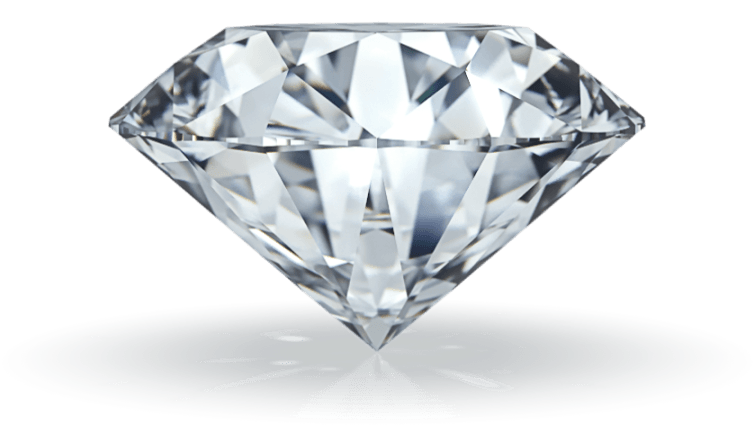
Diamonds are a pure form of what element?
a)
Carbon
b)
Oxygen
c)
Silicon
d)
Silver
60.
What forms when two atoms of the same kind combine?
a)
A nucleus
b)
A proton
c)
A molecule
d)
A neutron
61.
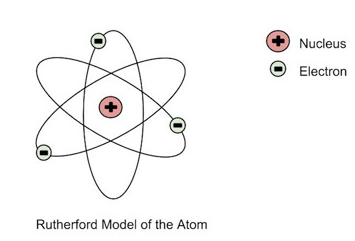
Rutherford's gold foil experiment provided evidence that...
a)
negative and positive charges are spread evenly throughout the atom.
b)
alpha particles have a positive charge.
c)
gold is not a dense as previously thought.
d)
there is a dense positively charged nucleus at the center of an atom.
100 %

