
 Worksheets
Relationships in an Ecosystem
Total questions: 20
Worksheet time: 18mins
Name
Class
Date
1.

Which one is NOT an example of a decomposer?
a)
mushroom
b)
leaves
c)
mold
d)
worm
2.

What four things do every organism need for survival?
a)
food, water, dirt, and a hat
b)
shelter, water, food, and air
c)
air, sun, dirt, and water
d)
light, electricity, and worms
3.

Examples of just producer
a)
frog, fly, lillypad
b)
algae, grass, tree
c)
worm, dirt, fish
d)
mouse, seeds, bird
4.
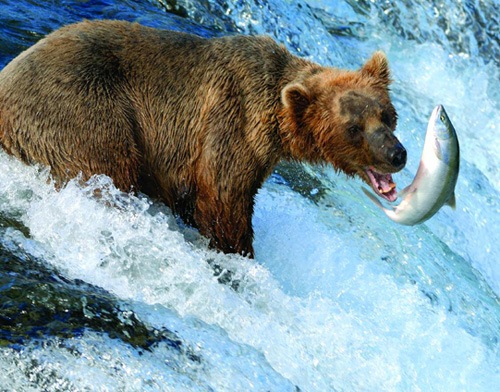
An organism that needs to eat other organisms to obtain energy is known as a:
a)
Autotroph
b)
Producer
c)
Consumer
d)
Mutualist
5.
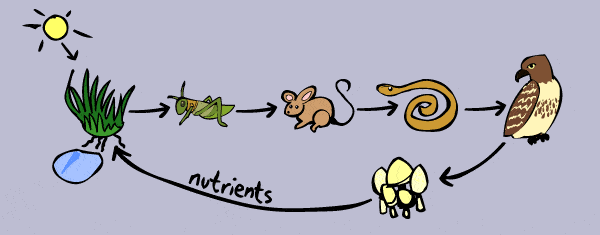
What does a food chain represent?
a)
How all living organisms within a habitat are connected.
b)
All of the things that a particular animal eats.
c)
How plants create their own food.
d)
A single path of energy transfer within a habitat.
6.

The arrows in a food chain or web represents what?
a)
They point to the organism that is being eaten.
b)
It shows how sunlight flows within an ecosystem.
c)
They show what direction the energy is flowing between organisms.
d)
They represent how water is transferred within a habitat.
7.

An energy pyramid represents what?
a)
How much sunlight is available for the ecosystem to use.
b)
How much energy a particular organism needs.
c)
How much energy is needed to build a pyramid.
d)
The amount of energy available to the next 'feeder' in a food web.
8.

How much energy is available to be passed on to the next trophic level in an ecosystem?
a)
100%
b)
10%
c)
50%
d)
75%
9.

Overlapping food chains in an ecosystem make up....
a)
food web
b)
food chain
c)
niche
d)
symbiosis
10.

An animal that eats other animals is a....
a)
carnivore
b)
omnivore
c)
herbivore
d)
decomposer
11.

Which of this energy roles is always located at the bottom of an energy pyramid?
a)
Producer
b)
Second-Level Carnivores
c)
Herbivores.
d)
First-Level Consumers.
12.

True or False. In this Food Web Pyramid the consumers on each level only get about 10 percent of energy that the plants have stored.
a)
True
b)
False
13.

Why might an organism have more than one arrow coming from them in a food web?
a)
More than one organism may eat them.
b)
They may eat more than one other organism.
c)
This organism gets its energy from multiple sources.
d)
They have no resources available to them.
14.

What may happen if the snowshoe hare was removed from the food web pictured?
a)
The insects in the habitat would increase.
b)
The shrew population would decrease due to being only hawk food source.
c)
The willow tree population would decrease.
d)
Foxes would dies due to no food source.
15.

The rabbit in this food web would be considered a:
a)
Decomposer
b)
Producer
c)
Secondary Consumer
d)
Primary Consumer
16.

The shrew provides energy for the _______?
a)
cricket
b)
grasshopper
c)
frog
d)
snake
17.

Where does the energy start in this food chain?
a)
Plant
b)
Sun
c)
Deer
d)
Wolf
18.

Which of the following best describes the small bird in the food web above?
a)
primary and secondary consumer
b)
secondary and tertiary consumer
c)
primary consumer only
d)
secondary consumer only
19.

Which organism has the most energy and which organism has the least amount of energy? Choose the best answer.
a)
mosquito and flower
b)
mouse and flower
c)
flower and owl
d)
flower and small bird
20.
All populations of different species living together in an area are called...
a)
Community
b)
Carnivores
c)
Population
d)
Ecosystem
100 %

