
 Worksheets
Chemistry Basics Review
Total questions: 80
Worksheet time: 1hrs 4mins
Name
Class
Date
1.
What type of bond results from shared electrons?
a)
Covalent Bond
b)
Ionic Bond
c)
Hydrogen Bond
d)
Water Bond
2.
What type of bond is formed when a positive ion and negative ion stick together?
a)
Covalent Bond
b)
Ionic Bond
c)
Water Bond
d)
Hydrogen Bond
3.
What is an ion?
a)
A small atom
b)
A large atom
c)
A neutral atom
d)
A charged atom
4.
Which subatomic particle is neutral?
a)
Neutron
b)
Positron
c)
Proton
d)
Electron
5.
Which subatomic particle is positive?
a)
Electron
b)
Proton
c)
Neutron
d)
Quark
6.
Which subatomic particle is negative?
a)
Proton
b)
Neutron
c)
Electron
d)
Negatron
7.
What two subatomic particles are found in the nucleus?
a)
Protons and Electrons
b)
Neutrons and Electrons
c)
Protons and Neutrons
d)
Electrons only
8.
Where are electrons located?
a)
In the electron clouds
b)
In the nucleus
c)
In the protons
d)
Paired with the neutrons
9.
If an atom has 8 protons and 10 electrons, what is its charge?
a)
Positive
b)
Neutral
c)
Negative
d)
It depends on its size
10.
Atoms of the same element that have different masses are called
a)
moles
b)
isotopes
c)
nuclides
d)
neutrons
11.

What is the number of protons that the element in this image contain?
a)
14
b)
7
c)
15
d)
18
12.
the central region of an atom where its neutrons and protons are is its
a)
nucleus
b)
electron cloud
c)
core
d)
center
13.
Matter which has no definite shape or volume is known as a
a)
solid
b)
liquid
c)
gas
14.
A(n) _____ is a unique substance that forms when two or more elements combine chemically.
a)
element
b)
compound
c)
mixture
d)
all of the above
15.
The substances on the right side of the yields arrow that are produced in a chemical reaction are called _____.
a)
reactants
b)
products
c)
reactors
d)
ingredients
16.
The substances on the left of the yields arrow that start a chemical reaction are called _____.
a)
reactants
b)
products
c)
reactors
d)
ingredients
17.
Endothermic reactions absorbs more energy to break bonds, so endothermic reactions cause (a) ______________.
a)
decrease in temperature
b)
increase in temperature
c)
no change in
18.
Which of the following causes an exothermic reaction:
a)
Alka-seltzer in water (feels cold)
b)
Calcium chloride in water (feels hot)
c)
Vinegar on pennies (no change in temperature)
d)
Ice melting
19.
In a __________ atoms are closely spaced and may vibrate in position but do not change locations.
a)
solid
b)
liquid
c)
gas
d)
plasma
20.
Chemical equations must be balanced because they describe how chemical reactions obey the principle of __________.
a)
activation
b)
decomposition
c)
mass coefficients
d)
conservation of mass
21.
What type of reaction is illustrated below?
FeS + Hal --> H2S + FeCl
FeS + Hal --> H2S + FeCl
a)
synthesis
b)
decomposition
c)
exchange reaction
22.
What type of reaction is illustrated below?
2HI --> H2 + I2
2HI --> H2 + I2
a)
synthesis
b)
decomposition
c)
single replacement
d)
double replacement
23.
Which of the following is not an element found in large abundance in organisms?
a)
Calcium
b)
Carbon
c)
Hydrogen
d)
Nitrogen
24.
The elements: C H O N typically represent what proportion of an organism's element make up?
a)
78%
b)
68%
c)
96%
d)
82%
25.
Bonds where there is unequal sharing of electrons are called:
a)
Polar Covalent Bonds
b)
Non-Polar Covalent Bonds
c)
Ionic Bonds
d)
London Forces
26.
The outermost set of electrons around an atom are called:
a)
Electronegativity
b)
Quantum Number
c)
Valence Electrons
d)
Oxidation Number
27.
Energy of motion is which type of energy?
a)
Potential
b)
Kinetic
c)
Sound
d)
Gravitational
28.
When plants convert the sun's energy into food, which type of energy is it?
a)
kinetic
b)
chemical
c)
thermal
d)
radiant
29.
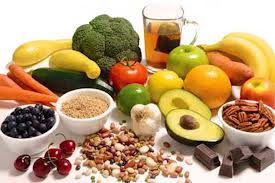
What kind of energy is represented in the picture?
a)
Thermal
b)
Chemical
c)
Sound
d)
Nuclear
30.

A battery converts what type of energy to another?
a)
sound to kinetic
b)
light to heat
c)
mechanical to electrical
d)
chemical to electrical
31.
Wind turbines and windmills convert what energy to another?
a)
Kinetic to electric
b)
Gravitational potential to electric
c)
Mechanical to potential
d)
Thermal to sound
32.
Work is:
a)
A transfer of energy by a force to move and object
b)
Something you get paid for
c)
Something you take home
d)
Makes you sweat
33.
Energy that is stored in bonds between atoms is:
a)
Mechanical energy
b)
Chemical energy
c)
Kinetic energy
d)
Nuclear energy
34.
According to which law of energy, energy can't be created or destroyed?
a)
First law of motion
b)
The law of tacos
c)
Laws of Energy
d)
law of conservation of energy
35.
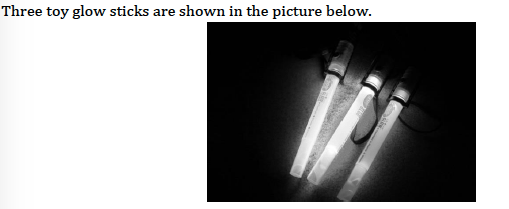
The glow sticks produce light for a short amount of time. The light from the glow stick is a conversion from what to what?
a)
thermal to light
b)
gravitational to potential
c)
radiant to electrical
d)
chemical to electromagnetic (visible lights)
36.
What change happens when water mixes with sugar?
a)
The appearance of sugar changes.
b)
The shape of water changes
c)
The taste of sugar changes
d)
The state of water changes
37.
A combination of two or more substances that cannot easily be separated--
a)
mixture
b)
solution
c)
solute
d)
solvent
38.

All are solutes except
a)
sugar
b)
pepper
c)
salt
d)
powdered chocolate
39.
What is a substance that is dissolved in another substance?
a)
solution
b)
solute
c)
solvent
d)
compound
40.
Is blood a mixture?
a)
No
b)
Yes
41.
Making a mixture results in ___________________ only.
a)
chemical reactions
b)
separate parts
c)
physical changes
d)
two subtances
42.
Lemonade is a special mixture called a
a)
substance
b)
solution
c)
plasma
d)
ingredient
43.

What type of mixture is this?
a)
heterogeneous
b)
homogeneous
44.

What type of mixture is this?
a)
heterogeneous
b)
homogeneous
45.

Cookies and cream ice cream would be classified as
a)
A homogenous mixture
b)
A heterogenous mixture
c)
An element
d)
A compound
46.

This is a type of mixture in which one substance is split up into tiny particles and spread throughout another substance.
a)
solubility
b)
colloid
c)
solute
d)
solvent
47.
Which type of reactions require energy to build large molecules from smaller ones?
a)
anabolic
b)
catabolic
48.
Which type of reactions release energy when they break down large molecules into smaller ones?
a)
anabolic
b)
catabolic
49.
Which term is defined as the ability to do work?
a)
energy
b)
thermodynamics
c)
autotroph
d)
wavelength
50.
The sum of all chemical reactions carried out in an organism is___________________.
a)
metabolism
b)
ATP
c)
substrate
d)
enzyme
51.
Endergonic is when energy is invested into a reaction. The energy is synthesized.
a)
True
b)
False
c)
False, exergonic
d)
False, catalyst
52.
what is the most important molecule that provides energy to the cells?
a)
Light
b)
Stroma
c)
Thylakoid
d)
ATP
53.
A catalyst does what?
a)
Lowers the atp
b)
lowers the active site
c)
lowers the activation energy
d)
slows down a reaction
54.
Large bodies of water do not quickly fluctuate in temperature. Why?
a)
Water is a solvent.
b)
Water has a high heat capacity.
c)
Water acts as a buffer.
d)
Water is non-polar.
55.
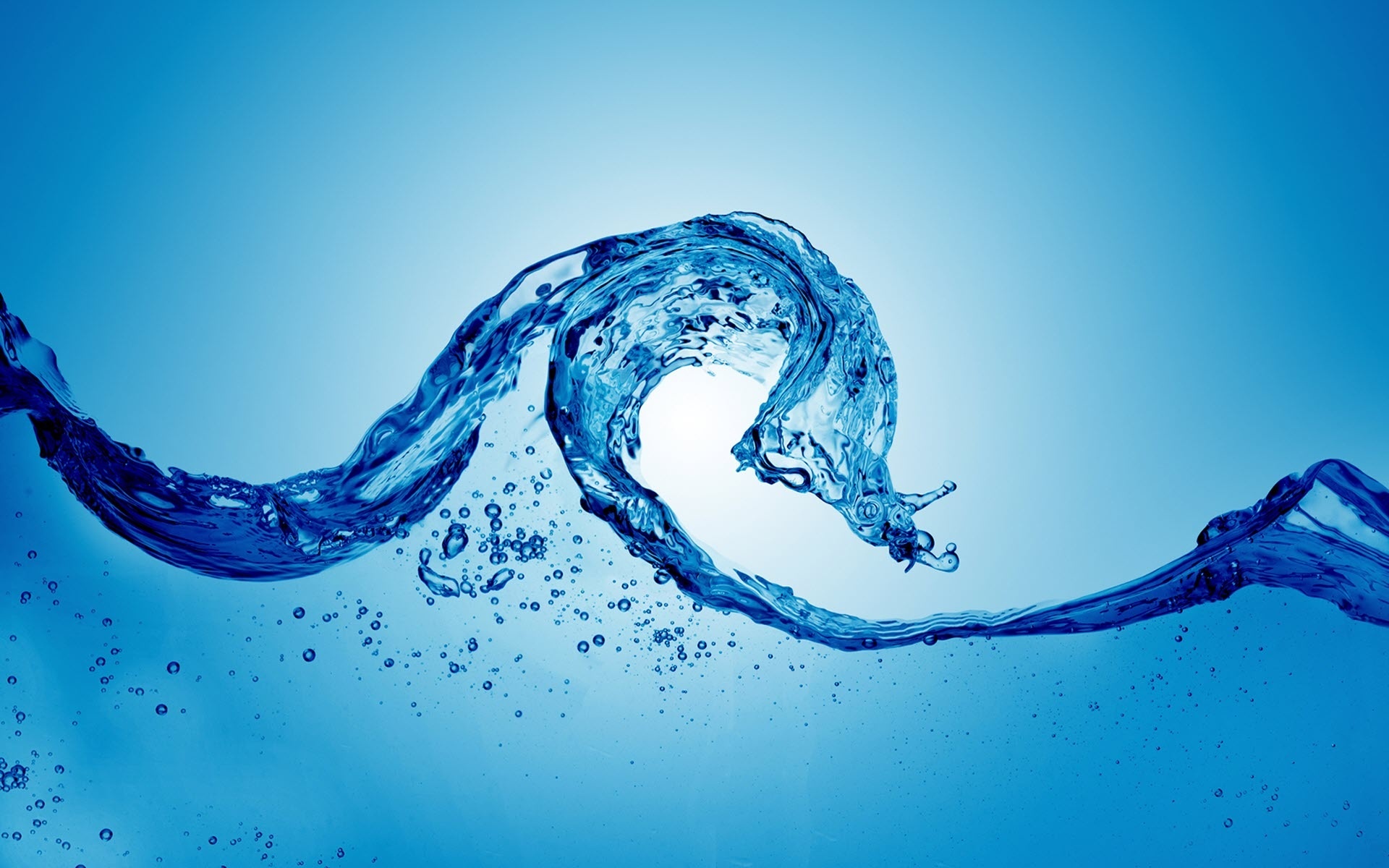
What two elements make up water?
a)
Helium and oxygen
b)
Hydrogen and oxygen
c)
helium and carbon
d)
oxygen and carbon
56.
Why can water have no net charge but have slight charges in different parts of the molecule?
a)
The oxygen end is slightly negative and the hydrogen end is slightly positive
b)
The hydrogen end is slightly negative and the oxygen end is slightly positive
c)
The hydrogen and oxygen ends change in polarity
d)
Because it is hydrophobic
57.
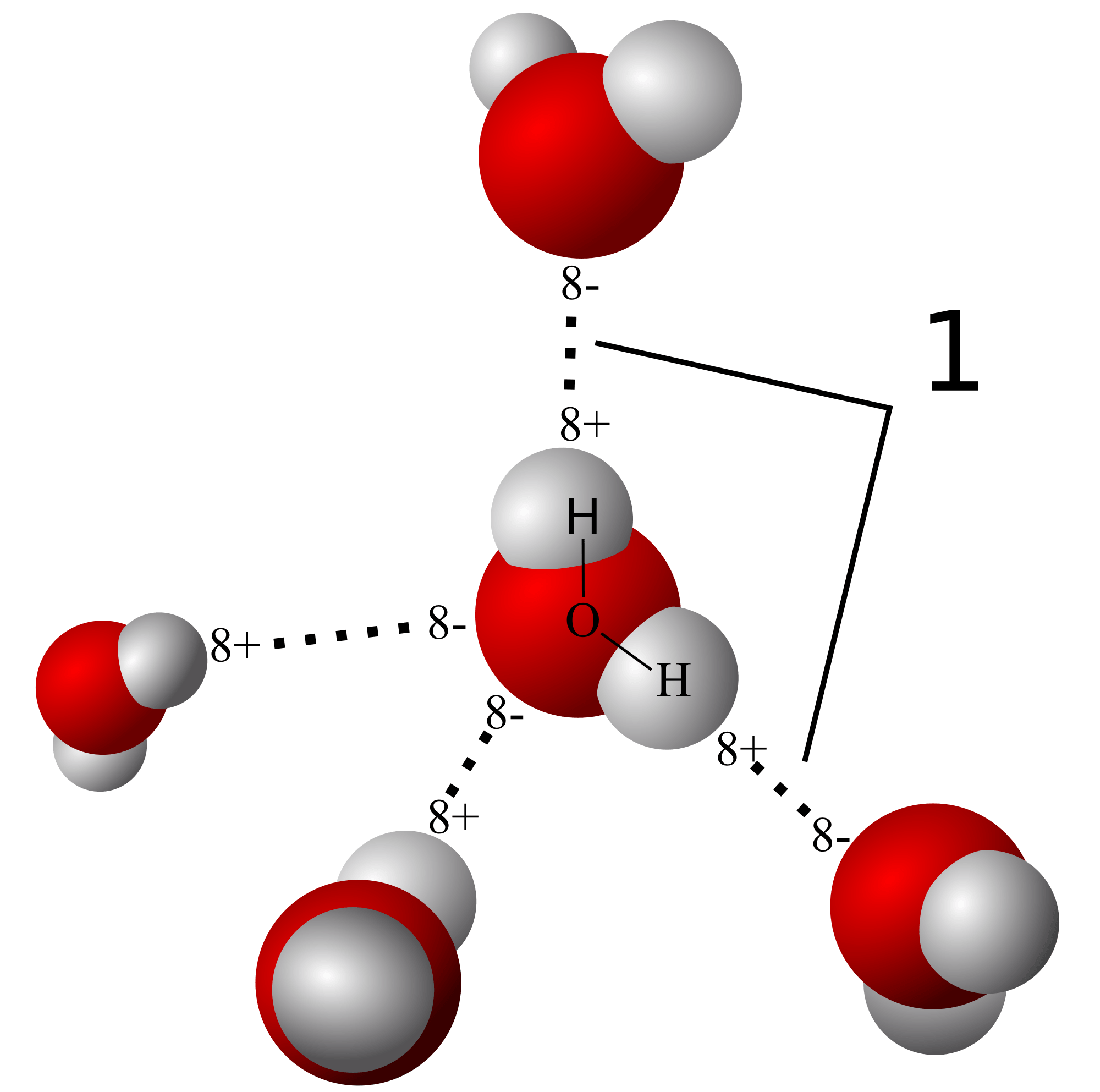
Attractions between water molecules are called
a)
Covalent bonds
b)
Ionic bonds
c)
Polar bonds
d)
Hydrogen bonds
58.
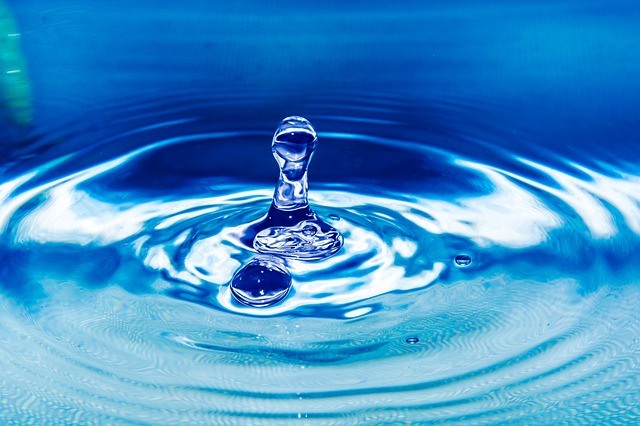
Which is NOT a unique property of water?
a)
Frozen water floats on liquid water.
b)
Water covers most of the Earth’s surface and retains a large amount of heat.
c)
Water molecules stick to each other through hydrogen bonds.
d)
Water cools very rapidly.
59.

What property of water helps to moderate earth's temperature?
a)
adhesion
b)
chohesion
c)
Specific heat capacity
d)
Latent heat of vaporization
60.
Which of the following compounds may be polymers?
a)
carbohydrates
b)
proteins
c)
nucleic acids
d)
all of these
61.
The various enzymes in our body are
a)
lipids
b)
proteins
c)
nucleotides
d)
carbohydrates
62.
When molecules of glucose and fructose combine to form sucrose, they do so by ___
a)
electron clouds
b)
dehydration synthesis
c)
hydrolysis
d)
radiation
63.
Carbon compounds that come from living organisms are called ____ compounds.
a)
organic
b)
water
c)
homogenous
d)
biological
64.
What are the building blocks of proteins?
a)
peptide bonds
b)
amino acids
c)
glycerol and fatty acids
d)
nucleic acids
65.
How many electrons can a carbon atom share?
a)
one
b)
two
c)
three
d)
four
66.
Water dissolves many ionic and molecular compounds because of its ___.
a)
hydrogen bonding
b)
covalent bonding
c)
ionic bonding
d)
polarity
67.
The smaller subunits that make up nucleic acids are called _____
a)
glycerol
b)
fatty acids
c)
glucose
d)
nucleotides
68.
A protein that speeds up a chemical reaction is a ___.
a)
amino acid
b)
enzyme
c)
lipid
d)
nucleic acid
69.
Molecule with unequal distribution of charge
a)
nonpolar
b)
polar
c)
polymer
d)
monomer
70.
DNA and RNA are examples of
a)
Carbohydrates
b)
Lipids
c)
Proteins
d)
Nucleic Acids
71.
Nucleotides are monomers of
a)
Carbohydrates
b)
Lipids
c)
Proteins
d)
Nucleic Acids
72.
Monosaccharides are monomers of
a)
Carbohydrates
b)
Lipids
c)
Proteins
d)
Nucleic Acids
73.
Waxes, oils and fats are examples of
a)
Carbohydrates
b)
Lipids
c)
Proteins
d)
Nucleic Acids
74.
Glycerol and fatty acids are the monomers of
a)
Carbohydrates
b)
Lipids
c)
Proteins
d)
Nucleic Acids
75.
The organic compounds that have many structural purposes and are used in many processes within the
cell are called ____________________.
cell are called ____________________.
a)
Carbohydrates
b)
Lipids
c)
Proteins
d)
Nucleic Acids
76.
What is the function of nucleic acids?
a)
store genetic information
b)
store energy (long-term)
c)
store energy (short-term)
d)
build skin, hair, nails, muscles
77.

Which macromolecule is shown?
a)
lipid
b)
protein
c)
nucleic acid
d)
carbohydrate
78.

Which macromolecule is shown?
a)
lipid
b)
protein
c)
nucleic acid
d)
carbohydrate
79.
What type of macromolecule are enzymes?
a)
Protein
b)
Carbohydrate
c)
Lipid
d)
Nucleic Acid
80.
Which macromolecule stores energy, insulates us, and makes up the cell membrane?
a)
lipids
b)
proteins
c)
carbohydrates
d)
nucleic acids
100 %

