
 Worksheets
Rocks & Minerals
Total questions: 34
Worksheet time: 39mins
Name
Class
Date
1.

Which property is described as the color of a mineral in powdered form?
a)
luster
b)
streak
c)
hardness
d)
density
2.
When determining which minerals will scratch other minerals, you would need to refer to the:
a)
Periodic Table of Elements
b)
Rocks Guide Book
c)
Moh's Hardness Scale
d)
Richter Scale
3.

Fracture or cleavage of a mineral tells you the:
a)
color
b)
harness
c)
temperature
d)
breakage pattern
4.
What are the two main types of luster?
a)
shiny and not shiny
b)
dull and plain
c)
metallic and nonmetallic
d)
greasy and glassy
5.
________ is the mass in a given volume.
a)
luster
b)
streak
c)
density
d)
hardness
6.
A naturally formed, inorganic solid with a crystalline structure
a)
density
b)
streak
c)
mineral
d)
non silicate mineral
7.
How do you test the hardness of a mineral?
a)
Throw it against a wall
b)
Step on it
c)
Scratch Test
d)
Kick it until it breaks
8.
Hardness is a property that helps identify minerals. Scientists use a scale of 1-10 to show the hardness of a mineral. What number would be given to the softest?
a)
1
b)
3
c)
5
d)
10
9.

Which mineral property is being shown here?
a)
luster
b)
cleavage
c)
streak
d)
fracture
10.
The repeating pattern of a mineral's particles forms a solid called a _________.
a)
crystal
b)
rock
c)
chemical
d)
inorganic process
11.
How light reflects off of a mineral is called the mineral's
a)
luster
b)
streak
c)
cleavage
d)
fracture
12.

By definition, a mineral has which of the following characteristic(s)?
a)
definite chemical composition
b)
crystal structure
c)
naturally occuring
d)
all of the above
13.
What does inorganic mean?
a)
Something that is living
b)
Something that is dead, but was once living
c)
Something that was never living
14.
Rocks are made of....
a)
tar and plastic
b)
water products
c)
one or more minerals
d)
fluid
15.
Compacting and cementing of sediments can also be called
a)
stratification
b)
sedimentariation
c)
lithification
d)
metamorphism
16.
Which type of rock forms from extreme heat and pressure?
a)
Igneous
b)
Sedimentary
c)
Organic
d)
Metamorphic
17.
Which type of rock results from melting and cooling of magma?
a)
Igneous
b)
Metamorphic
c)
Sedimentary
d)
Extrusive
18.
Which type of igneous rock forms above ground?
a)
Intrusive
b)
Organic
c)
Extrusive
d)
Foliated
19.
Coal is an example of a _______ sedimentary rock.
a)
Chemical
b)
Organic
c)
Clastic
d)
Intrusive
20.
A metamorphic rock changes into an igneous rock by what two processes?
a)
Melting and cooling
b)
Extreme heat and pressure
c)
Compaction and cementation
d)
Weathering and erosion
21.
Wind, water, and ice breaking down rock is called
a)
Erosion
b)
Deposition
c)
Compaction
d)
Weathering
22.
What is the MAIN way rocks are classified?
a)
Their color and shapes
b)
How they form
c)
Mineral bands
d)
Where they form
23.
A naturally occurring solid mixture of minerals and organic matter is a
a)
mineral
b)
rock
c)
composition
d)
pebble
24.
The chemical makeup of a rock
a)
Composition
b)
Texture
c)
Minerals
d)
Organic matter
25.
Texture is determined by
a)
the chemicals in a rock
b)
the color of a rock
c)
the bumpiness of a rock
d)
the size and shape of the rock's mineral grains
26.

Each rock type can follow only one pathway of the rock cycle.
a)
True
b)
False
27.
The movement of weathered material (sediment) is called?
a)
weathering
b)
erosion
c)
deposition
28.

The process when rocks break into smaller pieces due to exposure to natural elements is called
a)
erosion
b)
weathering
c)
sediments
29.
The process in which dissolved minerals crystallize and glue sediment together.
a)
compaction
b)
deposition
c)
organic rock
d)
cementation
30.

When sediments are pressed together tightly, this is called ____________.
a)
Compaction
b)
Cementation
c)
Weathering
d)
Erosion
31.
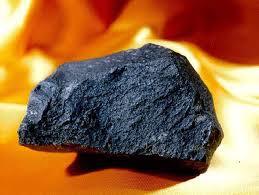
This rock was found near the mouth of a volcano. What type of rock is this?
a)
Sedimentary
b)
Igneous
c)
Metamorphic
32.
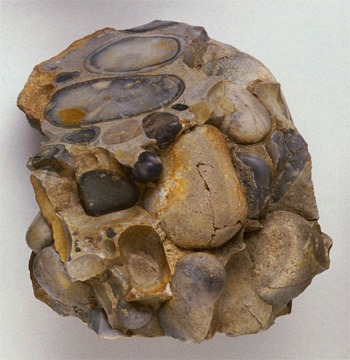
This rock was formed by smaller pieces of rock that settled at the bottom of a lake millions of years ago. What type of rock is this?
a)
Sedimentary
b)
Igneous
c)
Metamorphic
33.
Which of the words below describe mud, sand, and tiny bits of rocks that cement together to form a type of rock?
a)
stalactites
b)
magmas
c)
metamorphs
d)
sediments
34.

Heat & pressure
a)
metamorphism
b)
volcanism
c)
magmarism
d)
lithification
100 %

