
NEW
Font size
S
M
L
XL
 Worksheets
Water2
Total questions: 20
Worksheet time: 17mins
Name
Class
Date
1.
What is the energy source for the water cycle?
a)
the sun
b)
the earth
c)
water
d)
the moon
2.
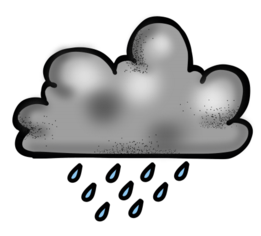
What part of the water cycle does this picture show?
a)
condensation
b)
precipitation
c)
evaporation
3.
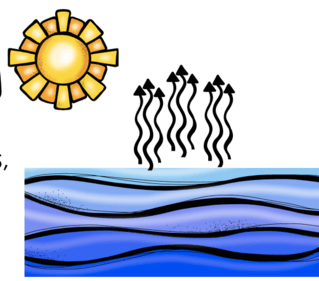
What part of the water cycle does this picture show?
a)
condensation
b)
precipitation
c)
evaporation
4.
What is evaporation?
a)
The part of the water cycle when the sun heats up water, turning it from a liquid into water vapor or steam. It rises from the ground into the air.
b)
The part of the water cycle when the water vapor in the air gets cold. The water turns back into a liquid and forms clouds.
c)
The part of the water cycle when clouds get heavy and can no longer hold the liquid water. This causes the water to fall from the sky to the earth as rain, snow, sleet, or hail.
5.
What is condensation?
a)
The part of the water cycle when the sun heats up water, turning it from a liquid into water vapor or steam. It rises from the ground into the air.
b)
The part of the water cycle when the water vapor in the air gets cold. The water turns back into a liquid and forms clouds.
c)
The part of the water cycle when clouds get heavy and can no longer hold the liquid water. This causes the water to fall from the sky to the earth as rain, snow, sleet, or hail.
6.
What is precipitation?
a)
The part of the water cycle when the sun heats up water, turning it from a liquid into water vapor or steam. It rises from the ground into the air.
b)
The part of the water cycle when the water vapor in the air gets cold. The water turns back into a liquid and forms clouds.
c)
The part of the water cycle when clouds get heavy and can no longer hold the liquid water. This causes the water to fall from the sky to the earth as rain, snow, sleet, or hail.
7.

When water condenses, the water vapor in the air gets ___________ and changes back into liquid.
a)
cold
b)
hot
c)
warm
d)
solid
8.
When water condenses, the liquid water forms ______________.
a)
water vapor
b)
steam
c)
air
d)
clouds
9.

Precipitation happens when clouds of water droplets are too ______________.
a)
cold
b)
light
c)
heavy
d)
hot
10.
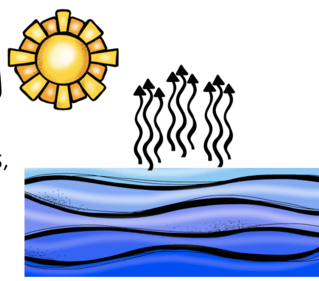
Evaporation happens when the sun ___________ water and turns it into vapor.
a)
cools
b)
heats up
c)
freezes
d)
lights up
11.
Which of these is an example of precipitation?
a)
snow
b)
air
c)
clouds
d)
vapor
12.

What is the water cycle?
a)
the 3 forms of water
b)
the movement of water on, above, or below the surface of the Earth
c)
when water melts
d)
when clouds form
13.
Where is most water found on Earth?
a)
glaciers
b)
lakes
c)
rivers
d)
oceans
14.
River, streams and oceans are all points of _____________ in the water cycle.
a)
collection
b)
precipitation
c)
condensation
d)
evaporation
15.
Which type of rainfall would be most helpful to farmers?
a)
rainfall that evaporates quickly
b)
rainfall that runs off the land quickly
c)
rainfall that soaks into the soil slowly
d)
very little rainfall
16.
Many Utah towns use water from wells for drinking. How does water get into wells?
a)
it has to be poured into them from water tanks
b)
rain sinks down through the soil into them
c)
it is pumped by large engines into the well
d)
it evaporates from inside the Earth
17.
What controls whether water is a gas, liquid, or solid ice?
a)
the shape or size of the cup
b)
where it has been stored
c)
if it is being used for irrigation
d)
what its temperature is
18.
Does the water cycle ever end?
a)
Yes, once water evaporates it is gone forever
b)
Yes, when it rains, the water goes into the ground forever
c)
No, once it evaporates the water fairies come and sing a rainy day song.
d)
No, the water cycle has been going on for billions of years, and will continue on forever.
19.
What follows evaporation during the water cycle?
a)
Water evaporates into water vapor
b)
Water vapor condenses and forms a cloud
c)
Water precipitates to the ground
d)
Water runs down into the hydrosphere
20.
What is water vapor?
a)
Water on the lan
b)
Water in the air
c)
Water in plants
d)
Water in the water (hydrosphere)
Reset

