
 Worksheets
Computational Thinking & Flowcharts
Total questions: 30
Worksheet time: 3600secs
What is computational thinking?
Giving Instructions to a computer
Coding
Using skills and techniques to solve a problem
Identifying a problem
Breaking a problem down into smaller parts and solving each one individually.
This is an example of:
Decomposition
Abstraction
Programming
Algorithmic Thinking
Picking out the important bits of information from the problem, and ignoring the specific details that don't matter.
This is an example of:
Decomposition
Abstraction
Pattern Recognition
Algorithmic Thinking
Designing a logical way of getting from the problem to the solution. Some of the steps may be reused and adapted to solve similar problems in the future.
This is an example of:
Decomposition
Abstraction
Programming
Algorithmic Thinking
Which of the following is NOT a computational thinking technique?
Decomposition
Abstraction
Coding
Pattern recognition
Which of these is an example of Decomposition?
Breaking the problem of organising a cake sale into smaller parts, such as who will bake the cakes and when to hold the cake sale.
Taking the problem of baking a cake and thinking about how we can make it the best cake possible.
Looking at what different kinds of cake can be made.
Which of the following is an example of Algorithmic Thinking?
Planning out your route when going to meet a friend
When going to meet a friend, wandering around until you find them
When going to meet a friend, asking your sister/brother to plan your route for you
You have been asked to draw an image of a cat. Your image must represent all types of cats, and focus on the main aspects.
This is an example of:
Abstraction
Algorithm Design
Pattern Recognition
Decomposition
You decide to bake a batch of cookies by following your grandmother's chocolate chip cookie recipe.
This is an example of:
Abstraction
Algorithm Design
Pattern Recognition
Decomposition
Your family are planning a road trip through all of the capital cities in the Europe. You have been asked to figure out the shortest route possible to save on the cost of fuel.
Is this an example of:
Abstraction
Algorithm Design
Pattern Recognition
Decomposition
Which of the following is NOT an example of computational thinking?
Planning what to collect and where to exit to complete a video game level
Planning how to beat your enemies in a video game level
Accidentally completing a video game level
What is a complex problem?
A problem that, at first, is not easy to solve
A problem that, at first, is not easy to understand
A problem that, at first, is not easy to solve or to understand
When can algorithms be used?
Only with computers
To design a solution to any problem
For programming
What should be considered when designing an algorithm?
If there is more than one way of solving the problem
If the correct hardware is being used
If the correct software is being used
What is it called when you test out the algorithm, and then make changes to fix any problems, before you run it again?
Pseudocode
Debugging
Coding
Looping
What are the two main ways that algorithms can be designed?
Images or videos
In pseudocode or as a flowchart
By hardware or software
What is pseudocode?
A way of describing a set of instructions in Structured English
A specific programming language that all computers use
A diagrammatic representation of a set of instructions
What is a flowchart?
A flowchart is a text-based way of designing an algorithm
A flowchart is a specific programming language
A flowchart is a diagram that represents a set of instructions
What is the purpose of a flowchart?
To plan the program before it is made
Because it is easier
Because it looks impressive


What does this symbol represent?
Start
Input
Decision
Process/Action

What is this symbol used for in a flowchart?
A decision/question
A process/action to carry out
To signal the start
To signal an input
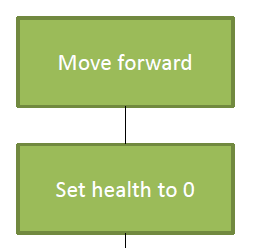
How are symbols connected together in a flowchart?
Symbols are not connected in a flowchart
With arrows to show the direction of flow
By numbering the blocks
With lines

What will happen if the user gets their details wrong?
(click on the image to show full screen)
Checks how many times they have tried
They get another try

What will happen if the user's book return is late?
(click on the image to show full screen)
Sends them an SMS (text)
Does not send them an SMS (text)

What is this flow chart missing?
Arrows
Loops
Decisions
Start and Stop

