
 Worksheets
Weather 1
Total questions: 19
Worksheet time: 9mins
Name
Class
Date
1.
Which of the following is an example of convection?
a)
A hair dryer is drying up your hair.
b)
When the AC or heater changes the temperature.
c)
When a car engine turns hot after being turned on.
d)
When you are making soup and the water is rising and lowering.
2.
Which of the following is needed for convection to happen?
a)
Fluid/Fluids
b)
Light in the form or rays
c)
Electromagnetic waves
d)
Fire
3.
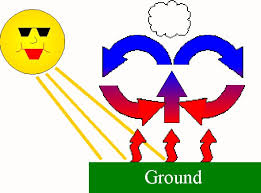
Warm air rises and the cool air sinks demonstrates this type of heat transfer.
a)
conduction
b)
convection
c)
radiation
d)
Insolation
4.
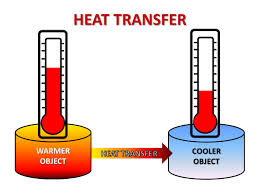
Heat transfers from an area of ____temperature to an area of ___ temperature.
a)
high to low
b)
low to high
c)
high to high
d)
It can travel high to low and low to high.
5.
Evaporation occurs when water changes into
a)
transpiration
b)
snow
c)
solid
d)
vapor
6.
The change of state from a gas to a liquid.
a)
water cycle
b)
evaporation
c)
precipitation
d)
condensation
7.
What is matter?
a)
length width and height of an object
b)
anything that has mass and takes up space
c)
what you care about
d)
Who knows?
8.

The drops of water that appear on the outside of a glass of cold juice on a warm day are an example of?
a)
sublimation
b)
condensation
c)
evaporation
9.

What does a thermometer measure?
a)
wind direction
b)
wind speed
c)
air temperature
d)
humidity
10.
Where weather occurs.
a)
stratosphere
b)
thermosphere
c)
troposphere
d)
mesosphere
11.
Where you will find the ozone layer.
a)
stratosphere
b)
thermosphere
c)
exosphere
d)
mesosphere
12.
Where we live.
a)
stratosphere
b)
thermosphere
c)
troposphere
d)
mesosphere
13.
What happens to the air pressure the higher up in space you go?
a)
the air pressure increases
b)
the air pressure decreases
c)
the air pressure stays the same
d)
there is no air pressure
14.
What does the earth's atmosphere do?
a)
help to regulate the temperature on Earth
b)
Help UV rays to reach the Earth's surface
c)
Creates meteors in the sky
d)
Keep ocean waters cold
15.
What is the function of the ozone layer?
a)
to allow UV rays to get to Earth
b)
to block UV rays from getting to Earth
c)
To keep oxygen in
d)
to allow meteors to get to Earth
16.
Which of these layers is closest to Earth?
a)
thermosphere
b)
stratosphere
c)
mesosphere
d)
ionosphere
17.
What is the jet stream?
a)
Precipitation in North Carolina
b)
Weather over a long period of time
c)
Strong winds above the Earth's surface
d)
Football flying over the Earth
18.
How does the jet stream affect the weather?
a)
The jet stream transports weather systems that affect us.
b)
The jet stream does not affect the weather.
c)
The jet stream releases oxygen so we can breathe.
d)
The jet stream brings only bad weather.
19.
Which has the greatest affect on the movement of the jet stream?
a)
differences in air temperatures
b)
amount of precipitation
c)
size of clouds
d)
The jet stream does what it wants.
100 %

