
 Worksheets
SS Benchmark Review-1
Total questions: 90
Worksheet time: 1hrs 5mins
Name
Class
Date
1.

Which landform/physical feature borders the Atlantic Ocean and the Gulf of Mexico?
a)
The Continental Divide
b)
Atlantic Ocean
c)
Atlantic Coastal Plain
d)
Appalachian Mountain
2.

This body of water is located between Mexico and Florida.
a)
Erie Canal
b)
Continental Divide
c)
Gulf of Mexico
d)
St. Lawrence River
3.

The high peaks(mountain tops) of the Rocky Mountains form an imaginary line in the United States known as
a)
Death Valley
b)
Continental Divide
c)
Rocky Mountains
d)
Great Plains
4.
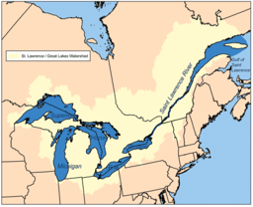
This river flows through northeastern Canada to the Great Lakes.
a)
Lake Lanier
b)
St. Lawrence River
c)
Atlantic Ocean
d)
Erie Canal
5.

This landform and physical features has very few trees and lots of grassland
a)
Great Plains
b)
Continental Divide
c)
Great Basin
d)
Death Valley
6.

These bodies of water are connected to each other and contain fresh water
a)
Great Lakes
b)
St. Lawrence River
c)
Gulf of Mexico
d)
Atlantic Ocean
7.
Which is a flat area in the mid-United States made up of grasslands with no trees?
a)
Great Basin
b)
Great Plains
c)
Death Valley
d)
Great Lakes
8.
How many Great Lakes are there?
a)
3
b)
4
c)
5
d)
6
9.
Are North, South, East, and West cardinal directions or intermediate directions?
a)
Cardinal directions
b)
Intermediate directions
10.
Are Northeast, Northwest, Southeast, and Southwest cardinal directions or intermediate directions?
a)
Cardinal directions
b)
Intermediate directions
11.
An area in southeastern California that is the lowest, driest, and hottest part of the United States
a)
Great Plains
b)
Death Valley
c)
Continental Divide
d)
Great Basin
12.
The large body of water to the east of the United States
a)
Gulf of Mexico
b)
Great Lakes
c)
Atlantic Ocean
d)
Pacific Ocean
13.
The longest river in the United States, extending nearly 2,500 miles from the Minnesota North Woods to the Gulf of Mexico
a)
Rio Grande
b)
St. Lawrence River
c)
Mississippi River
d)
Missouri River
14.
Some believe that the Native Americans came from _____________.
a)
Australia
b)
Antarctica
c)
Asia
d)
Africa
15.
The first Native Americans traveled across this to get to American.
a)
Land Bridge
b)
Land Tide
c)
big lake
d)
Open Bridge
16.
True or false: All Native American tribes were nomadic?
a)
False
b)
True
17.

Which letter shows where the Native American tribe Hopi lived?
a)
A
b)
E
c)
C
d)
D
18.

Which letter shows where the Native American tribe Pawnee lives?
a)
A
b)
E
c)
D
d)
B
19.

Which letter shows where the Native American tribe Nez Perce lived?
a)
D
b)
C
c)
B
d)
A
20.

Which letter shows where the Seminoles Native American tribe lived?
a)
A
b)
C
c)
B
d)
D
21.

Which letter represents the GREAT PLAINS area on the map?
a)
A
b)
C
c)
B
d)
D
22.

Which letter represents the SOUTHWEST area on the map?
a)
E
b)
A
c)
C
d)
B
23.

Which letter represents the SOUTHEAST area on the map?
a)
D
b)
E
c)
C
d)
B
24.

Which letter represents the PLATEAU area on the map?
a)
A
b)
B
c)
C
d)
E
25.

Which letter shows where the Native American tribe Kwakiutl lived?
a)
A
b)
B
c)
C
d)
D
26.

A teepee is a...
a)
Cone shaped tent made from animal hides.
b)
ability to move from one place to another.
c)
way of life.
27.

People in this region made this home of clay and stone and called it a pueblo.
a)
Eastern Woodland
b)
Great Plains
c)
Plateau
d)
Southwest
28.

Match the home with the Native American Region:
These people were nomadic and built teepee as a shelter.
These people were nomadic and built teepee as a shelter.
a)
Plateau
b)
Eastern Woodlands
c)
Great Plains
d)
Southeast
29.

This home was made from ice and snow.
a)
Igloo
b)
Wikiup
c)
Teepee
d)
Chickee
30.

To prevent flooding and swamp animals from entering, these people made elevated homes 3-feet off the ground.
a)
Southwest
b)
Eastern Woodland
c)
Southeast
d)
California Intermountain
31.

What was the motto for exploration?
a)
Spices, Power, and Christianity!
b)
God, Gold, and Glory!
c)
Bravery, Blood, and Glory!
d)
Marco Polo!
32.
Who were the three main powerful countries that were involved in the Age of Exploration?
a)
Spain, Germany, and France
b)
England, Spain, & France
c)
Italy, Spain, and Portugal
d)
Portugal, Ireland, & France
33.
What was the purpose of exploring the Americas?
a)
To establish peace with Native Americans
b)
To gain Gold, Glory & spread the Catholic religion
c)
To bring new technology to the Natives
d)
To bring new diseases to the Americas
34.

I am a Spanish explorer - I searched for the Fountain of Youth and gold - but ended up finding Florida instead!
a)
Leif Ericson
b)
Francisco Coronado
c)
Ponce de Leon
d)
Ferdinand Magellan
35.
_______________ was the first European to discover the Pacific Ocean in 1513.
a)
Vasco Nunez de Balboa
b)
Christopher Columbus
c)
John Cabot
d)
Henry Hudson
36.
I was looking for the Northwest Passage in 1534. On my journey, I sailed down the Saint Lawrence River.
a)
Henry Hudson
b)
John Cabot
c)
Jacques Cartier
d)
Christopher Columbus
37.
What are some obstacles that early explorers faced?
a)
No maps and poor navigation tools
b)
Caught diseases and fought with Native Americans
c)
Bad weather and mutiny (thrown off ship)
d)
All of the above
38.
What are some ways that the early explorers caused problems (impacted) for the Native Americans?
a)
Disease
b)
Took their land
c)
Made them slaves
d)
All of the above
39.
Christopher Columbus sailed for what country?
a)
England
b)
France
c)
Spain
d)
Colombia
40.
Which explorer sailed for the country France?
a)
Vasco De Balboa
b)
Ponce de Leon
c)
John Cabot
d)
Jacques Cartier
41.
Who did Henry Hudson sail for?
a)
Spain
b)
France
c)
England
42.
Which one of these is an obstacle explorers faced?
a)
Poor maps
b)
Spread christianity
c)
improved navigational
d)
gold
43.
Which one of these is an obstacle explorers faced?
a)
good maps
b)
disease and starvation
c)
improved navigational
d)
gold
44.
Which one of these is an obstacle explorers faced?
a)
good maps
b)
good health
c)
Lack of adequate supplies
d)
gold
45.
Which one of these is an obstacle explorers faced?
a)
good maps
b)
good health
c)
good supplies
d)
fear of the unknown
46.
Which one of these is an accomplishment of exploration?
a)
exchange of goods and ideas
b)
disease and starvation
c)
good supplies
d)
fear of the unknown
47.
Which one of these is an accomplishment of exploration?
a)
improved navigational tools and ships
b)
disease and starvation
c)
No new territories
d)
fear of the unknown
48.
Which one of these is an accomplishment of exploration?
a)
No supplies
b)
disease and starvation
c)
Claimed territories
d)
fear of the unknown
49.
Which is a motivation for exploring?
a)
Fear of the unknown
b)
Improved maps and ships
c)
Gold
d)
Lack of adequate supplies
50.
Which is an obstacle to exploration
a)
Spreading Christianity
b)
Disease and starvation
c)
Exchanged goods and ideas
d)
Natural Resources
51.
Which is an accomplishment of exploration?
a)
Claimed new territories
b)
Belief in superiority of one's culture
c)
Fear of the unknown
d)
Poor maps and navigational tools
52.
Which colonists were farmers and plantation owners who grew cotton and tobacco?
a)
New England
b)
Southern
c)
Middle
d)
Backcountry
53.
Which colonial region contained rocky soil and cold climate?
a)
New England
b)
Middle
c)
Southern
d)
Backcountry
54.
Most of the work on large, southern plantations was done by ___________ and ___________
a)
Native Americans and slaves
b)
women and children
c)
slaves and indentured servants
d)
Frenchmen and Mexicans
55.
The people who settled in the New England colonies were looking for religious freedom
a)
True
b)
False
56.
Large farms, called ___________________, were spread throughout the Southern colonies.
a)
Trade centers
b)
Plantations
c)
Settlements
d)
industrial centers
57.
Which region relied mostly on cash crops to make their money?
a)
New England
b)
Middle Colonies
c)
Southern Colonies
d)
Backcountry
58.
Jamestown is in the state of _____________.
a)
Hidalgo County
b)
California
c)
New York
d)
Virginia
59.
Jamestown was settle in ____________
a)
1492
b)
1607
c)
1620
d)
1977
60.
In general, why were MOST of the New England colonies founded?
a)
make money
b)
better soil
c)
economic opportunity
d)
religious freedoms
61.
Persecution is what?
a)
Very Good treatment.
b)
Hostility and ill treatment.
c)
Undeserved treatment.
d)
Free food.
62.
The _____ of the Southern Colonies was based on farming.
a)
economy
b)
colony
c)
merchant
63.
I have been working for many years to pay off my trip to North America. After I work off my debt, I am free. I am an _______.
a)
indentured servant
b)
slave
c)
merchant
64.
Who am I?
I have to take care of the children and the home. I also can't vote and never got an education.
I have to take care of the children and the home. I also can't vote and never got an education.
a)
Women
b)
Large Landowners
c)
Artisans
d)
Slaves
65.
Large landowners owned __________ who did the work on the plantations.
a)
Women
b)
Indentured Servants
c)
Artisans
d)
Slaves
66.
Owners of small farms relied on their _______ for labor or help.
a)
Families
b)
Paid Laborers
c)
Artisans
d)
Slaves
67.
Europeans who willingly agreed to work in exchange for passage to America were __________.
a)
Free African Americans
b)
Indentured Servants
c)
Paid Laborers
d)
Artisans
68.
Who wrote this letter:
I spend all day making copper metal cups. People from all over buy my stuff.
I spend all day making copper metal cups. People from all over buy my stuff.
a)
Free African Americans
b)
Indentured Servants
c)
Large Landowner
d)
Artisans
69.
Who am I?
I wasn't educated as a child and now I'm a homemaker.
I wasn't educated as a child and now I'm a homemaker.
a)
Women
b)
Farmers
c)
Large Landowner
d)
Artisans
70.
Who am I?
I live in the south and have a rich social culture.
I live in the south and have a rich social culture.
a)
Free African Americans
b)
Farmers
c)
Large Landowner
d)
Artisans
71.
Who am I?
I was captured in Africa and was sent to the colonies where I was sold into slavery without any rights.
I was captured in Africa and was sent to the colonies where I was sold into slavery without any rights.
a)
Artisans
b)
Farmers
c)
Slaves
d)
Indentured Servants
72.
Who am I?
I'm free at the end of my contract.
I'm free at the end of my contract.
a)
Women
b)
Free African Americans
c)
Slaves
d)
Indentured Servants
73.
Lived on plantations, used slaves and indentured
servants, rich and educated.
a)
Large Landowners
b)
Slaves
c)
Small Farmers
d)
Women
74.
Did not choose to come to the colonies, worked
on plantations, treated poorly.
a)
Indentured Servants
b)
Women
c)
Slaves
d)
Artisans
75.
Worked for 3 – 7 years in return for someone
bringing them to America.
Then they could do whatever they wanted.
a)
Slaves
b)
Women
c)
Artisans
d)
Indentured Servants
76.
Raised livestock and grew crops, family did all
of the work, did not own slaves.
a)
Colonial Farmers
b)
Large Landowners
c)
Indentured Servants
d)
Artisans
77.
Could not vote, did all of the housework, little
chance of education.
a)
Slaves
b)
Indentured Servants
c)
Colonial Women
d)
Large Landowners
78.
Skilled craftsmen throughout the colonies, great
at making and selling things.
a)
Colonial Farmers
b)
Slaves
c)
Indentured Servants
d)
Aritsans
79.
Residents of the land before any Europeans, some
were able to cooperate and trade with colonists, others fought to keep their
land or were removed from it.
a)
Indentured Servants
b)
Native Americans
c)
Large Landowners
d)
Colonial Farmers
80.
Who lived predominately in the South?
a)
Artisans
b)
Large Landowners
c)
Women
d)
Farmers
81.
I was captured in my homeland of Africa and sold to slave traders.
a)
Large Landowner
b)
Indentured servants
c)
Enslaved African Americans
d)
Free African Americans
82.
I could work for pay and decide how to use my money.
a)
Large Landowner
b)
Indentured servants
c)
Enslaved African Americans
d)
Free African Americans
83.
Residents of the land before any Europeans, some were able to cooperate and trade with colonists, others fought to keep their land or were removed from it.
a)
Indentured Servants
b)
Native Americans
c)
Large Landowners
d)
Colonial Farmers
84.
Had no rights
a)
Slave
b)
Indentured Servant
c)
Both
85.
What are the "breadbasket colonies"?
a)
Southern
b)
Middle
c)
New England
d)
Eastern
86.
What was the nickname for the Middle Colonies due to their large grain harvests?
a)
The Wheaties
b)
The Breadbasket Colonies
c)
The Grain Groups
d)
The Wheat Colonies
87.
Why were there more slaves in the southern colonies than in the other two regions?
a)
The southern Plantation system needed a large work force
b)
The northern colonies did not have any slaves
c)
The northern colonies used Native Americans for workers
d)
Slavery was illegal in the northern colonies
88.
Which of the following were reasons for the establishment of the 13 English colonies?
a)
Religious Freedom and economic opportunity
b)
To spread religion to Native Americans and search for gold
c)
To establish slavery and religious freedom
d)
To fight against tyranny and create a utopian society
89.
Which of the following were reasons for the establishment of the 13 English colonies?
a)
Religious Freedom and economic opportunity
b)
To spread religion to Native Americans and search for gold
c)
To establish slavery and religious freedom
d)
To fight against tyranny and create a utopian society
90.
Which of the following were reasons for the establishment of the 13 English colonies?
a)
Religious Freedom and economic opportunity
b)
To spread religion to Native Americans and search for gold
c)
To establish slavery and religious freedom
d)
To fight against tyranny and create a utopian society
100 %

