
 Worksheets
Renaissance Review
Total questions: 66
Worksheet time: 36mins
Name
Class
Date
1.
What does the word "Renaissance" mean?
a)
Renewed
b)
Rebuilt
c)
Remade
d)
Rebirth
2.
What is one way that Medieval and Renaissance artists differ?
a)
Renaissance art focuses more on religion
b)
Medieval artists were more realistic
c)
Renaissance artist turned to Roman and Greek works for inspiration
d)
They are the same
3.
On what peninsula did the Renaissance begin?
a)
Spain
b)
England
c)
Italy
d)
Germany
4.
Artist who painted the ceiling of the Sistine Chapel in Rome
a)
Michelangelo
b)
Leonardo Da Vinci
c)
Perspective
d)
Patron
5.
Italian artist who also excelled in astronomy, engineering, and anatomy
a)
Michelangelo
b)
Raphael
c)
Johann Guttenberg
d)
Leonardo da Vinci
6.
Which of the following is associated with classical learning?
a)
the ideas of the middle ages
b)
the ideas of Greece & Rome
c)
the ideas of ancient China
d)
the ideas of ancient India
7.
How many wives did Henry VIII have?
a)
4
b)
5
c)
6
d)
7
8.
What dynasty ruled England during the Renaissance?
a)
Tudor
b)
Henry
c)
Elizabeth
d)
Anglican
9.
Who was the German Monk who wrote 95 arguments against the Catholic Church?
a)
Martin Luther King Jr.
b)
King Edward
c)
Martin Luther
d)
Christopher Columbus
10.
Today, Baptists, Methodists, Pentecostals, etc. belong to the group called...
a)
Jews
b)
Catholics
c)
Protestants
d)
Romans
11.
The writer of Romeo and Juliet, MacBeth, and Hamlet was
a)
Brunelleschi
b)
Machiavelli
c)
Dante
d)
Shakespeare
12.
Brunelleschi is best known for
a)
"The Prince."
b)
the statue of David
c)
the Dome of Santa Maria del Fiore
d)
"The Divine Comedy"
13.
The author of "The Divine Comedy"
a)
Machiavelli
b)
Brunelleschi
c)
Shakespeare
d)
Dante
14.
The Renaissance first began in the city-state of
a)
Florence
b)
Rome
c)
Venice
d)
Milan
15.
The wealthy family of Florence that controlled the city-state and was a patron of Renaissance artists was the _________ family.
a)
Da Vinci
b)
Medici
c)
Petrach
d)
Orsini
16.
Gutenberg's accomplishment that led to the spread of the Humanist movement throughout Europe was
a)
wood block printing
b)
his poem, "The Divine Comedy"
c)
"The Prince"
d)
the printing press with movable type
17.
Which describes how the subjects of Renaissance art were different than art during Medieval times?
a)
The subjects of art were always religious figures.
b)
Artists painted individuals in everyday life and showed them more realistically.
c)
The art was usually very dark and depressing.
d)
Subjects' bodies were not shown in proportion.
18.
How did the city-states of Italy gain wealth?
a)
Through industry
b)
Through banking and trade
c)
Through the sale of Renaissance art
d)
Through the large farming estates
19.
Leonardo DaVinci's most famous contributions to Renaissance art were
a)
The "Last Supper" and the ceiling of the Sistine Chapel
b)
The "Pieta" and "David"
c)
"David" and the ceiling of the Sistine Chapel
d)
The "Mona Lisa" and the "Last Supper"
20.
Which was NOT a characteristic of humanism?
a)
an emphasis on the individual and society
b)
gaining knowledge through reason and not just religious faith
c)
an emphasis on the Catholic Church
d)
It was based on Greek and Roman ideas
21.

Which of the following cities was an important center during the early Renaissance?
a)
Florence
b)
London
c)
Ghent
d)
Paris
22.

Why was the invention of the printing press so important?
a)
It embodied the spirit of the Renaissance
b)
It made books available to a wider audience
c)
It made Johannes Gutenburg famous
d)
It spurred the invention of the telescope
23.

Humanism is a way of thought that focuses on which of the following?
a)
The human potential for achievement
b)
the needs of the group over the individual
c)
the works of medieval writers
d)
the doctrines of the Christian Church
24.

The first moveable type of printing press that allowed mass production of materials was invented by
a)
Leonardo da Vinci.
b)
Johann Gutenberg.
c)
William Shakespeare.
d)
Michelangelo di Buonarroti Simoni.
25.
Who wrote "Praise of Folly", a book that cricized the Pope?
a)
Sir Thomas More
b)
Erasmus
c)
Machiavelli
d)
Da Vinci
26.
Which of these was a writer of the northern Renaissance?
a)
Erasmus
b)
Cervantes
c)
Petrarch
d)
Dante
27.
Many ideas of the European Renaissance were based on the cultures of ancient
a)
Greece and Egypt
b)
Greece and Rome
c)
Greece and China
d)
Greece and India
28.
Who is known as "the father of Humanism? He was famous for writing sonnets/poems.
a)
Machiavelli
b)
Petrarch
c)
Leonardo da Vinci
d)
Michelangelo
29.
What provided the major economic support for the Renaissance?
a)
wealthy patrons
b)
church officials
c)
government grants
d)
kings competing for prestige
30.
What was the Renaissance a "rebirth" of?
a)
Religion
b)
Classical culture
c)
Life (after the black death)
d)
Middle Ages
31.
During the Renaissance, why was Florence significant?
a)
Birthplace and symbol of the Renaissance
b)
Birthplace of Michelangelo
c)
The last place the Black Plague hit
d)
Home of all of the significant artists and sculptors
32.
Advantages of Johannes Gutenberg's printing press include all of the following EXCEPT:
a)
Cheaper book prices
b)
Increase in education/literacy
c)
Increase in church power
d)
Rapid spread of ideas
33.
During the Renaissance, Europeans ______________ ideas from ancient Greece & Rome.
a)
ignored
b)
sold
c)
forgot
d)
rediscovered
34.
What do King Henry VIII & Leonardo da Vinci both have in common?
a)
both were high-ranking members of the Roman Catholic Church
b)
both were leaders in the Protestant Reformation
c)
both were English monarchs
d)
both were Renaissance men
35.
Leonardo da Vinci was not only an artist, scientist, architect and inventor, he was also a(n)
a)
king
b)
patron
c)
philosopher
d)
religious leader
36.
Martin Luther's refusal to recant before Church officials sparked the
a)
Renaissance
b)
Crusades
c)
Protestant Reformation
d)
Dark Ages
37.
All are causes of the Protestant Reformation EXCEPT for
a)
Martin Luther's 95 Theses
b)
the Crusades
c)
growing disgust over corrupt church policies
d)
the plague & the printing press
38.
What did the Catholic Church do to Martin Luther?
a)
they burned him at the stake
b)
they excommunicated him, meaning he could no longer preach in a Catholic Church
c)
they made him a monk
d)
they forced him to make a public apology
39.
Increasing numbers of people learned to read after the mid-1400s because
a)
most people had plenty of free time
b)
most people had extra money to spend on books
c)
printed materials became more available thanks to the printing press
d)
of the Plague
40.
Which of the following plays was NOT written by William Shakespeare?
a)
Hamlet
b)
MacBeth
c)
Romeo & Juliet
d)
The Divine Comedy
41.
Who was the astronomer to first reject the geo-centric theory?
a)
Copernicus
b)
Galileo
c)
Kepler
d)
Newton
42.
Who was the astronomer to be arrested for the helio-centric theory?
a)
Copernicus
b)
Galileo
c)
Kepler
d)
Newton
43.
Who was the astronomer who showed how gravity proved the heliocentric theory?
a)
Copernicus
b)
Galileo
c)
Kepler
d)
Newton
44.
What powerful institution was challenged with the rebirth of critical thinking and science?
a)
the church
b)
the government
c)
the home
d)
the school
45.
Luther protested the practice of selling indulgences. What was that practice?
a)
Clergy members bought indulgences to reach higher offices.
b)
The clergy sold pardons that released people from performing penalties for their sins.
c)
Charles V told his people that buying indulgences was a way to earn a way to heaven.
d)
Indulgences permitted priests to marry and have children.
46.
Who declared himself the head of the English Church?
a)
Henry VIII
b)
John Knox
c)
Martin Luther
d)
Emperor Charles V
47.
Who was the first of Henry VIII's children to rule England?
a)
Elizabeth I
b)
Mary
c)
Edward VI
d)
Anne
48.
What kind of person represented the ideal of the "Renaissance man"?
a)
someone who enjoyed worldly pleasures
b)
someone who excelled in many areas of study
c)
someone who specialized in a particular field of study
d)
someone who supported and appreciated the arts without creating art
49.
____________________ is a person who supports artists, especially financially.
a)
Utopia
b)
Patron
c)
indulgent
d)
Secular
50.
Galileo was tried for heresy because he argued
a)
That heaven did not exist
b)
That Earth revolved around the sun
c)
Against the law of gravity
d)
That the sun revolved around the Earth
51.
According to Copernicus, the sun
a)
Revolved around the earth
b)
Was the center of the Universe
c)
Was the biggest star
d)
Had many moons
52.
During the Scientific Revolution the heliocentric view of the universe was first proposed by __.
a)
Ptolemy
b)
Francis Bacon
c)
Isaac Newton
d)
Nicolaus Copernicus
53.
What did Galileo Improve?
a)
The astrolabe
b)
The stars
c)
The Telescope
d)
The compass
54.
_____________________ was an Italian astronomer who developed the telescope, which then confirmed Copernicus’ Heliocentric Theory
a)
a. Isaac Newton
b)
b. Galileo Galilei
c)
c. Adam Smith
d)
d. Dennis Diderot
55.
What did Kepler add to Copernicus’ heliocentric theory?
a)
That Jupiter had four moons
b)
That the planets revolved around the earth
c)
That the sun was the biggest star
d)
That the planets move in eliptical (oval shaped) orbits around the sun
56.
During the scientific revolution people started using experiments to test theories rather than just believing the ___________
a)
King
b)
Family
c)
Church
d)
Sir Salami
57.
He pioneered the use of inductive reasoning for the use in the scientific method.
a)
Kepler
b)
Bacon
c)
Dr. Seuss
d)
Dr. Who
58.
What type of math was Newton known for developing?
a)
Geometry
b)
Trigonomety
c)
Calculus
d)
Addition
59.
Which scientist developed laws of motion?
a)
Ptolemy
b)
Copernicus
c)
Galileo
d)
Newton
60.
The English philosopher who proposed the Scientific Method.
a)
Sir Francis Bacon
b)
Voltaire
c)
Thomas Hobbes
d)
hypothesis
61.
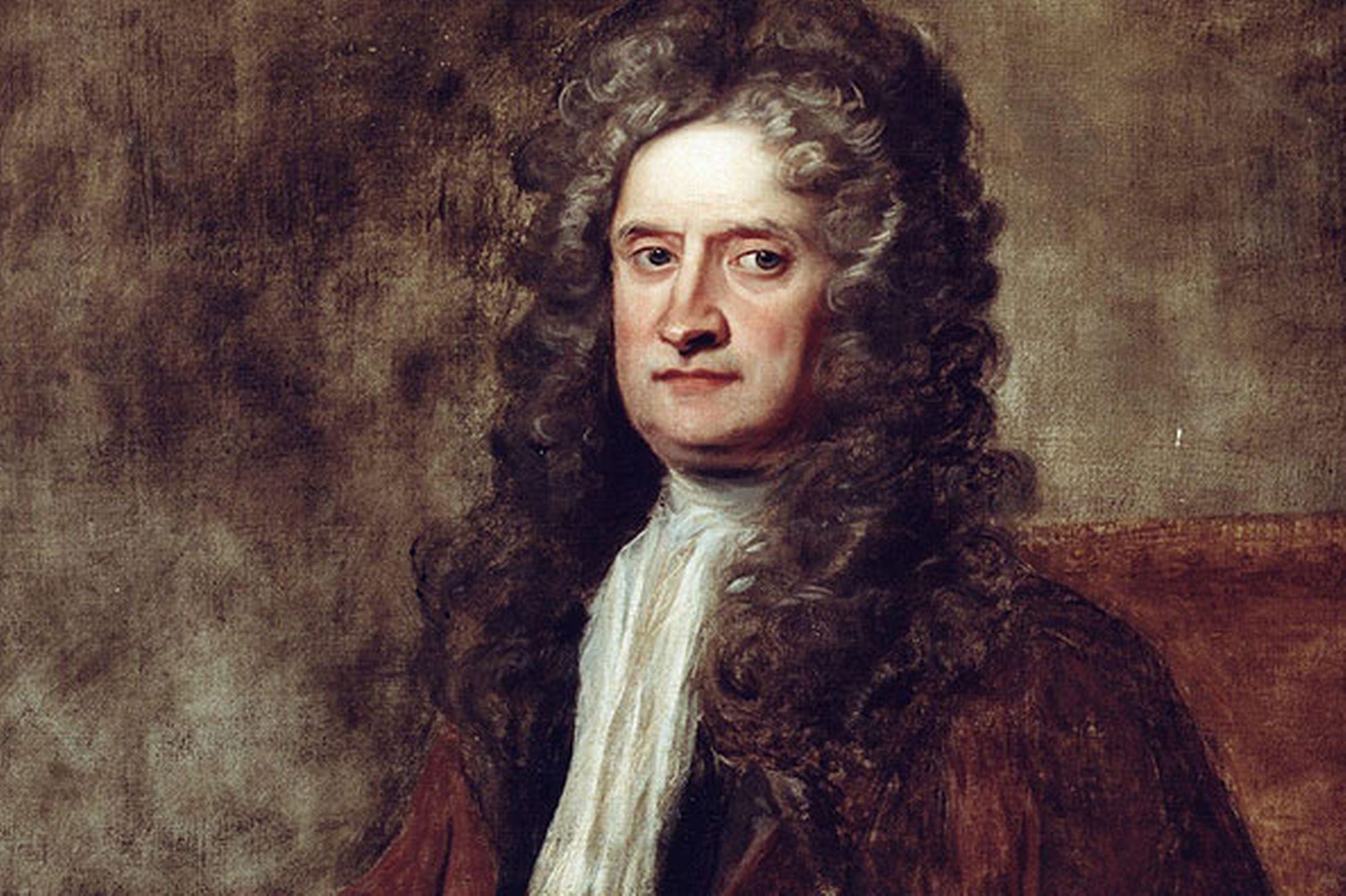
Which of the following was developed by Isaac Newton?
a)
the heliocentric theory
b)
the scientific method
c)
the theory of scientifc rationalism
d)
the theory of universal gravitation
62.
What was the result of the Scientific Revolution?
a)
advancements in the theories and teachings of the Roman Catholic Church
b)
Advancedments made in science and math
c)
Supports previous thought processes and studies
d)
Expanded on beliefs in faith
63.
What do these steps describe?
1. Ask a question
2. Form a hypothesis
3. Experiment to test hypothesis
4. Analyze data
5. Draw a conclusion
1. Ask a question
2. Form a hypothesis
3. Experiment to test hypothesis
4. Analyze data
5. Draw a conclusion
a)
Order of Operations
b)
Steps of CPR
c)
Scientific Method
d)
Essay writing
64.
What happened to Galileo because he would not renounce his beliefs?
a)
Excommunicated
b)
Charged with heresy
c)
Put under house arrest
d)
All of these
65.
Copernicus did not want to publish his book on the heliocentric theory until after his death because he was afraid of persecution from the ______ Church
a)
Islamic
b)
Buddhist
c)
Catholic
d)
Protestant
66.
Scientist began using _____________ and _______________ instead of placing their beliefs in faith.
a)
History and faith
b)
Math and Science
c)
Math and History
d)
reason and logic
100 %

