
 Worksheets
Biomes
Total questions: 114
Worksheet time: 2hrs 33mins
Name
Class
Date
1.
Which biome is characterized by low temperatures and low amounts of rainfall?
a)
tundra
b)
desert
c)
temperate deciduous forest
d)
tropical rain forest
2.
Which biome covers most of the land mass near the Earth's equator?
a)
tundra
b)
desert
c)
grassland
d)
tropical rainforest
3.
Which biome, because of its climate, has the largest number of species of plants and animals?
a)
tundra
b)
desert
c)
tropical rainforest
d)
pine forest
4.
Which biome receives between 0 to 25 centimeters of rain per year, has a temperature range of 0 to 50 degrees Celsius, has poor soil, and is home to lizards, scorpions, and snakes?
a)
desert
b)
mountain
c)
taiga
d)
tundra
5.
Which biome receives between 0 and 25 centimeters of precipitation each year, has a temperature range from -27 to 5 degrees Celsius, has frozen soil, and is home to hares, caribou, and wolves?
a)
desert
b)
mountain
c)
savannah
d)
tundra
6.
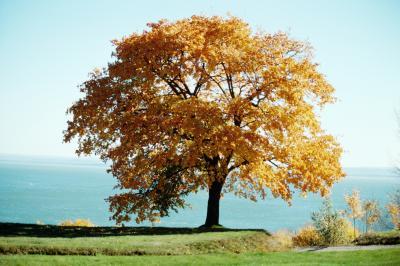
The biome known for trees with broad leaves that fall off the trees in the winter.
a)
Coniferous Forests
b)
Deciduous Forests
c)
Deserts
d)
Tropical Rain Forests
7.
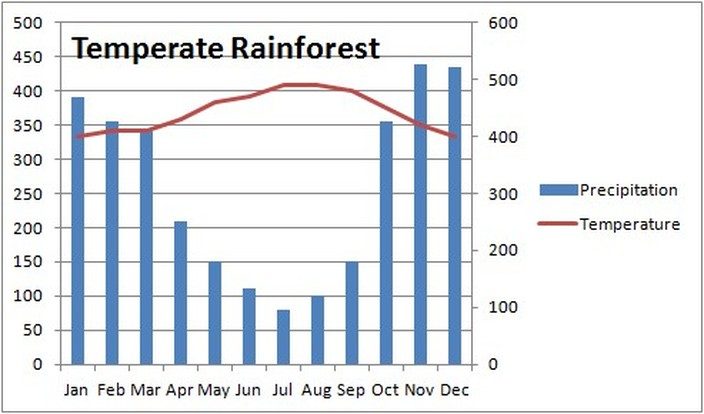
The most important abiotic factors when studying biomes are...
a)
Food and Water
b)
Water and Sunlight
c)
Temperature and Oxygen
d)
Water and Temperature
8.
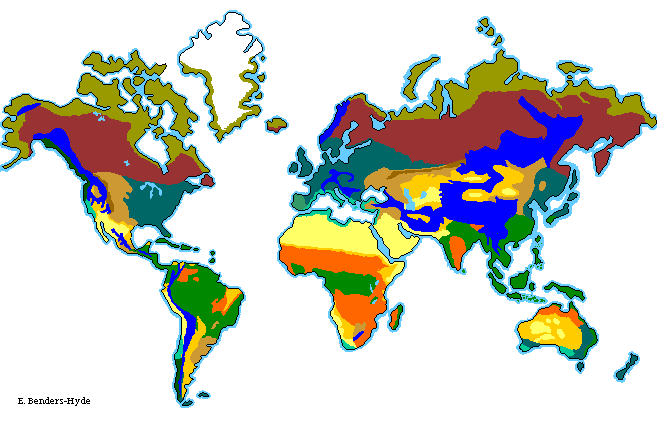
A large ecosystem is called a ______
a)
Ecosystem
b)
Habitat
c)
Biome
d)
Niche
9.
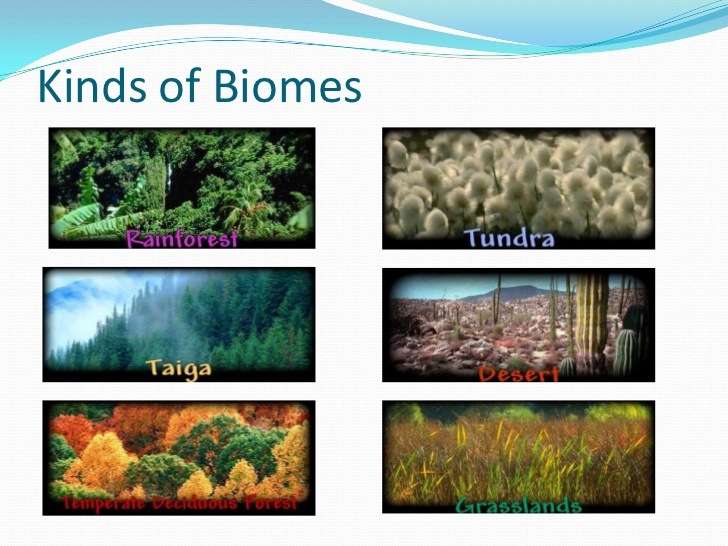
What is the main factor that separates the biomes?
a)
Land
b)
Water
c)
Climate
d)
Longitude
10.
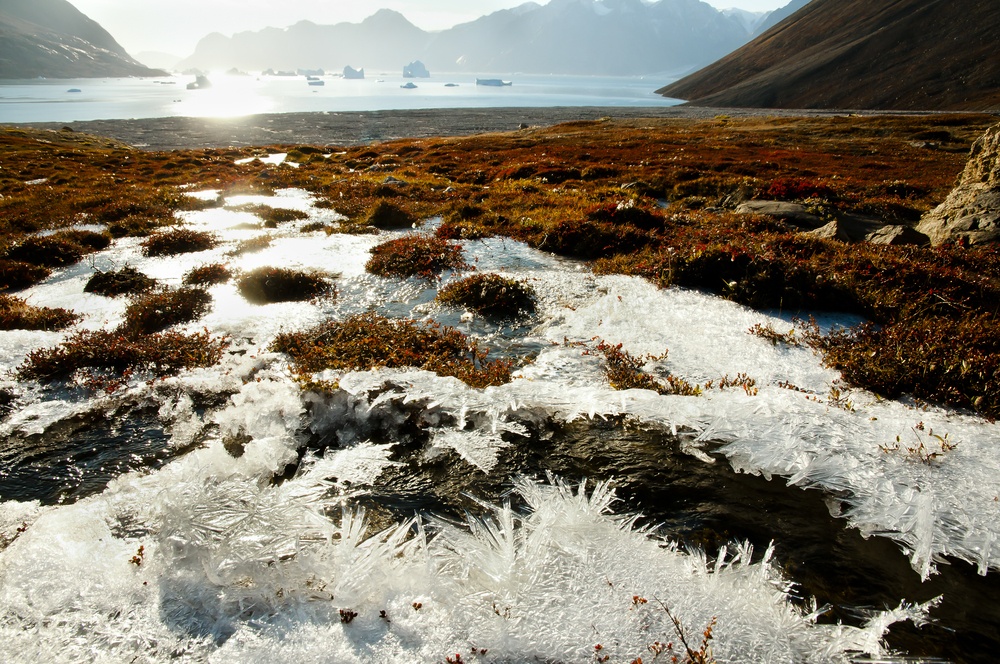
Which Biome has permafrost?
a)
Temperate Forest
b)
Rainforest
c)
Taiga
d)
Tundra
11.
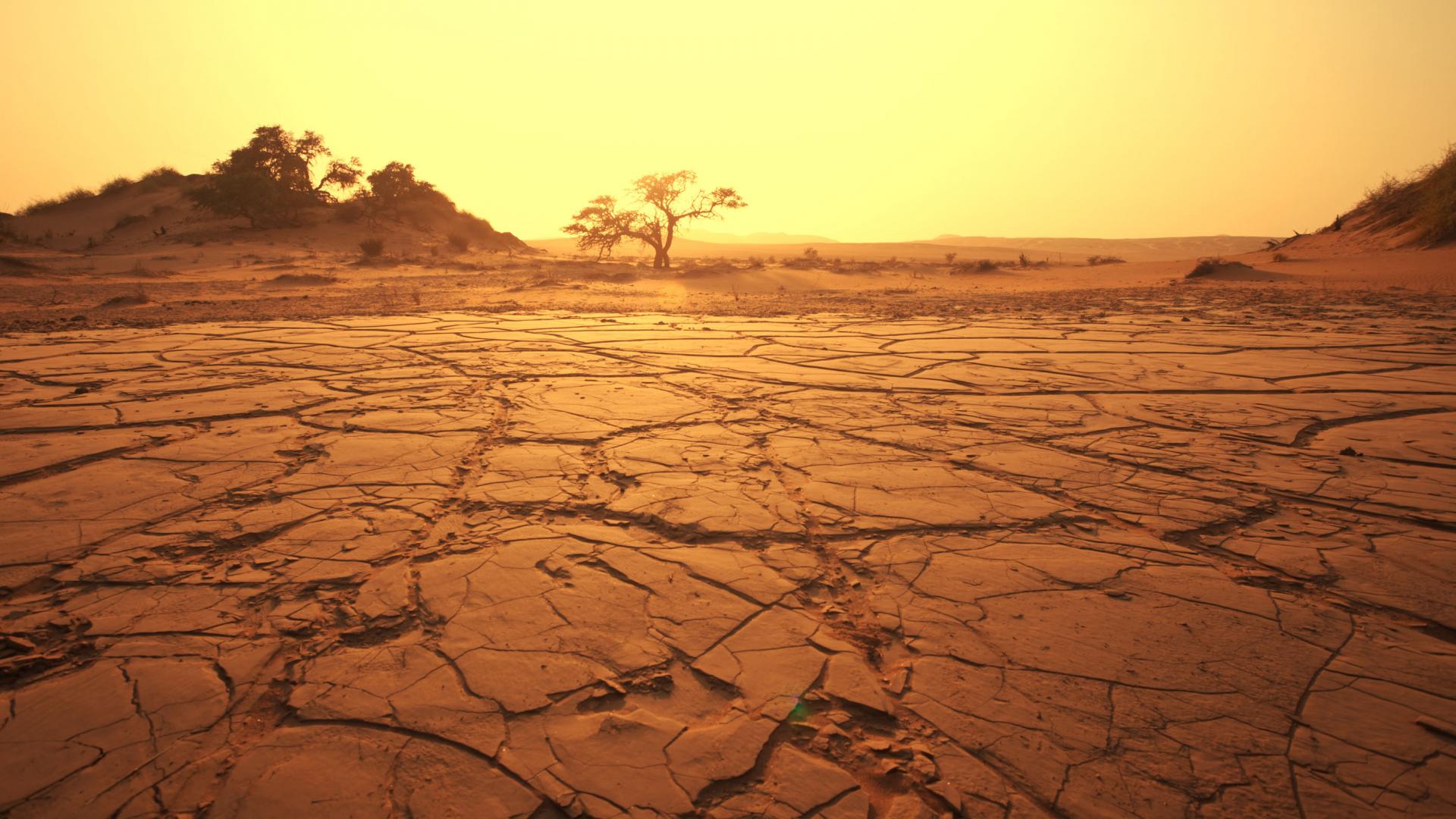
Which biome is the driest?
a)
Desert
b)
Tundra
c)
Taiga
d)
Rainforest
12.
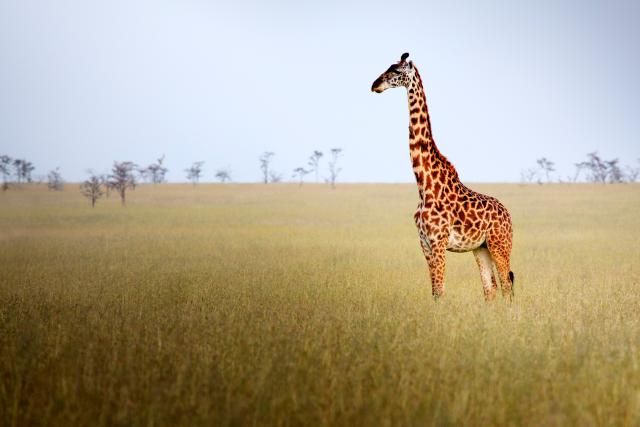
Which biome is home to lions, zebras, wildebeests, giraffes, and elephants?
a)
Grasslands
b)
Tundra
c)
Rainforest
d)
Temperate Forest
13.

Which biome is home to jaguars, anacondas, leopards, gorillas, and poisonous tree frogs?
a)
Grasslands
b)
Temperate Forest
c)
Rainforest
d)
Tundra
14.
Biotic factors of an ecosystem are:
a)
non-living
b)
plants
c)
living thing
d)
soil
15.
Identify an a example of an abiotic factor?
a)
Panda
b)
Turtle
c)
Butterfly
d)
sunlight
16.
Temperature, light, air, water, and soil are all _____ parts of the environment
a)
alive
b)
biotic
c)
abiotic
d)
living
17.
Coniferous (Boreal) forests are made up primarily of trees that _______________.
a)
change color in the fall
b)
bear cones
c)
shed their leaves
d)
have thin bark
18.
Which of the following is the best definition for estuary?
a)
Narrow band of coastline that exists between high and low tide.
b)
Areas along the coast where fresh water from rivers mixes with salt water from the ocean.
c)
Flowing fresh water containing rapids.
d)
Freshwater aquatic areas that are saturated by water for at least part of the year.
19.
What aquatic biome is characterized by flowing fresh water?
a)
Lakes/Ponds
b)
Mangroves Swamps
c)
Rivers/Streams
d)
Coral Reefs
20.

Which biome is pictured below?
a)
freshwater
b)
wetland
c)
coral reef
d)
ocean
21.
Which watery biome has the lowest concentration of salt?
a)
freshwater
b)
ocean
c)
coral reef
d)
wetland
22.
Which is NOT a freshwater ecosystem?
a)
a river
b)
a lake
c)
an estuary
d)
a stream
23.
Fresh water referrers to which of the following
a)
oceans, rivers, lakes
b)
ponds, rivers, oceans
c)
lakes, ponds, streams
d)
streams, lakes, oceans
24.
A major abiotic factor of the marine biomes
a)
Salt content
b)
depth
c)
climate
25.
An ecosystem where water covers the soil or water is near the surface of the soil is called
a)
a desert
b)
an ocean
c)
an estuary
d)
a wetland
26.
List the zones of ocean areas from shallow to deep.
a)
Neritic, intertidal, oceanic.
b)
Oceanic, neritic, intertidal
c)
Intertidal, neritic, oceanic.
d)
Intertidal, oceanic, neritic
27.

What is a close interaction between two unlike species where at least one species benefits?
a)
Predation
b)
Symbiosis
c)
Adaptation
d)
Prey
28.
What is the ocean floor called?
a)
Photic Zone
b)
Aphotic Zone
c)
Benthic Zone
29.

The plankton that are microscopic and plant like are called
a)
zooplankton
b)
phytoplankton
c)
minnows
30.
Why doesn’t photosynthesis occur in deep ocean water?
a)
There is no sunlight.
b)
There are not enough nutrients.
c)
The salinity level of the water is too high.
d)
The water temperature is too cold.
31.
Despite having plenty of sun and rain, the tropical rainforest has very poor _____.
a)
biodiversity
b)
soil
c)
animal life
d)
air quality
32.

What kind of animals live in an estuary?
a)
elephants and birds
b)
cats and dogs
c)
hamsters and rats
d)
Fish and shell fish
33.

What is an estuary?
a)
A little body of water.
b)
water in a gaseous form.
c)
Places where fresh water and streams flow into the ocean.
d)
the presence of an unwated msterial in a given place.
34.

Which organism can be found in coral reefs?
a)
Clownfish
b)
Dragonfish
c)
Whales
d)
Dogs
35.
What type of symbiosis?
* Hummingbirds feed on nectar from flowers.
* Flowers are pollinated by hummingbirds as they move from flower to flower.
* Hummingbirds feed on nectar from flowers.
* Flowers are pollinated by hummingbirds as they move from flower to flower.
a)
commensalism
b)
mutualism
c)
parasitism
d)
predation
36.
What type of symbiosis?
*Snapping Shrimp have poor and depend on their goby fish roommate to give the danger signal when predators come and guide them
back home if they wander too far.
* Goby fish who don't have a place to hide are quickly eaten. They find a Snapping Shrimp roommate who digs a hole for both to live in.
*Snapping Shrimp have poor and depend on their goby fish roommate to give the danger signal when predators come and guide them
back home if they wander too far.
* Goby fish who don't have a place to hide are quickly eaten. They find a Snapping Shrimp roommate who digs a hole for both to live in.
a)
commensalism
b)
mutualism
c)
parasitism
d)
predation
37.
What type of symbiosis?
*The tick lives on dog and feeds on its blood and tissue.
* The dog gets skin irritation and can pick up diseases carried by tick.
*The tick lives on dog and feeds on its blood and tissue.
* The dog gets skin irritation and can pick up diseases carried by tick.
a)
commensalism
b)
mutualism
c)
parasitism
d)
predfation
38.
What type of symbiosis?
* The Red-Chested cuckoo birds find an unattended robin nest, push out the robin eggs, and lay their eggs in the robin’s nest, and leave.
* Robin babies die and robin parents feed and take care of the cuckoo babies.
* The Red-Chested cuckoo birds find an unattended robin nest, push out the robin eggs, and lay their eggs in the robin’s nest, and leave.
* Robin babies die and robin parents feed and take care of the cuckoo babies.
a)
commensalism
b)
mutualism
c)
parasitism
d)
predation
39.
What type of symbiosis?
*Mycorrhizal fungi invade and live in or among roots cells of many plants. The plant provides nutrients to the fungi.
*The Mycorrhizal fungi help the host plant absorb inorganic nitrogen and phosphorus from the soil. Some mycorrhizal fungi also secrete antibiotics which may help protect their host from invasion by parasitic fungi and bacteria.
*Mycorrhizal fungi invade and live in or among roots cells of many plants. The plant provides nutrients to the fungi.
*The Mycorrhizal fungi help the host plant absorb inorganic nitrogen and phosphorus from the soil. Some mycorrhizal fungi also secrete antibiotics which may help protect their host from invasion by parasitic fungi and bacteria.
a)
commensalism
b)
mutualism
c)
parasitism
d)
predation
40.
What type of symbiosis?
* Mycorrhizal fungi invade and live in or among roots cells of many plants. The plant provides nutrients to the fungi.
* The Mycorrhizal fungi help the host plant absorb inorganic nitrogen and phosphorus from the soil. Some mycorrhizal fungi also secrete antibiotics which may help protect their host from invasion by parasitic fungi and bacteria.
* Mycorrhizal fungi invade and live in or among roots cells of many plants. The plant provides nutrients to the fungi.
* The Mycorrhizal fungi help the host plant absorb inorganic nitrogen and phosphorus from the soil. Some mycorrhizal fungi also secrete antibiotics which may help protect their host from invasion by parasitic fungi and bacteria.
a)
commensalism
b)
mutualism
c)
parasitism
d)
predation
41.
What type of symbiosis?
*Remora use suckers to attach temporarily to large marine animals such as sharks, manta rays, whales, turtles, or large fish.
*The shark provides free transportation, protection, and dropped food and feces which the remora feeds on. The host is not injured.
*Remora use suckers to attach temporarily to large marine animals such as sharks, manta rays, whales, turtles, or large fish.
*The shark provides free transportation, protection, and dropped food and feces which the remora feeds on. The host is not injured.
a)
commensalism
b)
mutualism
c)
parasitism
d)
predation
42.
What type of symbiosis?
*Fungi form lichens by living in a close relationship with an algae. The fungus provides a protective home for the algae, and gathers mineral nutrients from rainwater and from dissolving the rock underneath.
*The algae gathers energy from the sun using photosynthesis. Both organisms share their nutrients with each other.
*Fungi form lichens by living in a close relationship with an algae. The fungus provides a protective home for the algae, and gathers mineral nutrients from rainwater and from dissolving the rock underneath.
*The algae gathers energy from the sun using photosynthesis. Both organisms share their nutrients with each other.
a)
commensalism
b)
mutualism
c)
parasitism
d)
predation
43.
What type of symbiosis?
*Honeyguide birds find a bee hive, then chatter loudly to attract the Honey badger. They fly toward the hive making sure the badger is following.
*Upon arrival at the bee hive, the badger tears open the hive and feasts on the honey. Then the Honeyguide bird feeds on the remaining wax and larvae.
*Honeyguide birds find a bee hive, then chatter loudly to attract the Honey badger. They fly toward the hive making sure the badger is following.
*Upon arrival at the bee hive, the badger tears open the hive and feasts on the honey. Then the Honeyguide bird feeds on the remaining wax and larvae.
a)
commensalism
b)
mutualism
c)
parasitism
d)
predation
44.
What type of symbiosis?
* Skunk Cabbage plants attract flies in cool weather by making heat and provide food to the flies that come.
* Flies move from one Skunk Cabbage plant to the next feeding and transferring pollen as they go.
* Skunk Cabbage plants attract flies in cool weather by making heat and provide food to the flies that come.
* Flies move from one Skunk Cabbage plant to the next feeding and transferring pollen as they go.
a)
commensalism
b)
mutualism
c)
parasititsm
d)
predation
45.
What type of symbiosis?
* Human intestine provides food for bacteria that live inside digestive system
*Beneficial bacteria live in the intestine of humans and help digest cellulose from plants which humans don’t have the enzymes to break down.
* Human intestine provides food for bacteria that live inside digestive system
*Beneficial bacteria live in the intestine of humans and help digest cellulose from plants which humans don’t have the enzymes to break down.
a)
commensalism
b)
mutualism
c)
parasititsm
d)
predation
46.
What type of symbiosis?
*•Kudzu vines grow by climbing, and wrapping around trees.
*•Kundzu covered trees die as they are smothered and break under the weight of the growing Kudzu vines.
*•Kudzu vines grow by climbing, and wrapping around trees.
*•Kundzu covered trees die as they are smothered and break under the weight of the growing Kudzu vines.
a)
commensalism
b)
mutualism
c)
parasitism
d)
predation
47.
What type of symbiosis?
*Hermit crabs find shells left by snails that have died and move in.
* Snails die and leave behind their shells.
*Hermit crabs find shells left by snails that have died and move in.
* Snails die and leave behind their shells.
a)
commensalism
b)
mutualism
c)
parasitism
d)
predation
48.
What type of symbiosis?
*Gall Insects lays their eggs in the leaves or branches of Oak trees causing a lump to form.
*Oak trees provide shelter and food to the insect larvae, but are not harmed.
*Gall Insects lays their eggs in the leaves or branches of Oak trees causing a lump to form.
*Oak trees provide shelter and food to the insect larvae, but are not harmed.
a)
commensalism
b)
mutualism
c)
parasitism
d)
predation
49.
What type of symbiosis?
*Skunks often live in burrows that have been dug and abandoned by woodchucks.
*Woodchucks abandon holes which are later used by skunks.
*Skunks often live in burrows that have been dug and abandoned by woodchucks.
*Woodchucks abandon holes which are later used by skunks.
a)
commensalism
b)
mutualism
c)
parasitism
d)
predation
50.
What type of symbiosis?
*The plover picks and eats scraps of meat from the crocodile’s teeth.
*The crocodile gets a free teeth-cleaning!
*The plover picks and eats scraps of meat from the crocodile’s teeth.
*The crocodile gets a free teeth-cleaning!
a)
commensalism
b)
mutualism
c)
parasitism
d)
predation
51.
What type of symbiosis?
*The Cattle Egret forages in pastures and fields among livestock such as cattle and horses feeding on the insects stirred up by the movement of the grazing animals.
*The cows and horses are not bothered by the cattle egrets.
*The Cattle Egret forages in pastures and fields among livestock such as cattle and horses feeding on the insects stirred up by the movement of the grazing animals.
*The cows and horses are not bothered by the cattle egrets.
a)
commensalism
b)
mutualism
c)
parasitism
d)
predation
52.
What type of symbiosis?
*Hookworms can enter the body, live off of the host’s blood.
*The host can suffer from blood loss, anemia and iron deficiency.
*Hookworms can enter the body, live off of the host’s blood.
*The host can suffer from blood loss, anemia and iron deficiency.
a)
commensalism
b)
mutualism
c)
parasitism
d)
predation
53.
Which of the following symbiotic relationships is considered parasitic?
a)
ticks feeding on a dog
b)
bees transporting pollen from flowers
c)
pilotfish swimming under sharks
d)
birds eating the insects from the back of a hippopotamus
54.
A lichen is a combination of fungus and algae that lives on the sides of trees, rocks, and other materials. The fungus provides the algae with water and minerals and the algae uses the water and minerals to make food for both organisms. What type of relationship does the lichen represent?
a)
commensalsim
b)
mutualism
c)
parasitism
d)
predation
55.
What does symbiosis mean?
a)
A.living separately, no relationship between 2 species
b)
A.living together, close relationship between 2 species
c)
A.Living separately, long distance relationship between 2 species
d)
When one species kills and eats another
56.
A bird living on a tree is an example of
a)
commensalism
b)
mutualism
c)
parasitism
d)
predation
57.
Which of the following is NOT considered to be a symbiotic relationship?
a)
A mother bear caring for her cub
b)
Worms living in a cow’s intestine
c)
A bacterial infection
d)
A viral attack on your immune system
58.
After being introduced in the 1930's, the fire ant became established in the southern United States. One biological way to control fire ants might be to introduce organisms that are
a)
mutualistic with the fire ant queen
b)
nurtured by fire ant workers
c)
preyed on by fire ants
d)
parasitic to fire ant larvae
59.
What might occur when a carnivore is removed from the food web?
a)
A) Nothing. Organisms cannot impact things below them on the energy pyramid.
b)
B) Primary consumers will overpopulate.
c)
C) Plants will be over browsed by herbivores.
d)
D) both B and C might occur.
60.

relationship in which two species live closely together
a)
resource
b)
mutualism
c)
succession
d)
symbiosis
61.

A living relationship between two species in which one organism is harmed is called...
a)
mutualism
b)
commensalism
c)
parasitism
d)
niche
62.
Which is NOT an abiotic factor:
a)
soil
b)
air
c)
bacteria;
d)
water
63.
What percentage of energy is passed on to each tropic level?
a)
10%
b)
50%
c)
90%
d)
100%
64.
What might happen if you remove a primary consumer from the ecosystem?
a)
There would be more food for secondary consumers.
b)
The number of primary consumers would increase.
c)
The number of plants would increase.
d)
The number of secondary consumers would increase.
65.
How do producers obtain energy?
a)
They conduct photosynthesis.
b)
They consume plants.
c)
They consume primary consumers.
d)
They consume secondary consumers.
66.
A consumer that hunts is called:
a)
a producer.
b)
an omnivore.
c)
a predator.
d)
a herbivore.
67.
Where do decomposers go in your food chain?
a)
at the beginning
b)
they don't belong in a food chain
c)
at the end
d)
at every level
68.
A food web can be broken down into several seperate
a)
food chains
b)
food pyramids
c)
producers
d)
consumers
69.
Which represents the largest group in a food web?
a)
carnivores
b)
omnivores
c)
herbivores
d)
producers
70.

diagram that shows the energy available to each trophic level in an ecosystem; 10% is passed on to upper levels, the rest is lost as heat
a)
succession
b)
cellular respiration
c)
energy pyramid
d)
biochemical cycle
71.

symbiotic relationship in which one organism benefits and the other organism is harmed
a)
secondary succession
b)
predation
c)
pioneer species
d)
parasitism
72.

anything that an organism needs to live, ex. food, water, space
a)
carrying capacity
b)
resource
c)
succession
d)
denitrification
73.

largest number of individuals of a population that the environment can support
a)
carrying capacity
b)
primary succession
c)
denitrification
d)
mutualism
74.

a relationship between two in which one species, the predator, feeds on the other species, the prey
a)
chemosynthesis
b)
predation
c)
cellular respiration
d)
commensalism
75.

symbiotic relationship in which one organisms benefits and the other organism is not affected
a)
invasive (non-native) species
b)
mutualism
c)
nitrogen fixation
d)
commensalism
76.

symbiotic relationship in which both organisms benefit
a)
competition
b)
Mutualism
c)
nitrogen fixation
d)
energy pyramid
77.
Step in the food chain, food web, or ecological pyramid
a)
trophic Level
b)
abiotic factors
c)
community
d)
ecosystem
78.
A large area that has a specific type of climate and certain types of plant and animal communities
a)
ecosystem
b)
habitat
c)
niche
d)
biome
79.
Network of all food in an ecosystem
a)
ecology
b)
food web
c)
decomposer
d)
food chain
80.
Study of interactions between organisms and their environment
a)
niche
b)
community
c)
ecology
d)
ecosystem
81.
Where an organism lives
a)
habitat
b)
niche
c)
heterotrogh
d)
biosphere
82.
Non-living factor that affects an ecosystem
a)
biotic factor
b)
abiotic factor
c)
food chain
d)
biome
83.
Consumer that eats plants
a)
heterotroph
b)
herbivore
c)
producer
d)
community
84.
Living factors or organisms that affect an ecosystem
a)
abiotic factors
b)
species
c)
trophic level
d)
biotic factors
85.
Series of steps in which organisms transfer energy by eating and being eaten
a)
foodweb
b)
consumer
c)
food chain
d)
omnivore
86.
The unique position that a species has in the physical use of its habitat and in its function (job) within an ecosystem
a)
producer
b)
biotic factors
c)
ecosystem
d)
niche
87.
Organisms that makes its own food using sunlight or chemicals; producer
a)
decomposer
b)
autotroph
c)
heterotroph
d)
herbivore
88.
Consumer that eats animals or meat
a)
carnivore
b)
omnivore
c)
consumer
d)
producer
89.
Barn owls hunt shrews. In this example what is a barn owl?
a)
Herbivore/Predator
b)
Carnivore/Prey
c)
Carnivore/Predator
90.
Sharks consume smaller fish they catch in the ocean. This is an example of what type of relationship?
a)
predator/prey
b)
parasite/host
c)
producer/consumer
91.
When an organism's energy source comes from both animals and plants, that organism is considered to be a what?
a)
predator
b)
omnivore
c)
herbivore
d)
carnivore
92.
On a safari at night, a lion hunts and feeds on an antelope. In this relationship, the lion is the ____________________ and the antelope is the _________________.
a)
Parasite/host
b)
Predator/prey
c)
Prey/Predator
93.
Which of the following is TRUE about the predator/prey relationship?
a)
The prey is the consumer of the predator
b)
The predator is the consumer of the prey
c)
The predator is considered to be the host
d)
The prey is considered to be the parasite
94.
Which of the following would be considered to be prey?
a)
an animal that has to hunt for its food
b)
an animal that is eaten by another animal
c)
an organism that makes it own food
d)
an organism that feeds on the blood of another animal
95.
A consumer that hunts is called:
a)
a producer.
b)
an omnivore.
c)
a predator.
d)
a herbivore.
96.
How do producers obtain energy?
a)
They conduct photosynthesis.
b)
They consume plants.
c)
They consume primary consumers.
d)
They consume secondary consumers.
97.
Organisms that makes its own food using sunlight or chemicals; producer
a)
decomposer
b)
autotroph
c)
heterotroph
d)
herbivore
98.
How do consumers get their energy?
a)
laying in the sun
b)
eating other organisms
c)
providing food for other organisms
d)
surviving in an ecosystem
99.
All food chains_____________________
a)
have more consumers than producers
b)
produce and use same amount of energy
c)
begin with a producer
d)
are unhealthy
100.
A tick living on a dog and taking its blood is an example of
a)
commensalism
b)
predation
c)
mutualism
d)
parasitism
101.

The image provided is an example of a(n):
a)
Producer
b)
Autotroph
c)
Consumer
d)
Insect
102.
An organism at the second trophic level would be considered a ________.
a)
Top carnivore
b)
Producer
c)
Herbivore
d)
Carnivore
103.
A tapeworm lives in human intestines absorbing the nutrients that would normally be absorbed by the person. This eventually causes the person to experience health problems. This relationship is -
a)
predator/prey
b)
parasite/host
c)
herbivore/omnivore
d)
consumer/producer
104.
What is a predator?
a)
Neither
b)
An organism that is consumed
c)
An organism that does the consuming
105.
What is prey?
a)
An organism that is consumed
b)
An organism that consumes
c)
neither
106.
Fleas and ticks are examples of what?
a)
predators
b)
prey
c)
hosts
d)
parasites
107.
What is the organism that is harmed in a parasitic relationship?
a)
parasite
b)
host
c)
consumer
d)
producer
108.
I am a living thing that must use other organisms as food to get energy.
a)
decomposer
b)
consumer
c)
competition
d)
energy pyramid
109.
I am a living thing that can use energy from the sun to make food.
a)
decomposer
b)
consumer
c)
producer
d)
competition
110.

A feeding relationship where one organism hunts and one is hunted.
a)
Commensalism
b)
Decomposistion
c)
Mutualism
d)
Predator-Prey
111.

An animal that hunts and consumes other organisms is known as a:
a)
Prey
b)
Decomposer
c)
Predator
d)
Commensalist
112.

The organism that is hunted and eaten in a particular feeding relationship is known as:
a)
Predator
b)
Decomposer
c)
Prey
d)
Autotroph
113.

An organism that needs to use chemicals to make its own food is known as a(n):
a)
Heterotroph
b)
Autotroph
c)
Decomposer
d)
Consumer
114.

An organism that eats other organisms to obtain energy is known as a:
a)
Mutualist
b)
Autotroph
c)
Producer
d)
Heterotroph
100 %

