
NEW
Font size
S
M
L
XL
 Worksheets
Genetics - Reproduction
Total questions: 20
Worksheet time: 10mins
Name
Class
Date
1.
Two parents needed.
a)
asexual
b)
sexual
2.
One parent needed.
a)
sexual
b)
asexual
3.
More genetic diversity among offspring.
a)
sexual
b)
asexual
4.
Offspring are identical to the parent.
a)
sexual
b)
asexual
5.
Occurs in more simple organisms.
a)
sexual
b)
asexual
6.
Occurs in more complex organisms.
a)
sexual
b)
asexual
7.
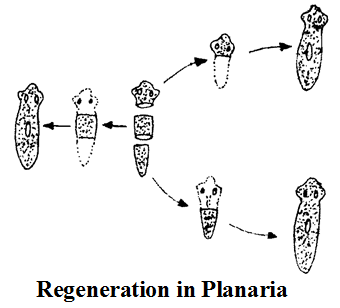
a)
sexual
b)
asexual
8.
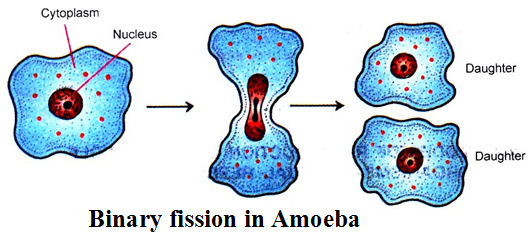
a)
sexual
b)
asexual
9.
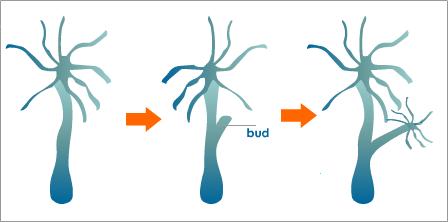
a)
sexual
b)
asexual
10.

The New Mexico whiptail lizard can reproduce both sexually and asexually. The most reliable way to determine that a group of offspring of New Mexico whiptail lizards was produced through asexual reproduction would be to look at which of the following characteristics?
a)
Physical appearance
b)
Habitat location
c)
Behavior patterns
d)
Genetic variation
11.
The offspring of an organism produced through asexual reproduction is always–
a)
genetically identical to its parent
b)
created by vegetative propagation
c)
made of cells with a cell wall
d)
different from its siblings
12.
If two organisms reproduce sexually, then their offspring will exhibit a genetic makeup that is -
a)
identical to only one parent
b)
identical to all of its siblings
c)
a unique combination of traits
d)
the recessive traits of each parent
13.

Prokaryotes reproduce asexually via -
a)
spore formation
b)
bud creation
c)
vegetative propagation
d)
binary fission
14.

Provided is a table of organisms and some data on their characteristics. Based on the information in the table, which organism is likely to produce offspring with the greatest genetic diversity?
a)
Black mold
b)
Bell tree dahlia
c)
Spruce
d)
Hydra
15.
All of the offspring of an organism have the same genetic material, which is identical to the parent organism. From this, we can conclude that this organism -
a)
makes its own food
b)
is unicellular
c)
live in a marine habitat
d)
reproduces asexually
16.
Compared to the offspring produced by sexual reproduction, the offspring produced by asexual reproduction will be -
a)
less vulnerable to prey
b)
larger in size
c)
better adapted to their habitat
d)
more genetically uniform
17.
When comparing the offspring of sexually and asexually reproducing organisms, we would expect the genetic material of the sexually reproducing organism to -
a)
contain fewer mutations
b)
be lesser in quantity
c)
be simpler overall
d)
show more variation
18.
Whether or not an organism reproduces sexually or asexually, the offspring resulting from reproduction has traits that depend directly on its parent’s or parents’ -
a)
genetic material
b)
physical appearance
c)
habitat location
d)
migration patterns
19.
The genetic material of an offspring of sexually reproducing organisms is best described as–
a)
identical to that of the other offspring
b)
a copy of the genetic material of the mother
c)
a copy of the genetic material of the father
d)
genes from both parents, in unique combinations
20.
What are some of the facts about asexual reproduction?
a)
Takes only one mate to reproduce and takes a longer time to reproduce
b)
Takes a shorter amount of time to reproduce and it takes two mates to reproduce
c)
Reproduces diverse offspring and takes a longer time to reproduce
d)
Takes only one mate to reproduce and takes a shorter time to reproduce
Reset

