
 Worksheets
Chapter 4 Review- Biomes and Succession
Total questions: 29
Worksheet time: 17mins
Name
Class
Date
1.
Which of the following is NOT a producer you would find in the Tundra?
a)
Arctic Moss
b)
Lichens
c)
Caribou Moss
d)
baobab trees
2.
The first species to inhabit an area after a disturbance is a...
a)
climax community
b)
pioneer species
c)
primary succession
d)
secondary succession
3.
Which of the following is a common plant found in this the taiga biome?
a)
Maple Trees
b)
Spruce Trees
c)
Deciduous Trees
d)
Oak Trees
4.
Which biome is characterized by low temperatures and low amounts of rainfall?
a)
Tundra
b)
Desert
c)
Temperate Deciduous Forest
d)
Tropical Rainforest
5.
Which of the following describes the seasons found in the taiga?
a)
Long summers and cold winters
b)
4 distinct seasons
c)
Winter throughout the year
d)
Long winters and short mild summers
6.
This is the largest terrestrial biome.
a)
Taiga
b)
Tropical Rainforest
c)
Desert
d)
Tundra
7.
The biome characterized by leafy trees and 4 seasons is?
a)
tundra
b)
tropical rainforest
c)
temperate forest
d)
desert
8.
Which biome receives the least amount of precipitation?
a)
Desert
b)
Grasslands
c)
Temperate Forest
d)
Tropical Rainforest
9.
The terrestrial biome with the most biodiversity is the....
a)
tropical rainforest
b)
marine aquatic
c)
desert
d)
taiga
10.
The grasslands are found in the middle ____________
a)
graze
b)
trees
c)
fast
d)
latitudes
11.
The dominant producers in the grasslands are ___________.
a)
rainfall
b)
dormant
c)
grasses
d)
trees
12.
The largest of all biomes is the
a)
tropical rainforest
b)
marine aquatic
c)
taiga
d)
desert
13.
The part of the ocean that never receives light is the....
a)
photic zone
b)
aphotic zone
c)
estuary
d)
intertidal zone
14.
What is the goal of the pioneer species in Primary Succession?
a)
To kill the dead materials after a disaster
b)
To rebuild soil
c)
To feed Johnny
d)
To put fresh oxygen into the air
15.
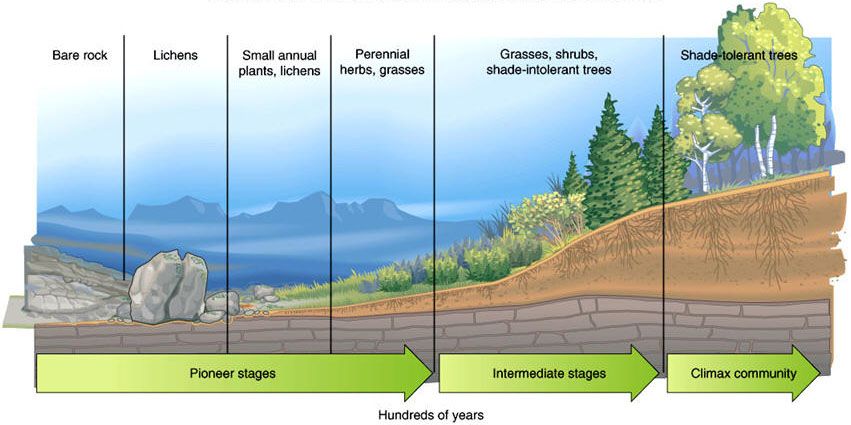
The picture shows what type of succession?
a)
primary
b)
secondary
c)
tertiary
d)
quadanary
16.
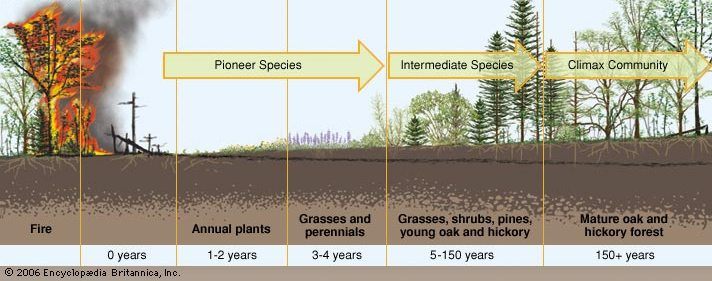
The picture shows what type of succession?
a)
primary
b)
secondary
c)
tertiary
d)
quadanary
17.
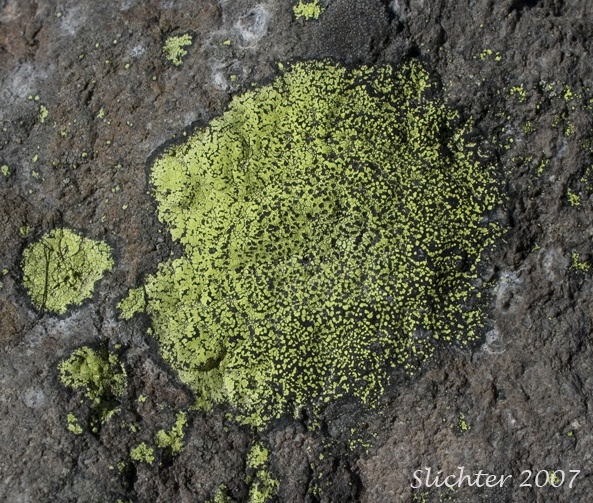
What is the name given to lichen or algae after a primary succession?
a)
pioneer species
b)
volunteer species
c)
founder species
d)
conqueror species
18.
After a volcanic eruption, lava covers the land. What is the order that plants grow to repopulate the area?
a)
Lichens → Shrubs → Grasses → Trees
b)
Lichens → tree → shrubs→Grasses
c)
Grasses → Lichens → Shrubs → Trees
d)
Lichens → Grasses → Shrubs → Trees
19.
Reaches a climax community quicker because soil is already present
a)
primary succession
b)
secondary succession
c)
both types of succession
20.

A pioneer species is...
a)
a large organism
b)
the first organisms to adapt to a new environment
c)
The best organism
d)
Abiotic organisms
21.
The area where salt and fresh H2O mix is called
a)
aphotic zone
b)
photic zone
c)
estuary
d)
intertidal zone
22.
Succession that occurs in an area with NO SOIL
a)
ecological succession
b)
primary succession
c)
secondary succession
d)
pioneer speciles
23.
The area between high and low tides
a)
photic zone
b)
aphotic zone
c)
estuary
d)
intertidal zone
24.
The part of the ocean that receives sunlight
a)
photic zone
b)
aphotic zone
c)
estuary
d)
intertidal zone
25.
Any biotic or abiotic factor that restricts the existence, number, reproduction or distribution of organisms
a)
succession
b)
pioneer species
c)
tolerance
d)
limiting factor
26.
Ground that remains frozen long term, found in the tundra
a)
humus
b)
acidic soil
c)
permafrost
d)
lichen
27.
A large group of ecosystems w/ same type of climax community
a)
population
b)
ecosystem
c)
biome
d)
terrestrial
28.
The ability to withstand fluctuations in biotic/abiotic factors
a)
limiting factor
b)
tolerance
c)
biome
d)
strength
29.
Any biotic or abiotic factor that restricts the existence, number, reproduction or distribution of organisms
a)
tolerance
b)
limiting factor
c)
bully
d)
succession
100 %

