
 Worksheets
Heat Transfer
Total questions: 30
Worksheet time: 1hrs 14mins
Name
Class
Date
1.

How is the teapot being heated?
a)
condensation
b)
conduction
c)
convection
d)
radiation
2.

How is the man being heated?
a)
condensation
b)
convection
c)
conduction
d)
radiation
3.

How is the cat being heated?
a)
condensation
b)
conduction
c)
convection
d)
radiation
4.

A group of friends gather around a fire to stay warm.
a)
conduction
b)
convection
c)
radiation
5.
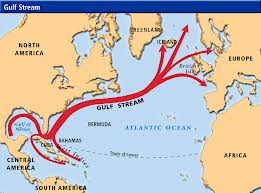
The Gulf Stream is a current that brings warm ocean water from the south to the north.
a)
conduction
b)
convection
c)
radiation
6.

Walking on the warm sand sand with your bare feet.
a)
conduction
b)
convection
c)
radiation
7.
Why do we wear sweaters in cold weather?
a)
To keep cold out.
b)
To generate heat.
c)
To reduce heat loss.
d)
All of the above.
8.
If you put a metal spoon and a wooden spoon into a pot of boiling water, one will become too hot to touch. Why?
a)
Metals conduct heat better than wood.
b)
Wood conducts heat better than metals.
c)
Metals pull in heat because heat is attracted to metals.
d)
Wood isn’t as strong as metals.
9.
1. You have a can of soda in your lunchbox that you want to keep cold. Which material will work best to keep it cold?
a)
Aluminum foil wrapped around the soda because metals transfer heat energy easily.
b)
A paper towel wrapped around the soda because paper soaks up the moisture.
c)
Wax paper wrapped around the soda because wax paper traps the moisture.
d)
Your wool sweater wrapped around the soda because wool traps air.
10.
Everyday the earth is warmed by the sun. What kind of heat transfer is taking place in this process?
a)
radiation
b)
conduction
c)
convection
d)
what is a 'sun'?
11.
What is the definition of CONDUCTION?
a)
When heat is transferred from objects like rays of light or electromagnetically.
b)
a hot liquid or air that expands, becomes less dense, and rises or becomes more dense, and sinks.
c)
When heat transfers from objects that are touching.
d)
When heat transfers through the heater or AC in your house.
12.
What is the definition of CONVECTION
a)
When heat transfers through the heater or AC in your house.
b)
When heat transfers from objects that are touching.
c)
a hot liquid or air that expands, becomes less dense, and rises or becomes more dense, and sinks.
d)
hot liquid or air that expands, becomes less dense, and rises or becomes more dense, and sinks.
13.
What is the definition of RADIATION
a)
hot liquid or air that expands, becomes less dense, and rises or becomes more dense, and sinks.
b)
When heat is transferred from objects like rays of light or electromagnetically.
c)
When heat transfers from objects that are touching.
d)
When heat transfers through the heater or AC in your house.
14.

The baby chickens are kept warm from the heat lamps demonstrates this type of heat transfer.
a)
conduction
b)
convection
c)
radiation
15.
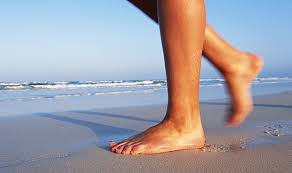
Walking on the warm sand sand with your bare feet demonstrates this type of heat transfer.
a)
conduction
b)
convection
c)
radiation
16.
Ironing a shirt is an example of...
a)
condensation
b)
conduction
c)
convection
d)
radiation
17.

A toaster toasting bread is an example of
a)
condensation
b)
conductio
c)
convection
d)
radiation
18.
What does convection cause in the air?
a)
hot summer days
b)
rain
c)
wind
d)
floods
19.
What does radiation do to Earth?
a)
heats it evenly
b)
heats it unevenly
20.
The process by which gases in the atmosphere absorb thermal energy and radiate it back to earth is called
a)
the thermal effect.
b)
the greenhouse effect.
c)
global warming.
d)
radiation balance
21.
The heat from a lamp allows a lizard to remain warm. This is an example of which type of heat transfer?
a)
radiation
b)
conduction
c)
convection
d)
insulation
22.
A student places a cup of cold water on a counter in a hot room. After a short time, the student notices that the water in the cup is no longer cold. Which best explains why the water in the cup is no longer cold?
a)
The coldness of the water transferred to the air, making the water in the cup warmer.
b)
The coldness of the water was conducted to the cup, making the water in the cup warmer.
c)
The heat from the air transferred to the water in the cup, making the water in the cup warmer.
d)
The heat from the air caused the cold water in the cup to condense, making the water warmer.
23.
Near the ceiling of a room the air is warmer. The warm air rises because of
a)
Conduction
b)
Convection
c)
Radiation
d)
Insulation
24.
Manuel was having trouble opening a new glass jar of pickles. His father told Manuel to hold the metal lid of the jar under running hot water for a few seconds, then try again. Then the lid opened easily. What is the most likely reason Manuel’s father suggested using hot water to loosen the lid?
a)
Glass contracts when it is heated.
b)
Metals expand when they are heated
c)
Metals are easier to grip when they are warm.
d)
Hot water reduces friction between metal and glass.
25.
Temperature is the measure of the ___________________ of particles in a substance.
a)
average potential energy
b)
average kinetic energy
c)
heat
d)
degrees
26.
Heat will always move from _______________ temperatures.
a)
higher to lower
b)
lower to higher
c)
it depends.
27.
The water molecules move ____________ in the cooler state.
a)
slower
b)
faster
28.
When heat is transferred when directly touch a material, it is
a)
radiation
b)
convection
c)
conduction
d)
swampy
29.
Warm air currents are an example of
a)
radiation
b)
convection
c)
conduction
d)
halitosis
30.
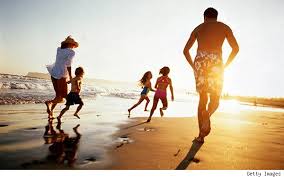
The sun shines down on this family as the play on the beach.
a)
conduction
b)
convection
c)
radiation
100 %

