
NEW
Font size
S
M
L
XL
 Worksheets
Water Cycle
Total questions: 15
Worksheet time: 16mins
Name
Class
Date
1.
How much of Earth's freshwater is available for use?
a)
97%
b)
3%
c)
2%
d)
1%
2.
What is the energy source for the water cycle?
a)
the sun
b)
the earth
c)
water
d)
the moon
3.
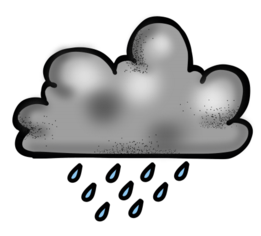
What part of the water cycle does this picture show?
a)
condensation
b)
precipitation
c)
evaporation
4.
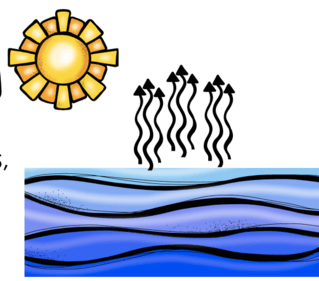
What part of the water cycle does this picture show?
a)
condensation
b)
precipitation
c)
evaporation
5.
What is evaporation?
a)
The part of the water cycle when the sun heats up water, turning it from a liquid into water vapor or steam. It rises from the ground into the air.
b)
The part of the water cycle when the water vapor in the air gets cold. The water turns back into a liquid and forms clouds.
c)
The part of the water cycle when clouds get heavy and can no longer hold the liquid water. This causes the water to fall from the sky to the earth as rain, snow, sleet, or hail.
6.
What is condensation?
a)
The part of the water cycle when the sun heats up water, turning it from a liquid into water vapor or steam. It rises from the ground into the air.
b)
The part of the water cycle when the water vapor in the air gets cold. The water turns back into a liquid and forms clouds.
c)
The part of the water cycle when clouds get heavy and can no longer hold the liquid water. This causes the water to fall from the sky to the earth as rain, snow, sleet, or hail.
7.
What is precipitation?
a)
The part of the water cycle when the sun heats up water, turning it from a liquid into water vapor or steam. It rises from the ground into the air.
b)
The part of the water cycle when the water vapor in the air gets cold. The water turns back into a liquid and forms clouds.
c)
The part of the water cycle when clouds get heavy and can no longer hold the liquid water. This causes the water to fall from the sky to the earth as rain, snow, sleet, or hail.
8.

When water condenses, the water vapor in the air gets ___________ and changes back into liquid.
a)
cold
b)
hot
c)
warm
d)
solid
9.

Which is the opposite of condensation?
a)
runoff
b)
evaporation
c)
precipitation
d)
transpiration
10.
Which best explains why runoff is important?
a)
It returns water to other locations on Earth
b)
It increases the chance of flooding
c)
It makes evaporation occur faster
d)
It increases condensation
11.

What is it called when plants give off water vapor as a waste product?
a)
condensation
b)
evaporation
c)
sublimation
d)
transpiration
12.
When water _________, dew forms.
a)
Melts
b)
Evaporates
c)
Condenses
d)
Precipitates
13.
What is a layer of rock or sediment that holds water?
a)
glacier
b)
well
c)
aquifer
d)
natural spring
14.
How much of our planet is estimated to be covered with water?
a)
68%
b)
50%
c)
97%
d)
75%
15.
How much of our planet's water is saltwater?
a)
75%
b)
1%
c)
99%
d)
97%
Reset

