
NEW
Font size
 Worksheets
Periodic Table Test Review
Total questions: 35
Worksheet time: 9hrs 45mins
In the modern periodic table elements are arranged by:
increasing atomic mass
increasing atomic number
The atomic number tells you what?
number of neutrons
number of protons
the mass number
Which group of the periodic table is composed of inert (not reactive) gases?
alkali metals
alkaline earth metals
noble gases
Elements which are shiny, conduct electricity and heat are called ___________.
metal
nonmetal
metalloid
Which element is not a metal?
Fe
B
Al

The elements along the staircase are called ________.
metals
nonmetals
metalloids
Which is a halogen?
Helium
Chlorine
Oxygen
Which is an alkali metal?
Magnesium
Iron
Sodium
energy levels
similar properties
protons
Group 1
Group 17
Group 18
Group 1
Group 17
Group 18
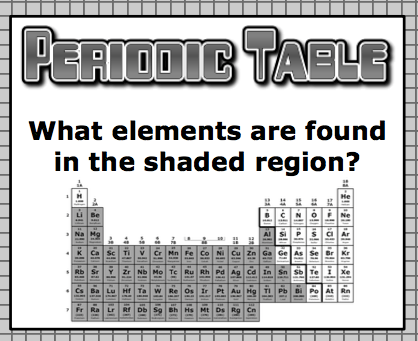
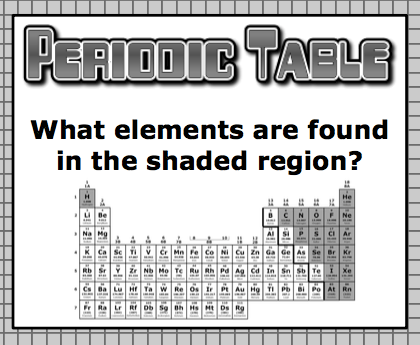
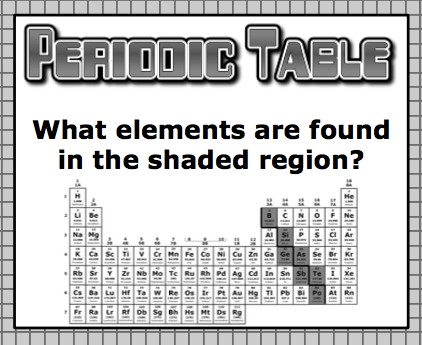
Elements which are considered semiconductors are _____________.
metals
nonmetals
metalloids

In the picture for Hydrogen, what does the 1.00794 stand for?
chemical symbol
atomic number
atomic mass
If a material can easily be drawn into the shape of a wire, it is ___________.
Ductile
Magnetic
Malleable

Beryllium is in group number______.
Group 2
Group 3
Group 4

CaCO3 represents a chemical ______________.
Symbol
Formula
Subscript
How many Hydrogen (H) atoms are in NH3O5?
3
4
5
How many elements are in C6H12O6?
1
2
3
How many atoms of carbon (C) are in C6H12O6?
3
6
12

The red numbers in the image represent ________.
subscripts
coefficients
chemical symbols

The blue numbers in the image represent ________.
precipitates
coefficients
subscripts
Fe + S --> FeS
H2 + Cl2 --> HCl
At the end of a chemical reaction, what is the total mass of the reactants compared to the total mass of the products?
the product is doubled
the product is half the mass of the reactants
the mass is the same
How does the law of conservation of mass apply to chemical reactions and chemical equations?
Matter changes when reacted or changed.
The mass of all reactants are changed during a physical or chemical change
The mass of the reactants is the same as the mass of the products
The substances listed on the left side of a chemical equation are the ____________.
Products
Coefficients
Reactants
The substances listed on the right side of a chemical equation are the ____________.
Yields
Reactants
Products

