
 Worksheets
Classification of Organisms
Total questions: 15
Worksheet time: 8mins
Name
Class
Date
1.
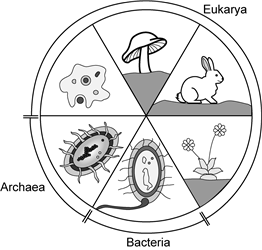
The taxonomic levels represented in this picture are the three —
a)
classes, the lowest levels of organization, and their associated phyla.
b)
kingdoms, the broadest levels of organization, and their associated phyla.
c)
domains, the broadest levels of organization, and their associated kingdoms.
d)
orders, the lowest levels of organization, and their associated domains.
2.
The domains of living organisms are —
a)
Prokarya, Bryozoa, and Bacteria, and they are the lowest level of taxonomic organization.
b)
Archaea, Euryarchaeota, and Eukarya, and they are the broadest level of taxonomic organization.
c)
Archaea, Bacteria, and Eukarya, and they are the broadest level of taxonomic organization.
d)
Flustrina, Archaea, and Bryozoa, and they are the second-lowest level of taxonomic organization.
3.
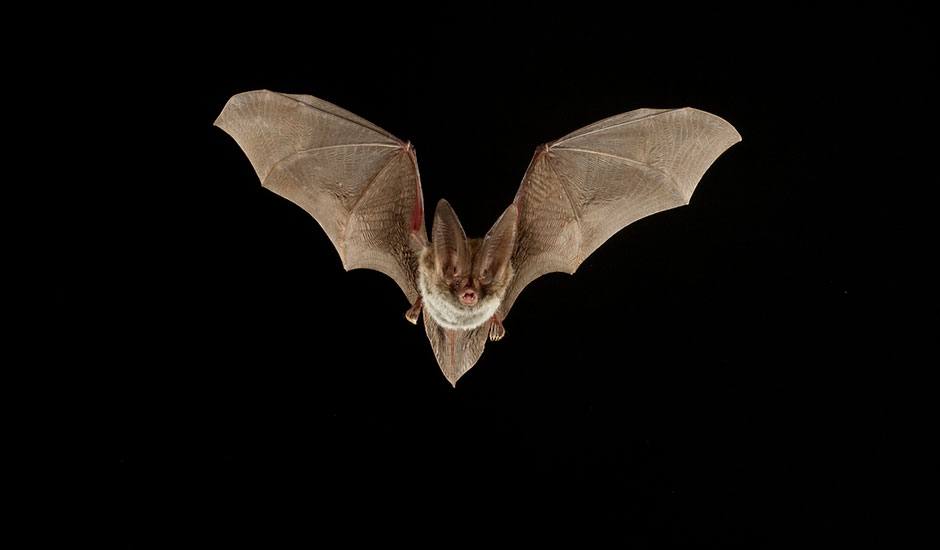
All species of bats are members of the kingdom Animalia. They are classified as animals because —
a)
their cells have cell walls.
b)
they feed on other organisms.
c)
their cells are large.
d)
they can move quickly.
4.
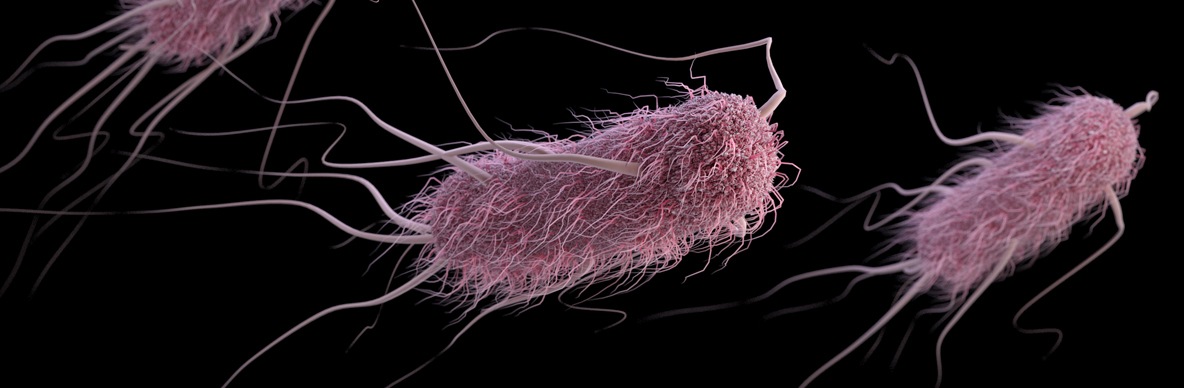
Escherichia coli, or E. coli, is a single-celled, prokaryotic organism. These characteristics require E. coli to be classified in the kingdom —
a)
Protista.
b)
Bacteria.
c)
Plantae
d)
Fungi
5.
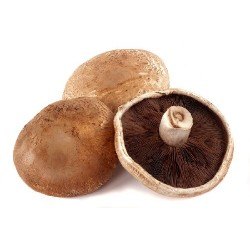
Agaricus bisporus, also known as the portobello mushroom, belongs to the kingdom Fungi. One of the characteristics that defines Agaricus bisporus as a fungus is that it has —
a)
the ability to ingest other organisms.
b)
the ability to photosynthesize.
c)
nucleus in its cells.
d)
pigment in its skin.
6.
What is the most basic difference between autotrophs and heterotrophs?
a)
Heterotrophs respond to their surroundings, while autotrophs do not.
b)
Heterotrophs remain in one place, while autotrophs move around.
c)
Heterotrophs get nutrition by eating, while autotrophs make their own food.
d)
Heterotrophs excrete waste products, while autotrophs do not.
7.
The diverse world of protists includes protozoans, slime molds, and certain algae. The word "protozoan" comes from Greek words meaning "first animal." What are the two main characteristics that protozoans share with members of the animal kingdom?
a)
They move around and cannot make their own food.
b)
They reproduce and are able to make their own food.
c)
They reproduce and respond to their environment.
d)
They respond to their environment and are multicellular.
8.
Green algae, ferns, and pine trees are classified in the plant kingdom. These organisms share certain characteristics. Which of the following is a characteristic used to classify these organisms as plants?
a)
They engage in photosynthesis.
b)
They have an immune system.
c)
They can be found in many different regions on Earth.
d)
They produce flowers.
9.
Tigers, sponges, and whales are all members of the animal kingdom. These organisms are very different, but are similar in some ways. Which of the following is a characteristic used to classify these organisms as animals?
a)
They have fur.
b)
They have cell walls.
c)
They eat other living organisms.
d)
They feed on decomposing organic matter.
10.
Amanda learns that some species of algae share the characteristics of being unicellular and producing sugar by photosynthesis. These species of algae fall into which kingdom?
a)
Fungi
b)
Animalia
c)
Protista
d)
Plantae
11.
Bacteria can be classified into two kingdoms: Archaea and Eubacteria. Bacteria in both of these kingdoms are all —
a)
organisms that live in harsh environments.
b)
autotrophs.
c)
organisms that reproduce sexually.
d)
prokaryotes.
12.
An organism is unicellular, reproduces asexually, and lives in a hot hydrothermal vent at the bottom of the ocean. This organism most likely belongs to the kingdom —
a)
Archaea
b)
Eubacteria
c)
Animalia
d)
Protista.
13.
A mushroom that is multicellular, eukaryotic, and a decomposer belongs to the kingdom —
a)
Plantae
b)
Fungi
c)
Animalia
d)
Protista
14.
The characteristics of a particular organism are listed below.
• Is unicellular
• Has cell nuclei
• Lives in moist environments
• Reproduces asexually
• Is mobile
In which kingdom should this organism be classified?
• Is unicellular
• Has cell nuclei
• Lives in moist environments
• Reproduces asexually
• Is mobile
In which kingdom should this organism be classified?
a)
Animalia
b)
Protista
c)
Plantae
d)
Eubacteria
15.
The characteristics of a particular organism are listed below.
• Is multicellular
• Is a consumer
• Has cells with nuclei
• Reproduces sexually
• Is mobile
• Digests foods internally
In which kingdom should this organism be classified?
• Is multicellular
• Is a consumer
• Has cells with nuclei
• Reproduces sexually
• Is mobile
• Digests foods internally
In which kingdom should this organism be classified?
a)
Animalia
b)
Fungi
c)
Archaea
d)
Plantae
100 %

