
 Worksheets
Ancient Egyptian Quiz
Total questions: 45
Worksheet time: 45mins
Name
Class
Date
1.
What is a dynasty?
a)
a collection of queens
b)
a collection of kingdoms
c)
series of rulers from different families
d)
series of rulers from the same family
2.
Who would the people blame if crops did not grow or if disease struck?
a)
the farmers
b)
the mummies
c)
the pharaoh
d)
the dynasty that was in power
3.
Who was the most famous pharaoh of the Old Kingdom?
a)
Horus
b)
Sinai
c)
Menes
d)
Khufu
4.
Which of the following beliefs was central to Egyptian religion?
a)
the afterlife
b)
the pyramids
c)
the pharaohs
d)
the heavens
5.
Describe the burial practices of Egyptians?
a)
They used a funeral pyre for the dead.
b)
They carried the dead to a nearby country.
c)
They preserved bodies as mummies.
d)
They were buried in the river.
6.
Why were tombs filled with art, jewelry, etc.....?
a)
Tombs were museums.
b)
Tombs were private storage for the pharaoh.
c)
Tombs were the safest place in the kingdom.
d)
They believed the dead enjoyed their materials in the afterlife.
7.
The first pharaoh and rulers after him wore a double crown to symbolize
a)
their rule of the queens
b)
their rule over upper and lower Egypt
c)
the Nile flowed 2 ways
d)
both farming and herding were important
8.
How was Egypt able to build pyramids and temples?
a)
The pharaohs family paid the cost.
b)
Egypt collected taxes from the people.
c)
Egypt collected taxes from Sumer.
d)
The priests held religious festivals.
9.
The worship of many gods.
a)
monotheism
b)
irrigation
c)
polytheism
d)
epic
10.
Pharaoh means
a)
great king
b)
great house
c)
great family
d)
great friend
11.
Egyptian writing system
a)
papyrus
b)
alaphabet
c)
cuneiform
d)
heiroglyphics
12.
Where is the most fertile soil in Egypt?
a)
Nile Delta
b)
desert
c)
far south
d)
cataracts
13.
What is papyrus?
a)
mud used in building
b)
plant from which paper is made
c)
rock used to make tools
d)
animal skin
14.
Rich soil carried and mixed with water is
a)
pebbles
b)
silt
c)
dust
d)
clouds
15.
Why was the Rosetta Stone so important?
a)
It helped archaeologists decipher Egyptian writing?
b)
It gave clues about building.
c)
It was a book of the dead.
d)
It told how pharaoh's rules.
16.
Who is at the top of the Egyptian social hierarchy?
a)
slaves
b)
pharaoh
c)
scribe
d)
merchant
17.
Steep river rapids, almost impossible to sail by boat
a)
delta
b)
canal
c)
dam
d)
cataracts
18.

This pharaoh had the Great Pyramid built as a monument to his greatness.
a)
Hatsheput
b)
Narmer
c)
Djoser
d)
Khufu
19.
Hatshepsut and Ramses II ruled during this kingdom.
a)
Old
b)
Middle
c)
New
d)
Ancient
20.

The great pyramids were built during what kingdom?
a)
Old Kingdom
b)
Middle Kingdom
c)
New Kingdom
21.
The goal of mummification was to
a)
Make sure the body decayed
b)
Preserve the body and achieve immortality
c)
Become one with the universe
d)
None of the above
22.
What was the special salt used to dry the body during mummification
a)
Sea
b)
Morton
c)
Natron
d)
Iodized
23.
The jars that hold the internal organs of the deceased are called
a)
Canopic
b)
Bell
c)
Ziploc
d)
Mason
24.
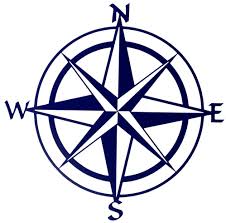
Which way did the Nile flow?
a)
North to South
b)
South to North
c)
East to West
d)
West to East
25.
Of these four groups, which one had the LOWEST social status?
a)
priests
b)
scribes
c)
artisans
d)
government officials
26.
The Nile River is the _____________ river in the world.
a)
widest
b)
shortest
c)
fastest
d)
longest
27.

Pharaoh Ramses II was known as a ....
a)
Military Leader and Master Builder
b)
A Patron of the Arts
c)
A Promoter of Trade
d)
A Failure
28.
Hatshepsut is remembered for her promotion of ....
a)
religious values
b)
feminism
c)
trade
d)
a strong military
29.

Pharaoh Khufu was BEST known for....
a)
being a ruthless leader
b)
being the builder of a famous pyramid
c)
being kind and loving to his people
d)
enslaving anyone who disagreed with him
30.
During this time period, ancient Egypt's power reached its height.
a)
The Old Kingdom
b)
The Middle Kingdom
c)
The New Kingdom
d)
Kingdom 2.0
31.

Ancient Egypt enjoyed three long periods of stability and unity under the rule of pharaohs. Which was NOT one of these time periods?
a)
The Old Kingdom
b)
The Middle Kingdom
c)
The New Kingdom
d)
The Final Kingdom
32.
When ____ drove the Hyksos out of Egypt, it was the beginning of the _____
a)
Ahmose; Middle Kingdom
b)
Queen Hatshepsut; Middle Kingdom
c)
Ramses II, New Kingdom
d)
Ahmose; Old Kingdom
33.
Whose tomb was discovered in 1922 and led to us knowing about Egyptian burial practices and beliefs?
a)
Khufu
b)
Ramses the Great
c)
Cleopatra
d)
King Tutankhamen
34.
What was a collections of spells and prayers studied to help obtain the afterlife called?
a)
The Book of Secrets
b)
The Dead Seas Scrolls
c)
The Book of the Dead
d)
Hieroyglphics
35.

The land around the Nile River delta is known as
a)
the Sudan
b)
Upper Egypt
c)
Lower Egypt
d)
Kush
36.

What does this statement imply?
a)
The Nile supports civilization in Egypt.
b)
Egypt has rewarded the world with the Nile.
c)
The Nile would be insignificant if not for Egyptian rule
d)
The Nile itself was worshipped as a god.
37.
Compared to the Tigris and Euphrates Rivers, the Nile River’s floods were__________.
a)
violent
b)
gentle and dependable
c)
unpredictable
d)
destructructive
38.

Who was the Egyptian god of the underworld?
a)
Osiris
b)
Isis
c)
Amon Re
d)
Horus
39.
According to legend, the first pharaoh and leader who united the Kingdoms of Upper and Lower Egypt was
a)
Ramses II
b)
Menes
c)
Seth
d)
Hatshepsut
40.
The woman pharaoh who concentrated on building the Egyptian economy was
a)
Isis
b)
Hatshepsut
c)
Ahmose
d)
Nefertari
41.
The Book of the Dead was a well-known piece of Egyptian literature that
a)
told the story of an Egyptian official who was accused of killing a pharaoh.
b)
was a list of important citizens and officials who had died.
c)
explained the succession of pharaohs from one dynasty to the next.
d)
served as a guide to the afterlife for dead souls.
42.
cuneiform: ___ :: hieroglyphics : ___
a)
Egypt, Mesopotamia
b)
Mesopotamia, Egypt
c)
Egypt, China
d)
Mesopotamia, Judea
43.
Which of the following were NOT considered natural barriers along the Nile River?
a)
cataracts
b)
Mediterranean Sea
c)
deserts
d)
pyramids
44.

What is a Delta?
a)
A triangle shaped area of land
b)
food
c)
A multitude
d)
Money
45.

What continent is Egypt on?
a)
South America
b)
Asia
c)
North American
d)
Africa
100 %

