
 Worksheets
Common Assessment Review Q1
Total questions: 29
Worksheet time: 31mins
Name
Class
Date
1.

What part of the water cycle does this picture show?
a)
condensation
b)
precipitation
c)
evaporation
2.
Which of these is an example of precipitation?
a)
snow
b)
air
c)
clouds
d)
vapor
3.
Snow, sleet, hail, and rain are all examples of ________________.
a)
evaporation
b)
condensation
c)
accumulation
d)
precipitation
4.

What is it called when WATER is FORMED from an LIQUID to a WATER VAPOR or a [GAS]?
a)
EVAPORATION
b)
PRECIPITATION
c)
TRANSPIRATION
5.
What is the water cycle?
a)
the 3 forms of water
b)
the movement of water on, above, or below the surface of the Earth
c)
when water melts
d)
when clouds form
6.
A possible explanation to a problem that has not yet been tested.
a)
data
b)
theory
c)
hypothesis
d)
fact
7.
A series of steps used by scientists to solve a problem or answer a question.
a)
scientific method
b)
recipe
c)
data collection
d)
metric system
8.
The summary at the end of an experiment that explains the results.
a)
conclusion
b)
procedures
c)
materials
d)
responding variable
9.
Water pollution that comes from many sources is considered...
a)
point source pollution
b)
nonpoint source pollution
c)
thermal pollution
d)
ocean pollution
10.
Which of the following is a way to save water?
a)
Water the lawn at high noon
b)
washing half loads of dishes
c)
taking shorter showers
d)
running the water while brushing your teeth
11.
Water pollution that comes from a single source is considered...
a)
point source pollution
b)
nonpoint source pollution
c)
thermal pollution
d)
ocean pollution
12.
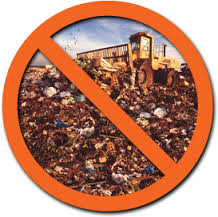
By reducing landfills, the benefits are
a)
Recyclable items can be donated to charity
b)
Divert waste from creating more landfills
c)
Reducing landfill problems such as leaking of landfill leachate contaminating rivers
d)
All of the above
13.
What does it mean to recycle?
a)
to throw things in a trash can
b)
to use something again
c)
to grow something to place items in a recycling bin
14.

It protects the eyes from chemical splashes.
a)
Watch glass
b)
Goggles
c)
Evaporating dish
d)
Thermometer
15.

It is an open tube used to hold small amount of liquid.
a)
Beaker
b)
Graduated cylinder
c)
Test tube
d)
Dropper
16.
What tool is used to find the temperature at which water boils?
a)
graduated cylinder
b)
hot plate
c)
stopwatch
d)
thermometer
17.
Sarah wishes to see the parts of a tiny flower more closely. What scientific instrument would she most likely use?
a)
pan balance
b)
microscope
c)
graduated cylinder
d)
meter stick
18.
The symbol on a weather map for a warm front is what?
a)
a line with triangles on it
b)
a line with circles on it
c)
a line with semi-circles on it
d)
a line with circles on it
19.

What does this symbol on a weather map indicate?
a)
High pressure system
b)
Low pressure system
c)
Cold front
d)
Warm front
20.
What is usually the most damaging part of a hurricane?
a)
Eye
b)
Lightning
c)
Storm surge
d)
Hail
21.

What does this tool measure?
a)
Wind speed
b)
Wind direction
c)
Air pressure
d)
Temperature
22.

What is the name of this tool?
a)
Barometer
b)
Hygrometer
c)
Rain Gauge
d)
Thermometer
23.
A rain gauge measures what?
a)
Air pressure
b)
Wind speed
wind speed
wind speed
c)
Amount of rain fall
d)
Wind direction
24.

This weather instrument is an...
a)
wind vane
b)
anemometer
c)
barometer
d)
thermometer
25.
They are highest clouds in the sky. They look curly, white and feathery. Usually mean good weather.
a)
Cumulus
b)
Cumulonimbus
c)
Cirrus
d)
Stratus
26.
This is sometimes called a thunderhead cloud. It looks very tall like mountains and heavy rain comes from it.
a)
Cumulus
b)
Cirrus
c)
Stratus
d)
Cumulonimbus
27.
They are low in the sky and look soft and fluffy.
a)
Cirrus
b)
Cumulonimbus
c)
Cumulus
d)
Stratus
28.
El Nino occurs when the tropical ocean waters are warmer in which ocean?
a)
Atlantic
b)
Indian
c)
Pacific
d)
Arctic
29.
What is the greenhouse effect?
a)
The warming of a planet due to trapped radiation.
b)
The cooling of Earth due to air pollution.
c)
The heating of a solid, such as a rock.
100 %

