
 Worksheets
Revision Year 9 Years work.
Total questions: 190
Worksheet time: 3hrs 56mins
Name
Class
Date
1.

What is sustainability?
a)
the action of preserving something.
b)
the action of conserving something
c)
the ability to be maintained at a certain rate or level.
d)
the condition or process of degrading or being degraded
2.
Which biome is the MOST sustainable?
a)
Temperate Deciduous Forest
b)
Tropical Rainforest
c)
Tropical Savanna
d)
Desert
3.

How are biodiversity and sustainability connected?
a)
When biodiversity increases, sustainability also increases
b)
When biodiversity increases, sustainability decreases
c)
Biodiversity and sustainability are not related
d)
When biodiversity decreases, sustainability stays the same
4.

Which of these describes the rainforest?
a)
populated by squirrels, bears and pine trees
b)
relatively few trees
c)
generally close to the equator
d)
short, mild, dry summers
5.

A living or once-living organisms in an ecosystem is a
a)
population
b)
biotic factor
c)
abiotic factor
d)
community
6.

What is the average, year-to-year conditions of weather in an area?
a)
Biome
b)
Air Mass
c)
Climate
d)
Precipitation
7.

Which biome is pictured below?
a)
freshwater
b)
wetland
c)
coral reef
d)
ocean
8.
A major abiotic factor of the marine biomes
a)
Salt content
b)
depth
c)
climate
9.
An ecosystem where water covers the soil or water is near the surface of the soil is called
a)
a desert
b)
an ocean
c)
an estuary
d)
a wetland
10.
Which biome receives between 0 and 25 centimeters of precipitation each year, has a temperature range from -27 to 5 degrees Celsius, has frozen soil, and is home to hares, caribou, and wolves?
a)
desert
b)
mountain
c)
savannah
d)
tundra
11.
__________ are at the top of the marine food chain.
a)
Primary producers
b)
Herbivorous fish
c)
Carnivorous fish
d)
Plankton
12.
The unwanted fish and other marine creatures caught during commercial fishing for a different species are ______.
a)
keystone species
b)
bioaccumulators
c)
by-catch
d)
ground fish
13.
The production of farm-raised fish in the ocean is known as ______.
a)
aquaponics
b)
wild-caught
c)
mariculture
d)
none of the above
14.
Climate change causes extreme weather conditions such as:
a)
excessive heat
b)
drought
c)
extreme storms
d)
all of these
15.
Increasingly severe weather systems such as monsoons or drought could lead to military conflicts.
a)
True
b)
False
16.
Climate change can cause increases in asthma, allergies and heart disease.
a)
True
b)
False
17.
Between 1990 and 2000 the glaciers in the Colombian Andes Mountains decreased by what percentage?
a)
10
b)
50
c)
80
d)
75
18.
Bangladesh is responding to climate change by?
a)
Creating a comprehensive NAPA (National Adaptation Program of Action)
b)
Focusing educating their youth so they have more career options
c)
reducing poverty
d)
all of these options
19.
What are greenhouse gases?
a)
gases that cause climate change
b)
gases that emit green smoke
c)
gases that are used to make green colored glass
20.
As a result of climate change food prices could
a)
increase
b)
decrease
c)
stay the same
21.

During volcanic eruptions, large volumes of sulfur dioxide released into the atmosphere can work together with dust and ash to cause global cooling.
a)
True
b)
False
22.
Which area produces the most carbon emissions?
a)
Global North (economically developed regions such as USA, Australia, Western Europe, Japan)
b)
Global South (less economically developed regions such as Africa, South America and most of Asia)
23.
Climate change can affect the growing season of crops, which can result in both increase in food supply and food shortages at the same time.
a)
True
b)
False
24.
Climate change can lead to _______________.
a)
sea level rise and floods in coastal areas
b)
droughts
c)
spread of dengue fever and malaria
d)
all of the above
25.
It is in the interest of all governments to make sure that people have enough to eat.
a)
True
b)
False
26.
What is Erosion?
a)
When waves lose energy and leave sediments / sand along a coast.
b)
The wearing away of land, removal of beach rocks/sand by water or wind.
c)
An area of land that smells different to other places.
d)
An area that has a lot of wind.
27.
What is Deposition?
a)
When waves lose energy and leave sediments / sand along a coast.
b)
The wearing away of land, removal of beach rocks/sand by water or wind.
c)
An area of land that smells different to other places.
d)
An area that has a lot of wind.
28.
What are destructive waves?
a)
Waves that are tall and frequent, crashing into shoreline, digging out chunks.
b)
Long and low waves, beginning far out in the sea, with a smooth gentle landing.
c)
The circular movement caused by wind and gravity fighting.
d)
When people wave their hand to aggresively destroy things.
29.
What are constructive waves?
a)
Waves that are tall and frequent, crashing into shoreline, digging out chunks.
b)
Long and low waves, beginning far out in the sea, with a smooth gentle landing.
c)
The circular movement caused by wind and gravity fighting.
d)
When people wave their hand to aggresively destroy things.
30.
What would be the best thing to help preserve a sand dune?
a)
Put a sign up telling people to stop stealing stand.
b)
Build a sea wall.
c)
Beach reprofiling.
d)
Plant vegetation on the sand dune to hold it in place.
31.
What is the main disadvantage of a sea wall?
a)
Aesthetically displeasing
b)
Encourages tourism, and thus litter
c)
Creates strong backwash, causing erosion beneath the wall.
d)
Expensive
32.

Which of these would be best for investigating how moving waves cause changes to land?
a)
observing the shape of the banks of a fast moving river
b)
building a model of a hill made from dirt and slowly pouring water over it
c)
observing the shape of the land in different places along the ocean shore
d)
modeling the way that waves move in a bathtub or a swimming pool
33.

What is a thin, narrow wall built from the shoreline into the ocean?
a)
barrier island
b)
dredging
c)
jetty
d)
sea wall
34.

While most land areas are slow to change, the shape of beaches changes daily. Which of the following best explains this?
a)
The heating and cooling of beaches changes the shape.
b)
Coastal animals change the shape of the shoreline.
c)
The wave action adds and removes sand daily.
d)
Sea level decreases each day, creating more coastal land.
35.

A severe storm would be most likely to damage a coastal area by causing
a)
erosion
b)
earthquakes
c)
pollution
d)
volcanoes
36.

How can a flood be a constructive process?
a)
It can pollute water supplies, making the water dangerous to drink.
b)
It can deposit rich, fertile soil as the water moves away.
c)
It can destroy plants, trees, and animal habits.
d)
It can knock down houses, buildings, and power lines.
37.

The picture below shows a geological landform on Earth. This landform is always found along the shoreline of a body of water. It is usually made up of loose particles, such as sand and rock.
a)
a canyon
b)
an ocean ridge
c)
a beach
d)
a fault line
38.

What is the dumping of new sand onto an eroded beach to restore it?
a)
barrier island
b)
beach nourishment
c)
dredging
d)
jetty
39.

What is deepening or widening a river or harbor?
a)
barrier island
b)
dredging
c)
jetty
d)
sea wall
40.

Which is true about the effect high ocean waves can have on a beach?
a)
high waves only affect beaches during a storm
b)
high waves cause a beach to change shape
c)
high waves help a beach to remain the same shape
d)
high waves only affect beaches during the winter
41.

What are small hills on a beach called that have been created by blowing wind?
a)
beach
b)
dunes
c)
hills
d)
waves
42.

The shape of the jagged coastline in the picture above is primarily caused by _______.
a)
gravity moving and depositing soil
b)
ocean waves eroding soil
c)
flowing rivers depositing soil
d)
blowing wind eroding soil
43.

Which of the following is a true statement?
a)
Ocean currents only affect beaches during storms and hurricanes.
b)
Ocean currents can move sand along the coast and build beaches.
c)
Ocean currents only destroy beaches.
d)
Ocean currents do not affect beaches.
44.

_______ can either form a beach by depositing sand or destroy a beach by eroding the sand.
a)
waves
b)
currents
c)
storms
d)
all of these
45.

During a hurricane, what affect can the ocean have on the beach?
a)
Only the rain from a hurricane affects the land.
b)
The ocean can wash away much of the beach in a short time.
c)
The ocean always cleans litter from the beach during a hurricane.
d)
Only the wind from a hurricane affects the land.
46.

Where does the sand that creates beaches come from?
a)
ocean floor
b)
waves
c)
rivers
d)
stormes
47.
What type of movement transports most of the sediment in beach environments?
a)
Undertows.
b)
Breakers.
c)
Longshore currents.
d)
swells
48.

This beach is the result of
a)
Destructive waves
b)
Constructive waves
c)
Longshore drift
d)
Erosion
49.

This is
a)
Longshore Drift
b)
Nearshore currents
c)
Attrition
d)
Undertow
50.

This is a
a)
Stack
b)
Arch
c)
Wave cut platform
d)
Blowhole
51.
Where is the worlds largest area of coastal development?
a)
Brazil
b)
Hampshire
c)
Dubai
d)
Norfolk
52.
What type of coastal defences trap and keep sand to stop longshore drift?
a)
Sea wall
b)
Groyne
c)
Gabions
d)
Rock armour
53.

What coastal defence can be seen in this image?
a)
Groyne
b)
Sea wall
c)
Gabions
d)
Revetments
54.
Which erodes quicker?
a)
Hard rock
b)
Soft rock
55.
What is hard engineering?
a)
Natural methods to absorb wave energy
b)
More sand is added to a beach using ships which use sand off the sea bed and spray it onto the beach
c)
Bulldozers push sand that has been dragged into the sea by the backwash up the beach to create a gentle beach profile
d)
Man-made structures using hard materials to prevent flooding or LSD
56.

What hard engineering method is this?
a)
Breakwater
b)
Revetments
c)
Gabions
d)
Groynes
57.
What is urbanisation?
a)
The movement of people from rural to urban areas, usually rapidly
b)
An increase in people living in rural areas
c)
The moment of people from one place to another
d)
The process of cities expanding into rural areas
58.
Which of these is a negative economic consequence of urbanisation?
a)
Less services available in the city
b)
Ability to share culture and religions
c)
Destruction of the natural environment
d)
Less money dedicated to rural infrastructure/services
59.
Which of these is a positive social consequence of urbanisation?
a)
Leaving family and friends behind in rural areas
b)
Ability to share cultures and religions
c)
More pollution to the air and environment
d)
Increase in services and infrastructure in rural areas
60.
Which of these is not an environmental consequence of urbanisation?
a)
Increase in water pollution
b)
More efficient services
c)
Loss of natural land/habitats
d)
Increase in air pollution
61.
What is a push factor leading to migration?
a)
Poverty
b)
More job opportunities
c)
Closer to family and friends
d)
Better services
62.
What is a pull factor?
a)
Something that draws people into another area
b)
Something that draws people from an area
c)
A cart that needs pulling
d)
The movement of people from one area to another
63.
What is population density?
a)
A measure of people per metre
b)
The rate of death minus the rate of births
c)
A measure of people per square kilometre
d)
A measure of how many people live in one house
64.
How do I calculate natural population increase?
a)
Births minus deaths
b)
Deaths minus births
c)
Deaths plus births
d)
Births multiplied by deaths
65.
What is one of the reasons for internal migration in Australia from this list?
a)
They want to get away from nature
b)
They want to live in the same house for a long time
c)
They want to live closer to the sea (sea-change)
d)
They want to work in the same suburb as they live
66.
Why might someone migrate to the Sunshine Coast?
a)
They want a sea change
b)
They want a tree change
c)
High mobility lifestyle
d)
They are FIFO workers
67.
What type of community do we live in?
a)
Rural
b)
Urban
c)
Suburban
68.
This is a large city with many people, cars, and buildings. The buildings are close together.
a)
urban
b)
suburban
c)
rural
69.
This is a mixture of smoke and fog.
a)
Acid Rain
b)
Dew
c)
Radiation
d)
Smog
70.
What does extinct mean?
a)
gone forever
b)
find a new home
c)
animals that eat dead plants
d)
animals that predators eat
71.
If there were no plants we would not have?
a)
school
b)
computers
c)
oxygen
d)
water
72.
Which is most likely to cause air pollution?
a)
truck
b)
flower
c)
bird
d)
rock
73.
What is a decomposer?
a)
find a new home
b)
animals that predators eat
c)
gone forever
d)
break down of dead plants and animals
74.
The ______ was not a direct result of the industrial revolution.
a)
spreading of species to new areas
b)
shift to the use of fossil fuels
c)
improvement n the quality of life
d)
growth of cities
75.
Most of today's environmental problems began during which period in human history?
a)
hunter-gatherer period
b)
agricultural revolution
c)
Industrial Revolution
76.
Residents of developed nations consume ______ of the world's resources and make up only 20% of the world's population.
a)
35%
b)
50%
c)
75%
d)
90%
77.
Chemicals that kill crop-destroying organisms are called _____________.
a)
sediments
b)
fertilizers
c)
acid rain
d)
pesticides
78.
Most water pollution is the result of __________________.
a)
natural processes
b)
animal waste
c)
human activities
d)
acid rain
79.
The ozone layer protects us from
a)
UV rays
b)
CFCs
c)
Increased atmospheric heat
d)
Decreased atmospheric heat
80.
Many uses of land, including logging, mining, and farming, expose the soil, which can lead to
a)
erosion
b)
development
c)
nutrient depletion
d)
crop rotation
81.
Which type of water pollution creates algae blooms?
a)
sediment
b)
toxic
c)
nutrient
d)
bacteria
82.
Why is biodiversity important?
a)
It removes mercury and other pollutants
b)
It stops acid rain
c)
It creates more fossil fuels
d)
Biodiversity helps an ecosystem survive impacts such as natural disasters or human impact
83.
What are some consequences of deforestation?
a)
increased population in cities
b)
building of more infrastructure
c)
soil erosion, loss of biodiversity, loss of ability to remove CO2
d)
more mercury and cyanide released into rivers
84.
What are impacts of overgrazing?
a)
pollution and use of more resources
b)
loss of biodiversity, loss of native topsoil, desertification
c)
more people than the infrastructure can support
d)
creation of heat islands
85.

What is one way that humans can lessen their ecological footprint?
a)
Recycle
b)
Eat more meat
c)
Drive large vehicles
d)
Increase agricultural area
86.
When fertilizers run off farmland into streams and ponds, the nitrogen content of the water increases. This can lead to rapid growth of algae in a process called eutrophication. How can this process affect other organisms in the water?
a)
Oxygen is used up as algae is decomposed, reducing the amount available to other organisms.
b)
The water becomes better able to support aerobic organisms.
c)
The algae provide food for fishes and other organisms, leading to decreased algae populations.
d)
The extra nitrogen provides additional food for the other organisms, increasing their population.
87.
One way that humans could have a positive impact on local environments is to:
a)
generate waste products as a result of technological advances
b)
use resources that are renewable
c)
increase planting large areas of one crop
d)
increase the use of pesticides
88.
How can people reduce the amount of natural resources they use?
a)
make more landfills and garbage dumps
b)
buy products with lots of packaging
c)
use water, electricity, and gas conservatively and recycle metal, paper, and glass
d)
Think only about what you need right now and don’t worry about the future
89.
How many children worldwide are living in poverty??
a)
3 billion
b)
4 billion
c)
2 billion
d)
1 billion
90.
Define sustainability
a)
the ongoing capacity of Earth to maintain all life
b)
natural products that can be used or converted by humans for use
c)
the ability to sustain food
91.

Of the following areas, the Human Development Index is highest in
a)
South Asia
b)
East Asia
c)
South America
d)
Europe
92.
From an economic standpoint, what is the criteria for a material to be considered a natural resource?
a)
It must be inexhaustable
b)
It must be fireproof
c)
It must be used to create value
d)
It must be destructible
93.
Overpopulation is
a)
too many darn people for the world
b)
too many darn people for a country
c)
too many darn people for an area
d)
too many darn people for the resources
94.
Latitude lines run
a)
East to West
b)
North to South
95.
This line measures 0 degrees longitude:
a)
Equator
b)
International Date Line
c)
Meridians
d)
Prime Meridian
96.
The 0 degree line of latitude is the ___________.
a)
Equator
b)
Prime Meridian
c)
International Date Line
d)
Contour line
97.

What is the approximate location of letter B?
a)
80oN, 0o
b)
0o, 80oW
c)
80oS, 0o
d)
0o, 80oE
98.

What is the reason why latitude lines NEVER intersect?
a)
They converge at the poles
b)
They are cool
c)
They are vertical lines
d)
They are parallel
99.

Which letter would you find at 15oS, 60oW?
a)
A
b)
C
c)
L
d)
H
100.

What is this object known as?
a)
map symbol
b)
map key
c)
map scale
d)
compass rose
101.

Which continent is touched by the Prime Meridian?
a)
North America
b)
Africa
c)
Australia
102.

What is the latitude of New Orleans?
a)
90*W
b)
30*N
c)
30*W
d)
90*E
103.

What direction is indicated by the number 5?
a)
northeast
b)
northwest
c)
southeast
d)
southwest
104.
What is a map scale?
a)
a tool to measure distance
b)
a tool to tell direction
c)
a tool to start a fire
d)
a tool to build a house
105.

What kind of map is this?
a)
Continental
b)
Political
c)
Flat
d)
Globe
106.
Explains what the symbols on a map represent
a)
Bar Scale
b)
Map Key/Legend
c)
Compass Rose
d)
Parallels
107.

Which climate zone is found at the blue X?
a)
Tropical
b)
Temperate
c)
Polar
108.

An instrument used to measure the amount of rainfall
a)
barometer
b)
thermometer
c)
rain guage
d)
wind sock
109.

An instrument that measures air pressure
a)
thermometer
b)
barometer
c)
rain guage
d)
wind sock
110.
_____________ has the same temperature and moisture content throughout.
a)
convection current
b)
front
c)
air mass
111.
Which term describes a circulation of air or water that is caused by uneven heating?
a)
convection current
b)
conduction current
c)
radiation current
d)
emission current
112.

Which statement best describes the difference between weather and climate?
a)
Weather is the conditions when you look outside while climate is the conditions you can expect for the next 6 months.
b)
Climate is the current condition outside while weather is what you can expect for the next 6 months.
113.

a)
Warm Front
b)
High Air Pressure
c)
Cold Front
d)
High Temperatures
114.

a)
High Pressure
b)
Warm Front
c)
Cold Front
d)
Mountains
115.
High Pressure is associated with this type of weather...
a)
Cloudy/Overcast Weather
b)
Cold Weather
c)
Warm Weather
d)
Fair Weather
116.
Low Pressure is associated with this type of weather...
a)
Cloudy/Overcast Weather
b)
Cold Weather
c)
Warm Weather
d)
Fair Weather
117.
Our weather generally moves in this direction...
a)
West to East
b)
East to West
c)
North to South
d)
South to North
118.
What causes warm air to rise?
a)
the fact that it's less dense than cold air
b)
The fact that it weighs more than cold air
c)
The fact that it has higher pressure than cold
d)
the fact that its more dense than cold air
119.
The boundary between two air masses is known as:
a)
front
b)
storm
c)
climate
d)
flood
120.
The temperature in which water vapor condenses to form clouds.
a)
Dew Point
b)
78 degrees
c)
53 degrees
d)
Vaporization point
121.
Which type of pressure spins clockwise in the Southern Hemisphere?
a)
High pressure
b)
Low pressure
c)
Atmospheric pressure
d)
Barometric pressure
122.
Brooklyn is sad that she cannot ride her scooter because it is raining outside. What type of pressure is messing up her day?
a)
High pressure
b)
Low pressure
c)
atmospheric pressure
d)
barometric pressure
123.

What weather map symbol is this:
a)
Cold front
b)
Warm front
c)
Stationary front
d)
Occluded front
124.

The person standing at the top of this mountain will experience________ than the person standing at the bottom of the mountain.
a)
higher air pressure
b)
lower air pressure
c)
no difference in air pressure
d)
warmer temperatures
125.

Warm ocean currents generally come from
a)
The North Pole
b)
The South Pole
c)
The Equator
d)
Both A and B
126.

Cold ocean currents generally come from
a)
The North Pole
b)
The South Pole
c)
The Equator
d)
Both A and B
127.
Which of the following is not data represented on a weather map?
a)
temperature
b)
precipitation
c)
change in air pressure
d)
traffic volume
128.
What are lines on a weather map connecting points of equal pressure?
a)
Isotherms
b)
Isoclines
c)
Isobars
d)
Isochrons
129.
The _____________ the isobars on a map are to/from one another the ___________ the wind.
a)
closer, slower
b)
closer, faster
c)
farther, faster
130.
Which instrument measures air pressure?
a)
Psychrometer
b)
Thermometer
c)
Anemometer
d)
Barometer
131.

Name the front.
a)
warm front
b)
stationary front
c)
cold front
d)
occluded front
132.

Which weather system is characterized by generally poor weather?
a)
cold front
b)
low pressure
c)
warm front
d)
high pressure
133.

Which system results in drier, fairer weather?
a)
low pressure
b)
high pressure
c)
hurricane
d)
weather system
134.

On a Climate Graph. the red line is for __________and the blue columns are for________
a)
Temperature,
precipitation
precipitation
b)
Precipitation,
temperature
temperature
c)
wind,
river height
river height
d)
River height,
wind
wind
135.
I am the type of erosion where sediment scrapes against the headland. What am I?
a)
Attrition
b)
Hydraulic action
c)
Solution
d)
Abrasion
136.
I happen when the waves don't have enough energy to carry sediment
a)
Deposition
b)
Erosion
c)
Swash
d)
Backwash
137.
I transport material along a beach. What am I.
a)
Longshore Drift
b)
Longshape Drift
c)
Longnose Drift
d)
Longway drift
138.
What is the dumping of new sand onto an eroded beach to restore it?
a)
barrier island
b)
beach nourishment
c)
dredging
d)
jetty
139.

What is land formed over many years by the build up of sand and dirt just offshore from the mainland?
a)
barrier island
b)
beach nourishment
c)
dredging
d)
jetty
140.
What is deepening or widening a river or harbor?
a)
barrier island
b)
dredging
c)
jetty
d)
sea wall
141.
What is a thin, narrow wall built from the shoreline into the ocean?
a)
barrier island
b)
dredging
c)
jetty
d)
sea wall
142.

What is a tall wall built along the near edge of a beach?
a)
sea wall
b)
jetty
c)
dredging
d)
barrier island
143.
Where does the sand that creates beaches come from?
a)
ocean floor
b)
waves
c)
rivers
d)
stormes
144.
Social Impacts are...
a)
impacts affecting people and communitites
b)
impacts affecting soccer
c)
impacts affecting animals
d)
impacts affecting work
145.
Economic impacts are...
a)
impacts that affect nature
b)
impacts that affect echoes
c)
impacts that affect money, jobs and businesses
d)
impacts that affect people
146.
Environmental impacts are...
a)
impacts that affect people
b)
impacts that affect engines
c)
impacts that affect money
d)
impacts that affect nature
147.
What coastal defence can be seen in this image?
a)
Groyne
b)
Sea wall
c)
Gabions
d)
Revetments
148.
Loss of animal habitats is what type of impact?
a)
Social
b)
Economic
c)
Environmental
149.
Which erodes quicker?
a)
Hard rock
b)
Soft rock
150.
Which one of the following is a soft engineering technique?
a)
Groynes
b)
Dune stabilisation
c)
Rip rap
d)
Revetments
151.
What is the main disadvantage of using groynes?
a)
They can starve other beaches of sediment
b)
Aesthetically displeasing
c)
Expensive
152.
Groynes are an effective technique because they stop the process of what occurring?
a)
Transportation
b)
Longshore drift
c)
Nearshore drift
d)
Deposition
153.
A recurved sea wall is effective because it...
a)
Is not particularly expensive
b)
Stops erosion of the coastline
c)
Deflects wave energy back out to sea
154.
Sea walls can cost up to what per m?
a)
£50,000
b)
£500
c)
£5000
d)
£50
155.
What is the main disadvantage of a sea wall?
a)
Aesthetically displeasing
b)
Encourages tourism, and thus litter
c)
Creates strong backwash, causing erosion beneath the wall.
d)
Expensive
156.
What is the main disadvantage of breakwaters?
a)
They can destroy the sea floor habitat
b)
They don't look natural
c)
They can be used as a first line of defence, to protect other defences
d)
An indirect protection method
157.
What is Erosion?
a)
When waves lose energy and leave sediments / sand along a coast.
b)
The wearing away of land, removal of beach rocks/sand by water or wind.
c)
An area of land that smells different to other places.
d)
An area that has a lot of wind.
158.
What is swash?
a)
Water that runs back into the ocean.
b)
Water that falls forward and moves up the shore.
c)
Tug of war between the drag of the wind and pull of gravity.
d)
Swirling of water in an area.
159.
What is backwash?
a)
Water that runs back into the ocean.
b)
Water that falls forward and moves up the shore.
c)
Tug of war between the drag of the wind and pull of gravity.
d)
Swirling of water in an area.
160.
What am I? I start far out to sea and land on the shore smoothly and gently.
a)
A deconstructive wave.
b)
A constructive wave.
c)
A pirate.
161.
Which is true about the effect high ocean waves can have on a beach?
a)
high waves only affect beaches during a storm
b)
high waves cause a beach to change shape
c)
high waves help a beach to remain the same shape
d)
high waves only affect beaches during the winter
162.

A _____ is a large, swirling, low-pressure system that forms over the Atlantic Ocean.
a)
blizzard
b)
cold front
c)
tornado
d)
hurricane
163.

A violently rotating column of air called a _____ when it comes in contact with the ground.
a)
hurrican
b)
tornado
c)
trade wind
d)
local wind
164.
Rain, snow, sleet, and hail are all forms of _____.
a)
precipitation
b)
condensation
c)
evaporation
d)
climate
165.

What is the highest pressure isbar on the map?
a)
1025hPa
b)
1028hPa
c)
1028hPa
d)
1030hPa
166.
Latitude lines run
a)
East to West
b)
North to South
167.
This line measures 0 degrees longitude:
a)
Equator
b)
International Date Line
c)
Meridians
d)
Prime Meridian
168.
The 0 degree line of latitude is the ___________.
a)
Equator
b)
Prime Meridian
c)
International Date Line
d)
Contour line
169.
What is the approximate location of letter B?
a)
80oN, 0o
b)
0o, 80oW
c)
80oS, 0o
d)
0o, 80oE
170.
What is the reason why latitude lines NEVER intersect?
a)
They converge at the poles
b)
They are cool
c)
They are vertical lines
d)
They are parallel
171.
Which letter would you find at 15oS, 60oW?
a)
A
b)
C
c)
L
d)
H
172.
What direction is indicated by the number 5?
a)
northeast
b)
northwest
c)
southeast
d)
southwest
173.
A _______________ is exactly half of the earth.
a)
Equator
b)
Hemisphere
c)
Tropic of Cancer
d)
Arctic Circle
174.
Indicates the location of landforms like deserts, mountains, and plains
a)
Intermediate directions
b)
Prime Meridian
c)
Physical Map
d)
Map key/Legend
175.
Explains what the symbols on a map represent
a)
Bar Scale
b)
Map Key/Legend
c)
Compass Rose
d)
Parallels
176.

In which direction is Mill River flowing?
a)
Southeast
b)
Southwest
c)
Northeast
d)
Northwest
177.

What is the elevation of point B?
a)
800 ft
b)
850 ft
c)
900 ft
d)
1000 ft
178.

What is the elevation of Y?
a)
Between 120-140 meters
b)
Between 100-120 meters
c)
Between 140-160 meters
d)
Between 80-100 meters
179.

The distance from D to E is...
a)
A little over 2 km
b)
A little over 3 km
c)
A little over 4 km
d)
A little over 5 km
180.

What is the elevation of the peak of the small island on the left side?
a)
About 20 meters
b)
About 40 meters
c)
About 60 meters
d)
About 200 meters
181.

What is the elevation of A?
a)
10 meters
b)
20 meters
c)
40 meters
d)
120 meters
182.

What feature is formed at B?
a)
river
b)
rift valley
c)
sink hole
d)
mountain
183.

If we were in a plane, Path B --> C is about the same distance as path E --> N. But, which path is the easier walk?
a)
B --> C is the easier walk
b)
E --> N is the easier walk
c)
B --> C and E --> N are the same walking distance
184.
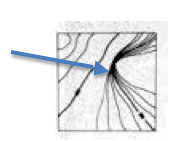
What feature is at the arrow?
a)
volcano
b)
mountain
c)
cliff
d)
river
185.
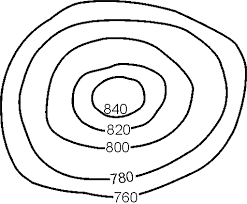
Determine the contour interval:
a)
5 m
b)
10 m
c)
15 m
d)
20 m
186.
What do contour lines that are farther apart represent?
a)
waterfall
b)
steep area
c)
gentle slope
d)
river
187.

Look at the arrow. What could this feature be?
a)
depression
b)
volcano
c)
sinkhole
d)
any of these are possible
188.
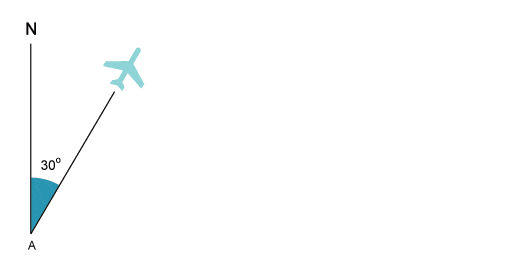
What is
the correct bearing?
the correct bearing?
a)
30
b)
330
c)
030
d)
60
189.

Choose the correct true bearing
a)
75
b)
255
c)
195
d)
075
190.

Write the bearings of A from O
a)
125
b)
055
c)
035
d)
305
100 %

