wayground logo

Free Printable Worksheets

NEW

Font size

S
M
L
XL
Worksheets

APHG Unit 3 Part 1 Review

Total questions: 77

Worksheet time: 43mins

Name
Class
Date
1.
Cultures stay exactly the same over time.
a)
True
b)
False
2.
Culture is spread by...
a)
Movement of people
b)
TV and Internet
c)
War and conquest
d)
All are correct
3.
The spread of McDonalds from the US to India where they have altered the menu is...
a)
Contagious Diffusion
b)
Hierarchical Diffusion
c)
Relocation Diffusion
d)
Stimulus Diffusion
4.
Slowly changes
a)
Folk Culture
b)
Pop Culture
c)
Neither
d)
Both
5.
Mostly spreads through TV, Internet, Movies...
a)
Folk Culture
b)
Pop Culture
c)
Neither
d)
Both
6.
McDonalds, Coca-Cola, Polo, Apple, cars, blue jeans, soccer...
a)
Folk Culture
b)
Pop Culture
c)
Neither
d)
Both
7.
Heterogeneous Population
a)
Folk Culture
b)
Pop Culture
c)
Neither
d)
Both
8.
Homogeneous Population
a)
Folk Culture
b)
Pop Culture
c)
Neither
d)
Both
9.
The spread of an idea or trait through the physical movement of people from one place to another.
a)
Relocation Diffusion
b)
Hierarchical Diffusion
c)
Stimulus Diffusion
d)
Contagious Diffusion
10.
The physical environment causes social and cultural development.
a)
Cultural Environmentalism
b)
Environmental Possibilism
c)
Environmental Determinism
d)
Cultural Possibilism
11.
Which of the following relates to folk culture?
a)
large groups
b)
heterogeneous society
c)
changes from time to time in a given place
d)
changes across space from place to place
12.
Which of the following relates to the origin and diffusion of folk culture?
a)
anonymous origin and rapid diffusion
b)
unknown hearths and relocation diffusion
c)
anonymous hearths and contagious diffusion
d)
known hearth and slow diffusion
13.
Which of the following relates to the origin and diffusion of popular culture?
a)
anonymous hearths and relocation diffusion
b)
known/traceable hearth and hierarchical diffusion
c)
known/traceable hearth and relocation diffusion
d)
isolated unknown hearth and contagious diffusion
14.
Which of the following indicators describes folk culture?
a)
resistant to change
b)
rapid diffusion
c)
mostly in MDCs
d)
mass communication
15.
Which of the following indicators describes popular culture?
a)
rural/subsistence agriculture
b)
mass communication and consumerism
c)
isolated and unique
d)
strong oral history (folklore)
16.
Which of the following describes folk music?
a)
life cycle events and everyday routines
b)
intended for a profit
c)
depends on the fashion and changing culture of the society
d)
Has its hearth in New York City
17.
Which of the following describes pop music?
a)
written in regards to climate and environment
b)
generally a description of life cycle events and routines
c)
purpose of selling music to large amounts of people
d)
nursery rhymes are products of this type of music 
18.
Which of the following describes folk clothing?
a)
driven by income
b)
determined by agriculture and environment
c)
driven by occupation
d)
changes frequently
19.
Which of the following describes pop clothing?
a)
depends on environment
b)
fur-lined boots are a prime example
c)
agriculture drives the style
d)
depends on income and technology/communication
20.
______ combines values, material artifacts, and political institutions.
a)
Customs
b)
Culture
c)
Habits
d)
Taboo
21.
A repetitive act that a particular individual performs, such as wearing jeans to class everyday.
a)
Customs
b)
Culture
c)
Habits
d)
Taboo
22.
A repetitive act of  group, performed to the extent that it becomes characteristic of the group.
a)
Customs
b)
Culture
c)
Habits
d)
Taboo
23.
Popular Culture varies over _____.
a)
space
b)
time
24.
How is popular culture initially diffused?
a)
relocation diffusion
b)
contagious diffusion
c)
stimulus diffusion
d)
hierarchical diffusion
25.
What is threatening the survival of unique folk cultures?
a)
globalization
b)
customs
c)
relocation diffusion
d)
intervening obstacles
26.
Which country would popular culture MOST LIKELY originate?
a)
The United States of America
b)
Brazil
c)
Poland
d)
China
27.
Which of the following regions is generally not viewed as a major node or heart of popular culture?
a)
North America
b)
Western Europe
c)
Japan & S. Korea
d)
Western Africa
28.
The cultural hearth of technology in the united states is _______.
a)
New York City
b)
Hollywood
c)
Silicon Valley
d)
Miami
29.
The cultural hearth of film in the United States is ______.
a)
New York City
b)
Hollywood
c)
Silicon Valley
d)
Miami
30.
Which element of folk culture is LEAST impacted by the physical environment?
a)
clothing
b)
language
c)
housing
d)
food preference 
31.
A restriction on a certain behavior based on a social custom
a)
habit
b)
norm
c)
negative behavior
d)
taboo
32.
People that practice _______ generally do not eat beef (cows) because it is a religious taboo.
a)
Hinduism
b)
Islam
c)
Judaism
d)
Christianity 
33.
People that practice _______ generally do not eat pork because it is a religious taboo.
a)
Hinduism
b)
Islam
c)
Judaism
d)
Christianity 
34.
People that practice _______ only eat food that is "kosher" (ritually cleaned) because eating food that is not "kosher" is a taboo.
a)
Hinduism
b)
Islam
c)
Judaism
d)
Christianity 
35.
Which of the following plays the biggest role in the differences in Himalayan Art?
a)
local resources
b)
isolation
c)
homogenous cultures
d)
local taboo
36.
Which country usually dominates media in most of Europe and parts of Sub-Saharan Africa?
a)
Germany
b)
Belgium
c)
The United Kingdom
d)
Spain
37.
Which country usually dominates media in South Asia and East Asia?
a)
Japan
b)
China
c)
South Korea
d)
India
38.
Which country usually dominates media in North America and Latin America?
a)
Spain
b)
Canada
c)
The United States of America
d)
Mexico
39.
Which of the following is NOT a theme of Western media portrayed by the US media?
a)
social mobility 
b)
relative freedom for women
c)
glorification of youth
d)
importance of religious values
40.
Cultural geography is the study of 
a)
Global customs and artifacts
b)
The spatial distribution of cultural traits
c)
Human-environment relationships
d)
How cultures change through time
41.

Which group of languages does English belong to?

a)

Slavic

b)

Romanic

c)

Germanic

d)

Finno-Ugric

42.
Which of the following will encompass the largest number of speakers?
a)
language group
b)
language family
c)
language branch
d)
dialect
43.

A threatened language is use for

a)

is spoken in daily use by people of all ages

b)

face to face communication, but is losing users

c)

is spoken, but has no literary tradition

d)

is used by older people, but is not being transmitted to children

44.

The three major branches of the Indo-European Language Family are

a)

English, Spanish, Hindi

b)

Semitic, Chadic, Berber

c)

Indo-Iranian, Romance, Germanic

45.

Italian is a

a)

Germanic Language

b)

Romance Language

c)

Slavic Language

d)

Indo-Aryan Language

46.

If two speakers of a different language revert to using English when they are conducting business, English would be known as the-

a)

Creolized Language

b)

Lingua Franca

c)

Isogloss

d)

Language Branch

47.

A fashion trend that diffuses from big cities to smaller cities is-

a)

Hierarchical Diffusion

b)

Contagious Diffusion

c)

Migration

d)

Diffusion

48.

True or False: Traditional Cultures are normally the isolated minority group in a culture

a)

True

b)

False

49.

The different way we speak English compared to people in Australia is an example of-

a)

Isoglosses

b)

Language Families

c)

Dialects

d)

Lingua Franca

50.

When one culture abandons their original culture and completely adopts a new culture-

a)

Acculturation

b)

Assimilation

c)

Multiculturalism

d)

Syncretism

51.

Soccer spreading throughout the world due to British colonization is _______ diffusion

a)

Expansion

b)

Hierarchical

c)

Contagious

d)

Relocation

52.

The birthplace of a civilization is its-

a)

Cultural Hearth

b)

Agricultural Homebase

c)

Source Region

d)

Diffusion

53.

The French language, how to weave a basket, and the belief in ancestral spirits are all examples of-

a)

Mentifacts

b)

Artifacts

c)

Hearths

d)

Diffusion

54.

Judging someone elses culture against your own-

a)

Cultural Relativism

b)

Ethnocentrism

55.

Tangible items left behind by a culture are-

a)

Artifacts

b)

Sociofacts

c)

Mentifacts

56.

The global lingua franca is-

a)

Chinese

b)

Spanish

c)

English

d)

Mandarin

57.

The increasing connectedness of different parts of the world through economic, political, and cultural interaction is-

a)

Culture

b)

Core-Periphery

c)

Globalization

d)

Development

58.

What family do most European languages belong to?

a)

Ural-Altic

b)

Basque

c)

Indo-European

d)

Phoenician

59.

A boundary between language regions-

a)

Dialect

b)

Isogloss

c)

Pidgin Language

60.
Toponymy is the study of
a)
place names
b)
extinct languages
c)
religious affiliations
d)
dialects
61.
The field that studies the relationship between the natural environment and culture is called
a)
environmental determinism
b)
cultural diffusion
c)
syncretism
d)
cultural ecology
62.
Which of the following is an example of an isolated language?
a)
Irish
b)
Basque
c)
Flemish
d)
German
63.
A highly simplified language developed between two heterogeneous groups for the purpose of basic group inter group communication is a
a)
Creole language
b)
Lingua franca
c)
Standard dialet
d)
Pidgin language
64.
A dialect is best classified as which of the following?
a)
Cultural trait
b)
Language branch
c)
Language family
d)
Language group
65.
All of the following belong to the Indo-European language family except
a)
Mandarin
b)
Hindi
c)
Dutch
d)
Farsi
66.
Which of the following will encompass the largest number of speakers?
a)
language group
b)
language family
c)
language branch
d)
dialect
67.
Which of the following is not a Romance language? 
a)
French
b)
German
c)
Italian
d)
Spanish
68.

Identify the type of region.

a)

Formal

b)

Functional

c)

Perceptual

69.

Identify the type of region.

a)

Formal

b)

Functional

c)

Perceptual

70.

Identify the type of region.

a)

Formal

b)

Functional

c)

Perceptual

71.

Identify the type of region.

a)

Formal

b)

Functional

c)

Perceptual

72.

Identify the type of region.

a)

Formal

b)

Functional

c)

Perceptual

73.

Identify the type of region.

a)

Formal

b)

Functional

c)

Perceptual

74.

Identify the type of region.

a)

Formal

b)

Functional

c)

Perceptual

75.

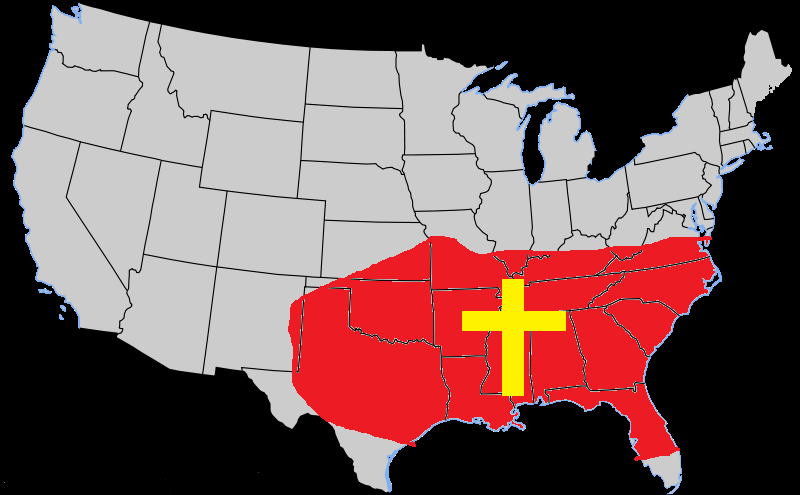
The image best fits the example of

a)

Vernacular Region

b)

Formal Region

c)

Functional Region

d)

Uniform Region

e)

Nodal REgion

76.

Sino-Tibetan

a)

Family

b)

Branch

c)

Individual

77.

Romance

a)

Family

b)

Branch

c)

Individual