
 Worksheets
Newton's Laws of Motion
Total questions: 35
Worksheet time: 30mins
Name
Class
Date
1.
The Law of Inertia
a)
Newton's
1st
Law of Motion
1st
Law of Motion
b)
Newton's
2nd
Law of Motion
2nd
Law of Motion
c)
Newton's
3rd
Law of Motion
3rd
Law of Motion
2.
Acceleration is caused by a force acting on a mass.
a)
Newton’s first law of motion
b)
Newton’s second law of motion
c)
Newton’s third law of motion
3.
For every action, there is an equal and opposite reaction.
a)
Newton's
1st
Law of Motion
1st
Law of Motion
b)
Newton's
2nd
Law of Motion
2nd
Law of Motion
c)
Newton's
3rd
Law of Motion
3rd
Law of Motion
4.
An object at rest will _______ if no outside forces are applied.
a)
Stay at rest
b)
Increase Velocity
c)
Decrease Mass
5.
The measure of how hard it is to stop a moving object
a)
Force
b)
Inertia
c)
Gravity
d)
Momentum
6.
Friction is a force that acts in an ___________ direction of movement.
a)
similar
b)
opposite
7.
Which force produces a change in motion?
a)
unbalanced force
b)
balanced force
c)
gravitational force
d)
frictional force
8.

When a heavy football player and a light one run into each other, who exerts more force?
a)
The heavy one
b)
The light one
c)
They are equal
d)
there is no such thing as force
9.
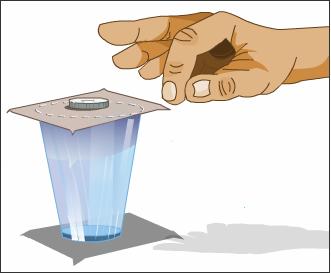
What is the tendency of an object to resist a change in motion?
a)
coffee
b)
motion
c)
inertia
d)
gravity
10.
An automobile you are riding in suddenly stops, but you continue to go forward.
a)
Newton's
1st
Law of Motion
1st
Law of Motion
b)
Newton's
2nd
Law of Motion
2nd
Law of Motion
c)
Newton's
3rd
Law of Motion
3rd
Law of Motion
11.
When the force on a car is doubled, the acceleration is doubled.
a)
Newton's
1st
Law of Motion
1st
Law of Motion
b)
Newton's
2nd
Law of Motion
2nd
Law of Motion
c)
Newton's
3rd
Law of Motion
3rd
Law of Motion
12.
A stationary bumper car is set in motion by the outside force of another bumper car colliding with it.
a)
Newton's
1st
Law of Motion
1st
Law of Motion
b)
Newton's
2nd
Law of Motion
2nd
Law of Motion
c)
Newton's
3rd
Law of Motion
3rd
Law of Motion
13.
A magician pulls a table cloth from under a table of dishes.
a)
Newton's
1st
Law of Motion
1st
Law of Motion
b)
Newton's
2nd
Law of Motion
2nd
Law of Motion
c)
Newton's
3rd
Law of Motion
3rd
Law of Motion
14.
The harder you hit a baseball, the faster it accelerates.
a)
Newton's
1st
Law of Motion
1st
Law of Motion
b)
Newton's
2nd
Law of Motion
2nd
Law of Motion
c)
Newton's
3rd
Law of Motion
3rd
Law of Motion
15.
You push against a wall and the wall is pushing back on you.
a)
Newton's
1st
Law of Motion
1st
Law of Motion
b)
Newton's
2nd
Law of Motion
2nd
Law of Motion
c)
Newton's
3rd
Law of Motion
3rd
Law of Motion
16.
The acceleration of a 4 kg bowling ball will be greater than the acceleration of a 6 kg bowling ball if the same force is applied to both.
a)
Newton's
1st
Law of Motion
1st
Law of Motion
b)
Newton's
2nd
Law of Motion
2nd
Law of Motion
c)
Newton's
3rd
Law of Motion
3rd
Law of Motion
17.
As the fuel in a rocket ignites, the force of gas expansion and explosion pushes out the back of the rocket and pushes the rocket forward.
a)
Newton's
1st
Law of Motion
1st
Law of Motion
b)
Newton's
2nd
Law of Motion
2nd
Law of Motion
c)
Newton's
3rd
Law of Motion
3rd
Law of Motion
18.
You are carrying a lunch tray when you bump into the edge of a table. Although the tray did not tip, your milk falls off of the front of the tray.
a)
Newton's
1st
Law of Motion
1st
Law of Motion
b)
Newton's
2nd
Law of Motion
2nd
Law of Motion
c)
Newton's
3rd
Law of Motion
3rd
Law of Motion
19.
When you paddle a kayak, you push the paddle backwards in the water and the kayak goes forward.
a)
Newton's
1st
Law of Motion
1st
Law of Motion
b)
Newton's
2nd
Law of Motion
2nd
Law of Motion
c)
Newton's
3rd
Law of Motion
3rd
Law of Motion
20.
Determine the acceleration that results when a 12-N net force is applied to a 3-kg object.
a)
3 m/s
b)
4 ft/s
c)
13 m/s
d)
4 m/s
21.
If a ball of cheese is fired into frictionless space, the amount of force needed to keep it going equals
a)
twice the force with which it was fired
b)
the same amount of force with which it was fired
c)
1/2 the force with which it was fired
d)
zero, since no force is requires to keep it moving.
22.
One object has twice as much mass as another object. The first object also has also twice as much...
a)
velocity
b)
gravitational acceleration
c)
inertia
d)
all of these
23.
What pulls a ball back to earth?
a)
Gas
b)
Gravity
c)
Friction
d)
Molecules
24.
A(n) __________ is a push or pull.
a)
newton
b)
acceleration
c)
force
d)
momentum
25.
If a baseball and a cannonball are dropped from the same height at the same time, which ball will hit the ground first?
a)
the cannonball
b)
the baseball
c)
The balls land at the same time.
d)
the ball with the larger volume
26.
A crumpled piece of paper hits the ground before a flat sheet of paper because
a)
the acceleration of gravity is greater on the crumpled paper.
b)
there is more air resistance against the flat paper.
c)
the crumpled paper is more massive
d)
the crumpled paper is less massive.
27.
How does Newton’s third law explain how a rocket takes off?
a)
The rocket’s acceleration is positive, while the gasses acceleration is negative but the direction is the same.
b)
The rocket is at rest until ignition.
c)
The hot gasses move in one direction, while the rocket moves in the opposite direction but with equal force.
28.
What unit do we measure force in?
a)
Newtons
b)
Joules
c)
Force
d)
Don't know
29.
You push on a tree with 20 N of force. If the tree doesn't move, the tree is pushing back on you with _____of force.
a)
20N
b)
40N
c)
10N
d)
70N
30.

What is the net force?
a)
400 N Up
b)
400 N Down
c)
- 400 N Down
d)
800 N Down
31.

In a tug of war the left team pulls with a force of 200N. The right team pulls with a force of 150N. What is the net force?
a)
50N to the left.
b)
350N to the left.
c)
350N to the right.
d)
50N to the right.
32.
Any change in an objects speed or direction
a)
Inertia
b)
Force
c)
Acceleration
d)
Reaction
33.
A rocket with less ________ will have a greater acceleration.
a)
Mass
b)
At Rest
c)
Reaction
d)
Resist
34.
A book weighs 4 N. When held at rest in your hands, the net force on the book is
a)
0 N.
b)
0.4 N.
c)
4 N.
d)
39 N.
35.
A 20 kg bike accelerates at 10 m/s2. What was the net force?
a)
25 Newtons
b)
20 Newtons
c)
200 Newtons
d)
10 Newtons
100 %

