
 Worksheets
Cell Membrane & Transport: Pre-Quiz
Total questions: 10
Worksheet time: 9mins
Name
Class
Date
1.
The cell membrane is selectively permeable, which means...
a)
All materials can enter and leave the cell
b)
Certain things can enter while others cannot
c)
The cell manually sorts through all materials
d)
Only certain cells can interact with the cell.
2.

What is the structure of a phospholipid in the cell membrane?
a)
a "water-fearing" head and two "water-loving" tails
b)
two "water-loving" heads and a "water-fearing" tail
c)
a "water-loving" head and two "water-fearing" tails
d)
two "water-fearing" heads" and a "water-loving" tail
3.
Most of the cell membrane is made of...
a)
Lipids
b)
Carbs
c)
Proteins
d)
Nucleic acids
4.
In a nerve cell, ATP energy is used to pump sodium (Na) out of the cell and potassium (K) into the cell. This is an example of...
a)
Facilitated Diffusion
b)
Simple Diffusion
c)
Active Transport
d)
Osmosis
5.
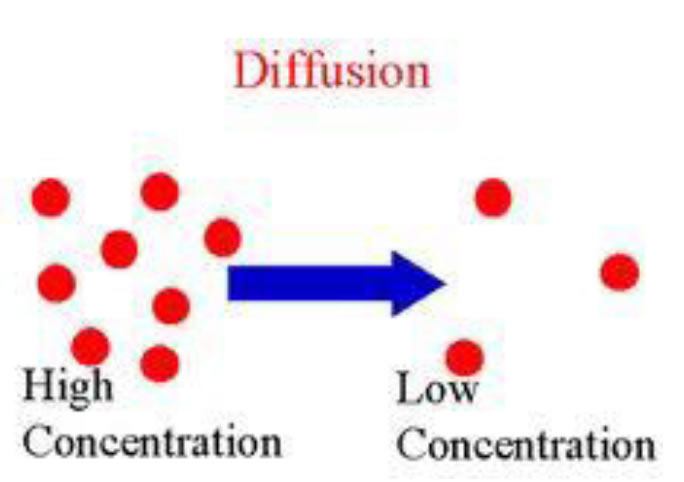
Movement of particles from high to low concentration.
a)
Passive Transport
b)
Active Transport
6.

Where is there a low concentration of dye?
a)
at the bottom of cup
b)
in the color
c)
at the top of cup
d)
no concenteraion gradient
7.
Two examples of passive transport are
a)
Earth and Sun
b)
Diffusion and Osmosis
c)
Energy and Wind
d)
None of the above
8.
ALL living cells have this in common
a)
Nucleus
b)
Cell Membrane
c)
Cell Wall
d)
Mitochondria
9.
Active transport requires ______, moves materials from __________________, and goes _______ the concentration gradient.
a)
No energy, low to high, against
b)
ATP, high to low, with
c)
ATP, low to high, with
d)
ATP, low to high, against
10.
Spraying Axe body spray in a corner of the room and someone on the opposite corner smells it is an example of what?
a)
Osmosis
b)
Facilitated diffusion
c)
Active transport
d)
Diffusion
100 %

