
 Worksheets
Astronomy Unit Test
Total questions: 50
Worksheet time: 52mins
Name
Class
Date
1.

Which season is taking place in the Northern Hemisphere in Position 3?
a)
Winter
b)
Spring
c)
Summer
d)
Fall
2.

Which season is taking place in the Northern Hemisphere in Position 4?
a)
Winter
b)
Spring
c)
Summer
d)
Fall
3.

What happens when the area in which you live tilts away from the sun?
a)
It is summer.
b)
It is spring.
c)
It is winter.
d)
It is fall.
4.
The term equinox means....
a)
equal amount of day light and equal amount of night
b)
Equal amount of winter and summer
c)
Equal amounts of hot dogs for everyone
d)
The longest day of the year
5.

Why is the Equator warmest?
a)
Because it is closest to the sun.
b)
Because it receives the most direct sunlight
c)
Because no clouds form here.
d)
Because it is far from the sun
6.

Name the moon phase
a)
Waxing Gibbous
b)
Waxing Crescent
c)
Waning Crescent
d)
Waning Gibbous
7.
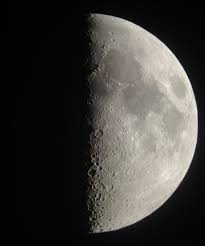
Name the moon phase
a)
First Quarter
b)
Last Quarter
c)
New Moon
d)
Full Moon
8.
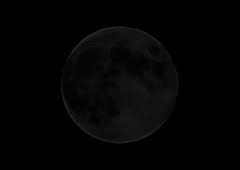
Name the moon phase
a)
First Quarter
b)
Last Quarter
c)
New Moon
d)
Full Moon
9.
Waxing means...
a)
Growing
b)
Dying
c)
Losing light
d)
Moving
10.
When the moon is in between the earth and the sun it is a
a)
New Moon
b)
Full Moon
c)
First Quarter
d)
Third Quarter
11.
Day and night is caused by the _____________ of earth on its axis.
a)
revolution
b)
orbit
c)
rotation
12.
The earth orbits around...
a)
the sun.
b)
the moon
c)
other planets
d)
the Milky Way
13.
What are the reasons for the seasons?
a)
Earth's tilt and rotation.
b)
Earth's rotation and revolution.
c)
Earth's tilt and revolution.
d)
Earth's tilt and resolution
14.
How long does it take the Earth to make one REVOLUTION around the Sun?
a)
12 hours
b)
24 hours
c)
365 days
d)
29.5 days
15.
A solar eclipse only happens during a ________ moon.
a)
New
b)
Cresent
c)
Gibbous
d)
Full
16.

What do we call the sun's outer atmosphere that you see during a solar eclipse?
a)
an umbra
b)
a corona
c)
an orbit
d)
a shadow
17.

a)
solar eclipse
b)
lunar eclipse
18.
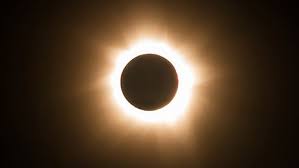
During a solar eclipse...
a)
The sun is blocked by the moon
b)
The Earth is blocked moon
c)
The moon is blocked by the sun
d)
You are blocked
19.
What type of galaxy do we live in?
a)
Spiral
b)
Elliptical
c)
Irregular
d)
Coaxial
20.
Where is Earth's position in our galaxy?
a)
in the center
b)
on a spiral arm, close to the center
c)
on a spiral arm, about 2/3 from the center
d)
on any spiral arm
21.
What are the three types of galaxies?
a)
Spiral, irregular, boxed
b)
Spiral, elliptical, spherical
c)
Spiral, elliptical, square
d)
Spiral, irregular, elliptical
22.

What type of galaxy is this?
a)
Spiral
b)
Elliptical
c)
Irregular
d)
Irrational
23.

What type of galaxy is this?
a)
Spiral
b)
Elliptical
c)
Irregular
d)
Irrational
24.
What are in galaxies?
a)
ice and rock
b)
dust, gas, and star
c)
stars and ice
d)
water and dust
25.
If the sun is bigger than the moon, why does the moon have a greater effect on tides?
a)
The sun's gravity doesn't affect water.
b)
The moon is much closer than the sun.
c)
Although the moon is smaller than the sun, it has more mass.
d)
The earth blocks the sun's gravitational pull.
26.
A[n] ______________ tide occurs when the sun is at right angles to the line between Earth and the moon.
a)
high
b)
neap
c)
low
d)
spring
27.
A[n] ___________ tide occurs when the sun, Earth, and the moon are nearly in a line.
a)
spring
b)
high
c)
low
d)
neap
28.
The bulge of water on the side of the Earth closest to the moon produces ___________.
a)
high tide
b)
low tide
c)
neap tide
d)
spring tide
29.

Which body has the greater effect on Earth's tides?
a)
Sun
b)
Saturn
c)
Moon
d)
Venus
30.

Wha type of tide would this arrangement of earth-moon-sun create?
a)
full moon tide
b)
new moon tide
c)
neap tide
d)
spring tide
31.

What type of tides would this arrangement of earth-moon-sun create?
a)
neap tide
b)
spring tide
c)
new moon tide
d)
full moon tide
32.

Which sun feature is shown here?
a)
solar flare
b)
aurora
c)
solar prominence
d)
sun spot
33.

What layer can be seen here?
a)
chromosphere
b)
corona
c)
photosphere
d)
core
34.
Huge loops of reddish gas that connect sunspots are called:
a)
prominences
b)
solar flares
c)
coronal loops
d)
solar wind
35.
Areas of gas on the sun's surface that are cooler than gases around them are called:
a)
corona
b)
prominences
c)
sunspots
d)
solarspots
36.
When we look at the sun, what layer are we viewing?
a)
photosphere
b)
chromosphere
c)
corona
d)
convection zone
37.
I am a rock entering a planet's atmosphere.
a)
meteor
b)
meteorite
c)
asteroid
d)
comet
38.
The belt between Mars and Jupiter
a)
Comets
b)
Asteroids
c)
Meteors
d)
Stars
39.
Sometimes I am called a "dirty snowball". I have a hydrogen cloud, coma, and a nucleus. I am invisible except when near the sun. What am I?
a)
Asteroid
b)
Star
c)
Meteor
d)
Comet
40.
The tail of a comet usually faces
a)
toward the sun
b)
toward the Earth
c)
away from the Sun
d)
away from the Earth
41.
Where do comets originate from?
a)
our imagination
b)
the sun
c)
The Oort Cloud and Kuiper belt
d)
unicorn landia
42.
Most of the asteroids are located between the orbits of
a)
Venus and Earth
b)
Earth and Mars
c)
Mars and Jupiter
d)
Jupiter and Saturn
43.
What are meteors sometimes called?
a)
shooting stars
b)
moons
c)
cows
d)
frorgs
44.
When a meteor hits Earth, what is it called?
a)
meteorite
b)
meteroid
c)
meteor
45.
What is a meteor called when it's in space?
a)
meteroid
b)
meteor
c)
meteorite
46.
Describe a comets origin and orbit.
a)
Between Mars and Jupiter, long-elliptical orbit
b)
Oort cloud or Kuiper belt, circular orbit similar to a planet
c)
Another galaxy, long-elliptical orbit
d)
Oort cloud or Kuiper belt, long elliptical orbit
47.
Describe an asteroids origin and orbit
a)
Between Mars and Jupiter, long elliptical orbit
b)
Between Mars and Jupiter, circular orbit
c)
Another galaxy, long elliptical orbit
d)
Oort cloud, long elliptical orbit
48.
Tides are caused by ___________
a)
wind
b)
gravitational pull of moon
c)
waves gravitation toward land
d)
rain
49.
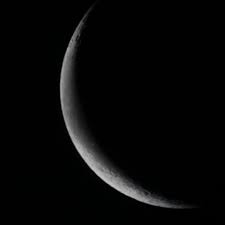
Name the moon phase
a)
waning crescent
b)
waxing crescent
c)
waning gibbous
d)
waxing gibbous
50.
What is illuminating the Moon?
a)
Nuclear Fusion
b)
Sunlight
c)
Mirrors
d)
Flood Lights
100 %

