
 Worksheets
Ancient Egypt RVMS World History
Total questions: 21
Worksheet time: 9mins
Name
Class
Date
1.

Cataracts
a)
plants that grew along the Nile used for making paper
b)
dramatic turns and rocky rapids
c)
the belief in many gods/goddesses
d)
a group of people and camels moving across the desert
2.

Papyrus
a)
plants that grew along the Nile used for making paper
b)
dramatic turns and rocky rapids
c)
the belief in many gods/goddesses
d)
a group of people and camels moving across the desert
3.

Polytheism
a)
plants that grew along the Nile used for making paper
b)
dramatic turns and rocky rapids
c)
the belief in many gods/goddesses
d)
a group of people and camels moving across the desert
4.

Hieroglyphics
a)
a process where other minerals are burned away leaving pure iron
b)
a huge temple built for an Egyptian Pharaoh
c)
a rock that contains a mixture of a metal(iron) and other minerals
d)
Egyptians method of writing using pictures that stood for sounds, objects or ideas
5.

Mummification
a)
a triangular area of fertile land formed by silt that the river deposited
b)
to continue to live after death
c)
a system of preservation to keep the body unchanged in its appearance and intact for the next life
d)
the belief in one God
6.

delta
a)
a triangular area of fertile land formed by silt that the river deposited
b)
to continue to live after death
c)
a system of preservation to keep the body unchanged in its appearance and intact for the next life
d)
the belief in one God
7.

pharaoh
a)
a leader of Egypt which means "great house"
b)
people who moved from place to place in search of food and water
c)
used for everyday writing, this is a simpler form of cursive that the Egyptians used
d)
group of rulers over several generations descending from the same family
8.

dynasty
a)
a leader of Egypt which means "great house"
b)
people who moved from place to place in search of food and water
c)
used for everyday writing, this is a simpler form of cursive that the Egyptians used
d)
group of rulers over several generations descending from the same family
9.

The large stone coffin that holds the other wooden coffins is called a
a)
Shaduf
b)
Shenti
c)
Masoleum
d)
Sarcophagus
10.

Hatshepsut and Ramses II ruled during this kingdom.
a)
Old
b)
Middle
c)
New
d)
Ancient
11.
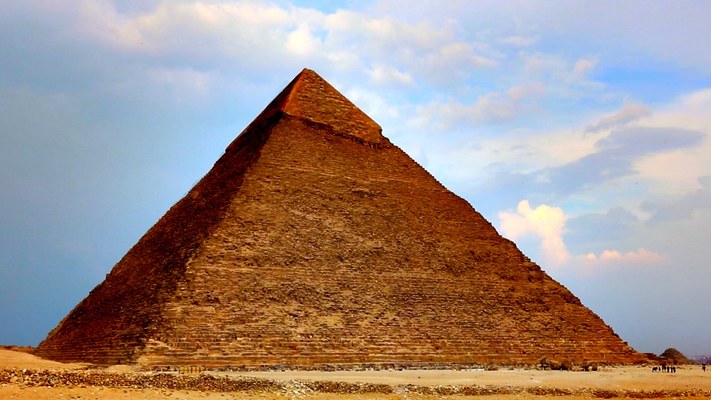
The great pyramids were built during what kingdom?
a)
Old Kingdom
b)
Middle Kingdom
c)
New Kingdom
12.

How did ancient Egyptians show their belief in an after life?
a)
They believed in only one god
b)
They preserved (Mummified) the bodies of the dead
c)
They became famous warriors
d)
They prayed in temples everyday
13.

Why did the ancient Egyptians place the favorite belongings of the pharaoh in his tomb?
a)
So no other human would ever use them
b)
To keep thieves from stealing them
c)
To prevent his servants from stealing them
d)
So they could be used by the pharaoh in the next life
14.

Which social group was upper class in ancient Egypt?
a)
slaves
b)
farmers and unskilled workers
c)
merchants, craftsmen, scribes
d)
nobles and priests
15.
Which of the following correctly lists things the Fertile Crescent and ancient Egypt had in common?
a)
both wrote in cuneiform, economy based on trade, and irrigation
b)
both had scribes, used irrigation, and river civilizations
c)
both built ziggurats, believed in afterlife, and mummified their dead
d)
both wrote in hieroglyphics, had social classes, and were poytheistic
16.

Which of the following best describes the land in Egypt?
a)
only desert
b)
fertile land and rocky soil
c)
90 % desert and 10 % valleys
d)
90 % desert and 10% fertile land
17.

The Nile shaped ancient Egypt in several ways. These include...
a)
settlements, their economy, and religious beliefs
b)
mummification, hieroglyphics, and pyramid building
c)
pharaohs that ruled, Rosetta Stone, mummification
d)
Valley of the Kings, Hatshepsut's temple, location of the burial tombs
18.

The Nile shaped (or made Egypt powerful) in ancient Egypt in several ways. These include...
a)
settlements, their economy, and religious beliefs
b)
mummification, hieroglyphics, and pyramid building
c)
pharaohs that ruled, Rosetta Stone, mummification
d)
Valley of the Kings, Hatshepsut's temple, location of the burial tombs
19.

Which of the following made the Egyptian economy more prosperous?
a)
hieroglyphics
b)
trade
c)
priests and scribes
d)
Great Pyramid
20.

Which discovery led to the ability to decode ancient Egyptian writing?
a)
Nile River Valley
b)
Old Kingdom
c)
Rosetta Stone
d)
Great Pyramid
21.

Which describes the route of the Nile River?
a)
begins in Egypt and flows south into east Africa
b)
flows northward into the Mediterranean Sea
c)
connects the Red Sea and the Mediterranean Sea
d)
flow south through Egypt into the Red Sea
100 %

